


.png)



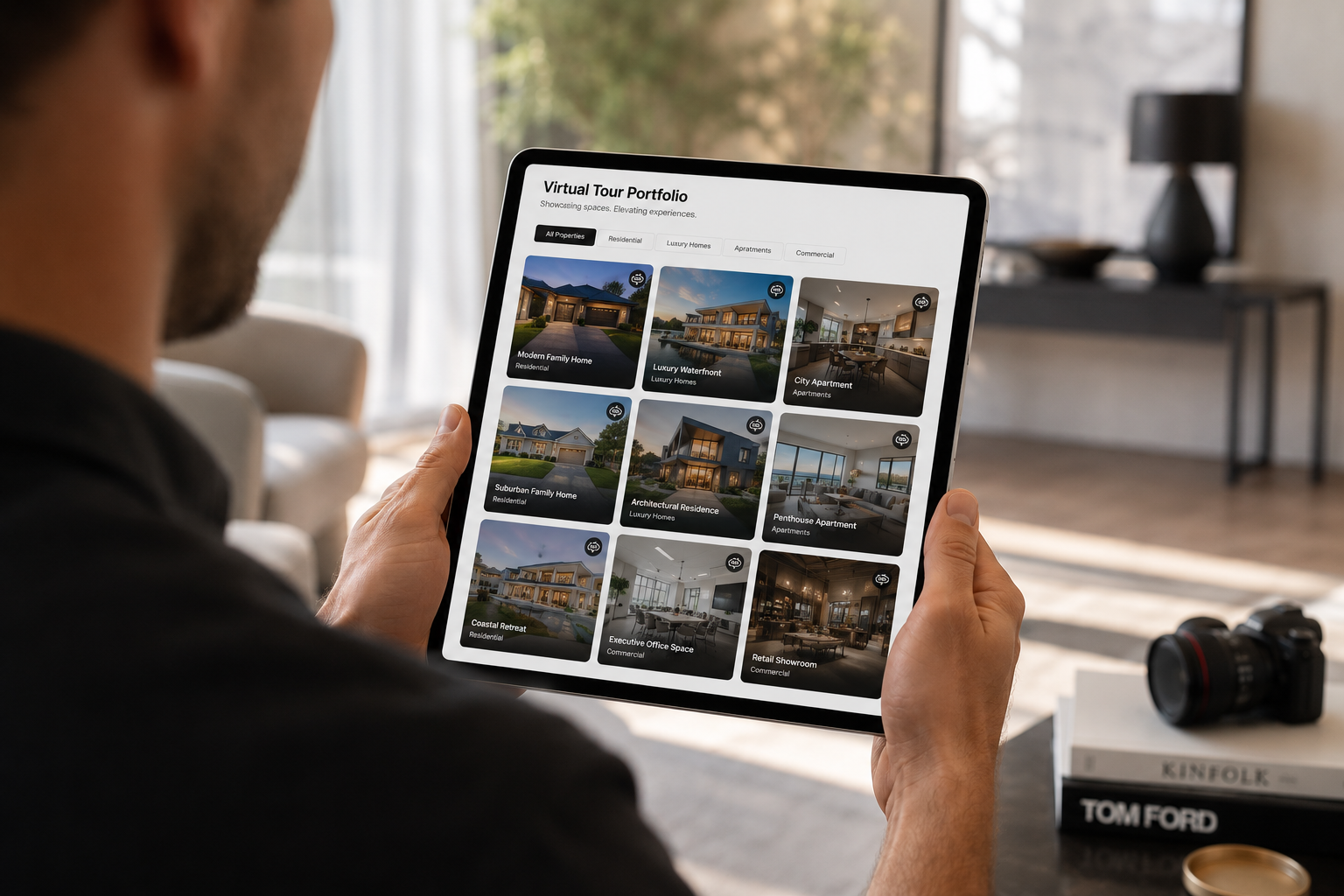
An agent evaluating a new virtual tour photographer isn't reading your website copy carefully — they're glancing at a handful of examples and deciding in seconds whether your work looks professional enough to put in front of their own clients. A genuinely strong virtual tour portfolio for real estate clients is what does most of the persuading before you ever say a word, and it's worth treating with the same care as the shoots themselves.
This guide covers how to select, present, and deliver a portfolio that actually converts interest into bookings — not just a folder of your favorite work, but a curated set of examples built specifically to win real estate clients with portfolio presentation done right. If you haven't sorted out the wider approach to selling this as a service yet, the complete guide to selling virtual tour services to agents covers pitching and pricing in full — this article is specifically about the portfolio that supports that pitch.
Learning how to build a real estate photography portfolio starts with being honest about quality over quantity. A portfolio of twenty mediocre tours convinces nobody; five or six genuinely excellent, varied examples convince far more effectively, because every single piece an agent looks at is reinforcing the same impression of quality rather than diluting it.
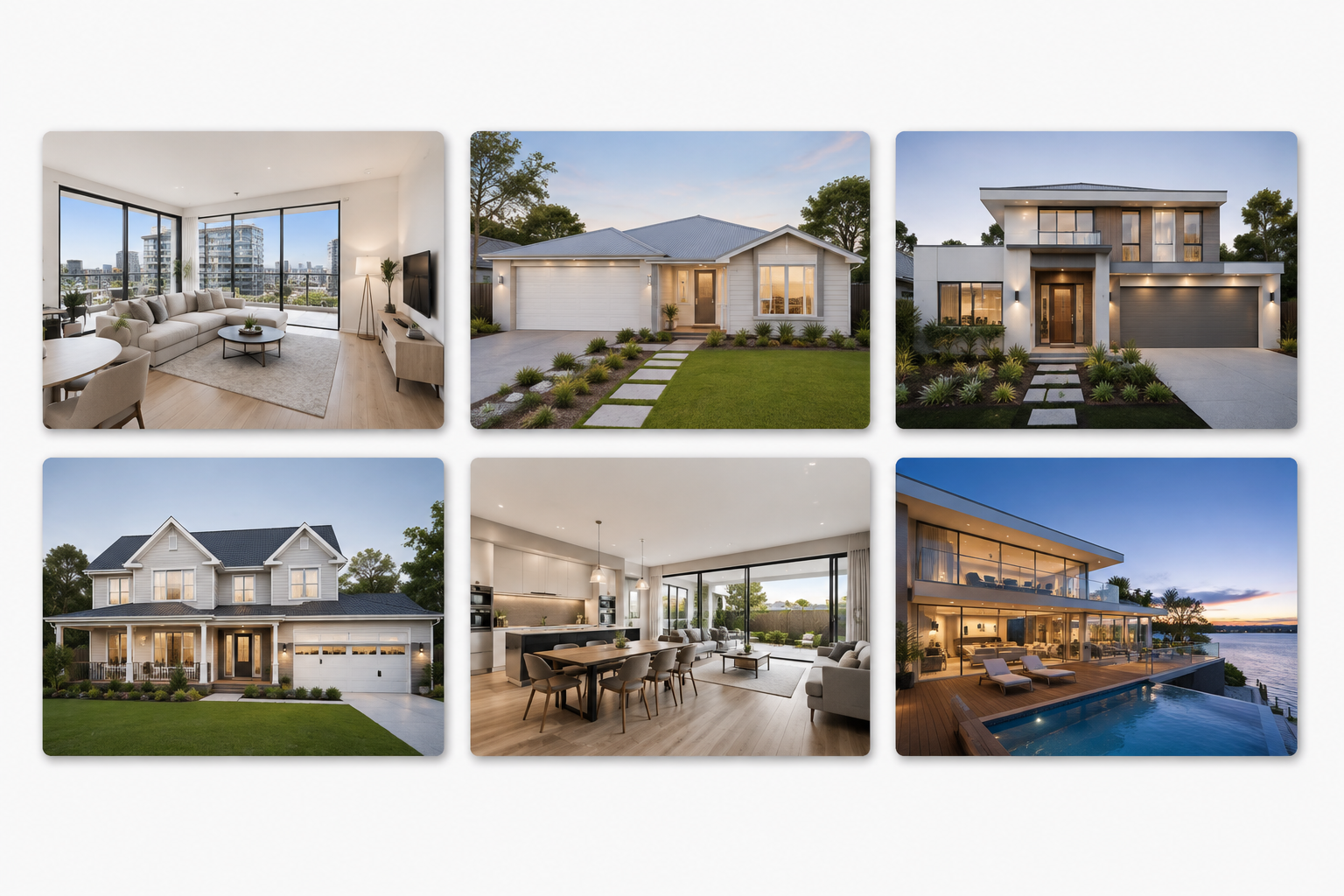
Variety matters almost as much as quality. Include a range of property types — an apartment, a standard family home, something larger or more architecturally distinctive — so a prospective client can picture their own specific listing in your work rather than only seeing one narrow style repeated. If you're just starting out and don't yet have paid client work to draw from, a handful of genuinely well-executed practice shoots on your own home, a friend's place, or a property you have permission to photograph is a legitimate way to build an initial portfolio — agents care about the quality of the finished tour, not necessarily whether the property was a paid job.
It's worth resisting the temptation to pad an early portfolio out with mediocre examples just to have more to show. A prospective client who clicks through six tours and finds two genuinely impressive ones and four forgettable ones walks away with an impression closer to "inconsistent" than "talented," even though the best two pieces were strong on their own. Three or four excellent examples consistently outperform a longer list with uneven quality, particularly when someone is making a quick judgment call about whether to book you.
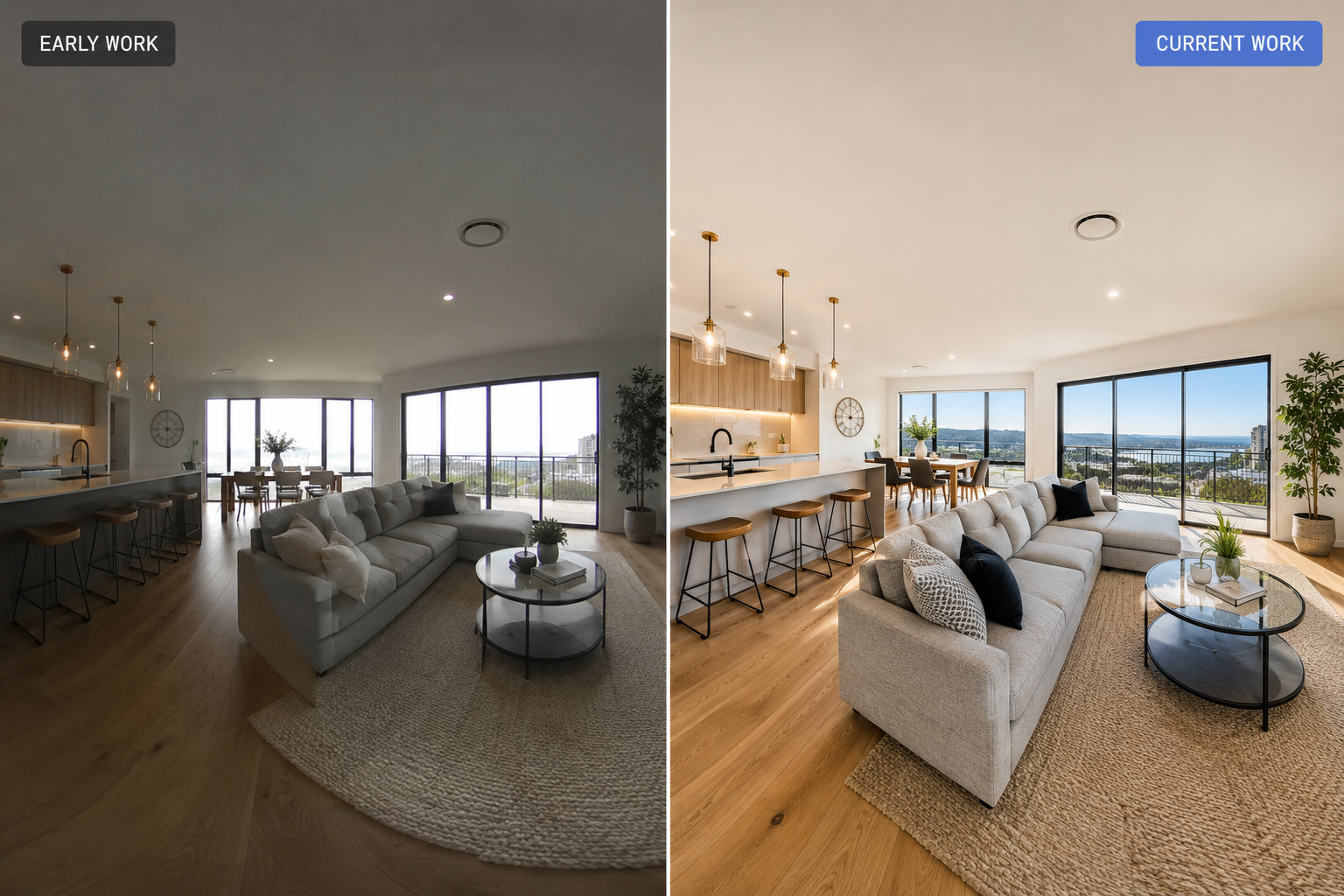
Every piece in your portfolio should meet a consistently high bar — clean stitching, balanced exposure, logical navigation — since one weak example can undermine the credibility of several strong ones sitting next to it. Be willing to leave out early work once your skills have clearly improved, even if it represents real effort at the time; a portfolio should reflect your current capability, not your full history.
It's also worth curating slightly differently depending on who you're pitching to. An agency that primarily handles smaller residential listings responds best to portfolio examples in that same category, while an agency working larger or more premium properties will want to see you've handled that scale and complexity convincingly. If you're building a single general-purpose portfolio rather than several tailored ones, lead with your most broadly impressive and highest-quality work first, since that's what sets the tone for everything a viewer looks at afterward.
If you do enough work across distinctly different market segments — say, standard residential listings and larger acreage or commercial properties — it's worth considering two lightly tailored versions of your portfolio rather than forcing one generic version to serve both audiences equally well. This takes more upfront effort to maintain, but a portfolio that feels specifically relevant to the agent reviewing it tends to land better than one that reads as generic across every type of client.
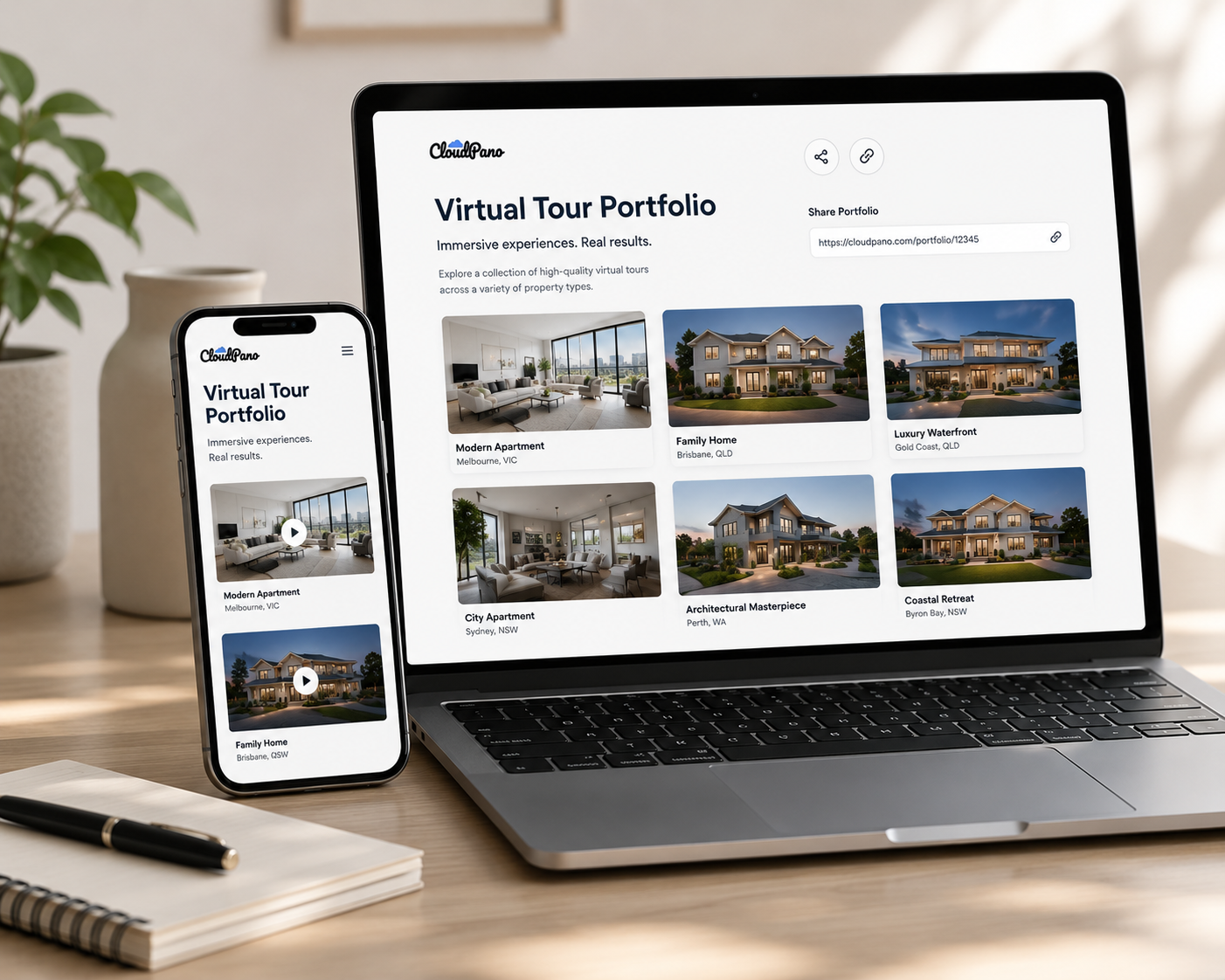
Knowing how to showcase virtual tour work to agents is as much about the presentation format as the tours themselves. A simple, clean landing page or a short curated set of shareable links tends to work better than a cluttered folder of files, since agents are busy and want to click through examples quickly without friction.
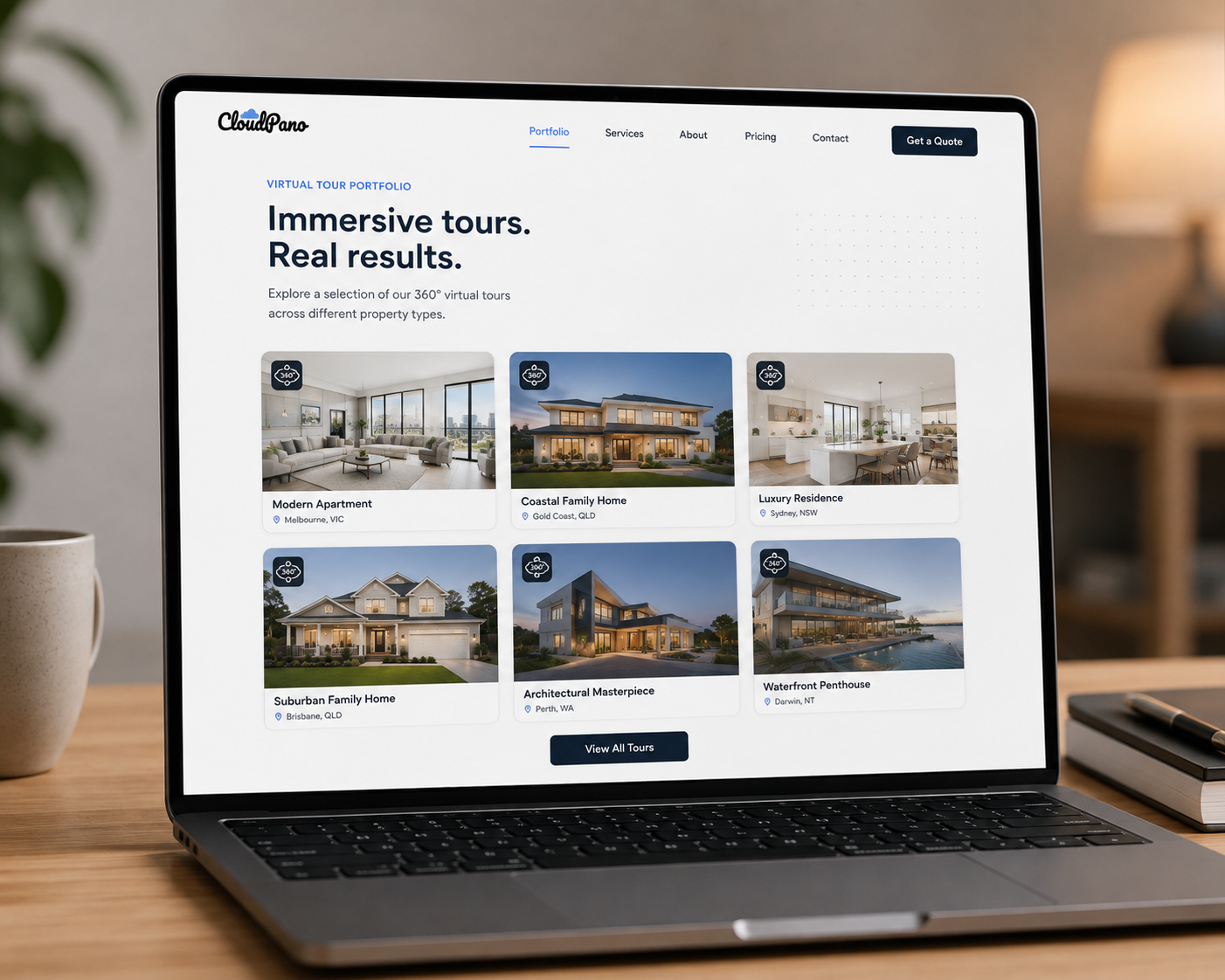
Context helps too — a short caption noting the property type, and if relevant, a brief note on the result ("this listing received strong buyer engagement" is fine as a general statement; avoid inventing specific statistics you can't verify). Keep the presentation format consistent across every example, since a portfolio that looks visually cohesive reads as more professional than one where each tour is presented differently.
Ordering matters too, and it's worth being deliberate rather than simply listing tours chronologically. Leading with your single strongest example — the one you'd choose if an agent only had time to look at one — sets the tone before someone decides whether to keep scrolling. If your portfolio spans a live webpage, PDF, or a simple shared folder, test the experience yourself from a phone, since a meaningful share of agents will open your link on mobile between appointments rather than at a desk, and a layout that only works well on a large screen loses a real portion of your audience.
A polished portfolio only works if it's genuinely easy for an agent to access at the exact moment they're considering hiring you — in an email, during an in-person conversation, or forwarded internally to a colleague. A single, clean shareable link works better than requiring a download, a login, or navigating a cluttered personal website to find the right page.
It's worth having your portfolio ready in more than one format: a link you can send by email, a version you can pull up instantly on your phone or tablet during an in-person pitch, and ideally a simple one-page summary an agent could forward internally without needing to explain who you are from scratch. Once your portfolio is polished and easy to access, getting your portfolio in front of agents locally is the next practical step, since even the strongest portfolio only helps once the right people are actually seeing it.
A branded, custom URL or a clean subdomain rather than a generic link buried in a larger website also does a surprising amount of work for credibility. Something an agent can type from memory or immediately recognize as yours reads as more established than a long, unmemorable link, even if the underlying content is identical. Similarly, keeping load times fast and file sizes reasonable matters more than it might seem — an agent who's quickly checking your work between appointments is unlikely to wait through a slow-loading page, no matter how good the tours themselves turn out to be once they finally load.
A portfolio built once and never updated eventually starts working against you, especially once your skill level has genuinely moved past what it shows. Building a simple habit — reviewing your portfolio every few months and swapping in stronger, more recent examples — keeps it an accurate reflection of your current capability rather than a snapshot of where you started.
This is also worth doing deliberately after any particularly strong shoot, rather than waiting for a scheduled review. A standout tour on an impressive property, shot and stitched cleanly, is worth adding to your portfolio promptly while it's still your best recent example — waiting months to update means missing the window where that piece is doing the most persuasive work for you. It's worth setting a simple recurring reminder for yourself to actually do this, since "I'll get to it eventually" is exactly how a portfolio quietly goes stale for photographers who mean to keep it current but never quite prioritize the update.
A strong virtual tour portfolio for real estate clients is one of the most effective tools you have for winning new agency business, often doing more of the convincing than a verbal pitch alone. Curate a small number of genuinely excellent, varied examples, present them cleanly and consistently, make them effortless to access and share, and keep the whole thing current as your skills improve.
Once your portfolio is doing its job well, the pitch itself, once your portfolio has opened the door becomes a much easier conversation — you're confirming quality an agent has already seen rather than trying to convince them from a standing start, which shifts the entire dynamic of that first meeting in your favor.
If you're building tours worth showcasing, CloudPano's polished viewer and easy sharing options make sure your best work actually looks as good as it deserves to when an agent clicks the link — turning a strong shoot into a genuinely strong first impression.


Compact, ready to go anywhere
Interchangeable lens that’s upgradeable
Dual 1-inch sensors for improved clarity and low light performance
Dynamic range and 6K 360° capture
360° photo resolution at 21MP

8K 360° video recording for ultra-detailed visuals.
4K single-lens mode for traditional wide-angle shots.
Invisible selfie stick effect for drone-like perspectives.
2.5-inch touchscreen with Gorilla Glass protection.
Waterproof up to 33ft for underwater shooting.

360° photo resolution in 23MP
Slim design at 24 mm thick
Built-in image stabilization for smooth video capture.
Internal 19GB storage for photo and video storage.
Wireless connectivity for remote control and sharing.

60MP 360° still images for high-resolution photography.
5.7K 360° video recording at 30fps.
2.25-inch touchscreen for intuitive control.
USB Type-C port for fast charging and data transfer.
MicroSD card slot for expandable storage.
.png)

.png)

Try it free. No credit card required. Instant set-up.






.svg)


.svg)