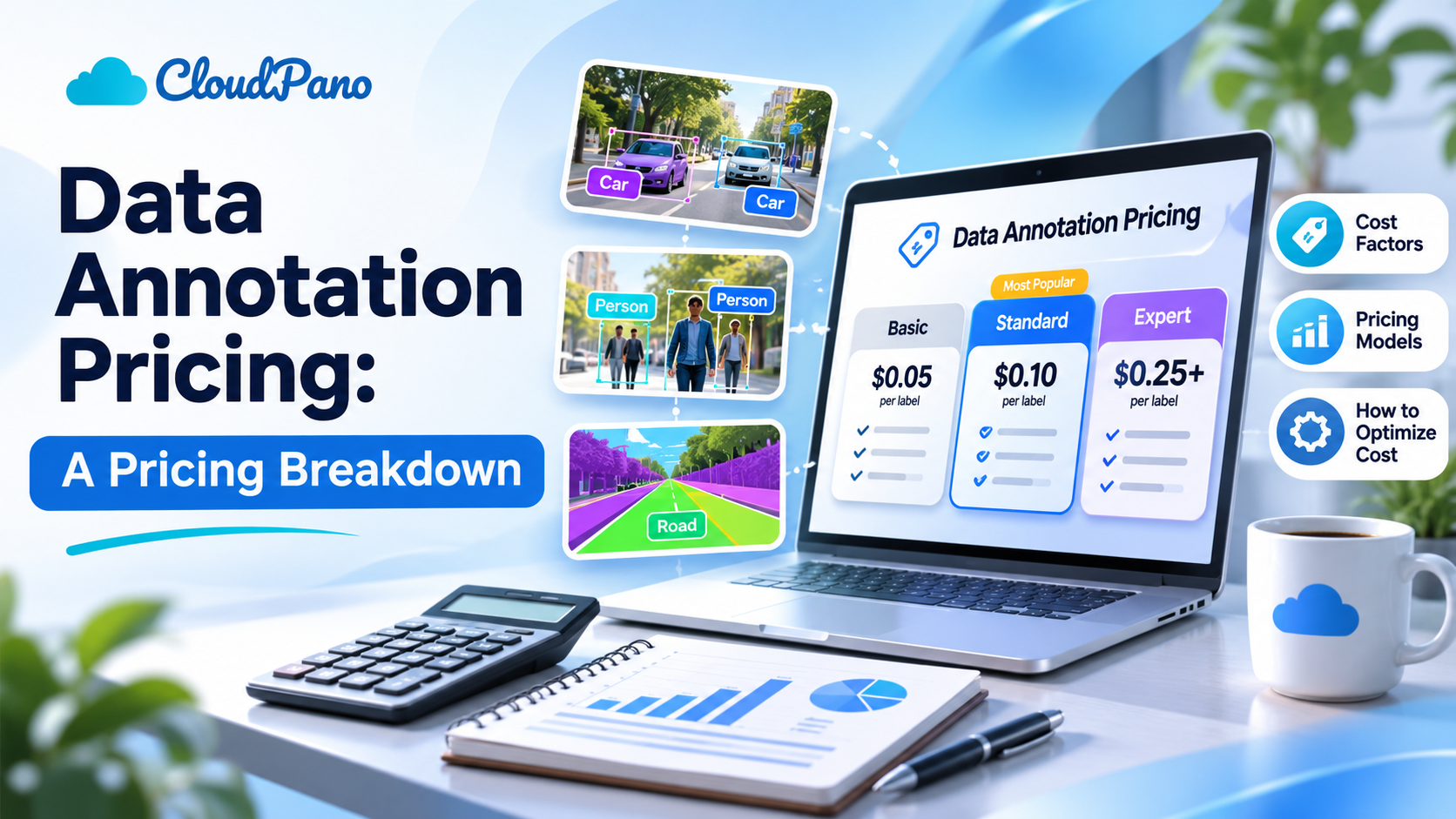
Data annotation pricing varies depending on data type, annotation complexity, dataset size, accuracy requirements, and annotator expertise. Simple image or text labeling may cost a few cents per item, while complex video annotation and specialized tasks can cost significantly more. Businesses should also consider quality assurance, project management, and potential rework when estimating total costs.
Artificial intelligence depends on high-quality training data, but preparing that data comes with costs that many businesses underestimate. Whether you're building a computer vision system, training a language model, or developing autonomous technology, understanding data annotation pricing is essential for planning an effective AI project.
Data annotation involves labeling raw information, such as images, videos, text, and audio, so machine learning models can recognize patterns and make predictions. Although the process may seem straightforward, annotation costs vary significantly depending on task complexity, dataset size, accuracy requirements, and the expertise of the people performing the work.
Some projects require simple image classification, while others involve detailed object tracking, specialized medical terminology, or complex human evaluations. Each requires different resources, workflows, and quality controls.
This guide breaks down the major factors influencing annotation costs, explains common pricing models, and offers practical strategies for managing your budget without sacrificing data quality.
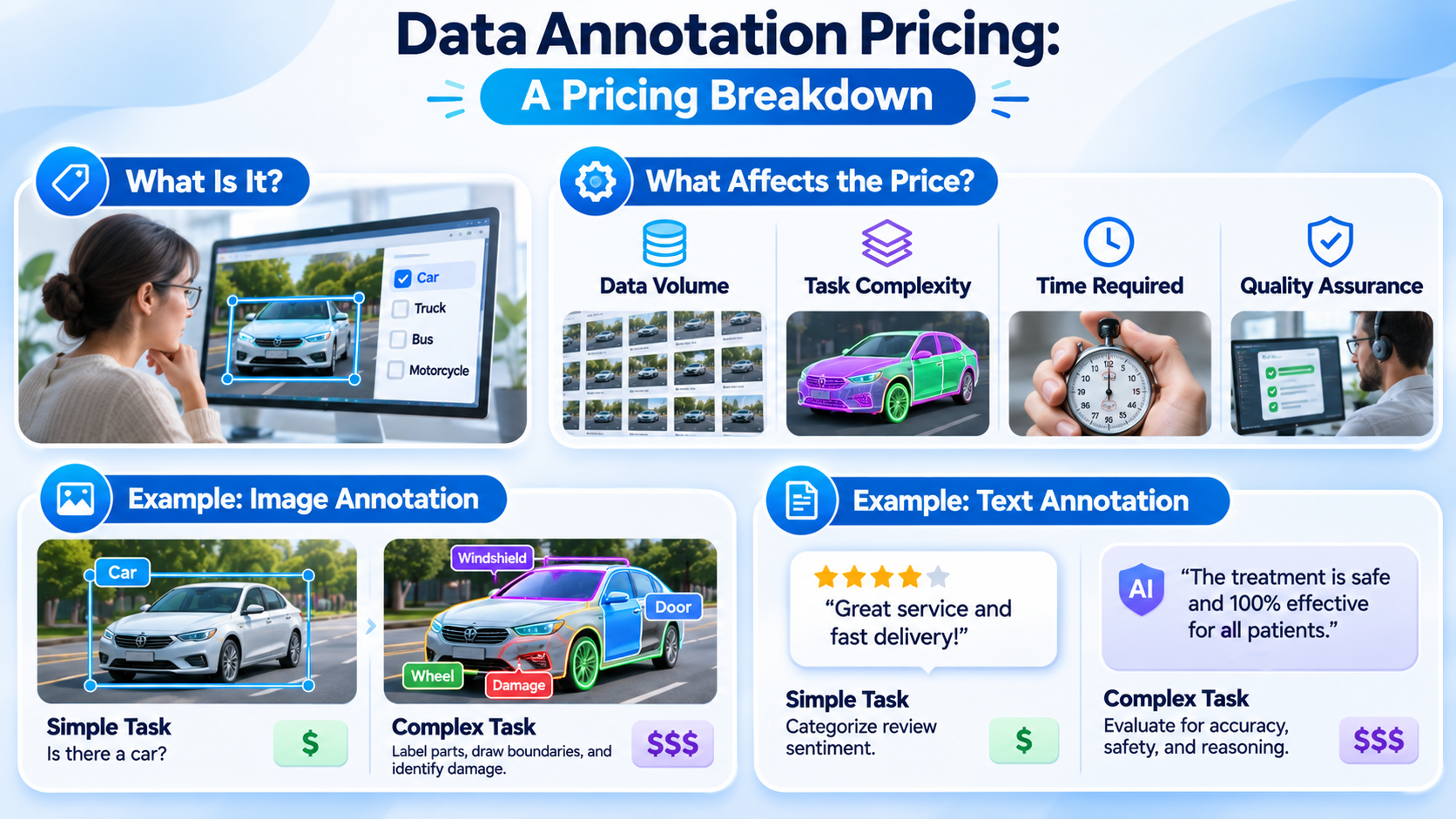
Data annotation pricing refers to the cost of labeling, categorizing, or enriching raw data to make it usable for machine learning and artificial intelligence systems.
Annotation providers typically calculate costs based on the amount of data processed, the complexity of labeling tasks, the time required, and the level of quality assurance involved.
For example, labeling whether an image contains a car is usually less expensive than identifying every vehicle component, drawing precise boundaries, and classifying visible damage.
Similarly, categorizing customer reviews by sentiment generally requires less effort than evaluating complex AI-generated responses for factual accuracy, safety, and reasoning quality.
Understanding these differences helps organizations compare providers and establish realistic project budgets.
Not all annotation projects require the same level of effort.
Several factors influence the final cost of preparing labeled datasets.
Different data formats require different annotation techniques.
Common categories include:
Video and 3D annotation often require more time because annotators must understand movement, spatial relationships, or complex visual structures.
However, specialized text or audio annotation can also become expensive when expert knowledge is necessary.
The more detailed the annotation requirements, the higher the potential cost.
Consider two computer vision projects.
The first requires annotators to identify whether an image contains a pedestrian.
The second requires annotators to outline every pedestrian, distinguish partially hidden individuals, and assign attributes such as movement direction.
Although both projects use images, the second involves substantially more work.
Detailed annotation instructions, numerous label categories, and ambiguous examples increase the time required per task.
Dataset volume plays an important role in determining total annotation expenses.
Large datasets require more processing time, coordination, and quality assurance.
However, larger projects may benefit from economies of scale.
Once annotation guidelines, tools, and workflows are established, providers can sometimes process additional data more efficiently.
This means the cost per labeled item may decrease as project volume increases, particularly for repetitive tasks.
High-quality annotations are essential for reliable machine learning performance.
Projects with strict accuracy requirements often include additional quality assurance processes, such as:
These measures increase operational costs but can reduce the risk of introducing incorrect labels into training datasets.
For applications involving healthcare, financial services, or autonomous systems, additional verification may be particularly important.
Some annotation tasks require specialized knowledge.
For example, labeling everyday household objects may be handled by trained general annotators.
Identifying abnormalities in medical images, however, may require qualified medical professionals.
Likewise, evaluating legal documents or technical engineering data may require reviewers with relevant subject-matter expertise.
Specialized expertise generally increases labor costs, but it can improve annotation consistency and reduce costly mistakes.
Annotation providers use several pricing structures depending on project requirements.
Understanding these models helps organizations identify which approach best matches their workload.
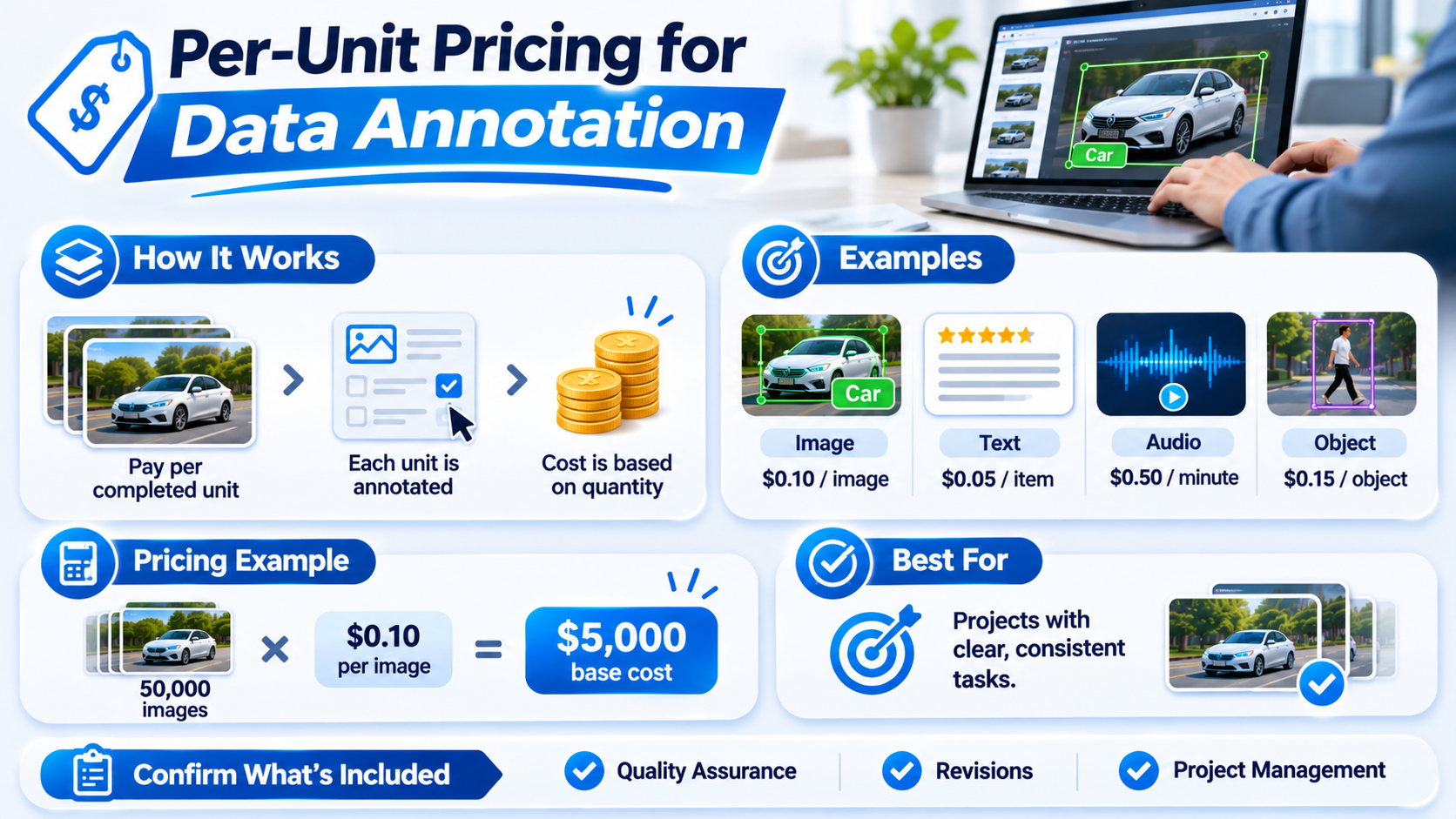
Under this model, businesses pay for each completed annotation unit.
Units might include images, text documents, audio clips, or labeled objects.
For example, if a provider charges $0.10 per image and a project contains 50,000 images, the base annotation cost would be $5,000.
This approach works well for projects with clearly defined, consistent tasks.
However, businesses should confirm whether quality assurance, revisions, and project management are included.
Hourly pricing charges based on the time annotators spend completing tasks.
This model is often used for complex or unpredictable projects.
Examples include detailed video analysis, specialized document labeling, and expert AI response evaluation.
Hourly arrangements provide flexibility when annotation requirements evolve, but total costs may be less predictable.
Project-based pricing establishes a fixed cost for a defined scope of work.
A provider evaluates dataset size, task complexity, turnaround requirements, and quality standards before preparing a quote.
This model can simplify budgeting for organizations with clearly documented requirements.
However, changes in scope may result in additional charges.
Some providers offer ongoing annotation services through monthly agreements or dedicated annotation teams.
These arrangements may include workforce management, annotation tools, quality assurance, and reporting.
Managed services are particularly useful for businesses that continuously collect new training data.
They can also reduce the operational burden of recruiting, training, and supervising internal annotators.
The following table illustrates hypothetical annotation costs for different task types. These figures are budgeting examples, not verified industry averages or current vendor quotes.
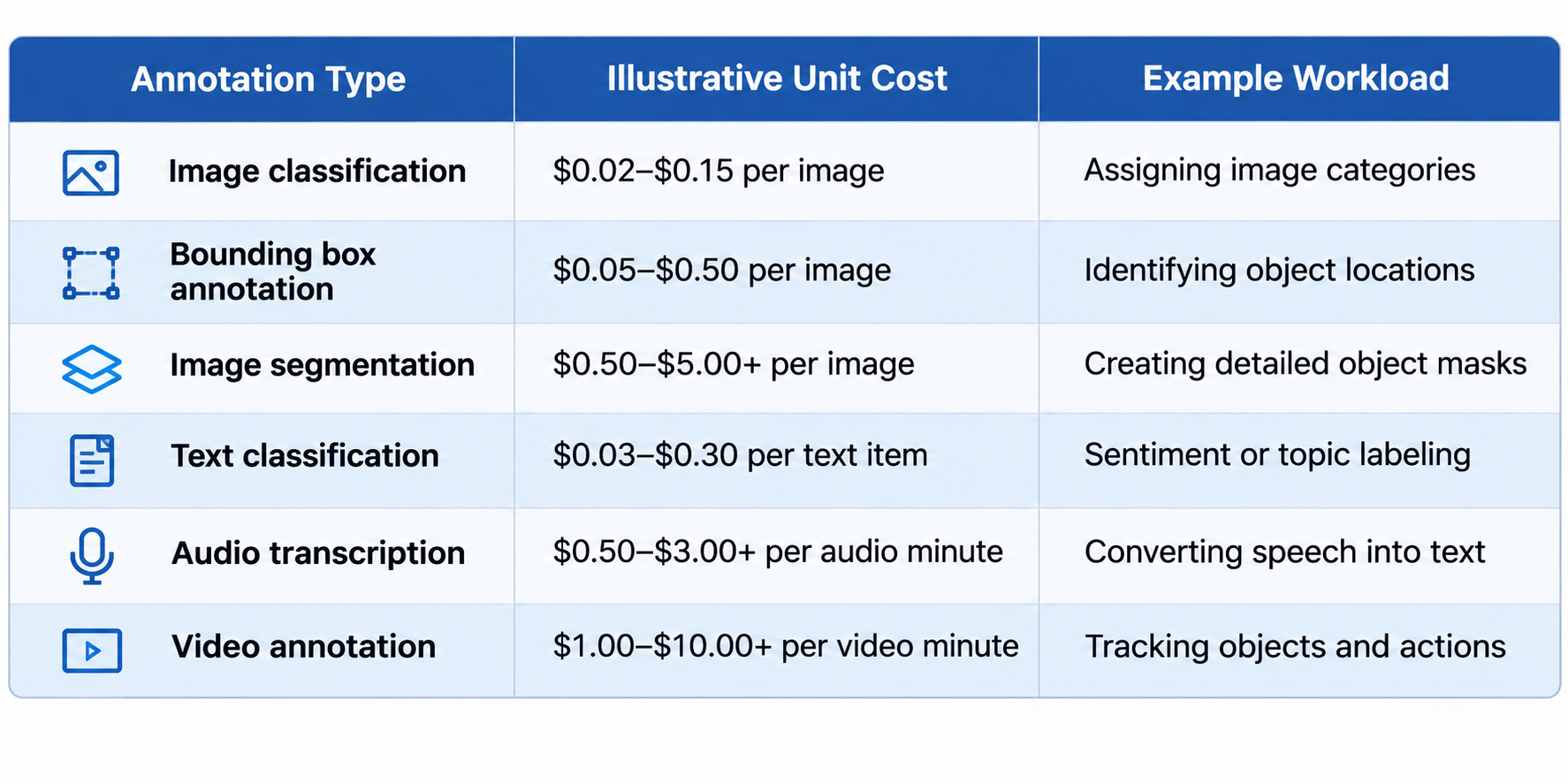
Actual prices may fall outside these ranges.
For instance, a video annotation project with multiple moving objects and detailed frame-by-frame labels may cost substantially more than one requiring only clip-level classification.
Likewise, segmentation costs depend on object count, image resolution, boundary precision, and annotation tooling.
Organizations should request sample-based estimates rather than relying exclusively on generalized price ranges.
A practical budget starts with understanding the total number of annotation units and the average cost per unit.
The basic formula is:
Total Annotation Cost = Number of Units × Cost per Unit
However, this calculation represents only the direct labeling expense.
A more complete budget should also account for quality assurance, project management, training, tooling, and revisions.
Imagine a business needs to annotate 100,000 images for an object detection model.
Its estimated expenses are:
Cost Component
Estimated Cost
100,000 images at $0.15 each
$15,000
Quality assurance
$2,000
Project setup and training
$1,000
Project management
$1,500
Total Estimated Budget
$19,500
In this hypothetical example, the effective cost is $0.195 per image.
This demonstrates why evaluating only the advertised per-image rate can underestimate the actual investment.
When evaluating data annotation pricing, businesses should look beyond the initial quotation.
Several additional expenses can affect the final budget.
Before labeling begins, teams need clear instructions defining categories, edge cases, and acceptable annotation boundaries.
Poorly written guidelines can lead to inconsistent labels and repeated corrections.
Incorrect annotations may require additional review or complete relabeling.
Rework becomes particularly expensive when errors are discovered after thousands of items have already been processed.
Annotation platforms may require licensing fees, cloud storage, security controls, or integration work.
These expenses should be included when comparing in-house and outsourced annotation approaches.
Projects involving sensitive information may require restricted access, secure infrastructure, confidentiality agreements, or additional privacy controls.
These safeguards can increase costs but may be necessary to meet contractual or regulatory requirements.
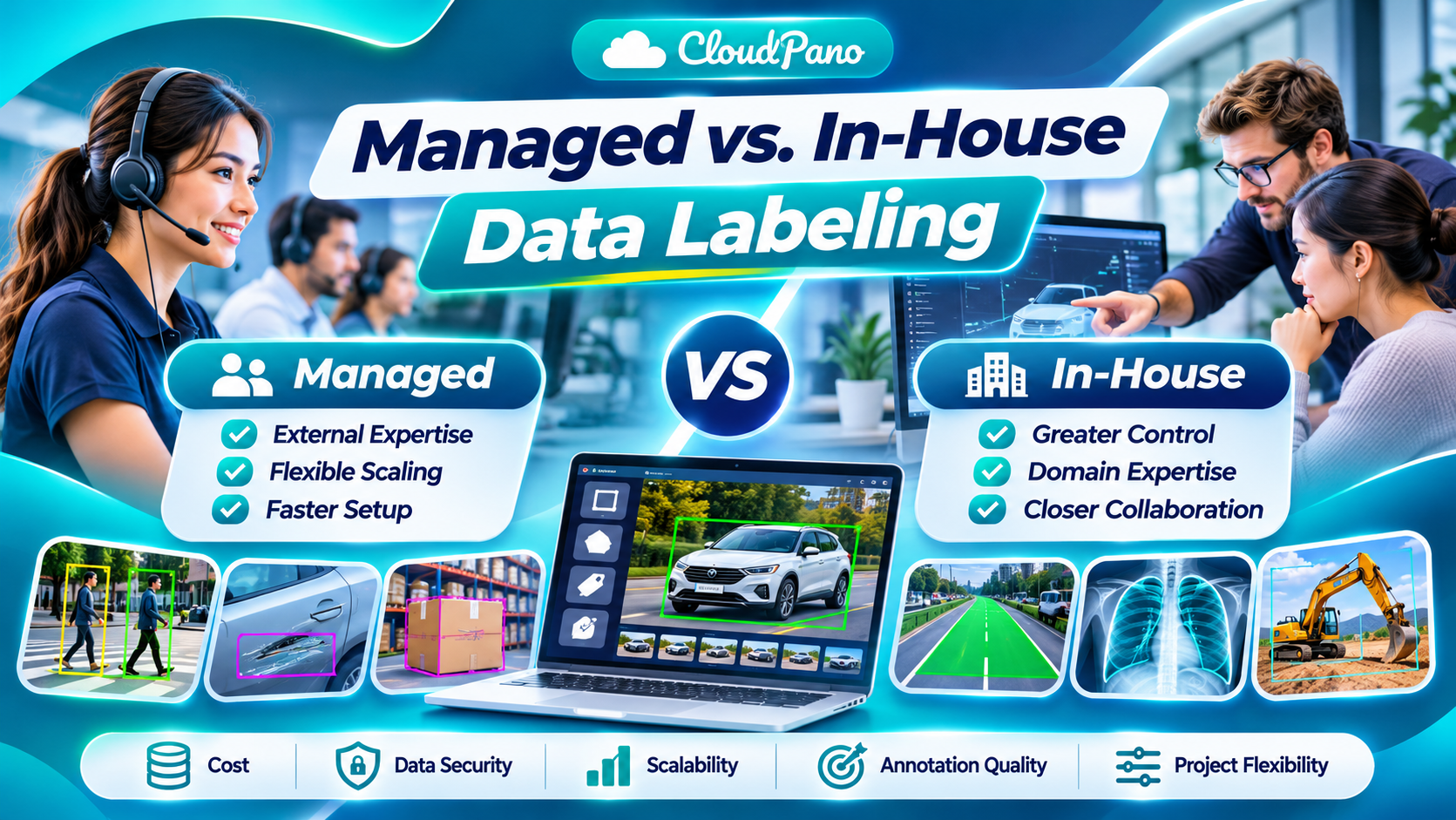
Organizations typically choose between building an internal annotation team and working with an external service provider.
Each approach has advantages.
Internal teams provide direct oversight of annotation processes and data handling.
They may be particularly valuable when projects require continuous collaboration with machine learning engineers or access to highly sensitive information.
However, organizations must account for recruitment, training, employee compensation, software, and management expenses.
External annotation providers offer access to established workflows, trained annotators, and scalable production capacity.
Outsourcing can be useful for large datasets, fluctuating workloads, or projects requiring specialized labeling capabilities.
However, businesses should carefully evaluate provider quality, security practices, communication, and contractual terms.
The most affordable option depends on total operating costs, not simply the hourly rate or quoted price.
Reducing annotation expenses does not necessarily mean choosing the lowest-priced provider.
The objective is to improve efficiency while maintaining the quality required for reliable model development.
Before committing to a large project, annotate a representative sample.
A pilot helps identify unclear instructions, estimate labeling time, and uncover potential quality problems.
Machine learning models can generate preliminary labels that human annotators review and correct.
This human-in-the-loop approach may reduce manual effort when model predictions are sufficiently accurate.
However, automated labels still require validation.
Not every data point contributes equally to model performance.
Active learning techniques can help identify uncertain or informative examples that deserve annotation priority.
This allows organizations to focus resources on data most likely to improve model performance.
Clear instructions reduce confusion and improve consistency.
Include examples of correct labels, difficult cases, and common mistakes.
Regular reviewer calibration can further reduce disagreements.
Quality assurance should occur throughout the project rather than only at completion.
Early error detection prevents small labeling problems from spreading across large datasets.
Selecting a provider requires balancing cost, quality, scalability, and reliability.
Before signing an agreement, ask:
Requesting a paid pilot is often more informative than comparing pricing sheets alone.
A slightly higher annotation rate may provide better overall value if it reduces errors, rework, and project delays.
Understanding data annotation pricing helps organizations make better decisions about AI development budgets, data quality, and operational efficiency.
While basic annotation tasks may be relatively inexpensive, complex datasets often require specialized expertise, advanced tools, and rigorous quality assurance.
The most effective approach is to define clear requirements, test annotation workflows on representative samples, and compare providers based on total value rather than advertised rates.
By combining realistic budgeting with strong quality controls and efficient annotation methods, organizations can build dependable training datasets while managing costs responsibly.
Annotation costs vary widely depending on the data format, labeling complexity, and quality requirements. Simple classification tasks may cost only a few cents per item, while detailed segmentation, video annotation, or expert review can cost substantially more. A representative pilot is the most reliable way to estimate project-specific expenses.
Video annotation often requires tracking objects across multiple frames, maintaining consistent identities, and interpreting movement over time. These tasks can demand more annotation effort than labeling individual images. However, actual costs depend on video length, frame sampling, object density, and the level of detail required.
Outsourcing can reduce recruitment, training, and infrastructure expenses, particularly for short-term or variable workloads. However, internal teams may be more cost-effective for continuous, specialized projects. Businesses should compare total operating costs, including management, quality assurance, security, and revisions, before deciding.
Businesses should define their annotation requirements, identify the number of labeling units, and conduct a representative pilot. The pilot can establish realistic processing times and error rates. A complete estimate should also include quality assurance, project setup, tooling, management, and potential revision expenses.
Not necessarily. Efficient tools, standardized workflows, and experienced teams can reduce costs while maintaining quality. However, unusually low prices may exclude important services such as independent reviews or error correction. Businesses should evaluate sample accuracy, quality controls, and total project costs rather than price alone.


Compact, ready to go anywhere
Interchangeable lens that’s upgradeable
Dual 1-inch sensors for improved clarity and low light performance
Dynamic range and 6K 360° capture
360° photo resolution at 21MP

8K 360° video recording for ultra-detailed visuals.
4K single-lens mode for traditional wide-angle shots.
Invisible selfie stick effect for drone-like perspectives.
2.5-inch touchscreen with Gorilla Glass protection.
Waterproof up to 33ft for underwater shooting.

360° photo resolution in 23MP
Slim design at 24 mm thick
Built-in image stabilization for smooth video capture.
Internal 19GB storage for photo and video storage.
Wireless connectivity for remote control and sharing.

60MP 360° still images for high-resolution photography.
5.7K 360° video recording at 30fps.
2.25-inch touchscreen for intuitive control.
USB Type-C port for fast charging and data transfer.
MicroSD card slot for expandable storage.


Try it free. No credit card required. Instant set-up.