Update: Avoid Costly Mistakes by Learning Drone Part 107 Rules and Insurance Laws

Cloudpano
December 11, 2025
5 min read
Share this post

Update: Avoid Costly Mistakes by Learning Drone Part 107 Rules and Insurance Laws 🚁📜

Starting a drone business is an exciting opportunity. With industries like real estate, construction, agriculture, and media production relying heavily on aerial imagery, drone pilots are in higher demand than ever. But before you rush into commercial flying, you need to understand the legal setup, FAA Part 107 rules, and drone insurance laws that protect both your business and your clients.

In this updated guide, we’ll break it down step by step so you can avoid costly mistakes and build a compliant, profitable drone business. For a deeper dive, check out this step-by-step FAA Part 107 and drone business guide on YouTube to make sure you’re starting on the right path.💼✅

Step 1: Form an LLC to Protect Your Business 🏢

The first step to running your drone business legally and securely is forming an LLC (Limited Liability Company). Why is this so important?

  • An LLC creates a legal separation between you and your business.
  • If your drone accidentally crashes into a car 🚗, damages a wedding venue 🎉, or ruins equipment, your personal assets (like your house or savings) remain protected.
  • Clients and enterprises take you more seriously when you operate as a registered business.

👉 For example, in Texas, you can file an LLC directly through the Secretary of State. If the paperwork feels overwhelming, you can use third-party services like LegalZoom or Incfile to simplify the process.

Once you have an LLC:

  • Open a business bank account.
  • Apply for a free EIN (Employer Identification Number) from the IRS.
  • Keep your income and expenses separate for tax purposes.

Pro Tip: Filing your LLC early also makes it easier to work with enterprise clients who require a W9 or vendor compliance.

Step 2: Get the Right Drone Insurance 📑🛡️

Flying drones for profit means you’re taking on risks. That’s why insurance isn’t optional—it’s essential. There are two main types you need to know:

1. General Liability Insurance 🏠

This protects your business if your drone causes property damage or personal injury. Large commercial clients (like real estate firms or construction companies) often ask for a COI (Certificate of Insurance) before they’ll even hire you.

👉 Services like Next Insurance make it fast and affordable to get liability coverage online.

2. Hull Insurance (Drone Coverage) 🚁

While liability protects others, hull insurance protects your drone itself. If your drone crashes due to weather 🌬️, pilot error, or technical failure, this coverage helps you replace or repair it.

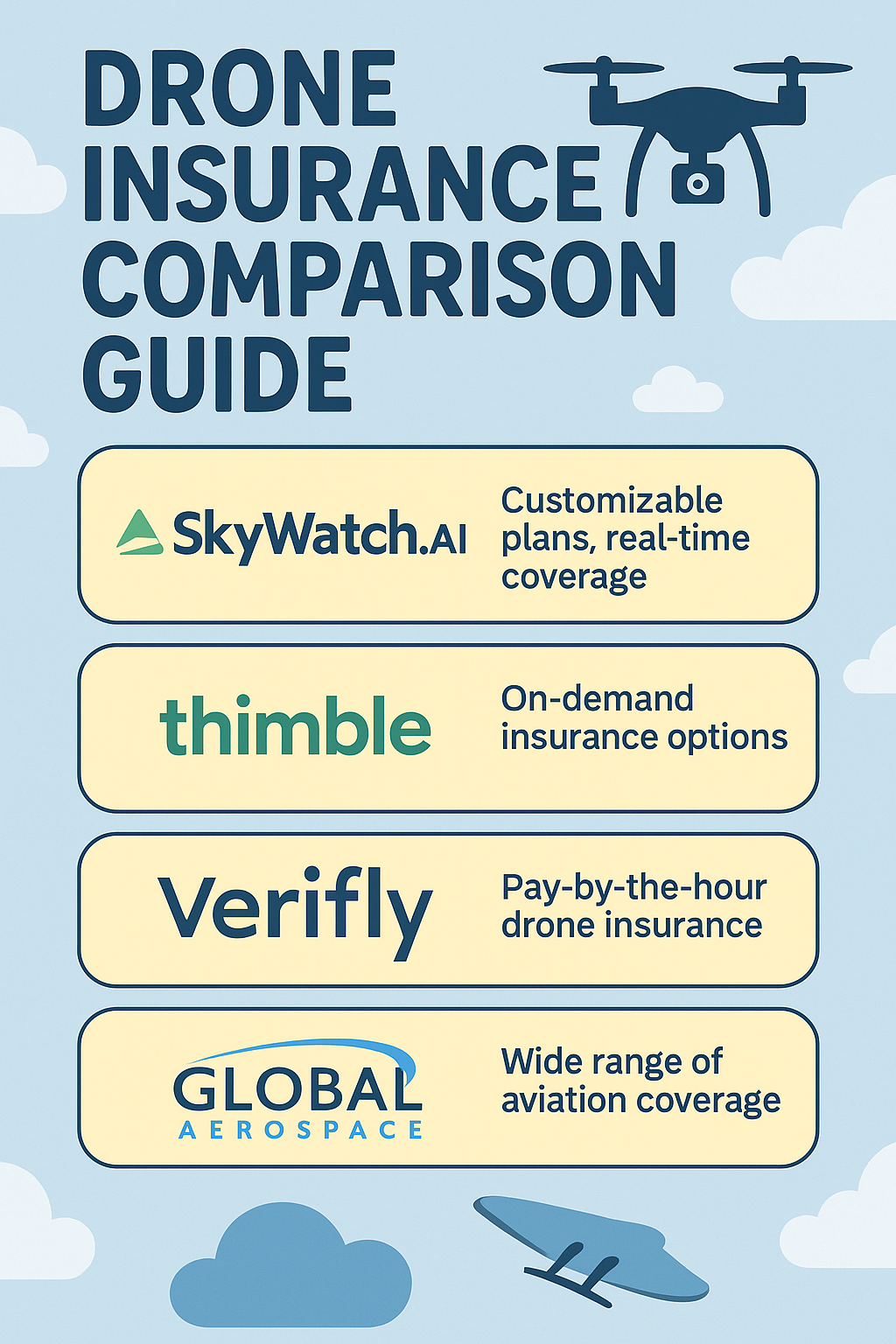
Popular providers include:

  • SkyWatch.AI
  • Thimble
  • Verifly
  • Global Aerospace

Anchor Tip 👇: For a detailed breakdown of drone insurance providers, check out our Drone Insurance Comparison Guide.
Step 3: Pass the FAA Part 107 Exam ✈️📘

To fly drones commercially in the U.S., you must pass the FAA Part 107 Remote Pilot Certificate exam.

Here’s what you need to know:

  • The test has ~60 questions, and you need a 70% score or higher to pass.
  • Topics include airspace classification, weather patterns, emergency procedures, and flight restrictions.
  • Certification must be renewed every 24 months.

Why it matters:

  • Flying without a Part 107 license can result in hefty fines 💸 and even legal action.
  • If an authority approaches you while flying commercially, you’ll need to show your pilot license.

👉 Become a Certificated Remote Pilot

Step 4: Compliance Gear & Best Practices 🎒👷

Beyond your LLC, insurance, and Part 107 license, you’ll also want to invest in some compliance essentials:

  • Reflective safety vests 🦺: Helps authorities and bystanders recognize you as a licensed operator.
  • Contracts & Scope of Work documents 📑: Carry them with you to avoid misunderstandings during projects.
  • Checklists 📝: Pre-flight checklists prevent avoidable mistakes.

Pro Tip: Always keep your license and COI handy during jobs. It shows professionalism and avoids disputes.

Step 5: Get a Client First Before Scaling 🚀

One of the biggest mistakes new drone pilots make is over-preparing without landing a client. The fastest way to learn is by securing a paying project—then worrying about scaling.

  • Start with referral leads. These are easier to close because trust is built in.
  • Subcontract with licensed pilots if you’re still studying for your Part 107 exam.
  • Deliver one great job and use it as a portfolio piece for future clients.

👇 Check out our Drone Profit Series for real-world pricing tips and sales strategies.

Why Compliance Matter⚖️📅

The FAA and insurance laws are tightening as drone adoption skyrockets. Authorities are cracking down on unlicensed and uninsured pilots.

Here’s why you should play by the rules:

  • Avoid fines: Flying without a license can cost you $500–$5,000.
  • Land bigger contracts: Enterprise clients only work with licensed and insured operators.
  • Protect your business: One accident without insurance could bankrupt your drone side hustle.

Quick Recap 📝✨

To fly drones commercially and profit, make sure you:

  1. Form an LLC to protect your assets.
  2. Get insurance (liability + hull).
  3. Pass the FAA Part 107 exam.
  4. Stay compliant with safety gear and contracts.
  5. Focus on getting a client first before scaling.

👏 Read More!

Final Thoughts 💡

Building a profitable drone business is exciting—but skipping over compliance is a recipe for costly mistakes. By forming an LLC, getting insured, and passing the FAA Part 107 exam, you’ll build a foundation of trust and professionalism that sets you apart in the market.

And remember: Always get the client first. Once you’ve secured your first job, the rest of your setup will fall into place much faster.

👉 Ready to take the next step? Check out our FAA Part 107 Prep Resources and Drone Insurance Provider Guide to get started today.

📱Get Started

Share this post
Cloudpano

Choose The Right 360° Camera

Insta360 ONE RS 1-Inch 360 Edition

  • Compact, ready to go anywhere

  • Interchangeable lens that’s upgradeable

  • Dual 1-inch sensors for improved clarity and low light performance

  • Dynamic range and 6K 360° capture

  • 360° photo resolution at 21MP

Learn More

Insta360 X4

  • 8K 360° video recording for ultra-detailed visuals.

  • 4K single-lens mode for traditional wide-angle shots.

  • Invisible selfie stick effect for drone-like perspectives.

  • 2.5-inch touchscreen with Gorilla Glass protection.

  • Waterproof up to 33ft for underwater shooting.

Learn More

Ricoh Theta Z1

  • 360° photo resolution in 23MP

  • Slim design at 24 mm thick

  • Built-in image stabilization for smooth video capture.

  • Internal 19GB storage for photo and video storage.

  • Wireless connectivity for remote control and sharing.

Learn More

Ricoh Theta X

  • 60MP 360° still images for high-resolution photography.

  • 5.7K 360° video recording at 30fps.

  • 2.25-inch touchscreen for intuitive control.

  • USB Type-C port for fast charging and data transfer.

  • MicroSD card slot for expandable storage.

Learn More
Property Marketing
Allows potential buyers to explore properties in detail from anywhere, enhancing the real estate marketing process.
Automotive Spins
Create an interactive virtual showroom and engage affluent digital buyers with live 360º video calls, all through the CloudPano mobile app for a complete automotive sales solution.
Interactive Floor Plans
Create 2D and 3D floor plans with measurements in 4 minutes or less, all from your phone. Download the Floor Plan Scanner app and get your first scan free.

360 Virtual Tours With CloudPano.com. Get Started Today.

Try it free. No credit card required. Instant set-up.

Try it free
Latest posts

See our other posts

Interviews, tips, guides, industry best practices, and news.

FAA Part 107 Exam Prep: How to Pass on Your First Try (With AI Practice Tests + Study Guide)

This blog post explains how to pass the FAA Part 107 exam on your first try using a proven prep strategy: combining a complete Part 107 study guide with AI-powered practice tests. It covers why most students fail (lack of repetition and no feedback), how AI quiz tools accelerate learning with personalized explanations for missed questions, and the best step-by-step study routine to build confidence through realistic exam simulations. The goal is to help future commercial drone pilots get certified legally and start earning faster.
Read post

How to Pass the FAA Part 107 Exam (On Your First Try)

This post explains how to pass the FAA Part 107 exam on your first try using a modern study strategy: a comprehensive Part 107 study guide combined with AI-powered practice tests. It walks through why most people fail (poor prep + lack of feedback), how AI quiz tools improve learning by providing personalized explanations for missed questions, and the exact step-by-step plan to build confidence through repetition, full-length practice exams, and focused review—so you can become a certified commercial drone pilot and start earning legally.
Read post

Car Photo Background Automation: How It Works

This blog post explains car photo background automation and how it transforms dealership inventory photos into clean, professional listing images at scale. It breaks down the full automation workflow step-by-step, including AI vehicle detection, background removal, edge refinement, background replacement, shadow generation, cropping, and export optimization. The article also covers why background consistency improves buyer trust and click-through rates, common dealership mistakes to avoid, and the ROI dealerships can expect by automating photo background editing.
Read post