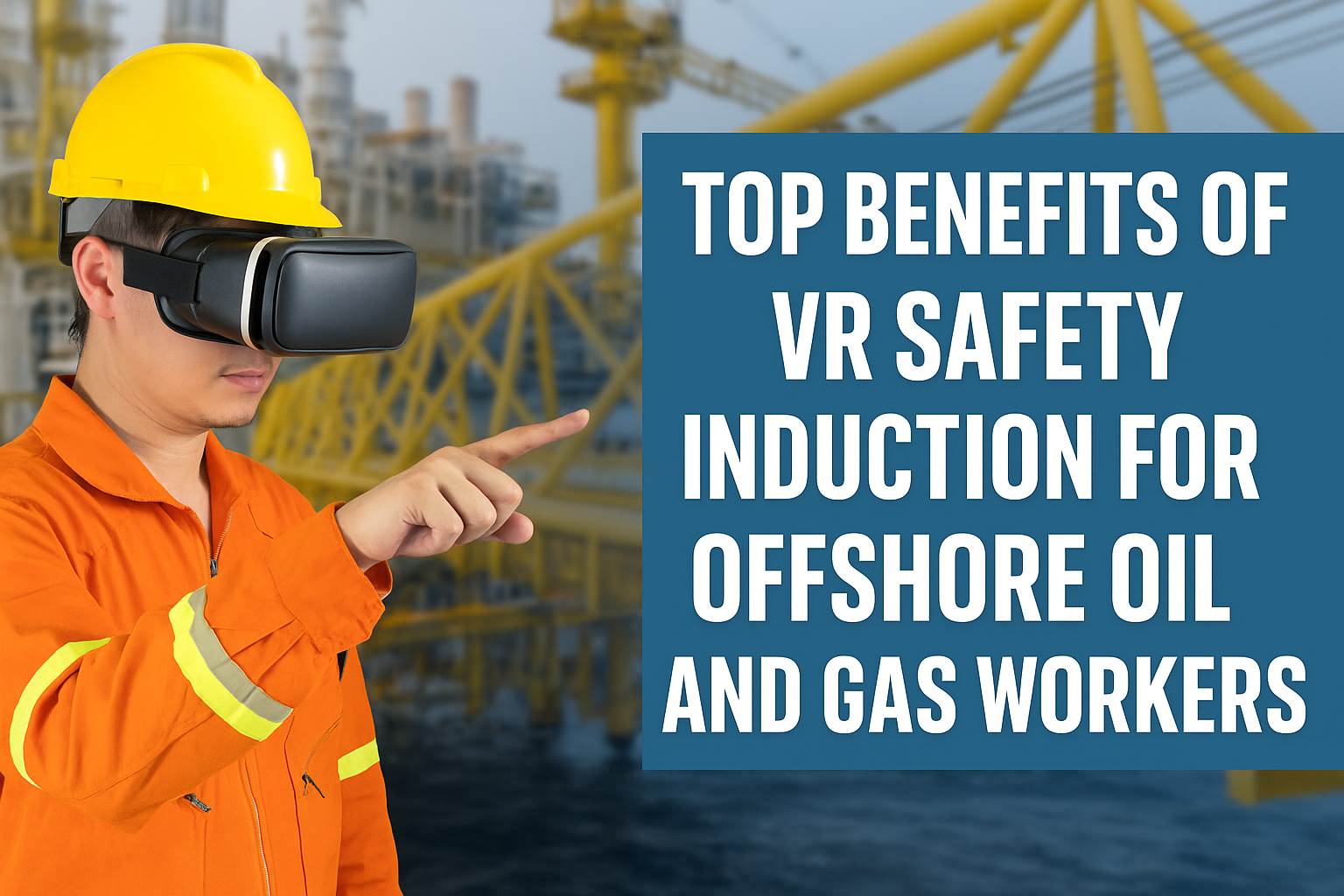
Top Benefits of VR Safety Induction for Offshore Oil and Gas Workers

Cloudpano
July 21, 2025
5 min read
Share this post

🛡️ Top Benefits of VR Safety Induction for Offshore Oil and Gas Workers 🌊🧠

The offshore oil and gas industry is known for its high-risk environments, intense operations, and complex safety requirements. Ensuring worker safety isn’t just important—it’s mission-critical. That’s why forward-thinking companies are now embracing Virtual Reality (VR) safety induction as the new gold standard for preparing offshore crews.

From boosting retention to reducing risk before boots hit the platform, VR safety induction offers real-world impact. In this post, we’ll walk through the top benefits of using VR training and how it stacks up against traditional methods—plus link you to related oil and gas safety resources. 🛠️🕶️

🔍 What Is VR Safety Induction?

Virtual Reality (VR) safety induction involves immersing new offshore oil and gas workers in a simulated 360° training environment, allowing them to learn, interact with hazards, and understand safety protocols before ever stepping foot on a rig.

This immersive training often uses:

  • 🧑‍🏭 360° site walkthroughs
  • ⚠️ Hazard recognition simulations
  • 🧯 Emergency drills
  • 🚨 Step-by-step onboarding procedures

It’s not just cool tech—it’s a proven solution to industry-wide problems in training and compliance.

🥇 1. Better Knowledge Retention & Engagement

📚 Traditional safety videos and manuals just don’t cut it anymore. Studies show learners retain 75% more information when immersed in virtual environments compared to reading or passive video watching.

Why it matters:

  • Workers engage more with training content.
  • They remember emergency response procedures better.
  • They gain a realistic sense of their future work environment.

📖 Related Read: From Classroom to Field: Virtual Tours for Realistic Oil and Gas Training

🛟 2. Improved Hazard Awareness Before Deployment

Before workers arrive on an offshore platform, they can be exposed to realistic simulations of trip hazards, fall zones, equipment hot spots, and emergency exits—all from a safe environment.

This means fewer surprises when they’re actually on the job. 🎯

📉 3. Reduced Onboarding Time and Costs

Onboarding new employees offshore is expensive. Flights, accommodations, and instructor time add up. VR safety inductions can be delivered:

  • Remotely 🌐
  • On-demand 📲
  • Consistently across multiple teams 🏢

This reduces the average onboarding time and cuts training costs dramatically—while maintaining high standards.

💼 You might also like: Train Your Oil and Gas Workforce Remotely with Interactive Virtual Tours

🧯 4. Enhanced Emergency Preparedness

VR safety induction allows for safe, repeatable training scenarios, including:

  • Fire response drills 🔥
  • Man-overboard simulations 🌊
  • Equipment malfunctions ⚙️

Workers can practice these scenarios multiple times and learn how to react under pressure—without actual danger.

🔗 See how this ties into Improve Incident Response in Oil and Gas with 360° Safety Documentation

📋 5. Strengthened Compliance & Audit Readiness

Training data captured through VR platforms (such as module completions, time-on-task, and quiz results) can be used to:

  • Prove regulatory compliance 🧾
  • Pass audits with confidence ✅
  • Provide digital training records 📂

This supports teams responsible for meeting OSHA, ISO, and company-specific standards.

🔗 Dive deeper: Streamlining Compliance: 360° Safety Documentation in the Oil and Gas Sector

🤝 6. Standardized Training Across Global Sites

With VR, you can ensure every worker—whether they’re in Houston, Dubai, or Aberdeen—gets the same high-quality, up-to-date safety training.

No more relying on instructor mood or memory. Everyone learns the same way, every time.

🌍 Related: Boost Oil and Gas Safety with 360° Documentation and Virtual Tours

💡 7. Real-Time Feedback and Performance Tracking

Modern VR induction platforms include interactive assessments, so you can:

  • Identify who’s ready for deployment
  • Spot knowledge gaps
  • Reinforce weak points before an incident happens

You’ll know who’s truly ready—not just who completed a training module. 🎯

🚀 Use insights from How VR Safety Induction Improves Efficiency on Oil Platforms to take this even further.

🧱 8. Building a Strong Safety Culture

When you invest in advanced tools like VR, it sends a message to your workers: "We care about your safety."

This helps build:

  • 🗣️ Open communication about safety risks
  • 🛑 Proactive behavior to avoid incidents
  • 👷‍♂️ A confident, well-prepared workforce

And in the oil and gas sector, culture is safety.

🧠 Read more: Oil Rig Safety 2.0: Introducing VR-Powered Induction Training

🔧 How to Get Started With VR Safety Induction

Getting started is easier than you think:

  1. ✅ Choose a VR training platform designed for oil and gas.
  2. 📸 Capture a 360° tour of your platform or facility.
  3. 🔗 Upload and add interactive hotspots for hazards and training checkpoints.
  4. 🎓 Assign the experience to new hires or contractors.
  5. 📊 Monitor performance with built-in reporting tools.

Want help launching your first VR tour? 🚀 Check out our Step-by-Step Guide to VR Safety Induction for Offshore Oil Rig Workers

🧭 Final Thoughts

Safety is not optional. It’s the foundation of every successful oil and gas operation. With VR safety inductions, companies can not only meet compliance needs but also save lives, improve performance, and cut costs—all while creating a next-level training experience.

✅ Immersive
✅ Cost-effective
✅ Scalable
✅ Trusted by the industry’s top players

👷 Ready to make safety training your competitive advantage?

👉 Learn how Virtual Tours for Oil Rig Safety Training: A New Industry Standard is helping companies like yours transform operations.

📌 Don’t Miss These Related Articles:

Share this post
Cloudpano

Choose The Right 360° Camera

Insta360 ONE RS 1-Inch 360 Edition

  • Compact, ready to go anywhere

  • Interchangeable lens that’s upgradeable

  • Dual 1-inch sensors for improved clarity and low light performance

  • Dynamic range and 6K 360° capture

  • 360° photo resolution at 21MP

Learn More

Insta360 X4

  • 8K 360° video recording for ultra-detailed visuals.

  • 4K single-lens mode for traditional wide-angle shots.

  • Invisible selfie stick effect for drone-like perspectives.

  • 2.5-inch touchscreen with Gorilla Glass protection.

  • Waterproof up to 33ft for underwater shooting.

Learn More

Ricoh Theta Z1

  • 360° photo resolution in 23MP

  • Slim design at 24 mm thick

  • Built-in image stabilization for smooth video capture.

  • Internal 19GB storage for photo and video storage.

  • Wireless connectivity for remote control and sharing.

Learn More

Ricoh Theta X

  • 60MP 360° still images for high-resolution photography.

  • 5.7K 360° video recording at 30fps.

  • 2.25-inch touchscreen for intuitive control.

  • USB Type-C port for fast charging and data transfer.

  • MicroSD card slot for expandable storage.

Learn More
Property Marketing
Allows potential buyers to explore properties in detail from anywhere, enhancing the real estate marketing process.
Automotive Spins
Create an interactive virtual showroom and engage affluent digital buyers with live 360º video calls, all through the CloudPano mobile app for a complete automotive sales solution.
Interactive Floor Plans
Create 2D and 3D floor plans with measurements in 4 minutes or less, all from your phone. Download the Floor Plan Scanner app and get your first scan free.

360 Virtual Tours With CloudPano.com. Get Started Today.

Try it free. No credit card required. Instant set-up.
Try it free
Latest posts

See our other posts

Interviews, tips, guides, industry best practices, and news.

Automating Listing Presentations with AI Avatars

This article explains how AI avatars are transforming real estate marketing by automating listing presentations. It walks readers through how AI avatar listing videos work, how agents can create AI powered real estate walkthroughs using platforms like PhotoAIVideo, and how real estate professionals can clone themselves to present properties automatically. The post also explores business models for photographers and agents, benefits for social media marketing, and best practices for creating engaging automated listing presentations that attract more buyers and generate leads.
Read post

Using AI Avatars for Real Estate Listing Presentations and Property Walkthrough Videos

This article explains how real estate professionals are using AI avatars for listing presentations and property walkthrough videos to scale their marketing and stay competitive in a video-first industry. It covers how AI avatars work, why they are becoming popular among agents, and how they help create professional listing videos without constant filming. The post also highlights how tools like PhotoAI allow agents to upload a headshot, generate a digital avatar, and quickly produce polished video content for property tours, seller presentations, and social media marketing. By leveraging AI avatars, agents can maintain consistent branding, create more content, and showcase listings more effectively while saving time.
Read post

AI Avatar Compliance and Best Practices for Real Estate Marketing

This article explores how real estate professionals can responsibly use AI avatars in property marketing while maintaining transparency and trust. It explains the importance of AI real estate compliance, including how agents should implement proper disclosure for AI videos and follow ethical AI marketing practices when using AI-generated presenters in listing videos. The guide walks through how AI avatars are created, how they can automate listing presentations, and how agents can integrate them into their marketing workflow without misleading buyers or violating advertising standards. By following clear best practices—such as accurate scripts, transparent disclosures, and consistent review of generated content—real estate teams can scale video marketing while protecting their reputation and building long-term client trust.
Read post