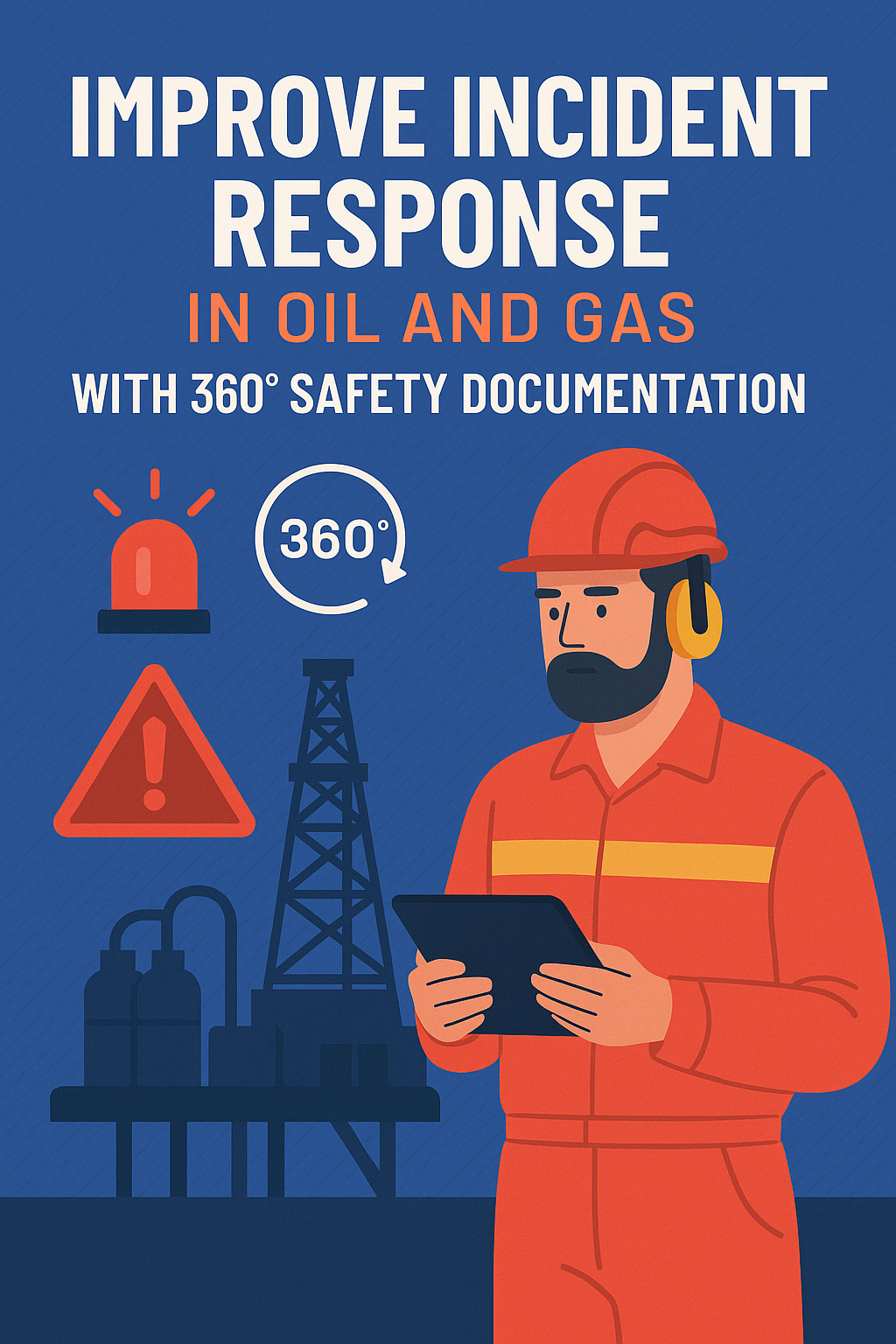
Improve Incident Response in Oil and Gas with 360° Safety Documentation

Cloudpano
July 21, 2025
5 min read
Share this post

🚨 Improve Incident Response in Oil and Gas with 360° Safety Documentation 🛢️📷

When an incident strikes in the oil and gas industry, every second counts. Whether it’s a gas leak, equipment failure, or fire hazard, response time and accurate situational awareness can mean the difference between a close call and a catastrophe. 🕒🔥

That’s where 360° safety documentation is changing the game. By capturing every detail of a site virtually, teams can train more effectively, audit more efficiently, and respond to emergencies with greater confidence and speed. 🧠🦺

Let’s break down how 360° documentation tools are helping oil and gas teams boost response preparedness, reduce downtime, and enhance safety compliance.

🧭 What is 360° Safety Documentation?

360° safety documentation involves capturing immersive visual data of an oilfield, refinery, or pipeline site using panoramic cameras or drones. The data is then turned into an interactive virtual environment that replicates real-world conditions.

This digital replica allows:

  • 🚶 Teams to explore the environment virtually
  • ⚠️ Hazards to be pre-tagged and explained
  • 🧯 Response protocols to be embedded into specific locations
  • 📋 Site knowledge to be preserved for future training and audits

👉 Related: Why 360° Documentation Software Is Essential for Oil and Gas Safety Training

🚒 Why Incident Response Needs a Digital Upgrade

The traditional approach to incident response — paper manuals, static maps, and classroom briefings — simply can’t keep up with the scale and complexity of modern oil operations. 📉

Some challenges include:

  • Delays due to unfamiliar terrain or outdated schematics
  • Miscommunication between remote and on-site teams
  • Slow contractor onboarding and site-specific safety orientation
  • Inability to simulate real hazard scenarios

With 360° documentation, you bring the site to the team — before the incident even happens. 👨‍🏫💻

🔄 5 Ways 360° Documentation Enhances Incident Response

1. ✅ Pre-Incident Familiarization

Emergency response teams can virtually walk through the facility beforehand. They’ll know:

  • Evacuation routes 🏃
  • Valve shut-off locations 🛠️
  • High-risk zones ☢️
  • Emergency equipment placements 🧯

👉 Dive deeper: Step Into Safety: Virtual Tours for Oil and Gas Industry Training

2. 🧰 Real-Time Coordination

During an incident, remote support teams can view the same 360° scene as on-site personnel — making coordination smoother and more accurate. 📡

You can:

  • Highlight exact locations
  • Simulate containment routes
  • Provide on-the-spot guidance

👉 Related read: Using VR and 360 Tours for Safer Oil and Gas Work Environments

3. 🕵️ Faster Investigations

After an incident, 360° records can help safety officers and auditors review the exact pre-incident environment — no guesswork, no miscommunication.

This streamlines:

  • Root cause analysis 🔍
  • Regulatory documentation 📑
  • Insurance claims 📈

👉 Explore: Streamlining Compliance: 360° Safety Documentation in the Oil and Gas Sector

4. 👷 Improved Contractor Readiness

New contractors or emergency crews unfamiliar with the site can take a virtual safety orientation tour before stepping foot on location.

This reduces:

  • Training delays
  • Risk of non-compliance
  • Onboarding costs

👉 Resource: Preparing New Hires with Oil and Gas Virtual Safety Orientation Tours

5. 🧠 Smarter Safety Drills

360° safety documentation enables interactive emergency simulations. Instead of boring briefings, crews can practice with:

  • Immersive hazard scenarios
  • Click-to-respond training modules
  • Digital badges for drill completions

👉 Read next: Oilfield Training Reimagined: Safety Simulations Through Virtual Tours

🔗 Internal Links for Advanced Learning

For a complete digital safety ecosystem, explore these additional resources:

  1. 📸 Using 360° Site Capture for Real-Time Oil and Gas Safety Training
  2. 🧪 Visualize Safety Hazards: The Power of Virtual Training Tours in Oil and Gas
  3. 🧬 Digital Twins and Safety: Virtual Tour Integration in Oil and Gas Training

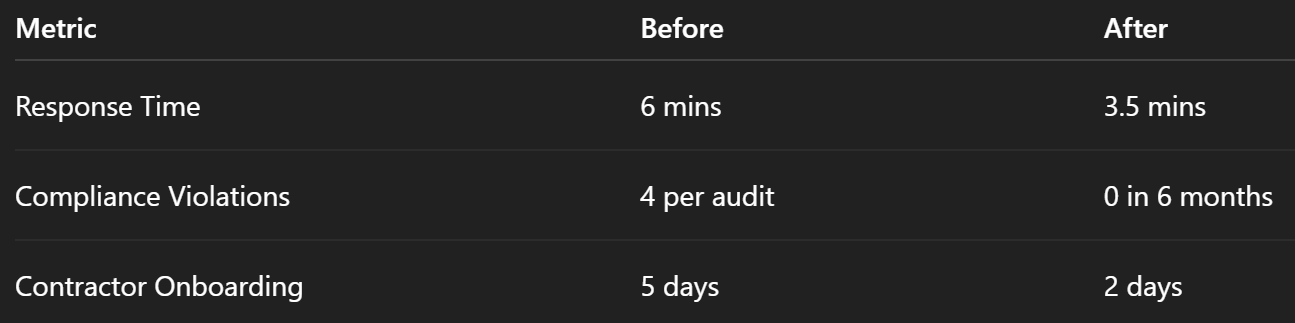
📊 Case Study Snapshot

Company: GulfCo Drilling
Problem: Delayed response time to refinery fire drills
Solution: Implemented 360° documentation and VR-based training

Results:
🛠️ Getting Started with 360° Safety Documentation

Step 1: Choose a 360° Camera or Drone

Recommended: Ricoh Theta Z1, Insta360, or DJI drones for aerial mapping.

Step 2: Capture the Environment

Cover:

  • Control panels
  • Emergency exits
  • Hazardous materials
  • Evacuation zones

Step 3: Build the Interactive Tour

Use platforms like:

  • CloudPano
  • Matterport
  • Kuula
  • 3DVista

👉 Guide: How to Create an Oil and Gas Safety Training Virtual Tour That Saves Lives

🏁 Final Thoughts

In a field where lives are on the line, investing in 360° safety documentation is a no-brainer. It empowers faster, smarter, and safer incident response — and it pays dividends in audit performance, crew safety, and operational readiness. 💡

👉 Ready to upgrade your incident response strategy?

Start here: Boost Oil and Gas Safety with 360° Documentation and Virtual Tours

And check out: Transform Your Oilfield Safety Training with 360° Tour Documentation Tools

Share this post
Cloudpano

Choose The Right 360° Camera

Insta360 ONE RS 1-Inch 360 Edition

  • Compact, ready to go anywhere

  • Interchangeable lens that’s upgradeable

  • Dual 1-inch sensors for improved clarity and low light performance

  • Dynamic range and 6K 360° capture

  • 360° photo resolution at 21MP

Learn More

Insta360 X4

  • 8K 360° video recording for ultra-detailed visuals.

  • 4K single-lens mode for traditional wide-angle shots.

  • Invisible selfie stick effect for drone-like perspectives.

  • 2.5-inch touchscreen with Gorilla Glass protection.

  • Waterproof up to 33ft for underwater shooting.

Learn More

Ricoh Theta Z1

  • 360° photo resolution in 23MP

  • Slim design at 24 mm thick

  • Built-in image stabilization for smooth video capture.

  • Internal 19GB storage for photo and video storage.

  • Wireless connectivity for remote control and sharing.

Learn More

Ricoh Theta X

  • 60MP 360° still images for high-resolution photography.

  • 5.7K 360° video recording at 30fps.

  • 2.25-inch touchscreen for intuitive control.

  • USB Type-C port for fast charging and data transfer.

  • MicroSD card slot for expandable storage.

Learn More
Property Marketing
Allows potential buyers to explore properties in detail from anywhere, enhancing the real estate marketing process.
Automotive Spins
Create an interactive virtual showroom and engage affluent digital buyers with live 360º video calls, all through the CloudPano mobile app for a complete automotive sales solution.
Interactive Floor Plans
Create 2D and 3D floor plans with measurements in 4 minutes or less, all from your phone. Download the Floor Plan Scanner app and get your first scan free.

360 Virtual Tours With CloudPano.com. Get Started Today.

Try it free. No credit card required. Instant set-up.
Try it free
Latest posts

See our other posts

Interviews, tips, guides, industry best practices, and news.

Using Your AI Voice Clone Across Listing Videos and Social Media

AI voice cloning is quickly becoming a powerful tool for real estate professionals who want to scale their marketing while maintaining a personal brand. By creating a digital version of their voice, agents can generate narrated listing videos, virtual tours, and social media content without needing to record new audio every time. This approach allows agents to produce consistent, engaging video content across multiple platforms while saving significant time. This article explains how AI voice clone marketing works and how agents can use it to create professional property walkthroughs, listing videos, and social media clips. By combining AI-generated motion videos with voice narration, real estate professionals can transform simple property photos into dynamic presentations that feel personal and informative. The guide also explores how real estate AI avatar branding helps agents maintain a recognizable voice across their marketing channels. When the same voice appears in listing videos, social media posts, and virtual tours, it creates a cohesive brand identity that builds trust with buyers. Finally, the article highlights how AI voice social media real estate strategies allow agents to produce content faster and reach larger audiences. With AI voice cloning technology, real estate professionals can generate multiple videos from a single listing, maintain consistent branding, and create high-quality marketing content at scale.
Read post

How to Record the Perfect Voice Sample for AI Voice Cloning

Recording a high-quality voice sample is the most important step when training an AI voice clone. In real estate marketing, voice cloning allows agents to create automated listing videos, AI avatar walkthroughs, and narrated virtual tours that sound exactly like them. However, the quality of the final AI voice depends heavily on how the original recording is captured. This article explains how to record voice samples for AI voice cloning, including the ideal recording environment, microphone recommendations, and best speaking practices. Readers learn how AI voice models analyze tone, pacing, and pronunciation to replicate a natural voice. By following simple voice sample recording tips, agents can dramatically improve the quality of their AI-generated narration. The guide also explores how AI voice clone training works and how voice samples can be used to produce scalable real estate marketing content. Once a voice model is created, agents can generate property walkthroughs, social media videos, and virtual tour narration without needing to record new audio for every listing. Ultimately, this technology enables real estate professionals to create consistent, engaging content while saving time. With the right voice recording process, agents can build a realistic AI voice clone that powers modern marketing tools and helps deliver property presentations at scale.
Read post

Best AI Voice Cloning Tools for Real Estate Marketing

AI voice cloning technology is rapidly transforming the way real estate professionals create marketing content. Instead of recording new narration for every listing, agents can now use advanced AI voice cloning tools to generate natural-sounding property walkthroughs, AI avatar videos, and voice-guided virtual tours. These tools allow real estate agents to maintain their personal voice and branding while dramatically speeding up the video production process. This article explores the best AI voice cloning tools for real estate marketing and explains how these technologies work. By combining AI avatars, voice cloning, and automated video generation, agents can turn simple property photos into dynamic marketing videos. After uploading listing images and recording a short voice memo, the AI can generate a professional video presentation with synchronized narration that sounds just like the agent. The guide also highlights how AI voice software for real estate can enhance listing videos, social media marketing, and interactive virtual tours. With voice narration, buyers can experience a guided property walkthrough that explains key features, layouts, and amenities, making listings more engaging and informative. Finally, the article explains how these real estate AI marketing tools help agents scale their marketing efforts by producing consistent, high-quality content quickly. As voice cloning technology continues to improve, it is becoming an essential tool for real estate professionals who want to create modern, engaging property presentations and stay competitive in the digital real estate market.
Read post