


.png)


Most people evaluating Matterport focus on the number on the pricing page, which is a reasonable starting point but not the whole picture. Some of the most commonly reported Matterport pricing surprises have less to do with the monthly rate and more to do with contract terms — commitment length, renewal clauses, cancellation conditions — that live in the fine print rather than the headline pricing table. This article is specifically about that fine print, not the tier mechanics covered elsewhere.
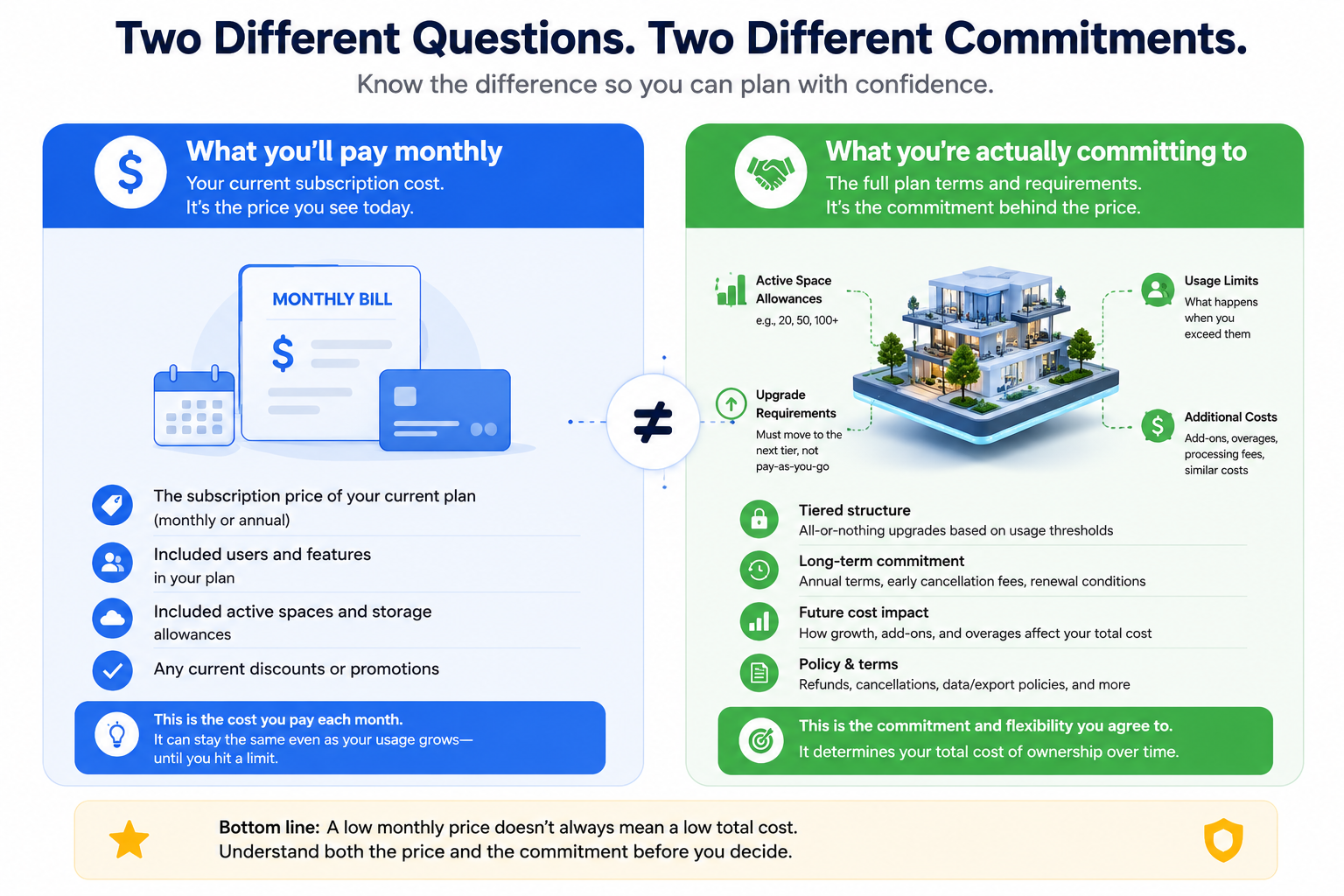
It's easy to assume that once you've compared monthly rates across a few tiers, you've done the necessary homework. But the monthly rate only tells you what you'll pay while you're actively using the service — it doesn't tell you what happens if your circumstances change, how locked in you are to a specific commitment length, or what triggers an automatic renewal you might not be expecting. These are genuinely separate questions from price, and they're worth checking with equal care.
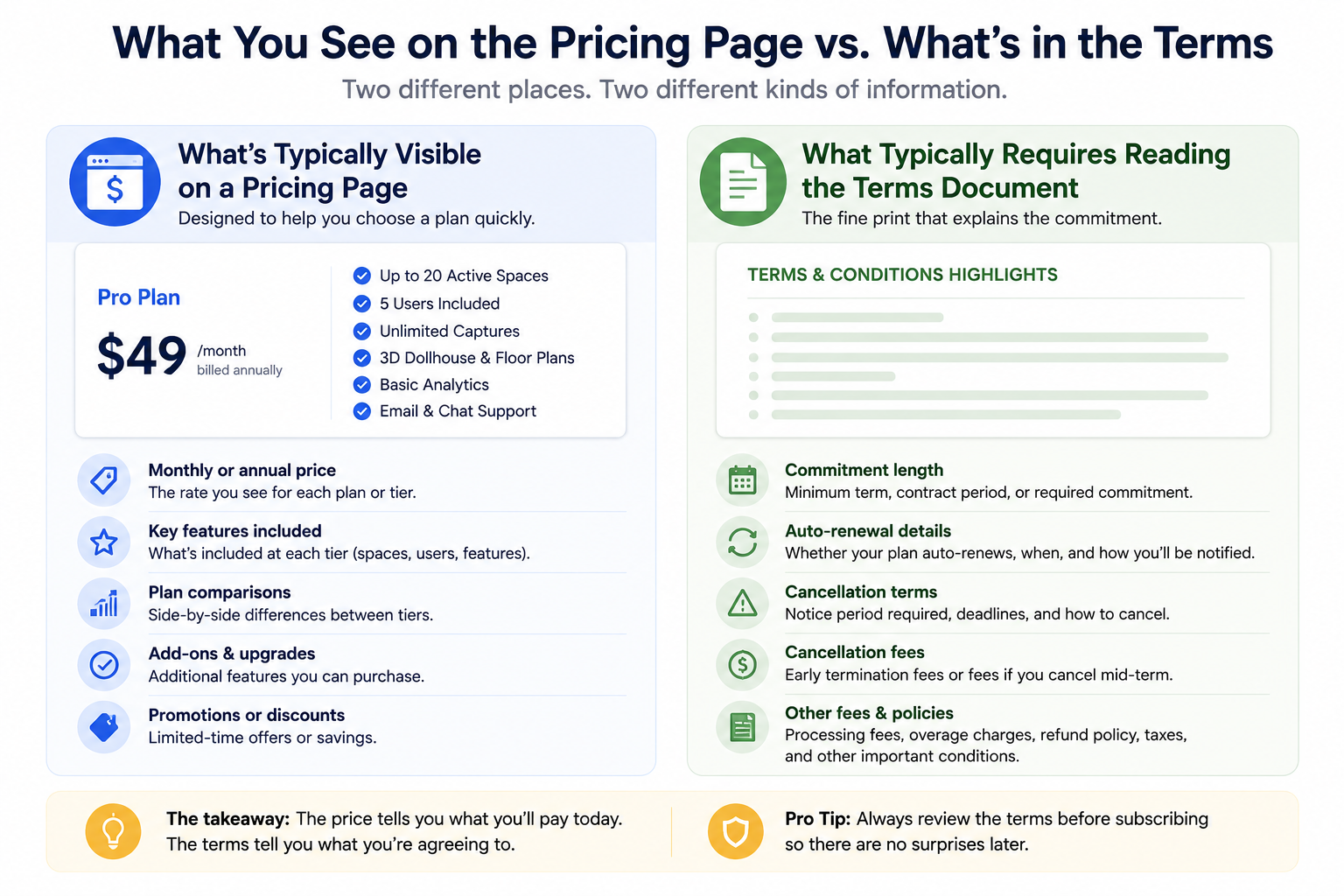
Beyond the advertised subscription price, a few Matterport hidden costs come up often enough in independent discussion to be worth checking specifically before signing up: charges tied to exceeding storage or active space allowances (covered in more mechanical detail in our pricing-model breakdown), potential fees for canceling before a committed term ends, and costs associated with specific add-ons that aren't always obvious from the initial sales conversation.
None of these are necessarily unreasonable in isolation, but they're worth knowing about before you sign up rather than discovering them mid-contract.
Before signing up, it's worth reading through the actual Matterport contract terms rather than relying solely on what a sales conversation covered verbally. Specific things worth checking directly: the length of your initial commitment (many SaaS contracts in this category default to an annual term even when a monthly option exists but isn't prominently offered), what happens if you want to cancel before that term ends, and whether the contract auto-renews at the end of a term without requiring your active confirmation.
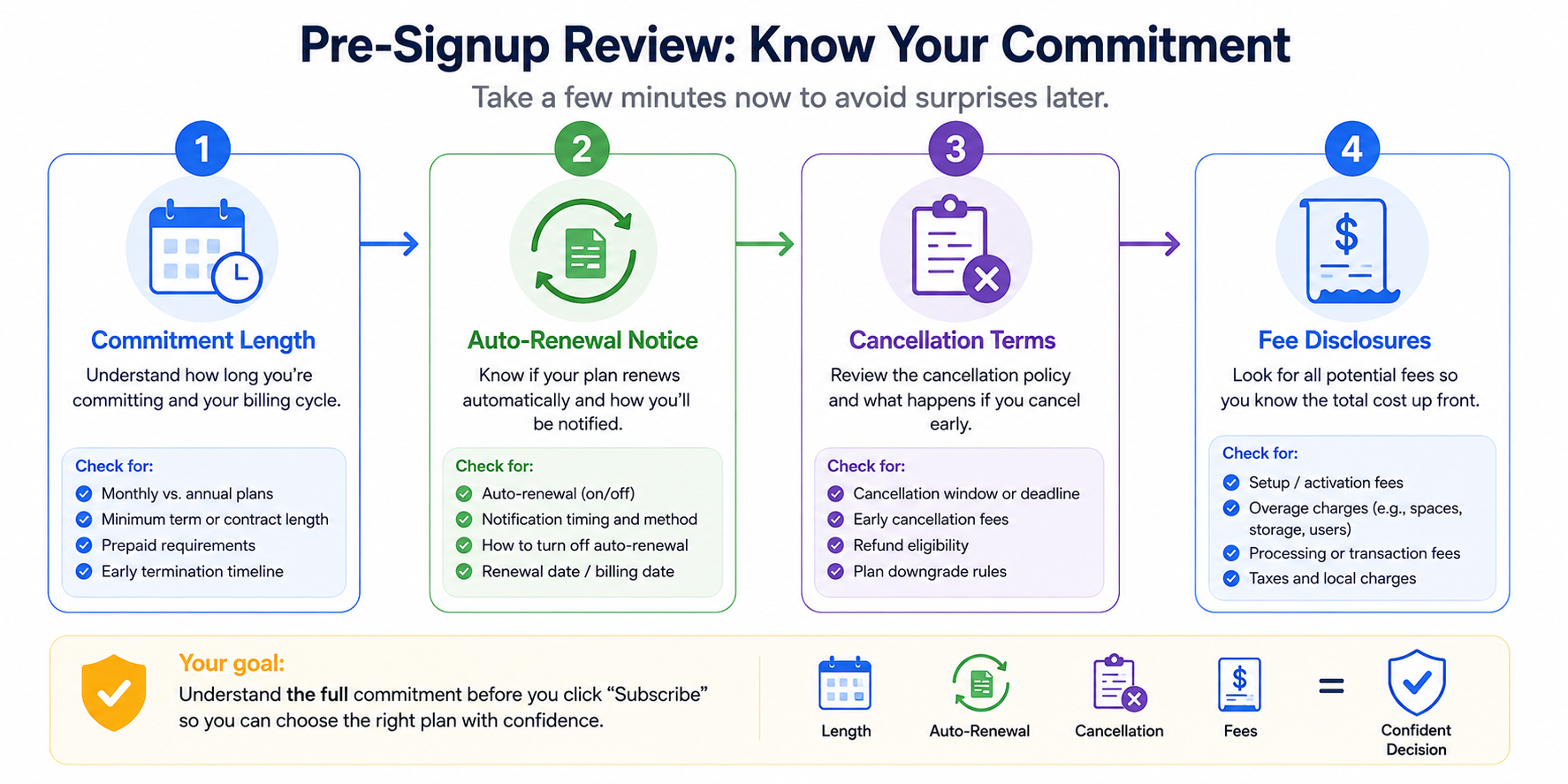
These terms genuinely vary by vendor and by plan, which is exactly why checking your specific agreement directly is more reliable than assuming based on general industry norms or a friend's experience with a different plan.
Not every line in a terms-of-service document deserves equal attention, so it helps to know which parts of the Matterport fine print are most likely to affect you in practice. Auto-renewal language is worth prioritizing — specifically, how much advance notice you're required to give if you don't want to renew, and how that notice must be submitted (some contracts require written notice through a specific channel, not just informally mentioning it to a support rep).
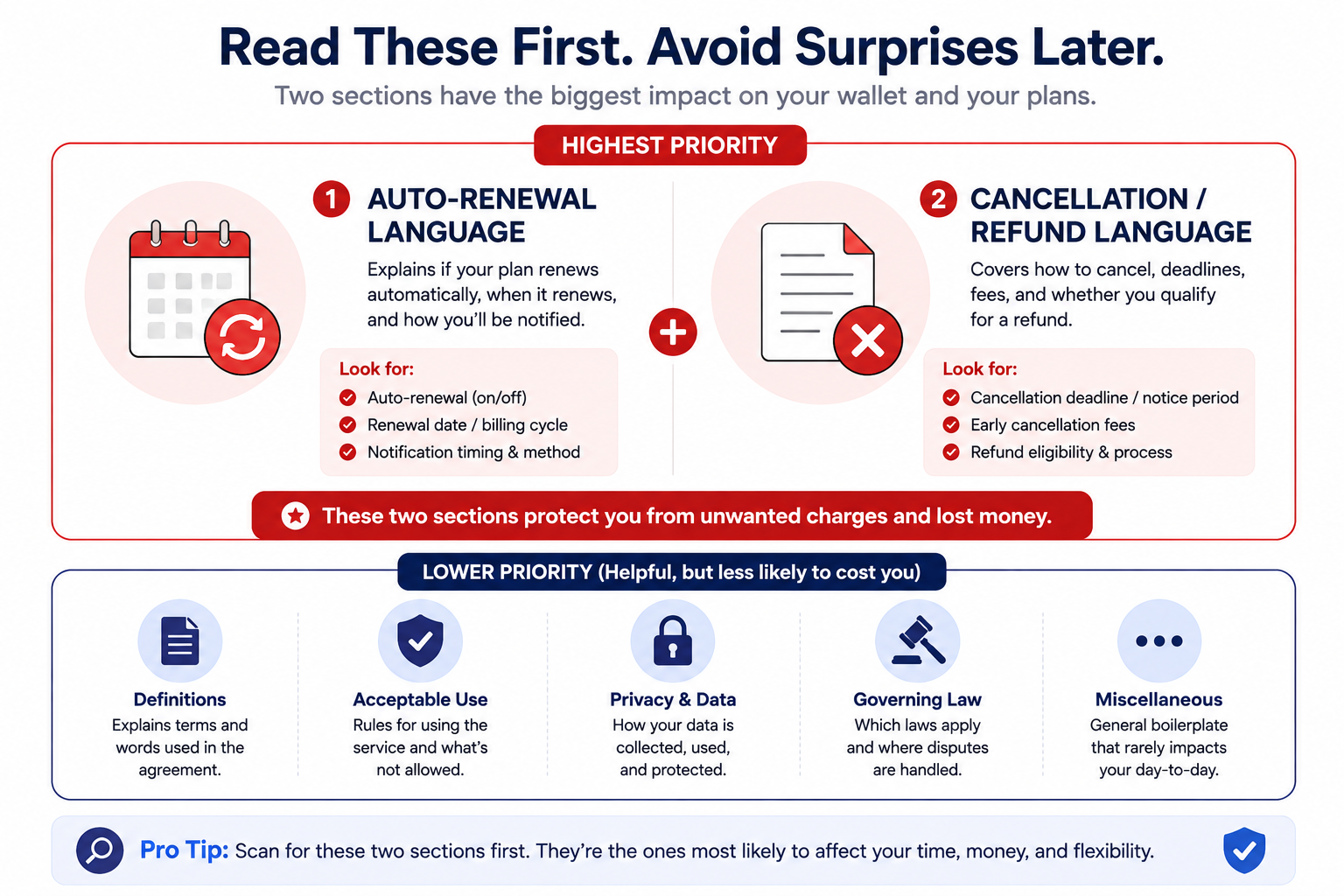
Cancellation and refund language is the other section worth reading carefully, particularly what happens to any unused portion of a prepaid term if you cancel early. Skimming past this section because it looks like standard boilerplate is exactly how people end up surprised by a term they technically agreed to but never actually read closely.
It's worth naming why contract-term surprises tend to generate more frustration than a straightforward price increase would. A price increase is usually communicated directly and gives you a clear choice: accept it or leave. A contract term you didn't fully read, by contrast, feels like something that was always technically true but only became relevant at an inconvenient moment — discovering an early-cancellation fee right when you want to leave, or realizing a renewal happened automatically right after you'd decided not to continue. The information was available the whole time, but it wasn't actively surfaced until it mattered, which is part of why it tends to feel more like a trap than a straightforward cost increase does, even when nothing dishonest actually occurred.
It's worth applying this same scrutiny beyond Matterport specifically, since contract terms vary just as much across the broader category as pricing tiers do. Some platforms favor month-to-month billing by default, with no long-term commitment required at all. Others default to an annual term but make cancellation straightforward with no early-termination fee. Still others combine an annual commitment with meaningful cancellation penalties, which is the combination most likely to generate the kind of regret discussed throughout this article.
If contract flexibility matters to you as much as price, it's worth adding "what are the actual commitment and cancellation terms" to your evaluation checklist for any platform you're considering, not just the one you're currently frustrated with. A slightly higher-priced platform with genuinely flexible terms can be a better overall choice than a cheaper one that locks you in more tightly than you realized at signup.
On G2's Matterport review page, a subset of reviewers specifically discuss being caught off guard by contract length or auto-renewal terms, distinct from the pricing-tier complaints covered in other reviews — worth searching for these terms specifically if you want to see this pattern directly.
Community discussions on r/Matterport occasionally include users asking real-time questions about specific contract clauses they're trying to understand before signing up, which can be a useful, current supplement to reading the terms document itself.
"Isn't reading a full terms-of-service document overkill for a software subscription?"
For a low-stakes, easily-cancellable monthly service, maybe. For an annual commitment tied to business-critical content, spending twenty minutes reading the specific sections on renewal, cancellation, and fees is a reasonable use of time relative to the cost of being locked into an unfavorable term you didn't fully understand.
"What if I don't understand the legal language?"
You don't need to parse every clause like a lawyer — focus specifically on the handful of practical questions covered above: commitment length, auto-renewal notice requirements, and early-cancellation consequences. If a specific clause is genuinely unclear, asking a sales representative directly and getting a written answer is a reasonable substitute for full legal review.
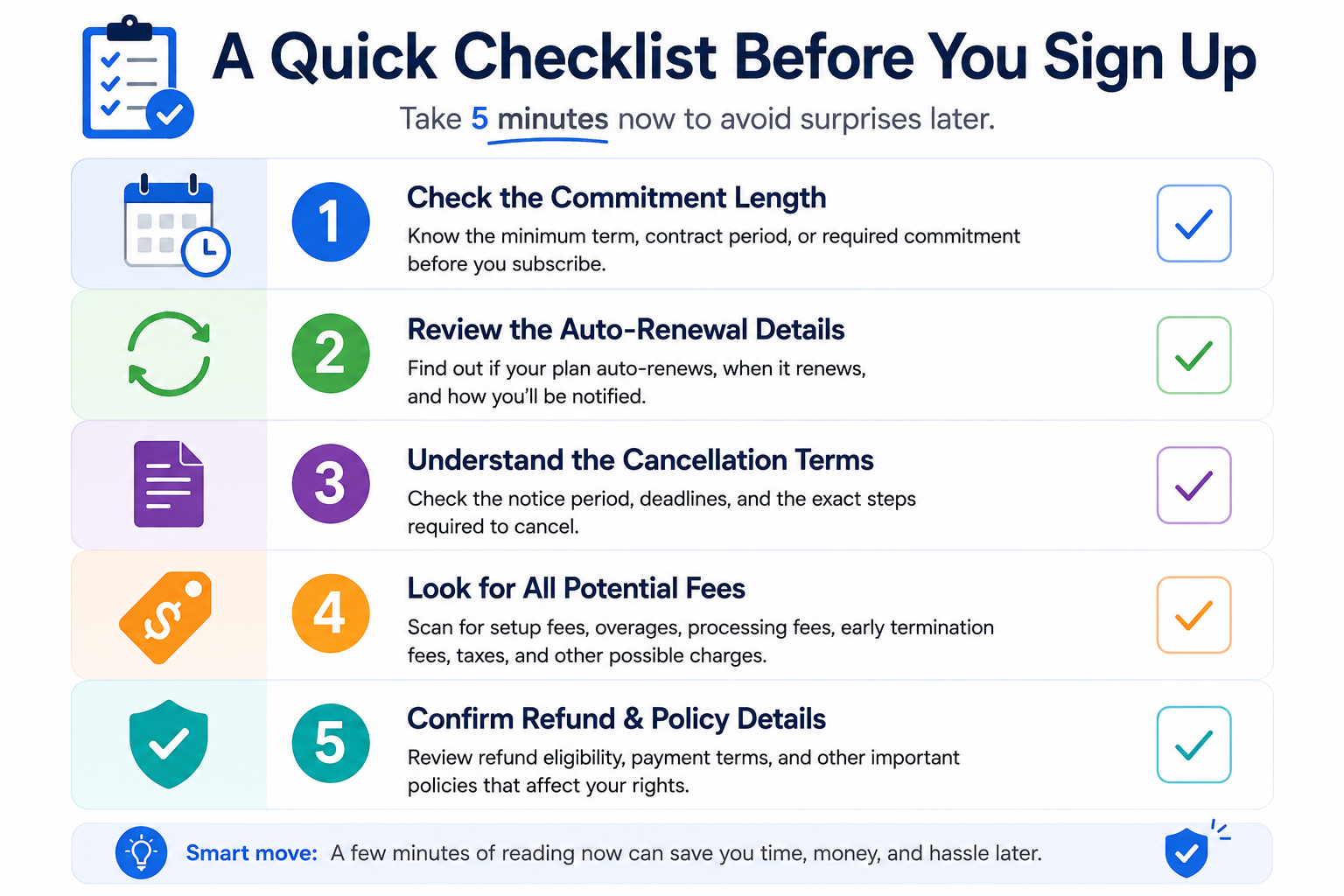
Reading contract terms carefully before signing anything is a habit worth building generally, not a one-time exercise specific to this decision. Software vendors across many categories, not just virtual tours, structure contracts with varying degrees of buyer-friendliness, and the twenty minutes it takes to read the relevant sections before committing is consistently a better use of time than dealing with an unexpected term after the fact. Treat this article's checklist as a template you can reapply to future software decisions, not a one-off exercise specific to Matterport.
The most commonly reported Matterport pricing surprises aren't always about the sticker price itself — commitment length, auto-renewal terms, and cancellation conditions buried in contract language cause just as much frustration, and they're genuinely easy to overlook if you're focused only on comparing monthly rates. A short, deliberate read of the specific sections covering renewal and cancellation before you sign up prevents most of this regret entirely.
If you're weighing whether Matterport's overall approach fits your business, our breakdown of the pricing tier mechanics covers the cost side of this in more depth, and our guide on choosing a Matterport alternative covers the broader decision if contract terms are part of what's pushing you to look elsewhere. Whichever platform you ultimately choose, treating contract terms as a genuine evaluation criterion — not just an afterthought you'll deal with if it ever becomes relevant — puts you in a meaningfully better position than most buyers, who only think carefully about these terms after they've already run into one.


Compact, ready to go anywhere
Interchangeable lens that’s upgradeable
Dual 1-inch sensors for improved clarity and low light performance
Dynamic range and 6K 360° capture
360° photo resolution at 21MP

8K 360° video recording for ultra-detailed visuals.
4K single-lens mode for traditional wide-angle shots.
Invisible selfie stick effect for drone-like perspectives.
2.5-inch touchscreen with Gorilla Glass protection.
Waterproof up to 33ft for underwater shooting.

360° photo resolution in 23MP
Slim design at 24 mm thick
Built-in image stabilization for smooth video capture.
Internal 19GB storage for photo and video storage.
Wireless connectivity for remote control and sharing.

60MP 360° still images for high-resolution photography.
5.7K 360° video recording at 30fps.
2.25-inch touchscreen for intuitive control.
USB Type-C port for fast charging and data transfer.
MicroSD card slot for expandable storage.
.png)

.png)

Try it free. No credit card required. Instant set-up.







.svg)


.svg)