


.png)



Great virtual tour work doesn't sell itself if it never reaches the right desk. Learning how to find real estate agents who need virtual tours is often the missing piece for photographers who are genuinely skilled but struggling to fill a booking calendar — the work is there, it just hasn't found its way to the agents who'd happily pay for it.
This guide covers the practical, repeatable places to look: how to research listings actively needing better marketing, how to network with agencies in person, and how to build a steady pipeline of leads rather than relying on occasional luck. For the broader strategy of turning these leads into paying clients, the complete guide to selling virtual tour services to agents covers pitching and pricing in full — this article is specifically about where to find the people worth pitching.
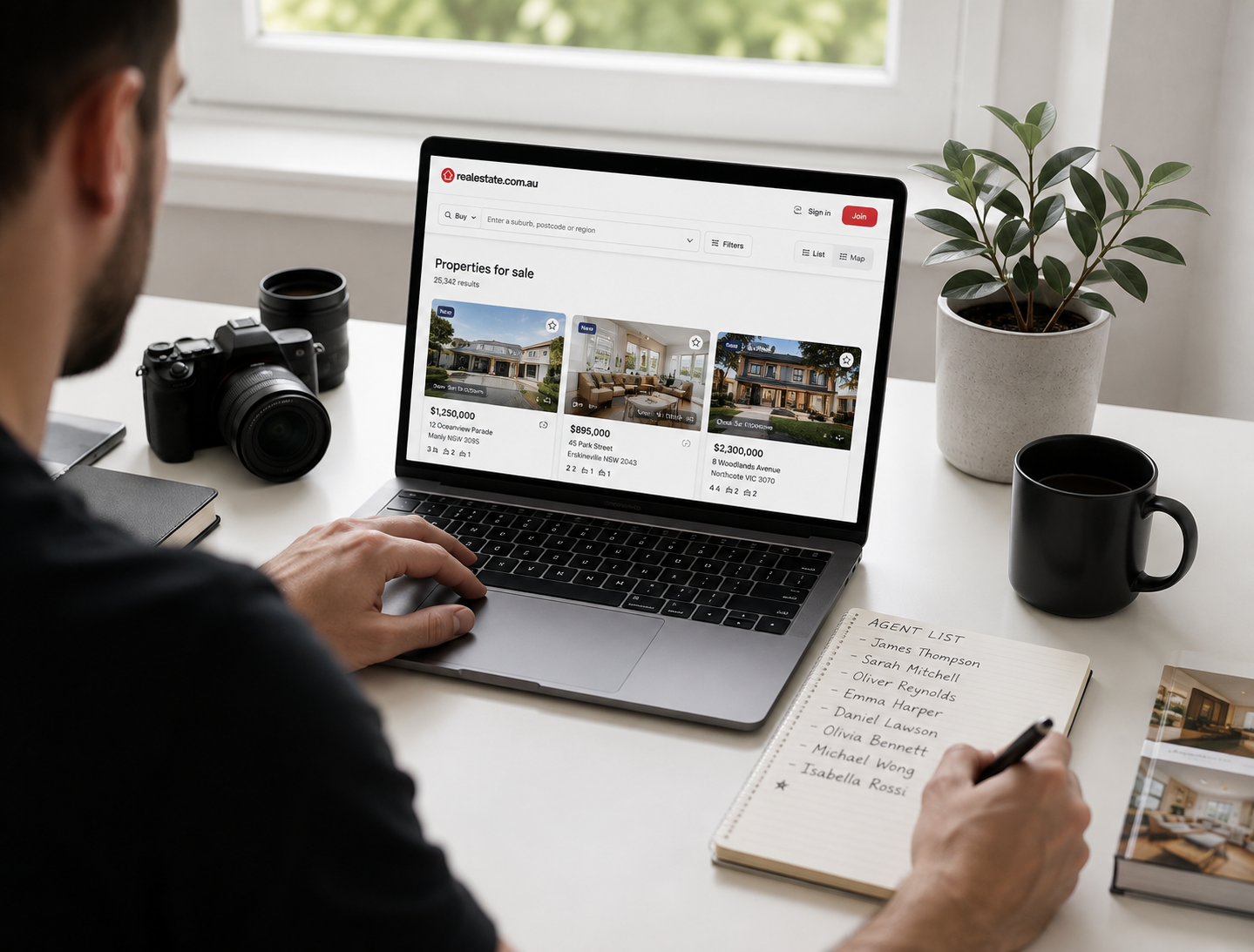
One of the most reliable ways to get real estate photography clients is simply paying attention to new listings as they appear, particularly ones marketed with only basic photography and no virtual tour. A listing photographed with a phone camera, poor lighting, or an obviously rushed photo set is a strong signal the agent either doesn't have a regular photography vendor or isn't currently satisfied with one.
Set aside a small amount of time regularly to browse new listings in your target area on realestate.com.au, noting the agent's name and agency on any listing that looks under-marketed. This isn't about criticizing anyone's work — it's about identifying agents who clearly have room in their current process for a stronger virtual tour offering, and who are worth a specific, well-timed outreach message referencing that exact listing.
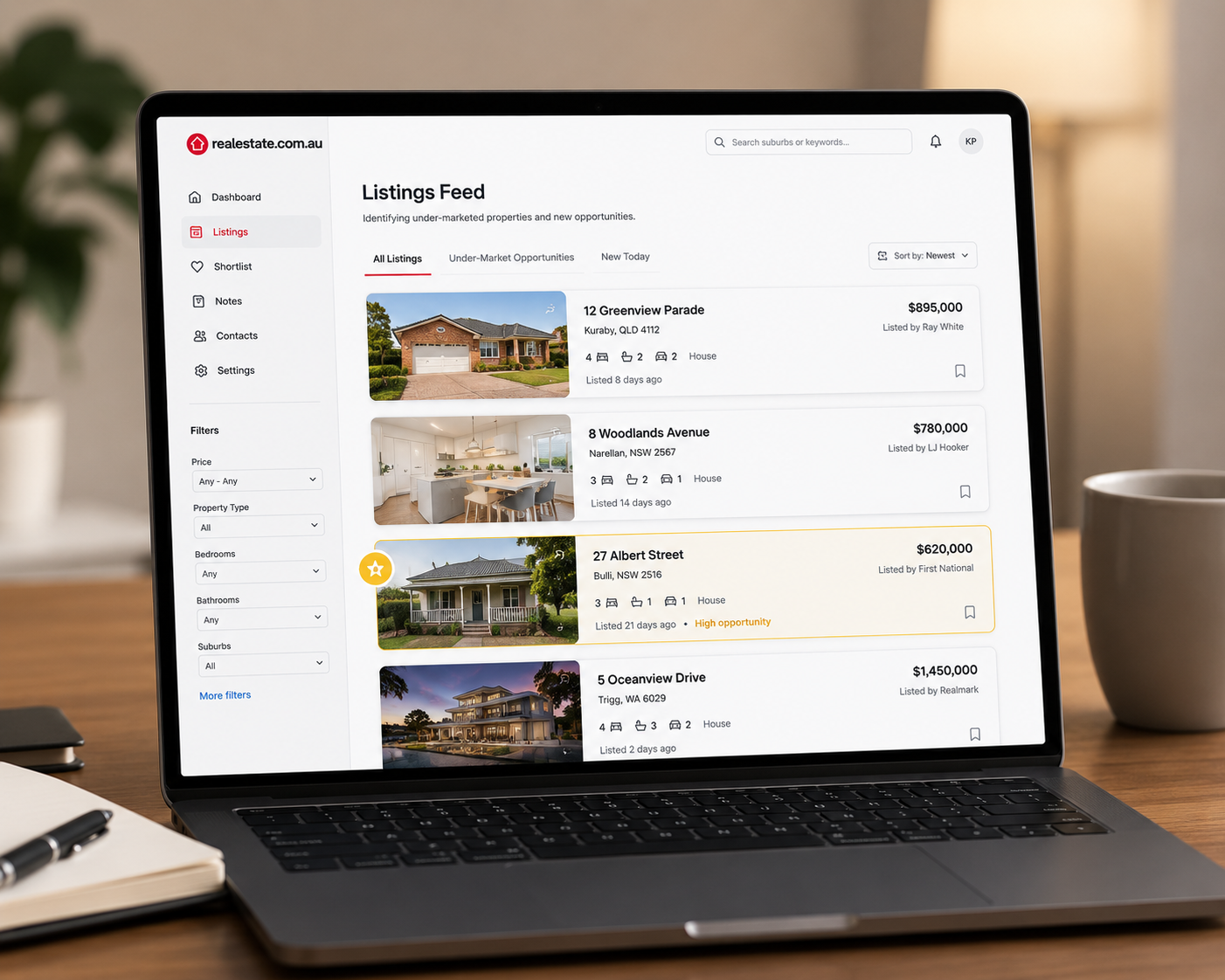
It's worth narrowing your focus to a specific geographic area rather than scanning listings state-wide, at least when you're starting out. A tighter radius makes it realistic to actually visit properties, attend nearby open homes, and build a genuine local reputation, rather than spreading your attention so thin that no single area ever builds the familiarity that turns into repeat work. As your capacity grows, expanding that radius becomes a natural next step, but starting narrow and genuinely known in one area tends to outperform starting broad and anonymous everywhere.
Beyond browsing listings directly, there are several other reliable sources of real estate agent leads for photographers worth building into a regular routine. Local real estate Facebook groups and community pages often feature agents discussing upcoming listings or asking for recommendations, which is a low-pressure way to become visible without a hard pitch. Agency websites frequently list their team of agents along with recent sales, giving you a ready-made list of specific people to research and approach individually rather than mass-contacting an entire office.
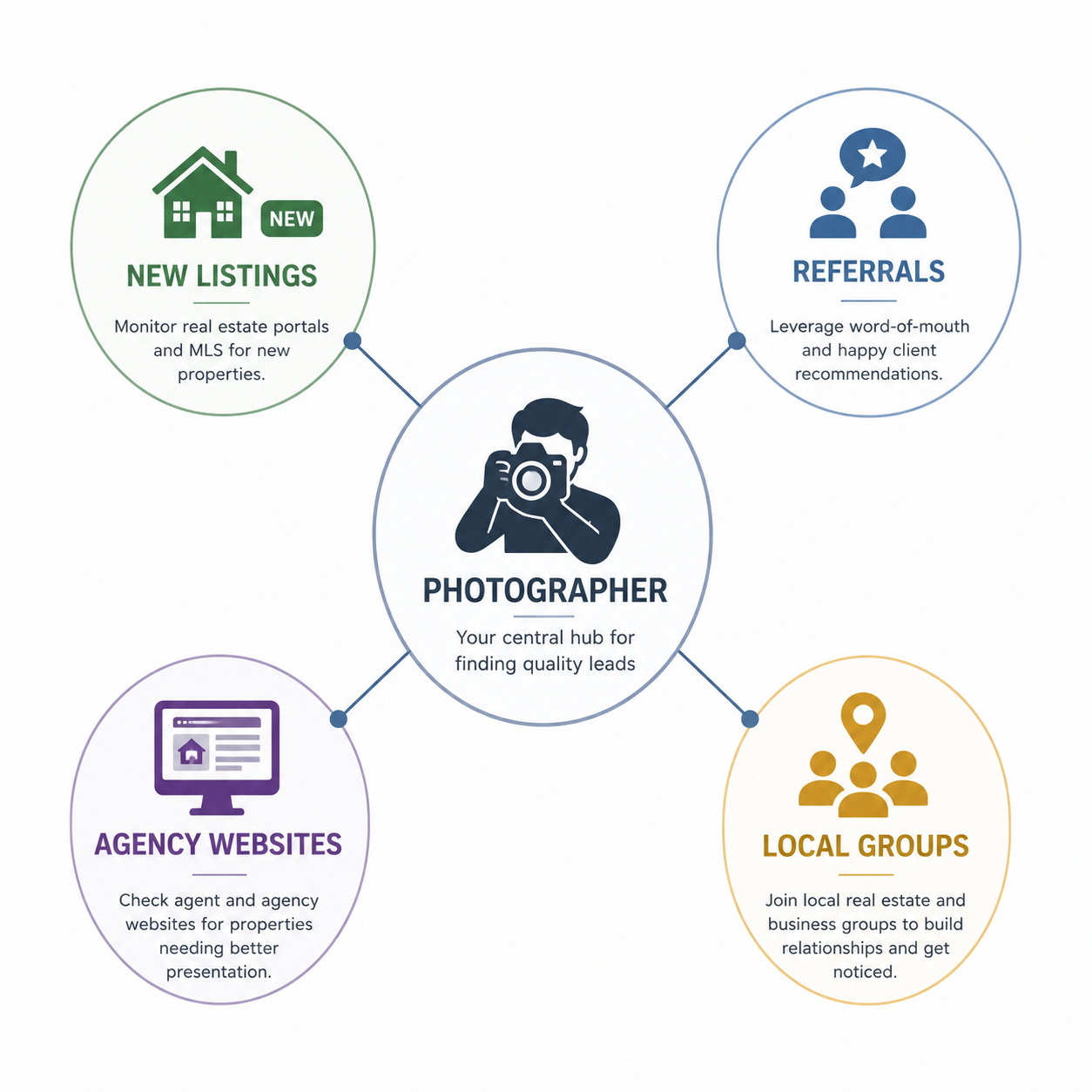
Referrals from existing clients are worth actively asking for, not just hoping for passively. A simple, direct request after a successful job — "if you know another agent who might want something similar, I'd really appreciate the introduction" — costs nothing and converts at a far higher rate than cold outreach, since it arrives with an implicit endorsement already attached. Even other vendors in the real estate ecosystem — stylists, conveyancers, mortgage brokers — can be valuable referral sources, since they interact with agents constantly and aren't direct competitors for your specific service.
Property managers are another source worth not overlooking, since many work at agencies that also handle sales listings, and a good relationship on the rental side can naturally open a conversation about the sales team's marketing needs too. Similarly, other tradespeople who service properties before a sale — painters, handymen, cleaners preparing a home for listing — often hear about upcoming listings before they're publicly marketed, and a friendly, mutually beneficial relationship with a few of these contacts can surface opportunities well before a property even appears on realestate.com.au.
Digital research only goes so far — learning how to network with real estate agencies in person tends to produce the strongest, most durable relationships, since agents remember and trust people they've actually met over a purely digital introduction. Open homes are one of the most accessible entry points: attending as a genuine visitor, chatting naturally with the hosting agent, and mentioning what you do without an aggressive pitch in the moment often opens the door to a follow-up conversation later.
Local real estate industry events, agency office visits, and even simply introducing yourself to agents working the same suburb over time all compound the same way — familiarity builds trust, and trust is what actually gets a first booking over the line. It's worth being patient with this approach rather than expecting an immediate result from a single interaction; most agent relationships that turn into steady work started as a low-key introduction well before any pitch was made.
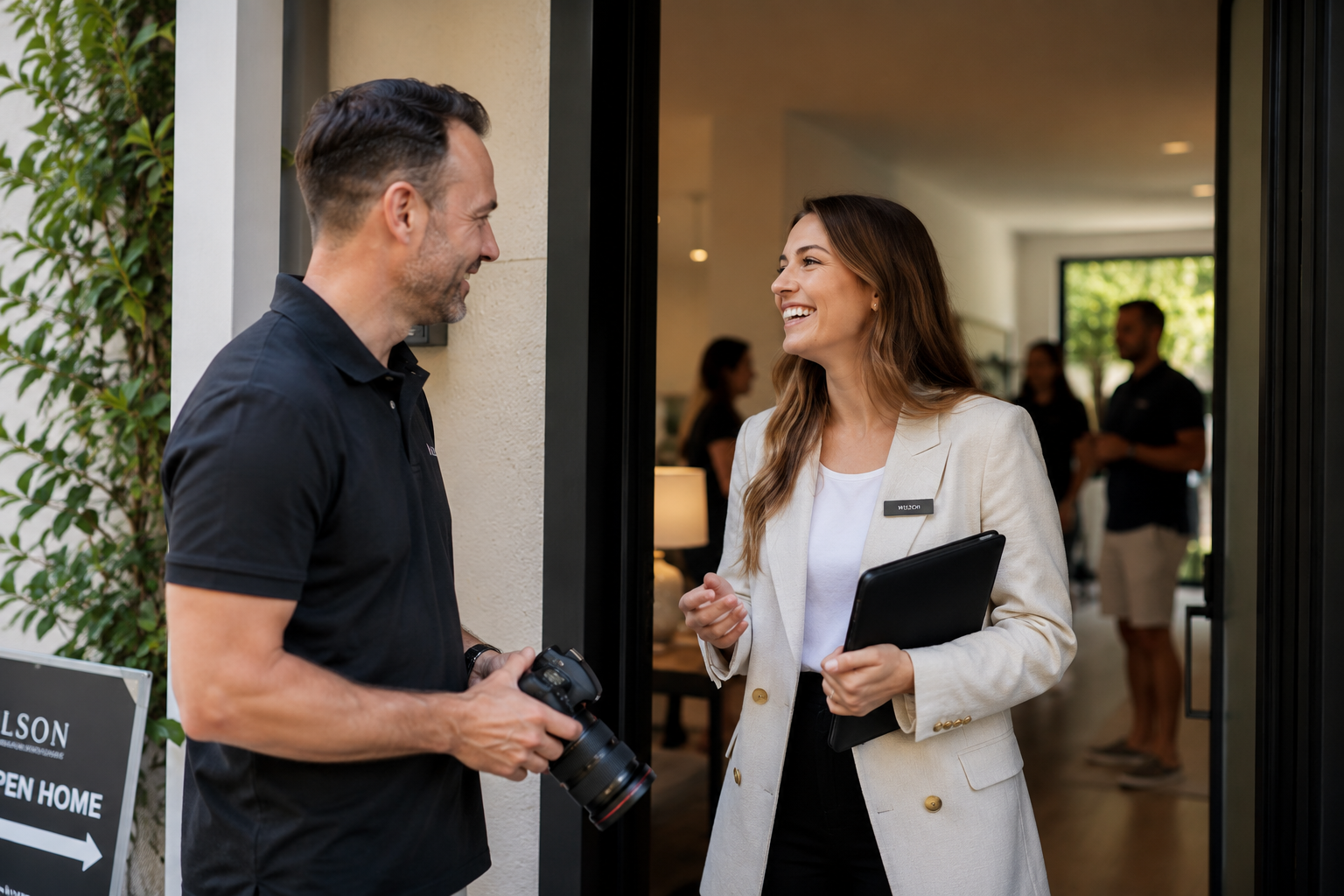
Genuine curiosity goes further than a rehearsed pitch in these settings. Asking an agent about a listing, their typical buyer profile, or how the local market's been performing signals real interest rather than a transactional approach, and often naturally leads into a conversation about their current marketing process without you needing to force it. Agents can usually tell the difference between someone networking to build a genuine professional relationship and someone working the room purely to sell something, and the former consistently builds more durable business over time.
The photographers who consistently find new agent clients treat this as an ongoing habit rather than a one-time push when work runs dry. Setting aside a small, consistent block of time each week — browsing new listings, checking in on referral opportunities, attending the occasional local event — produces a far steadier pipeline than sporadic bursts of effort followed by long gaps.
It's also worth tracking who you've identified and reached out to, even with something as simple as a spreadsheet noting the agent's name, agency, how you found them, and whether you've followed up. This prevents both the awkwardness of forgetting you already contacted someone and the wasted opportunity of a promising lead quietly falling through the cracks because it wasn't written down anywhere.
A simple weekly rhythm works well for most photographers building this habit: a short block of time reviewing new listings, one or two genuine outreach messages to agents you've identified as good fits, and a quick check-in on any pending follow-ups from previous weeks. This doesn't need to take hours — thirty focused minutes a week, done consistently over months, tends to produce a far stronger pipeline than an occasional multi-hour push followed by weeks of no activity at all. Consistency compounds in a way that sporadic bursts of effort simply don't.
Finding the right agent is only useful if you're genuinely ready to follow through the moment the opportunity appears. That means having a portfolio ready to show the moment you find them, a clear sense of your pricing, and enough capacity in your schedule to actually take on new work without a long delay that risks losing the agent's interest.
It's also worth thinking about lead generation as a long game rather than a series of one-off wins. Building a stronger local marketing presence over time — through consistent visibility, referrals, and a growing reputation in your specific area — eventually means agents start finding you rather than the other way around, which is a far more sustainable position than needing to constantly chase new leads from scratch.
This shift doesn't happen overnight, and it's worth setting realistic expectations for how long it takes. Most photographers who reach the point where referrals and inbound inquiries make up the bulk of their new business spent a genuine stretch of time — often the better part of a year or more — doing the more active outreach described above first. Treating that early period as an investment in reputation, rather than expecting immediate volume, makes the inevitable slow patches feel like a normal part of the process instead of a sign that something's going wrong.
There's no single trick to how you find real estate agents who need virtual tours — it comes down to a handful of consistent habits: watching new listings for under-marketed properties, actively asking for referrals, showing up in person at open homes and local events, and tracking your outreach so nothing falls through the cracks. None of this requires aggressive sales tactics, just consistency applied over time, week after week, until the pipeline starts to feel steady rather than uncertain.
Once you've found the right agents, CloudPano helps make sure the work you show them is polished enough to convert that first conversation into a lasting client relationship — so all that effort spent finding the right person doesn't go to waste on a mediocre first impression.


Compact, ready to go anywhere
Interchangeable lens that’s upgradeable
Dual 1-inch sensors for improved clarity and low light performance
Dynamic range and 6K 360° capture
360° photo resolution at 21MP

8K 360° video recording for ultra-detailed visuals.
4K single-lens mode for traditional wide-angle shots.
Invisible selfie stick effect for drone-like perspectives.
2.5-inch touchscreen with Gorilla Glass protection.
Waterproof up to 33ft for underwater shooting.

360° photo resolution in 23MP
Slim design at 24 mm thick
Built-in image stabilization for smooth video capture.
Internal 19GB storage for photo and video storage.
Wireless connectivity for remote control and sharing.

60MP 360° still images for high-resolution photography.
5.7K 360° video recording at 30fps.
2.25-inch touchscreen for intuitive control.
USB Type-C port for fast charging and data transfer.
MicroSD card slot for expandable storage.
.png)

.png)

Try it free. No credit card required. Instant set-up.






.svg)


.svg)