


.png)



Virtual tours have quietly become one of the most important tools in real estate marketing. Buyers increasingly expect to preview a property online before scheduling an in-person showing, and immersive 360° tours can provide a much richer sense of a property than static photos alone. But there’s a gap many agents and brokerages haven’t addressed: real estate ADA compliance for the virtual tours themselves, not just the physical properties they represent.
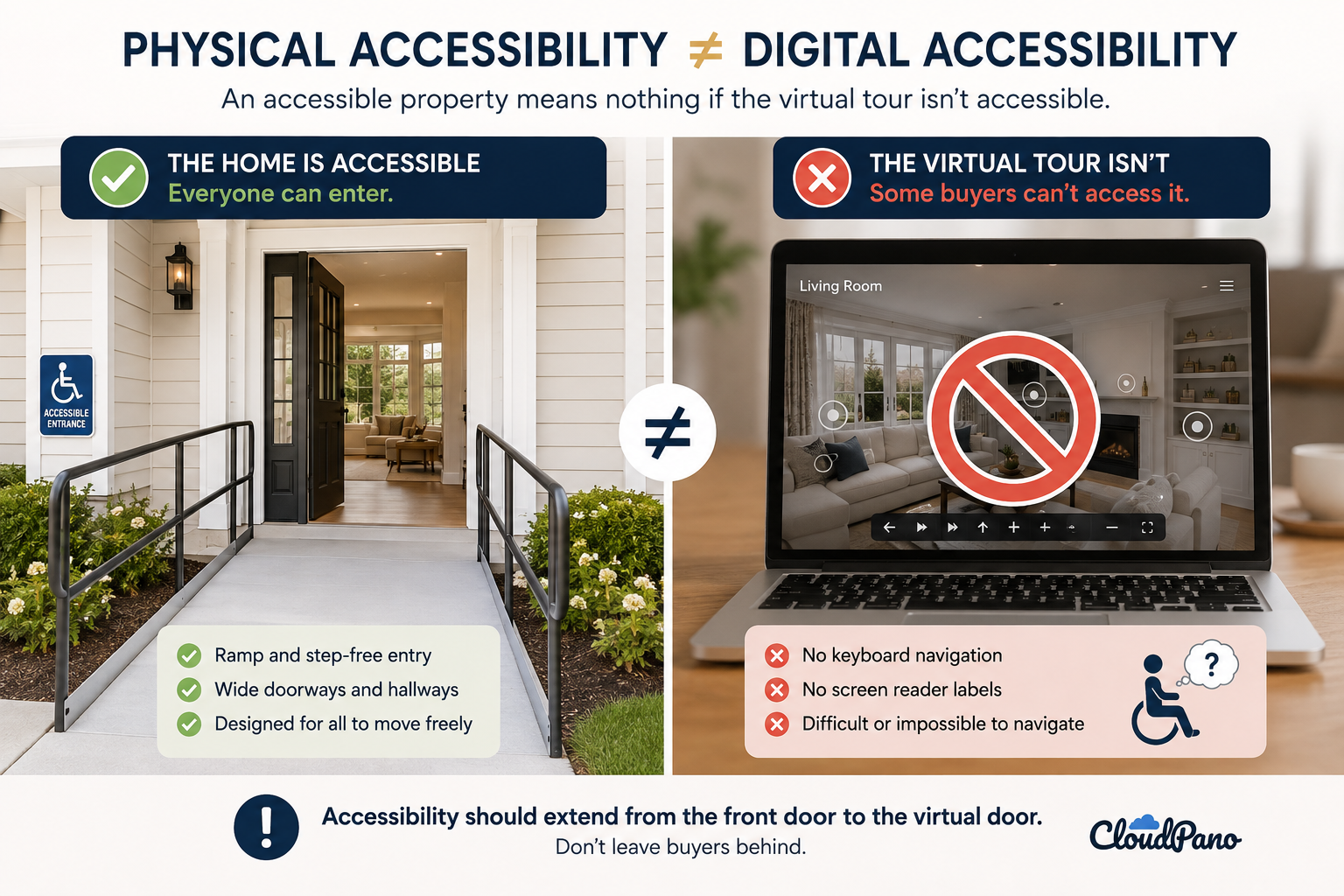
It’s a common blind spot: an agent lists a property with wide doorways, an accessible entrance, and other accessibility features, then publishes a virtual tour that a blind buyer—or a buyer who can’t use a mouse—simply cannot navigate.
The physical accessibility of a property and the digital accessibility of its marketing are two separate considerations, yet digital accessibility can easily be overlooked.
For buyers with disabilities, an inaccessible virtual tour doesn’t just mean a slightly worse browsing experience—it can mean being unable to properly evaluate a listing before deciding whether to request an in-person showing, potentially putting them at a disadvantage compared with other buyers.
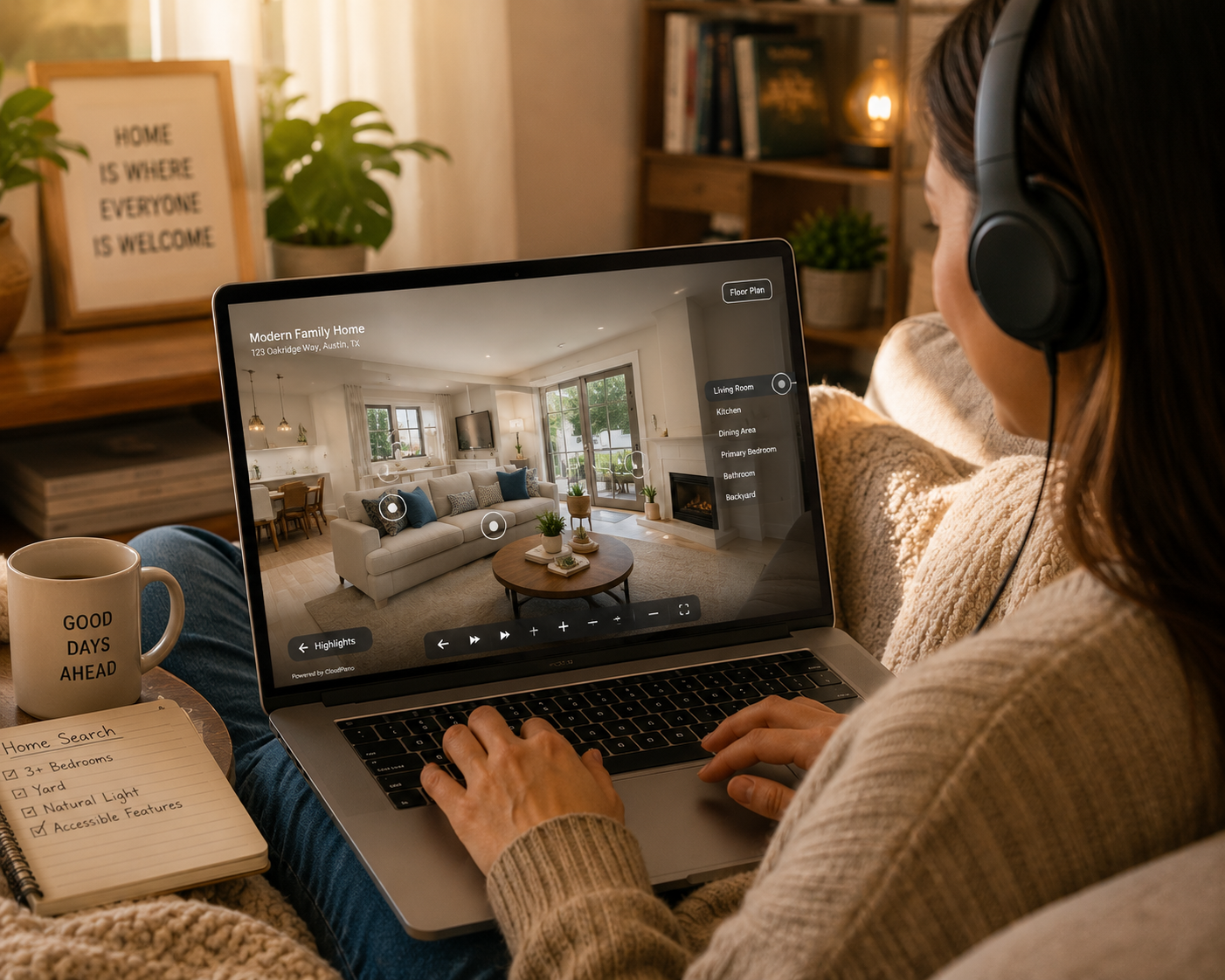
A few factors make accessibility especially relevant to real estate:
The tour may be a key part of the listing experience. For many buyers, the virtual tour helps them decide whether a property is worth visiting in person. If the tour is inaccessible, an important part of that decision-making process may be unavailable to them.
Fair housing and accessibility share an important principle. While the Fair Housing Act and the ADA are separate laws with different requirements and scopes, both address forms of discrimination and access. Real estate is already an industry where accessibility and equal access are important considerations, making digital accessibility increasingly relevant as more of the property-search process moves online.
High-value transactions raise the stakes. Home buying is one of the largest financial decisions most people make. Being unable to fully evaluate a listing can have meaningful consequences, making accessibility particularly important in the real estate experience.
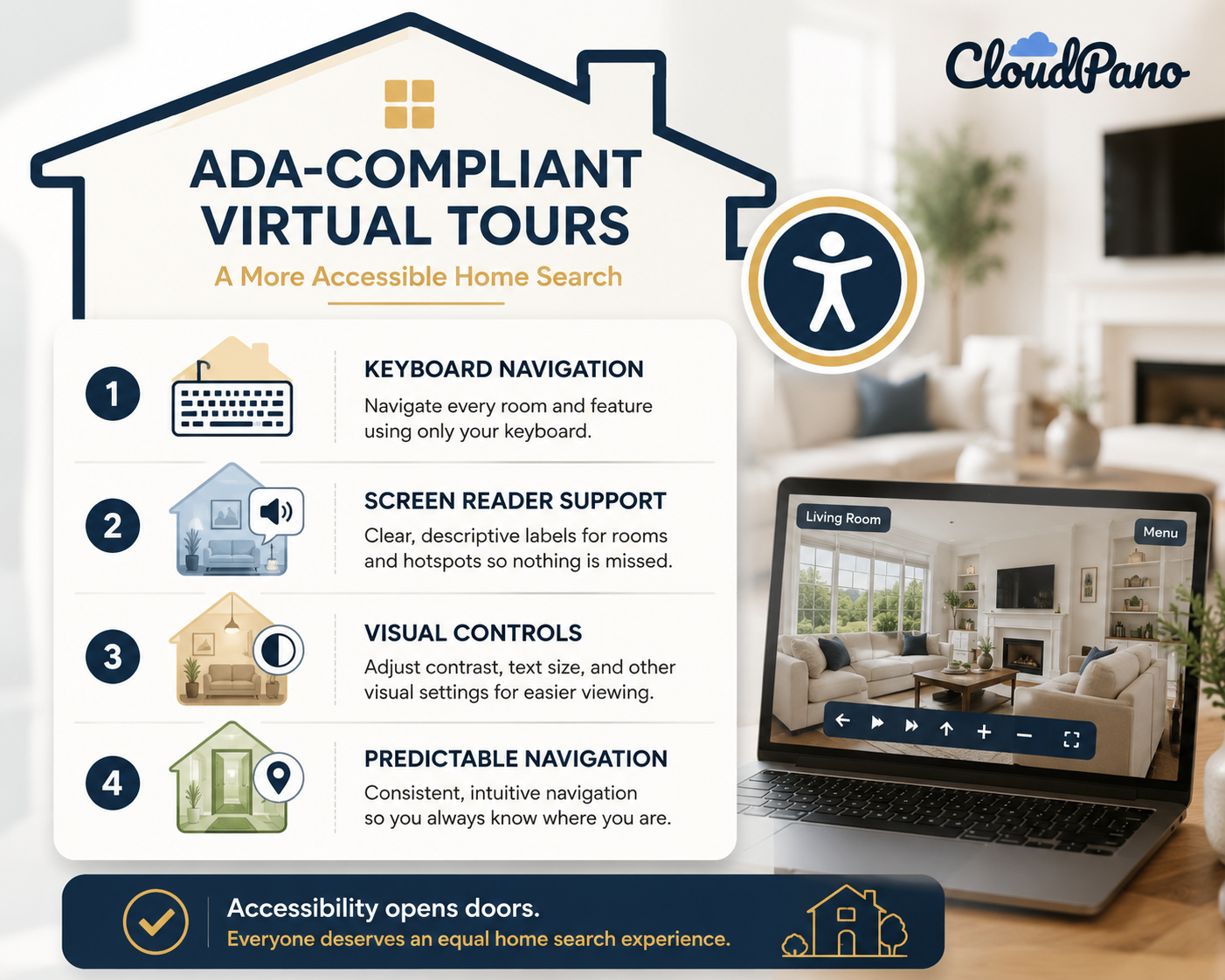
An accessible real estate virtual tour may include:
This is the type of functionality a purpose-built ADA widget for virtual tours is designed to support—without requiring agents or brokerages to have a technical background.
Real estate is a relationship-driven and reputation-sensitive business. Buyers and their families may research an agent’s other listings before reaching out, and providing accessible virtual tours can demonstrate professionalism, inclusivity, and attention to detail—the same qualities buyers often value in an agent handling one of their largest financial decisions.
There’s also a practical reach argument: a significant number of U.S. adults live with a disability. For an agent or brokerage marketing properties to a broad buyer pool, accessibility can help ensure that more potential clients can effectively explore listings, including those who use assistive technologies.
For brokerages managing many agents and listings, consistency matters as much as individual effort. Establishing a brokerage-wide standard—such as building every listing tour on a platform with accessibility features—can help avoid situations where some agents’ tours are accessible while others aren’t.
A consistent approach can also create a more predictable buyer experience across the brokerage’s brand.
If you’re an agent or brokerage that regularly publishes virtual tours, one of the most efficient approaches is to choose a tour platform with accessibility support built into the workflow rather than trying to retrofit each listing individually.
CloudPano’s ADA compliance page explains the platform’s accessibility features, while CloudPano’s real estate-focused features show how virtual tours fit into the broader listing workflow.
This article is for general informational purposes only and does not constitute legal advice.


Compact, ready to go anywhere
Interchangeable lens that’s upgradeable
Dual 1-inch sensors for improved clarity and low light performance
Dynamic range and 6K 360° capture
360° photo resolution at 21MP

8K 360° video recording for ultra-detailed visuals.
4K single-lens mode for traditional wide-angle shots.
Invisible selfie stick effect for drone-like perspectives.
2.5-inch touchscreen with Gorilla Glass protection.
Waterproof up to 33ft for underwater shooting.

360° photo resolution in 23MP
Slim design at 24 mm thick
Built-in image stabilization for smooth video capture.
Internal 19GB storage for photo and video storage.
Wireless connectivity for remote control and sharing.

60MP 360° still images for high-resolution photography.
5.7K 360° video recording at 30fps.
2.25-inch touchscreen for intuitive control.
USB Type-C port for fast charging and data transfer.
MicroSD card slot for expandable storage.
.png)

.png)

Try it free. No credit card required. Instant set-up.







.svg)


.svg)