What Is RLHF? A Practical Guide to Reinforcement Learning From Human Feedback

Cloudpano
July 25, 2026
5 min read
Share this post

What Is RLHF? A Practical Guide to Reinforcement Learning From Human Feedback

What is RLHF, in plain terms? It's the training method largely responsible for turning a raw language model — one that just predicts likely next words — into something that can actually hold a helpful conversation, follow instructions, and avoid saying things it shouldn't. The acronym stands for reinforcement learning from human feedback, and it's one of the more important developments behind why modern AI assistants behave the way they do.

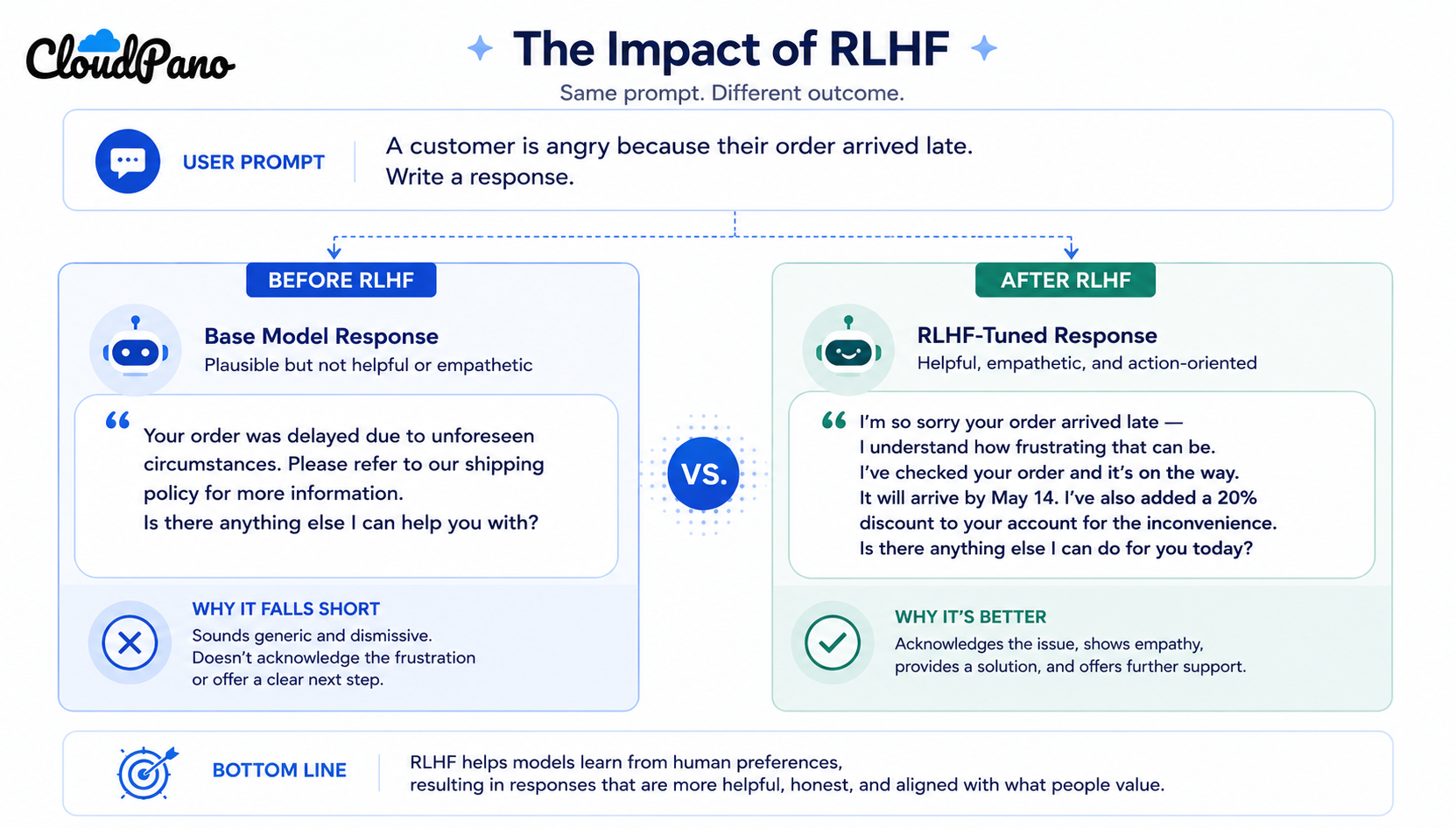
Before RLHF became standard practice, language models were mostly trained to predict text, which doesn't automatically make them good at being helpful, honest, or safe conversational partners. RLHF closes that gap by directly incorporating human judgment about what a good response actually looks like.

Why It Matters

A model trained only to predict likely text doesn't inherently know what "helpful" or "appropriate" means to a person — those are human judgments, not properties that emerge automatically from text prediction. How RLHF works is essentially a mechanism for teaching a model those human judgments directly, rather than hoping they emerge as a side effect of other training.
NIST's AI Risk Management Framework identifies alignment between a system's behavior and its intended use as a core element of trustworthy AI, and RLHF is one of the primary techniques the AI industry currently uses to pursue that alignment for language models specifically (NIST AI RMF).

Google Research's "Data Cascades" study is a useful reminder here too: the quality of the human feedback used in a process like RLHF has an outsized effect on the resulting system, since problems introduced at this stage compound rather than staying contained (Sambasivan et al., Google Research).

The relevance of this keeps growing as language models see wider deployment. Stanford HAI's AI Index has tracked the rapid expansion of large language model capabilities and adoption across industries (Stanford HAI, AI Index Report), and RLHF is a large part of why those models can be trusted with more conversational, instruction-following tasks than earlier text-prediction-only systems could handle.

How It Works

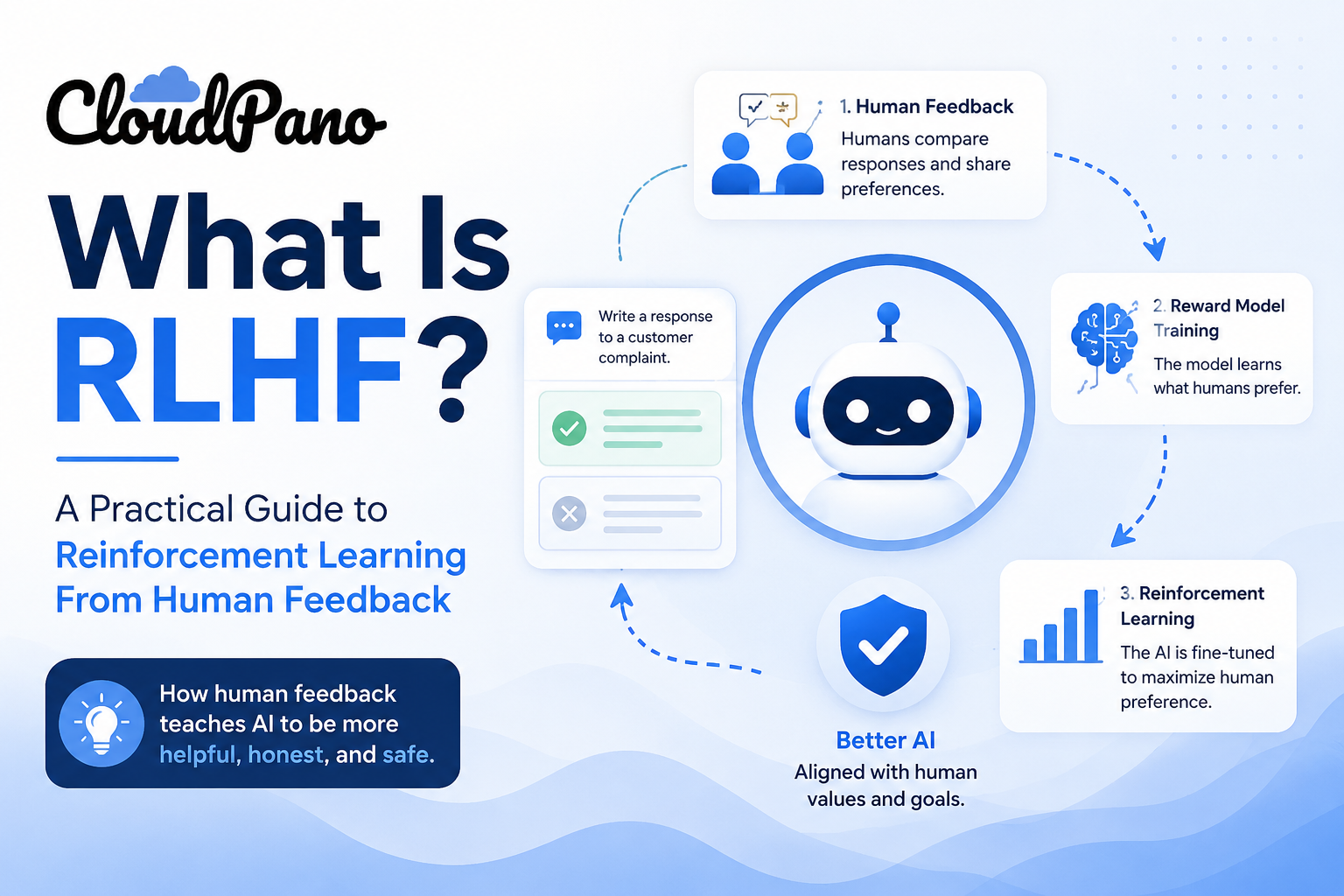
Reinforcement learning from human feedback works through three connected stages.
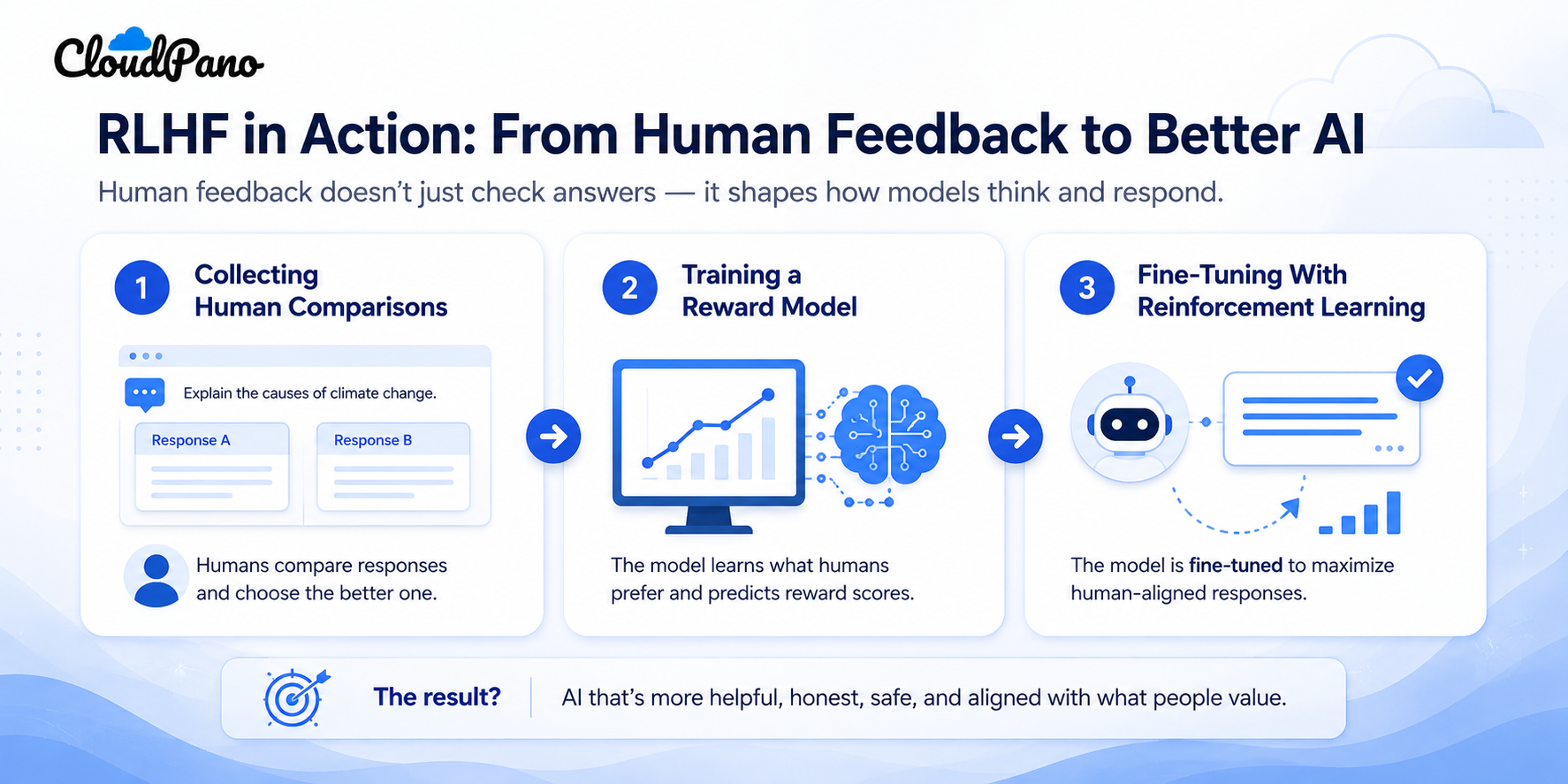
Infographic explaining RLHF in three simple stages

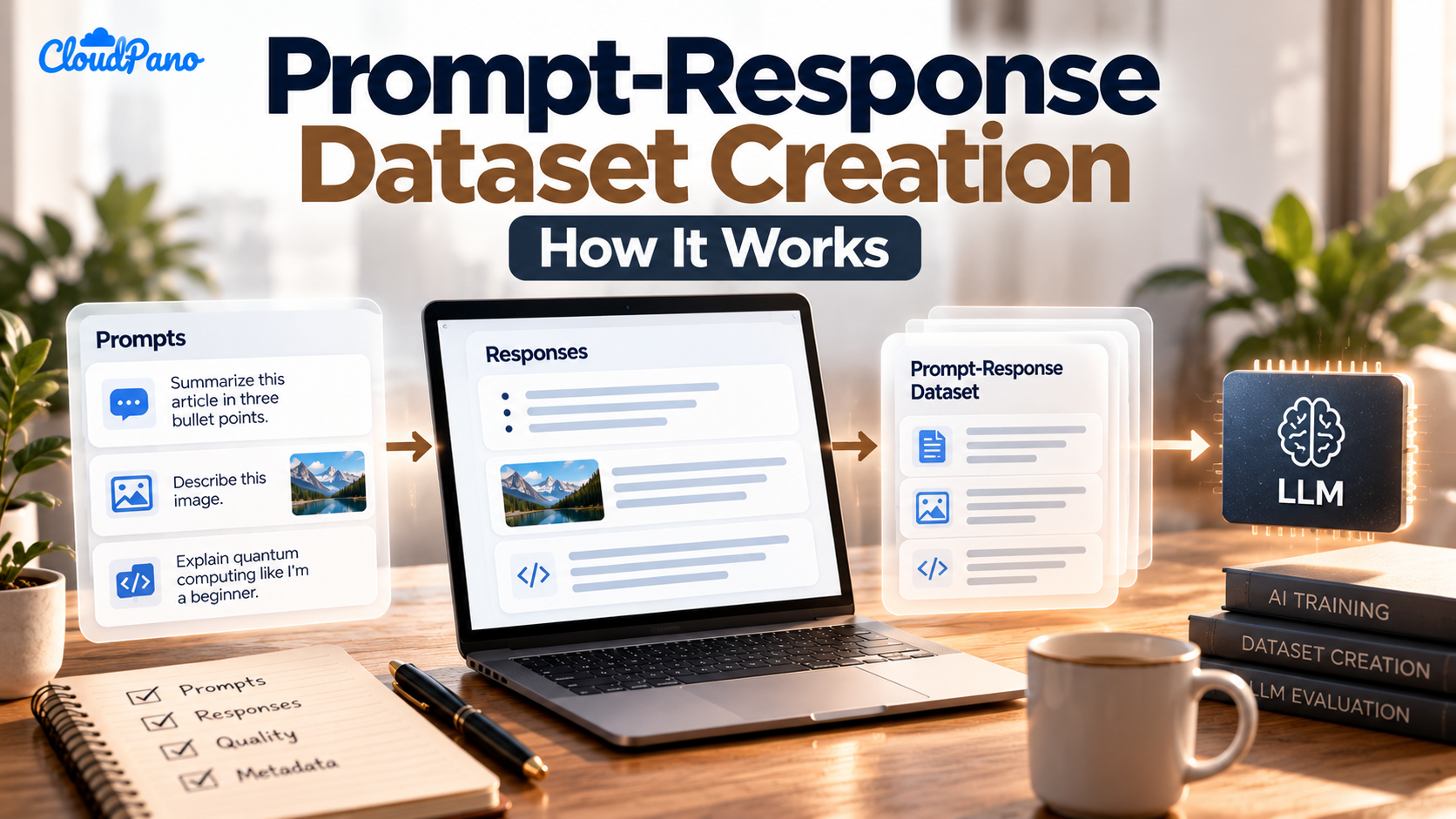
Collecting human comparisons. People are shown two or more responses to the same prompt and asked which one they prefer — for helpfulness, accuracy, tone, or safety — rather than being asked to write a "correct" answer from scratch.

Training a reward model. Those comparisons train a separate model to predict which response a person would likely prefer, turning human judgment into a score a computer can use.

Fine-tuning with reinforcement learning. The original language model is then adjusted so its outputs score more consistently well according to that reward model, nudging its behavior toward what people actually preferred in the comparison data.

RLHF for large language models specifically has become a standard part of the development process for conversational AI systems, precisely because plain text prediction doesn't teach a model concepts like "be helpful" or "don't make things up" — those come from the human feedback layered on top through this process.

Understanding how these workflows operate as a distinct stage after initial model training — not a replacement for it — clarifies why RLHF gets discussed as its own topic rather than folded into general "AI training" conversations.
Step-by-Step Workflow

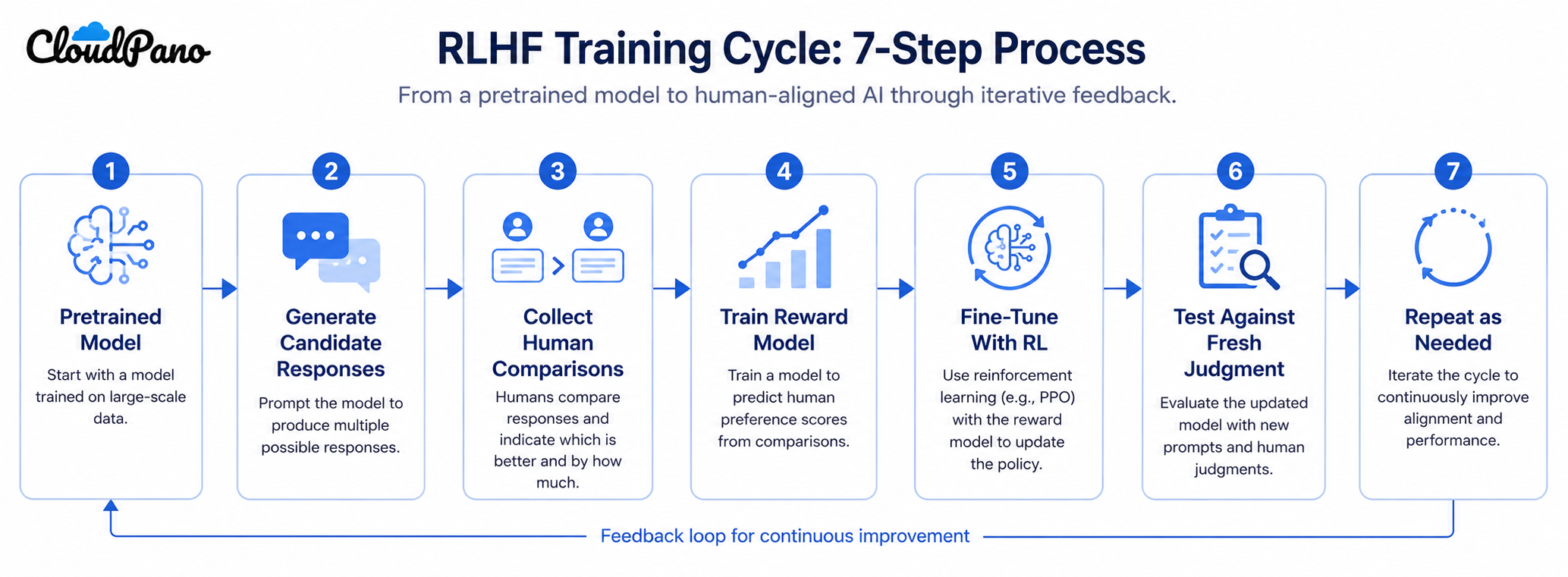
Flowchart of the full RLHF training sequence from pretraining to iteration
  • Start with a pretrained language model. RLHF is applied after a model has already learned general language patterns, not as a starting point.
  • Generate multiple candidate responses to a set of prompts. These become the raw material people will compare.
  • Collect human preference comparisons on those candidates. People rank or choose between responses according to defined criteria.
  • Train a reward model on those comparisons. This model learns to predict human preference at a scale individual review couldn't sustain alone.
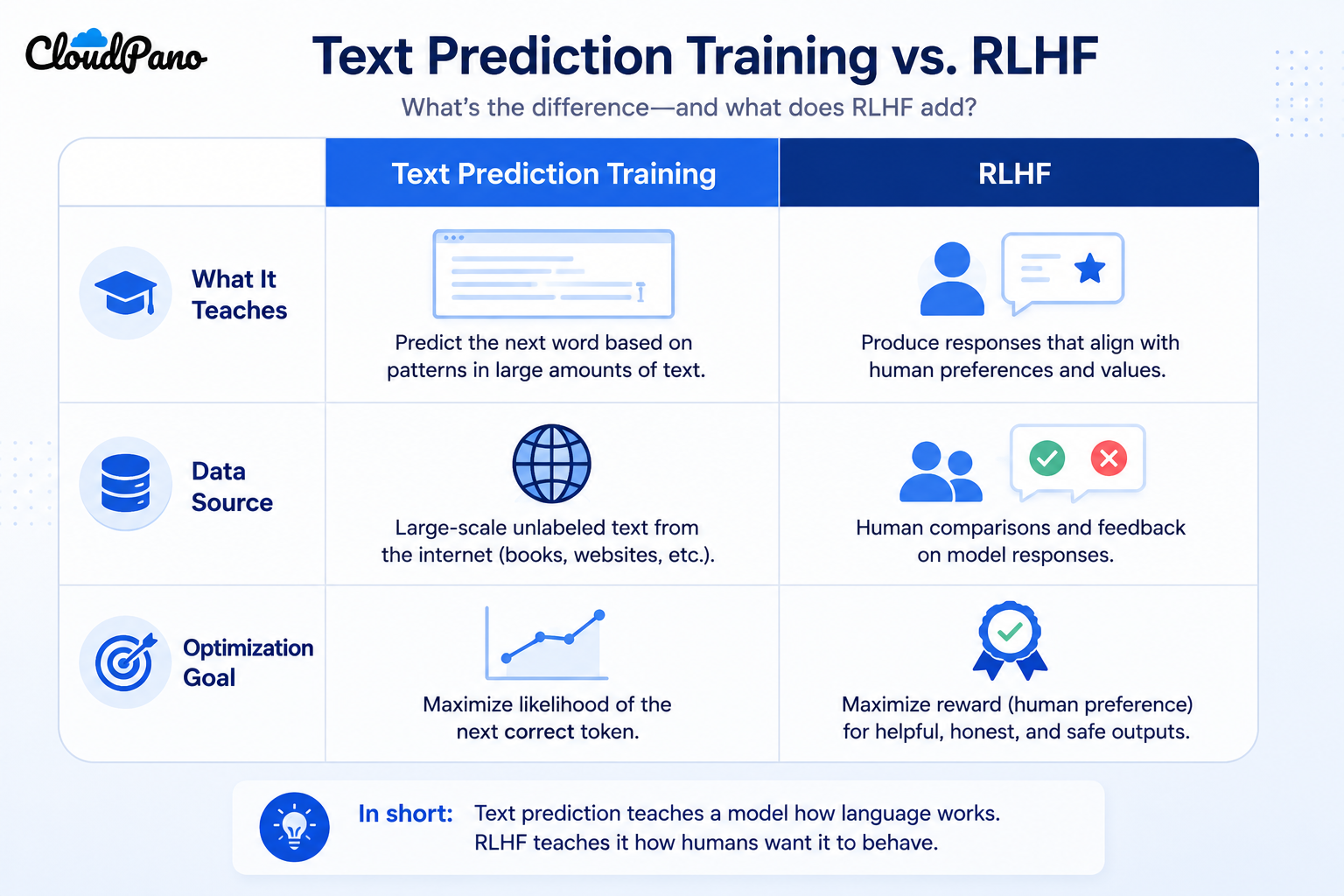
Comparison table of standard text prediction training vs RLHF
  • Fine-tune the language model using reinforcement learning guided by the reward model. The model's behavior shifts toward outputs the reward model scores highly.
  • Test the fine-tuned model against fresh human judgment. Confirm the changes actually reflect what people prefer, not just what the reward model rewards.
  • Repeat as needed with updated comparison data. RLHF is often an iterative process, refined across multiple rounds rather than a single pass.

Industry Use Cases

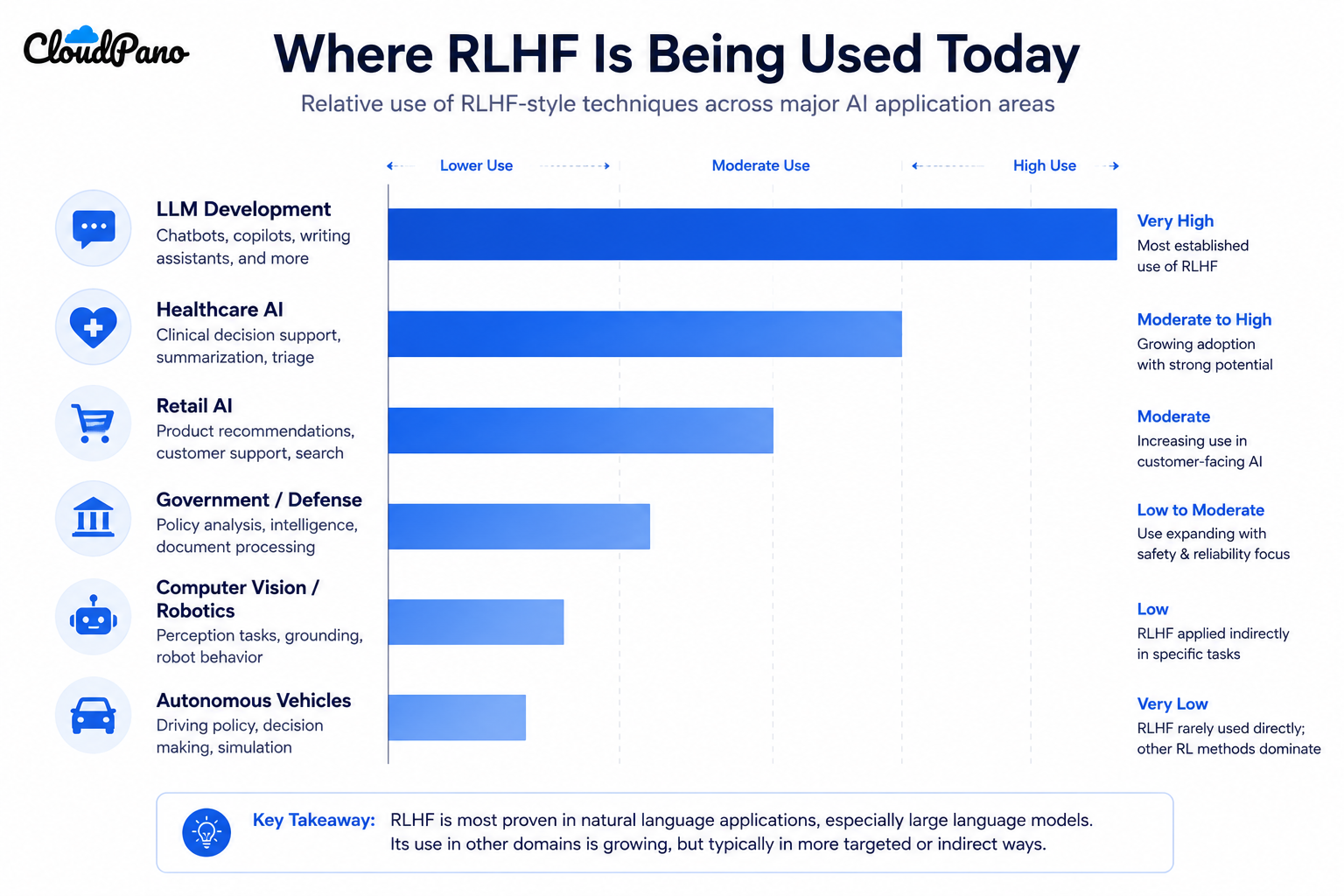
Bar chart showing how widely RLHF is used across AI application types
  • LLM developers: RLHF is the primary technique for aligning conversational and generative language models with helpfulness, safety, and tone expectations.
  • Healthcare AI: Clinical documentation assistants and patient-facing conversational tools use similar feedback-based tuning to balance accuracy with appropriate caution.
  • Retail AI: Customer-facing conversational assistants use preference-based tuning to balance helpfulness with brand voice and appropriate boundaries.
  • Government & defense: Deployed conversational systems in these sectors often require alignment tuning for tone, caution, and policy compliance.
  • Computer vision / robotics: Feedback-based reinforcement approaches exist in some robotics contexts, though the mechanics differ meaningfully from language model RLHF.
  • Autonomous vehicles: Some behavior-shaping work uses feedback-informed reinforcement learning for ambiguous judgment calls, though this is a less direct parallel to LLM-focused RLHF.

Benefits

  • Produces more genuinely helpful behavior. Models trained with RLHF tend to follow instructions and communicate more naturally than models trained purely on text prediction.
  • Incorporates nuanced human judgment. Qualities like tone and appropriateness are hard to specify as fixed rules, and RLHF captures them through comparison-based feedback instead.
  • Scales human preference efficiently. Once a reward model is trained, it applies human judgment criteria at a scale that direct human review of every output couldn't match.
  • Improves alignment with intended use. Well-executed RLHF makes a model's actual behavior track more closely with what its developers intend it to do.

Common Mistakes

  • Assuming RLHF replaces the need for a well-trained base model. RLHF refines behavior on top of an already capable model; it isn't a substitute for solid initial training.
  • Treating human feedback collection like standard labeling. Comparison-based preference collection requires different guidelines and quality checks than single-item annotation.
  • Leaving preference criteria vague. Without clear definitions of what "helpful" or "appropriate" means for a specific project, feedback becomes inconsistent across different people providing it.
  • Not validating the reward model against fresh judgment. Assuming the reward model perfectly captures human preference without checking it against new comparisons.
  • Treating RLHF as a one-time process. Many effective implementations involve multiple rounds of feedback and fine-tuning rather than a single pass.

Best Practices

  • Apply RLHF as a refinement stage after solid base model training, not as a substitute for it.
  • Define preference criteria clearly and specifically for the project rather than assuming general notions of "good" responses.
  • Give the people providing feedback consistent, written guidance so comparisons reflect a shared standard.
  • Validate the reward model against fresh human judgment periodically, not just once during initial training.
  • Plan for RLHF as an iterative process, with multiple rounds of feedback and refinement rather than a single pass.

FAQ

What does RLHF stand for?

Reinforcement learning from human feedback — a training method that uses human comparisons of model outputs to guide a model's behavior toward what people actually prefer.

How is RLHF different from how AI models are normally trained?

Standard pretraining teaches a model to predict likely text based on patterns in data, while RLHF specifically incorporates human judgment about which responses are actually good, using comparison-based feedback rather than text prediction alone.

How does RLHF actually work, step by step?

People compare candidate responses to the same prompt, that comparison data trains a reward model to predict human preference, and the original model is then fine-tuned using reinforcement learning guided by that reward model's scores.

Why is RLHF for large language models specifically so widely used?

Because plain text prediction doesn't teach a model concepts like helpfulness, honesty, or appropriate caution; those are human judgments that RLHF incorporates directly through preference-based feedback.

Does RLHF make a model perfect or error-free?

No. It improves alignment with human preference on the criteria and data used during training, but it doesn't eliminate all errors or guarantee correct behavior on every possible input.

Can RLHF be applied to models outside of language models?

The concept of reinforcement learning guided by human feedback has been explored in other domains like robotics, though the specific mechanics of comparison-based preference collection are most developed and widely used for language models.

How much human feedback data does RLHF typically require?

This varies significantly by model size and use case, so it's best assessed against your specific project's scope rather than a fixed general benchmark.

Conclusion

What is RLHF, at its core, comes down to a straightforward idea: use human comparisons of model outputs to teach a system what people actually prefer, rather than relying solely on text prediction to produce good behavior. It's become a standard part of developing modern language models precisely because qualities like helpfulness and appropriate tone are human judgments that need to be taught directly, not properties that emerge automatically from predicting text.

🚀 Your All‑In‑One Virtual Experience Stack
🎬
PhotoAIVideo
Turn photos into scroll‑stopping AI videos.
Get Started →
🏡
Pictastic
Instantly stage listings with AI.
Try Staging →
🌀
CloudPano
Create stunning 360° tours in minutes.
Launch Tour →
💰
VirtualTourProfit
Build a profitable virtual tour business.
Learn More →
🤝
CloudPano Reseller
Resell AI visual software without building it.
Become a Reseller →
🚗
Auto CloudPano
Sell more vehicles with 360° experiences.
Explore Auto →
🏗️
AI Floor Plan Builder
Generate detailed floor plans with AI.
Build Now →
📐
3D Measure
Capture accurate floor plans & 3D measurements.
Measure Now →
🧠
AI Training Data
Custom AI training data services.
Learn More →
Share this post
Cloudpano

Choose The Right 360° Camera

Insta360 ONE RS 1-Inch 360 Edition

  • Compact, ready to go anywhere

  • Interchangeable lens that’s upgradeable

  • Dual 1-inch sensors for improved clarity and low light performance

  • Dynamic range and 6K 360° capture

  • 360° photo resolution at 21MP

Learn More

Insta360 X4

  • 8K 360° video recording for ultra-detailed visuals.

  • 4K single-lens mode for traditional wide-angle shots.

  • Invisible selfie stick effect for drone-like perspectives.

  • 2.5-inch touchscreen with Gorilla Glass protection.

  • Waterproof up to 33ft for underwater shooting.

Learn More

Ricoh Theta Z1

  • 360° photo resolution in 23MP

  • Slim design at 24 mm thick

  • Built-in image stabilization for smooth video capture.

  • Internal 19GB storage for photo and video storage.

  • Wireless connectivity for remote control and sharing.

Learn More

Ricoh Theta X

  • 60MP 360° still images for high-resolution photography.

  • 5.7K 360° video recording at 30fps.

  • 2.25-inch touchscreen for intuitive control.

  • USB Type-C port for fast charging and data transfer.

  • MicroSD card slot for expandable storage.

Learn More
Property Marketing
Allows potential buyers to explore properties in detail from anywhere, enhancing the real estate marketing process.
Automotive Spins
Create an interactive virtual showroom and engage affluent digital buyers with live 360º video calls, all through the CloudPano mobile app for a complete automotive sales solution.
Interactive Floor Plans
Create 2D and 3D floor plans with measurements in 4 minutes or less, all from your phone. Download the Floor Plan Scanner app and get your first scan free.

360 Virtual Tours With CloudPano.com. Get Started Today.

Try it free. No credit card required. Instant set-up.

Try it free
Latest posts

See our other posts

Interviews, tips, guides, industry best practices, and news.

What Is RLHF? A Practical Guide to Reinforcement Learning From Human Feedback

RLHF stands for reinforcement learning from human feedback — a training method where people rank or compare a model's outputs, and that feedback trains a system to produce responses more aligned with human preference. It's a key reason modern language models can follow instructions and communicate in a natural, helpful way.
Read post

RLHF Services: How Human Feedback Data Actually Shapes Model Behavior

RLHF services provide the human feedback data — typically comparison rankings between model outputs — used to train a reward model that then guides a language model's behavior through reinforcement learning. This differs from standard annotation because it captures relative preference between outputs rather than a single correct label per item.
Read post

How to Build a Human-in-the-Loop Program: Team Structure and Tools

How to build a human-in-the-loop program requires defining specific reviewer roles, selecting tooling that connects flagged cases to reviewers and back into training data, and establishing a reporting structure that ties into engineering. It's an organizational build, not just a policy decision — team, tools, and process all need to exist together.
Read post