


.png)


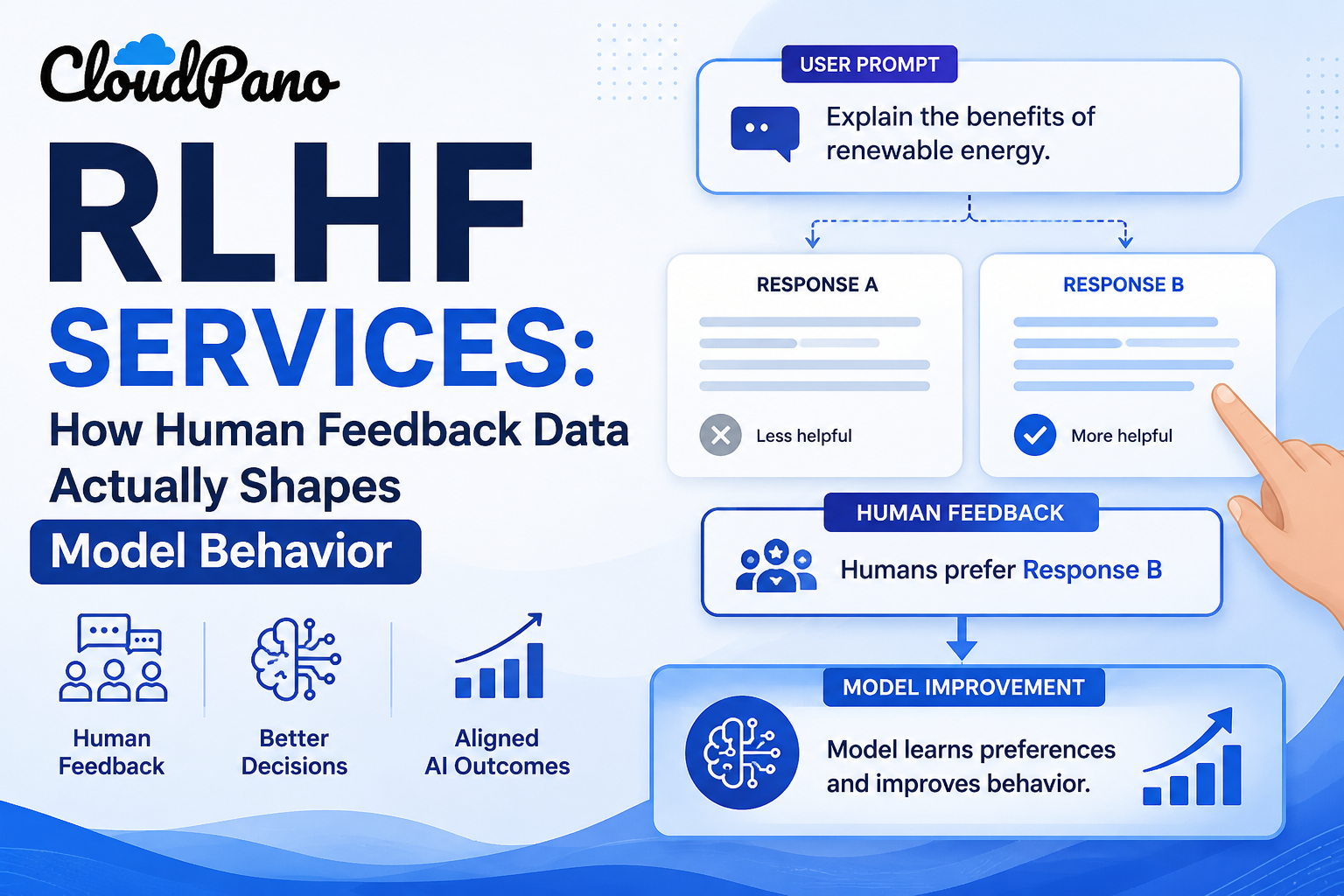
Reinforcement learning from human feedback gets referenced constantly in discussions of how modern language models are aligned, but RLHF services as an actual operational offering are less commonly explained in concrete terms. The core work isn't standard annotation — it's collecting structured comparisons between model outputs that teach a system what a person actually prefers.
That distinction matters when scoping this kind of project. Reinforcement learning from human feedback depends on comparison data quality in a way that's different from labeling accuracy on a single-item classification task, and treating the two as the same leads to a poorly scoped project.
Preference data quality has an outsized effect on model behavior because the reward model trained on it directly shapes what the final model is optimized to produce. Google Research's "Data Cascades" study documented how quality issues introduced early in a data pipeline compound into larger, harder-to-diagnose problems later — a pattern that applies with particular force to RLHF, since a poorly calibrated reward model can steer a language model toward consistently wrong behavior rather than just occasional errors (Sambasivan et al., Google Research).
NIST's AI Risk Management Framework treats the alignment between a model's behavior and its intended use as a core trustworthiness concern, which is directly relevant to human feedback for AI training, since that feedback is what defines "intended behavior" in practice (NIST AI RMF).
The pace of LLM development makes getting this right more urgent. Stanford HAI's AI Index has tracked the rapid expansion of large language model capabilities and deployment (Stanford HAI, AI Index Report), and preference data quality issues discovered after a model is fine-tuned are significantly more expensive to correct than issues caught during data collection.
RLHF data annotation typically moves through three connected stages.
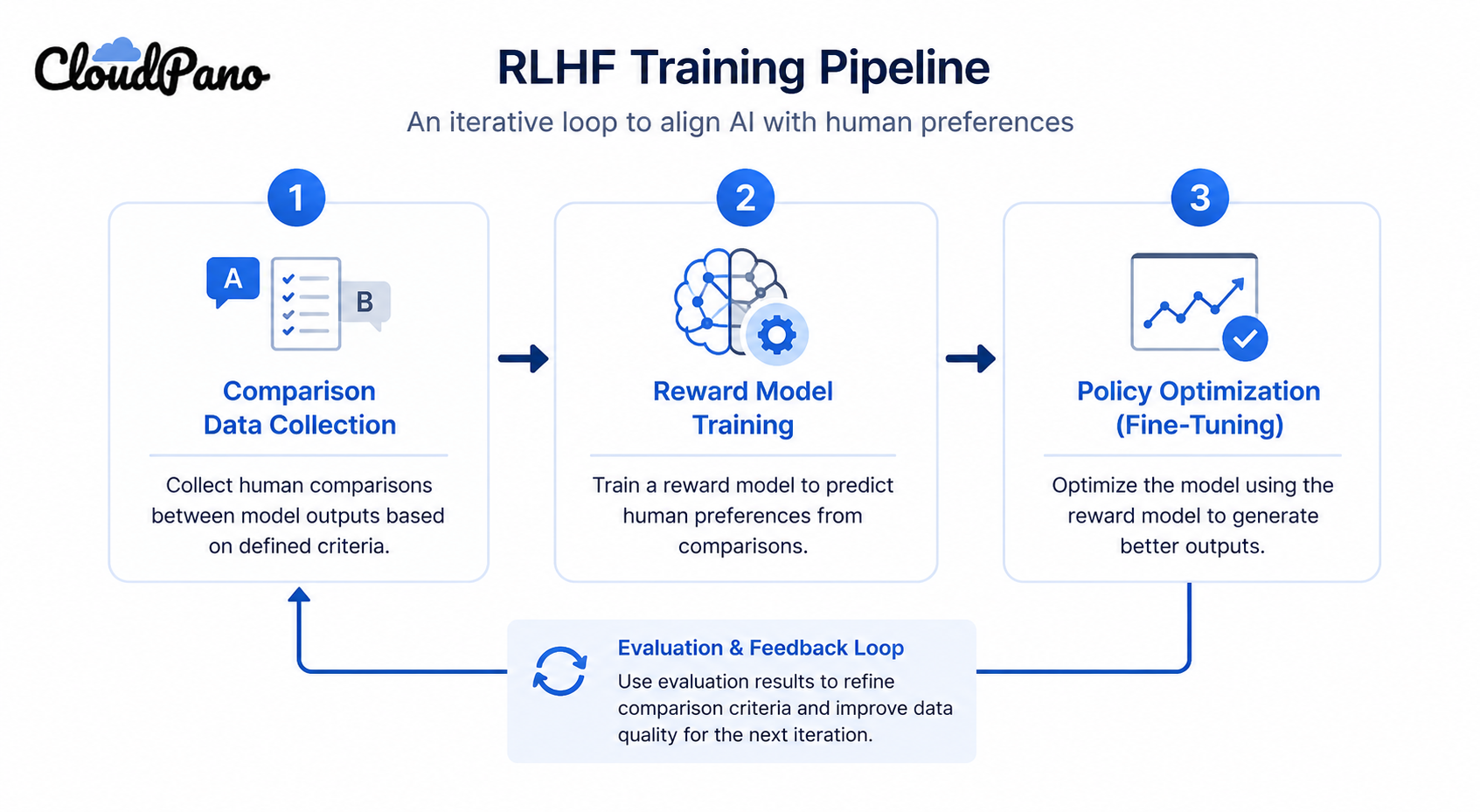
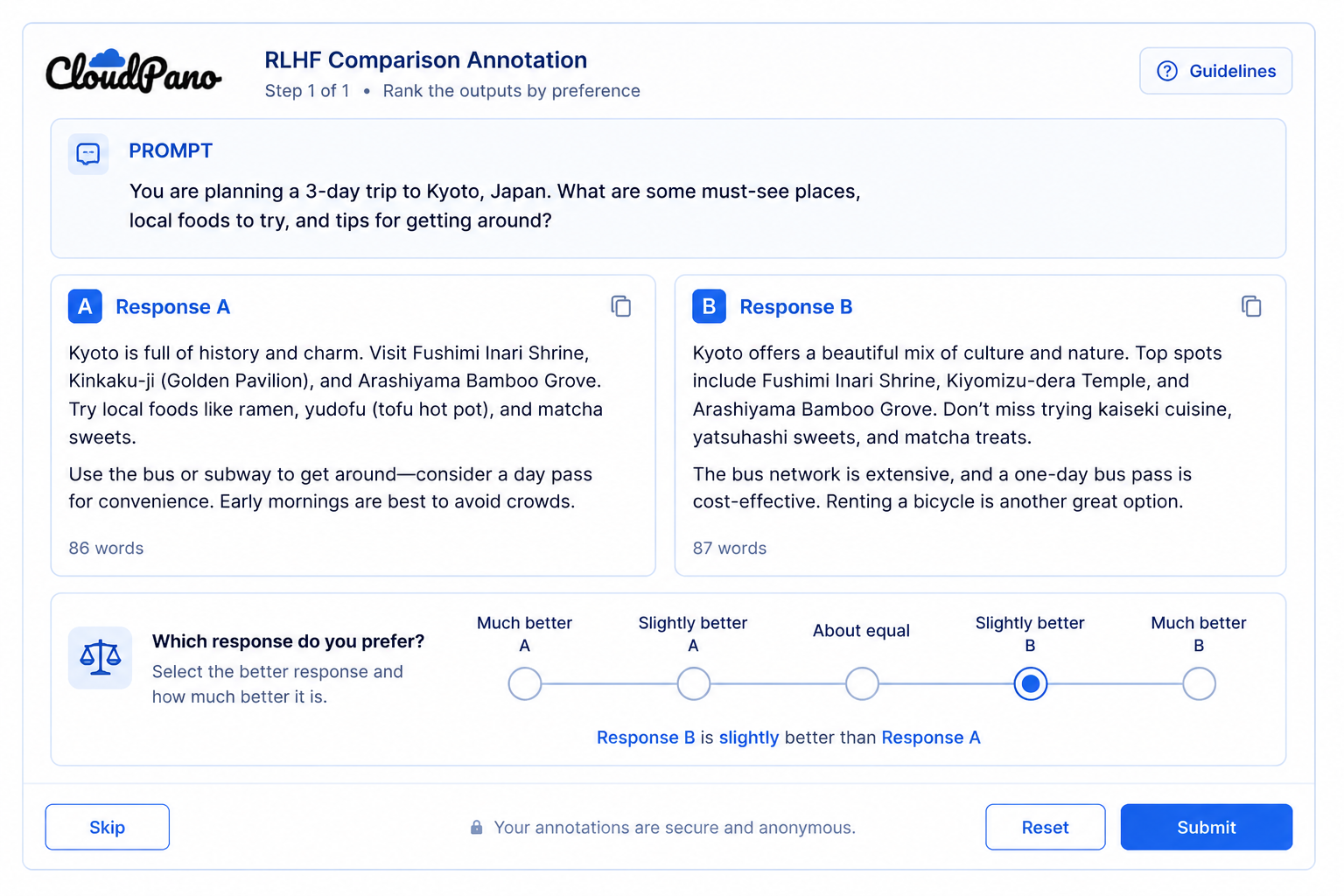
Comparison data collection. Annotators are shown two or more model outputs for the same prompt and asked to rank them by preference according to defined criteria — helpfulness, accuracy, safety, tone — rather than labeling a single output as simply correct or incorrect.
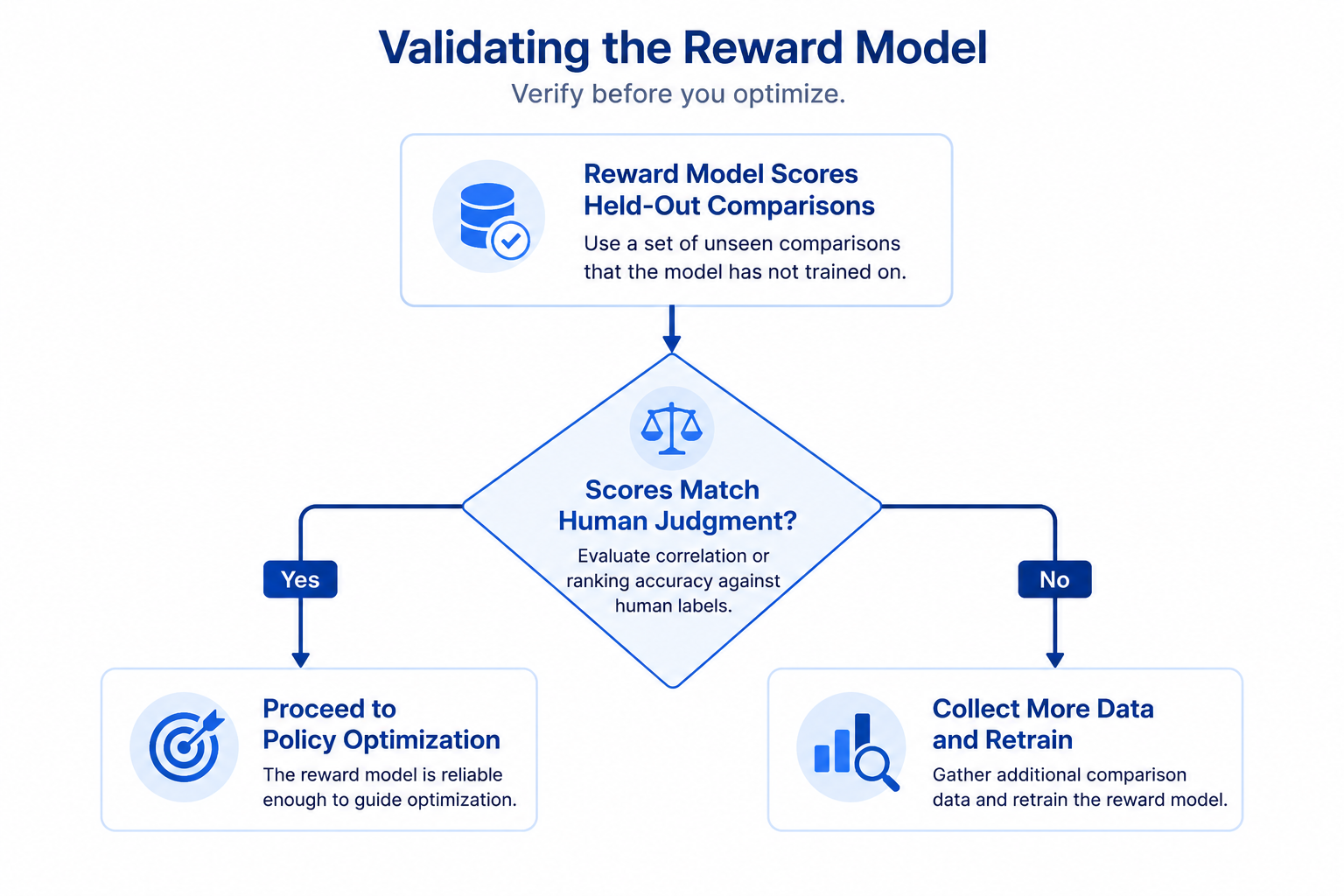
Reward model training. The comparison data trains a separate model to predict which of two outputs a human would prefer, effectively encoding human judgment into a scorable signal.
Policy optimization. The language model is then fine-tuned using reinforcement learning, guided by the reward model's scores, to produce outputs that score more consistently with human preference.
Understanding how these workflows operate as a comparison-based process — not single-item labeling — is what separates a properly scoped RLHF data project from one that reuses standard annotation practices poorly suited to preference ranking.
Services that collect the comparison-based human feedback data — rankings of model outputs by preference — used to train a reward model that then guides a language model's fine-tuning through reinforcement learning.
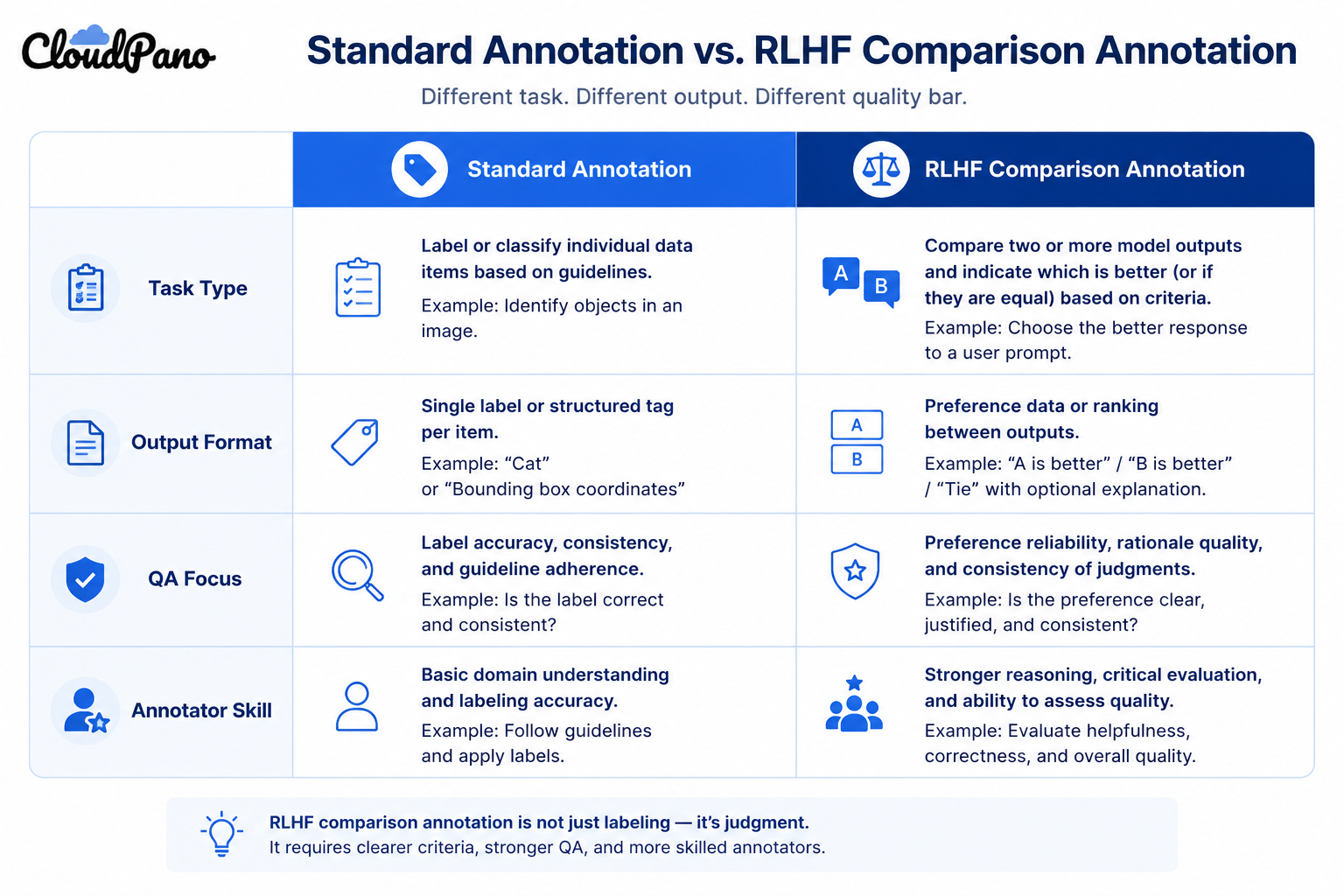
Standard labeling typically assigns a single correct label to an item, while RLHF annotation involves ranking multiple outputs relative to each other according to defined preference criteria like helpfulness or safety.
A model trained on human comparison data to predict which of two outputs a person would prefer, which then provides the scoring signal used to fine-tune the target model through reinforcement learning.
It's when a model learns to produce outputs that score well according to the reward model without genuinely improving in the way humans actually prefer, which is why evaluating against fresh human judgment matters.
Common criteria include helpfulness, accuracy, safety, and tone, though the specific criteria should be defined explicitly for each project rather than assumed to be universal.
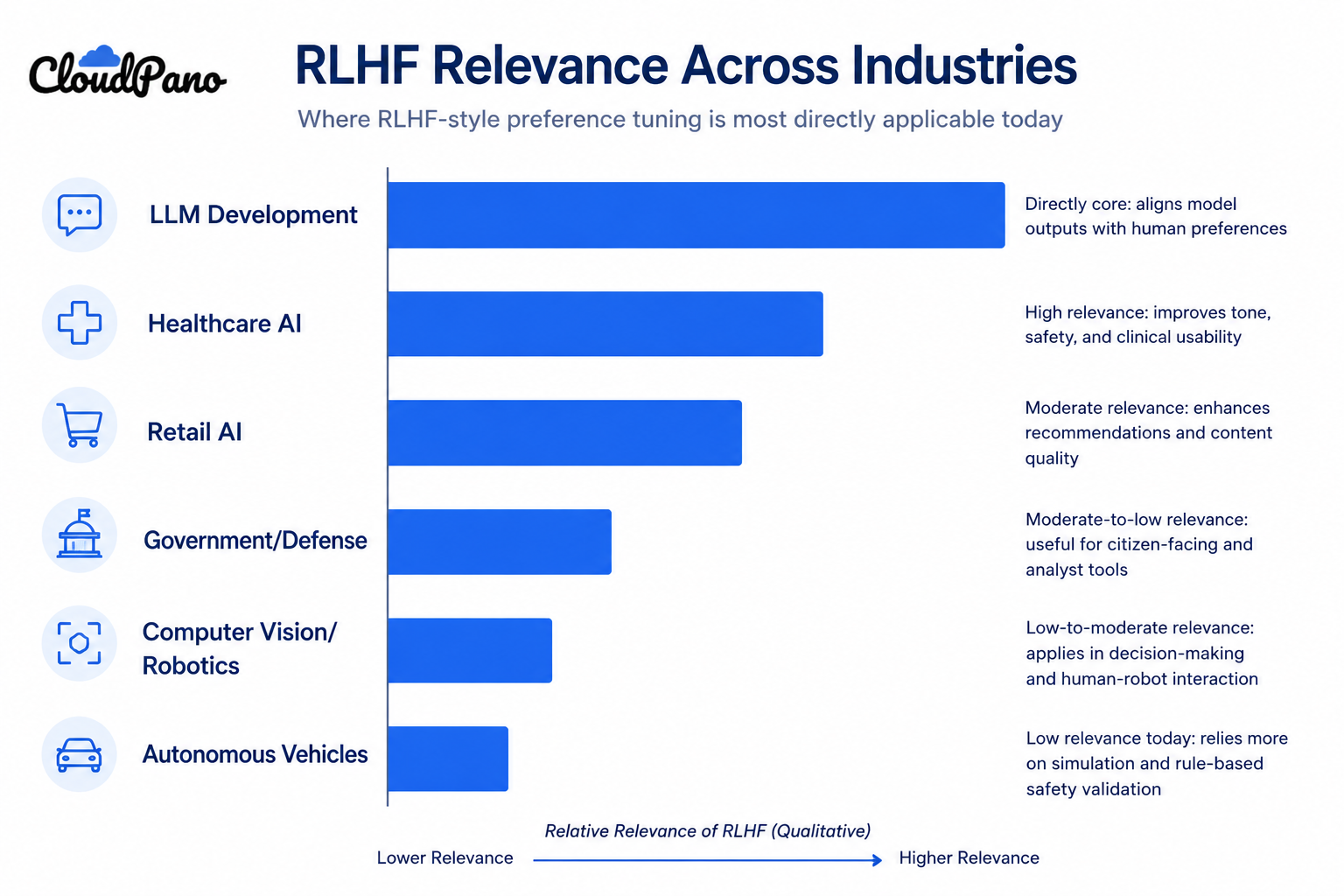
They're most directly associated with LLM alignment, though similar preference-based feedback approaches are being explored in some robotics and conversational retail contexts, with differing mechanics.
RLHF QA focuses on inter-annotator agreement specifically on preference rankings and validating the reward model's scores against held-out human judgment, rather than standard label accuracy checks.
RLHF services involve a fundamentally different kind of annotation work than standard labeling — comparison-based preference ranking, reward model training, and careful validation against real human judgment throughout. Scoping this correctly, with explicit preference criteria and comparison-specific quality assurance, is what separates a properly executed RLHF project from one that misapplies standard annotation practices to a task that needs something different.


Compact, ready to go anywhere
Interchangeable lens that’s upgradeable
Dual 1-inch sensors for improved clarity and low light performance
Dynamic range and 6K 360° capture
360° photo resolution at 21MP

8K 360° video recording for ultra-detailed visuals.
4K single-lens mode for traditional wide-angle shots.
Invisible selfie stick effect for drone-like perspectives.
2.5-inch touchscreen with Gorilla Glass protection.
Waterproof up to 33ft for underwater shooting.

360° photo resolution in 23MP
Slim design at 24 mm thick
Built-in image stabilization for smooth video capture.
Internal 19GB storage for photo and video storage.
Wireless connectivity for remote control and sharing.

60MP 360° still images for high-resolution photography.
5.7K 360° video recording at 30fps.
2.25-inch touchscreen for intuitive control.
USB Type-C port for fast charging and data transfer.
MicroSD card slot for expandable storage.
.png)

.png)

Try it free. No credit card required. Instant set-up.





.svg)


.svg)