


.png)


Most virtual tour software is built with real estate's rapid turnover in mind — capture, publish, move on to the next listing. Hospitality operates on a different rhythm entirely: a tour built for a hotel or restaurant typically needs to represent an ongoing brand experience, maintained carefully over a long period rather than replaced frequently. Evaluating virtual tour software for hotels properly means recognizing this difference rather than applying a real estate-oriented checklist to a fundamentally different use case.
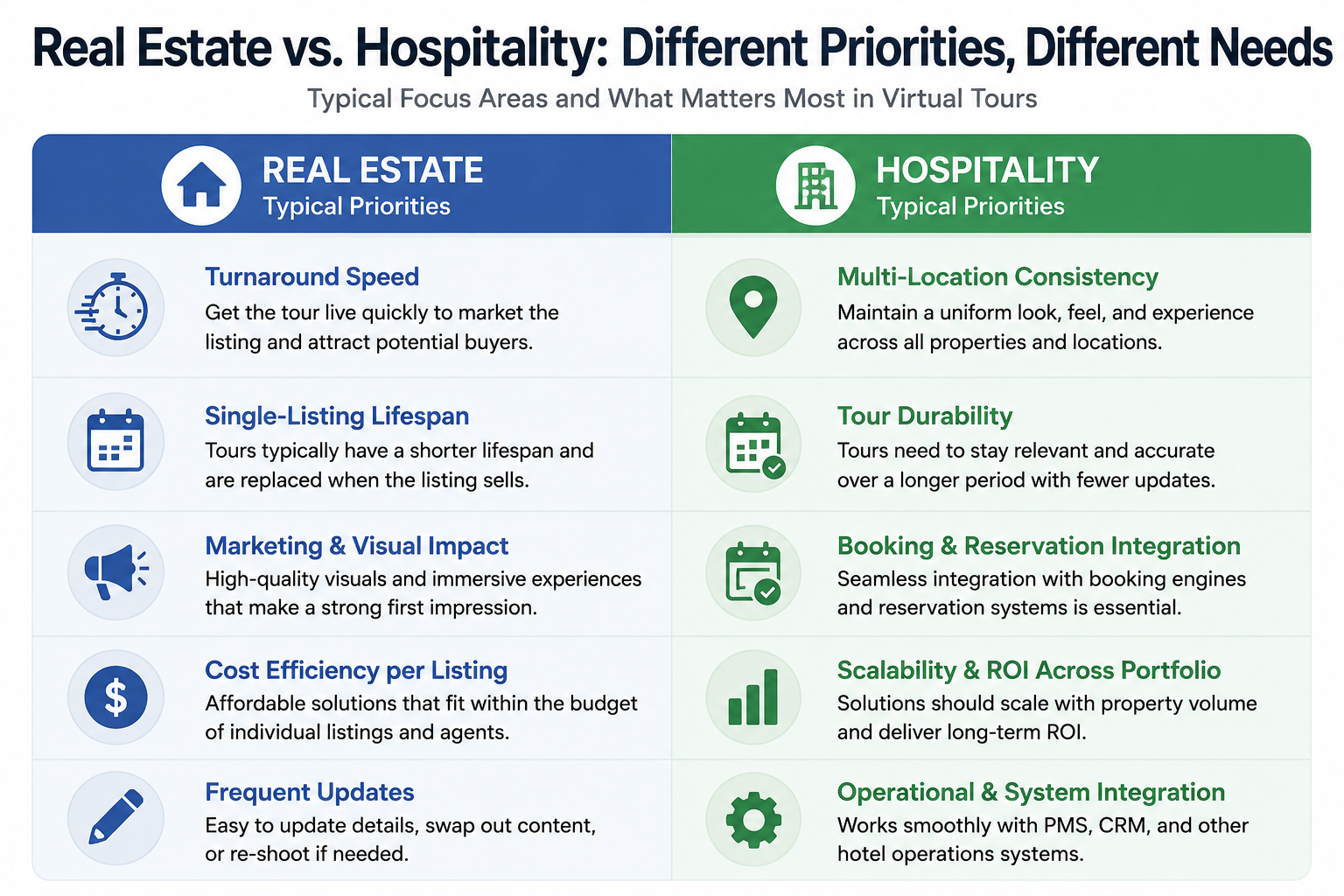
A real estate tour has a defined lifespan tied to a listing — it exists to sell one specific property, then gets retired. A hotel or restaurant tour represents an ongoing brand presence, often across multiple locations, viewed by potential guests deciding whether to book weeks or months before ever setting foot on the property. This means update frequency, multi-location consistency, and integration with a booking flow matter more here than the rapid capture-to-publish speed that dominates real estate's priorities.
Effective hospitality 3D tours share characteristics that differ meaningfully from a real estate-focused checklist: consistent branding and presentation quality across multiple properties under the same company, if you operate more than one location; integration or at least easy adjacency to a booking or reservation flow, since the tour is often one step in a longer guest decision journey rather than the final step before a sale; and durability, since these tours are typically built once and need to remain accurate and polished for a long stretch rather than being refreshed constantly.
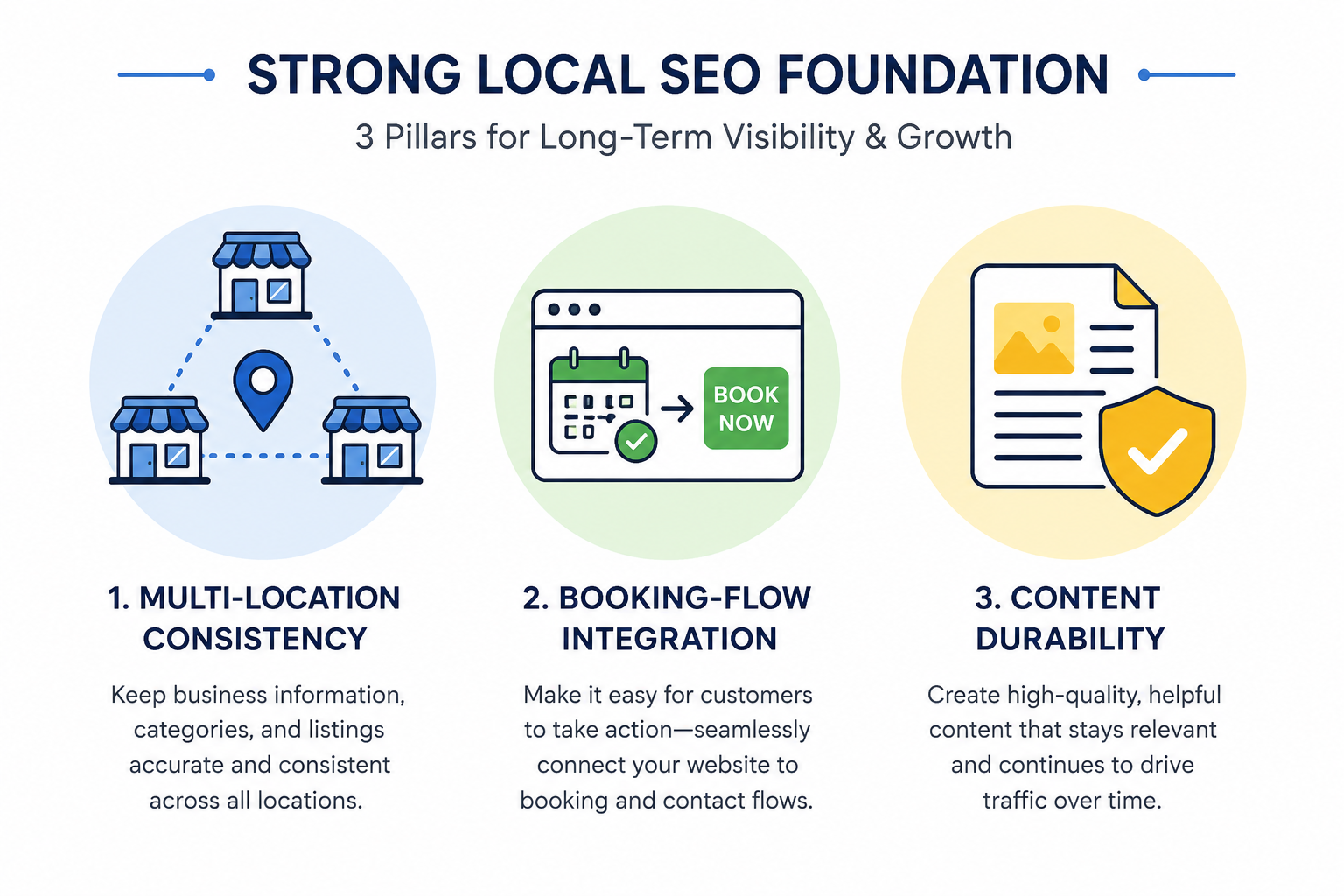
None of these priorities show up clearly on a generic features page, which is exactly why hospitality businesses evaluating this category benefit from a different lens than a real estate-focused buyer would use.
Larger hospitality operators sometimes manage several distinct brands or property types under one company — a boutique brand alongside a budget-friendly one, for instance, each with its own visual identity and guest expectations. This adds another layer of complexity beyond simple multi-location consistency: the platform needs to support genuinely different branding and presentation standards across brands, not just consistent presentation within a single brand's multiple locations.
If this describes your situation, it's worth checking specifically whether a platform's account and branding structure supports distinct sub-brands cleanly, rather than forcing every property under the same visual template regardless of which brand it actually belongs to. This is a more demanding version of the multi-location question raised earlier, and it deserves its own direct check rather than assuming standard multi-location support automatically covers it.
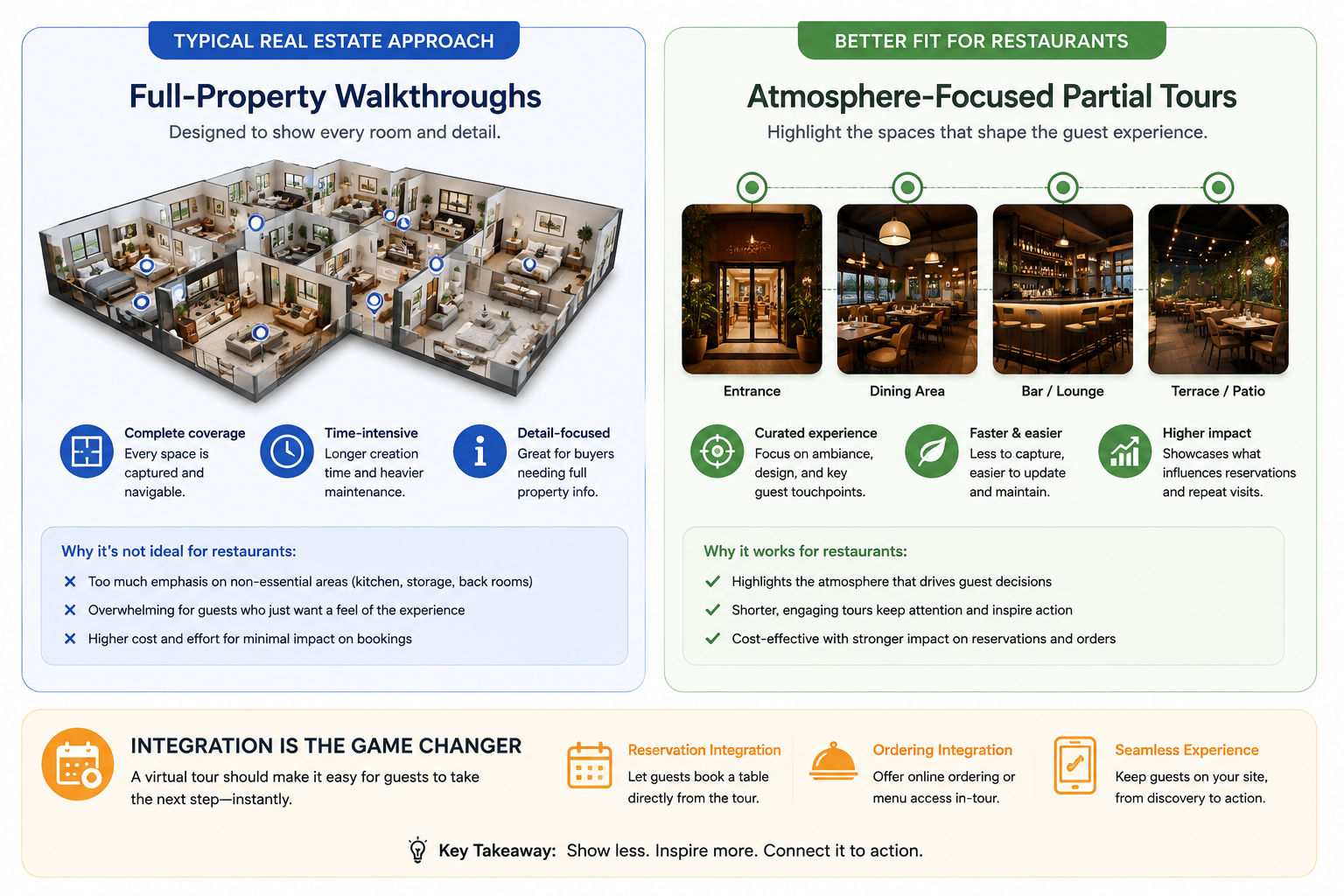
A restaurant virtual tour carries some considerations distinct even from hotels. Restaurants often want to showcase atmosphere and specific spaces (a dining room, a bar area, an outdoor patio) rather than a full property walkthrough, and the tour frequently needs to work well alongside a reservation platform or delivery/ordering integration that's central to how the business actually operates day to day. A platform that handles this kind of partial, atmosphere-focused tour well, and embeds cleanly alongside a reservation widget, tends to serve restaurants better than one built primarily around full-property real estate walkthroughs.
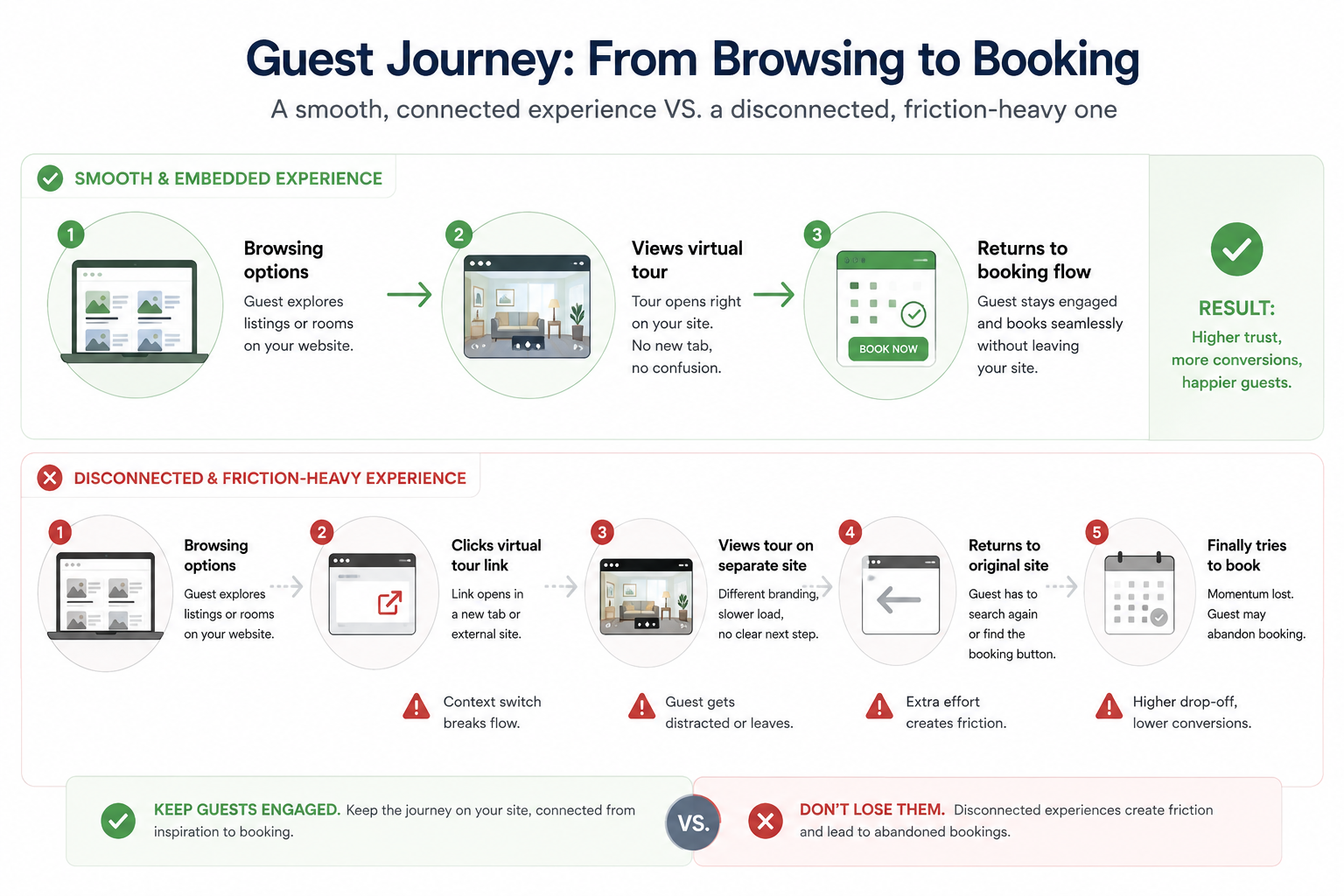
A hotel booking virtual walkthrough works best when it's positioned as part of the booking journey, not a separate, disconnected experience. This means checking directly whether a platform's tours embed cleanly near or within your actual booking flow, rather than living on a separate page a guest has to navigate away from and back to. A tour that requires guests to leave the booking process entirely to view it, then find their way back, introduces friction at exactly the point in the journey where you want to reduce it, not add to it.
Beyond the core priorities above, some hospitality businesses have an additional layer worth planning for: seasonal offerings, temporary event spaces, or limited-time packages that need their own tour content without disrupting the main property tour. A boutique hotel running a seasonal spa package, or a restaurant hosting a private event space that's reconfigured for different occasions, may need a platform that handles this kind of supplementary, temporary content cleanly alongside the main, durable property tour.
This is worth checking directly if it applies to your business, since it's a use case that sits between the two ends of the spectrum discussed earlier — content stable enough to be maintained carefully, but with more frequent updates than a hotel's core building tour would typically need.
On G2's virtual tour software category page, hospitality-identified reviewers tend to emphasize multi-location consistency and booking-flow integration as decision factors, distinct from the turnaround-speed priorities that dominate real estate reviewer feedback on the same platforms.
Hospitality industry trade publications occasionally cover virtual tour and proptech adoption specifically within a hospitality context, which can surface booking-journey and guest-experience considerations that a general software comparison wouldn't think to address.
One consideration worth mentioning specifically for hospitality: a tour that no longer accurately reflects a renovated space, a changed layout, or a discontinued amenity can create a mismatch between guest expectations and reality that shows up in reviews after the fact. Because hospitality tours are meant to stay live for a long time, it's worth building a habit of periodically checking that tour content still matches the actual property, rather than assuming a tour built once remains accurate indefinitely. This is a smaller, ongoing maintenance task, but it protects against the specific hospitality risk of a guest arriving to find something meaningfully different from what the tour showed.
"Isn't a good virtual tour just a good virtual tour, regardless of industry?"
Baseline capture and image quality matter everywhere, but "good for hospitality" specifically means fitting into a longer guest decision journey and staying consistent across locations, which is a different standard than "good for a single real estate listing with a short lifespan." A platform can excel at one without necessarily excelling at the other.
"What if we only have one location, not a multi-property brand?"
Multi-location consistency matters less for a single-property business, but the booking-integration and durability priorities still apply — a single hotel or restaurant still benefits from a tour that fits cleanly into its booking journey and doesn't need constant refreshing.
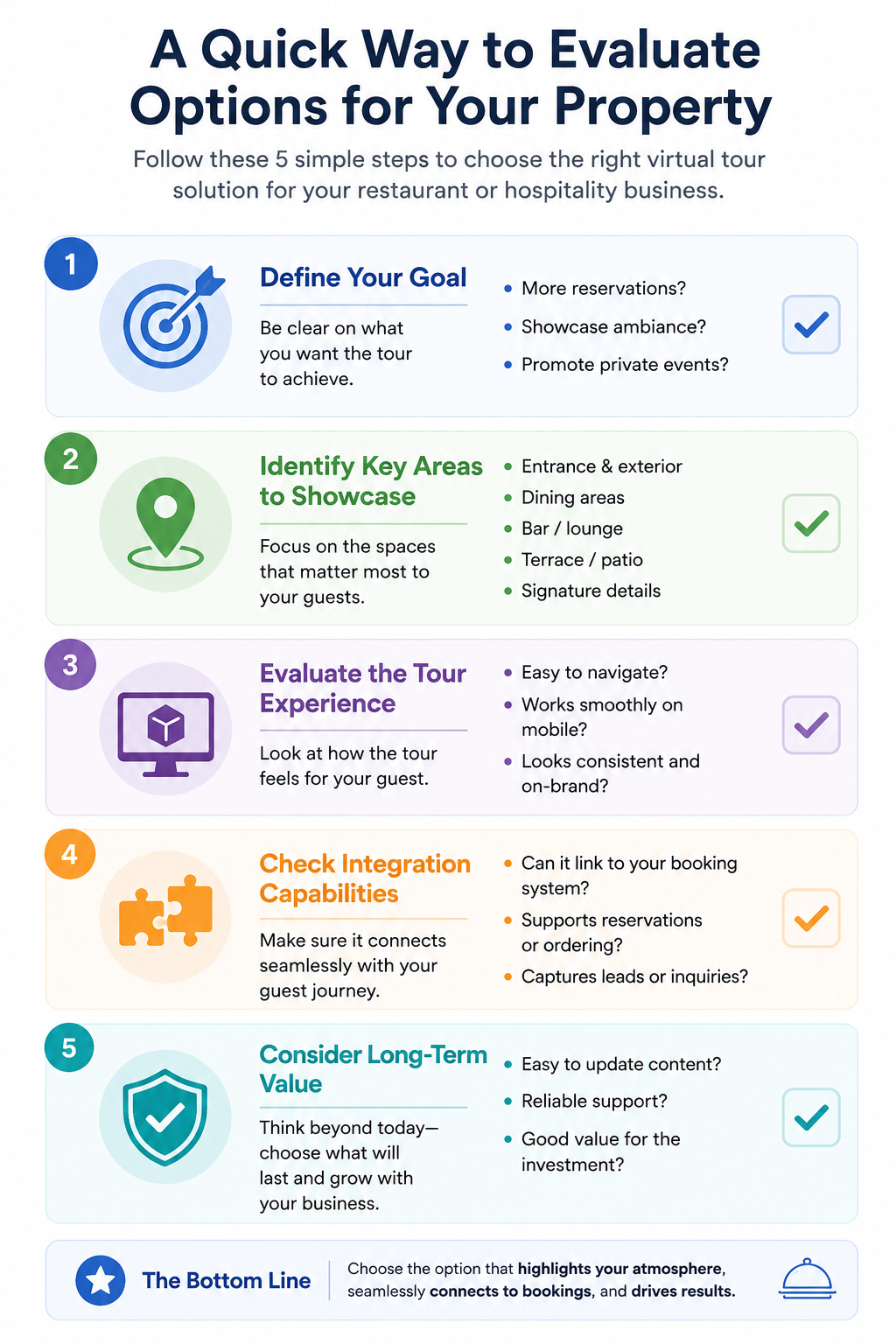
Hospitality's specific needs — multi-location consistency, booking-journey integration, and long-term content durability — differ meaningfully from the rapid-turnover priorities most virtual tour software is built around by default. Evaluating platforms against these hospitality-specific priorities, rather than a generic or real estate-oriented checklist, produces a far more relevant shortlist for a hotel or restaurant business.
If multi-location consistency and flexible integration matter to your property, it's worth testing CloudPano directly against your actual booking journey. And if you want the broader industry-by-industry framework this article builds on, our guide on choosing virtual tour software by industry covers that ground in full. Whether you operate a single property or a multi-brand hospitality group, evaluating against the specific priorities covered here — consistency, booking integration, and durability — will get you to a genuinely well-matched platform faster than a generic comparison built with a different industry's rhythm in mind.


Compact, ready to go anywhere
Interchangeable lens that’s upgradeable
Dual 1-inch sensors for improved clarity and low light performance
Dynamic range and 6K 360° capture
360° photo resolution at 21MP

8K 360° video recording for ultra-detailed visuals.
4K single-lens mode for traditional wide-angle shots.
Invisible selfie stick effect for drone-like perspectives.
2.5-inch touchscreen with Gorilla Glass protection.
Waterproof up to 33ft for underwater shooting.

360° photo resolution in 23MP
Slim design at 24 mm thick
Built-in image stabilization for smooth video capture.
Internal 19GB storage for photo and video storage.
Wireless connectivity for remote control and sharing.

60MP 360° still images for high-resolution photography.
5.7K 360° video recording at 30fps.
2.25-inch touchscreen for intuitive control.
USB Type-C port for fast charging and data transfer.
MicroSD card slot for expandable storage.
.png)

.png)

Try it free. No credit card required. Instant set-up.





.svg)


.svg)