


.png)



This multimodal dataset case study follows a retail AI team building an image-text dataset to train a product search model — one that needed to match a photo of an item to accurate, descriptive text, and vice versa. The scenario is a useful reference point precisely because it surfaces the coordination problems that make multimodal AI training data harder than single-modality projects.
Most teams underestimate this until they're in it: labeling images alone is one workflow, labeling text alone is another, but making sure the two stay consistent with each other is a distinct problem that neither modality's standard process solves on its own.
Multimodal datasets fail in a specific way that single-modality datasets don't: the image label might be accurate, the text label might be accurate, and the pairing between them can still be wrong or loosely aligned. Google Research's "Data Cascades" study documented how such subtle, compounding data issues become difficult to trace back to their source once a model is already trained on them (Sambasivan et al., Google Research).
NIST's AI Risk Management Framework treats data quality and consistency as foundational to trustworthy AI, and cross-modal consistency is exactly the kind of quality dimension that's easy to overlook when each modality's pipeline is evaluated in isolation (NIST AI RMF).
The stakes are amplified by how quickly multimodal models are moving into production use. Stanford HAI's AI Index has tracked the rapid expansion of multimodal AI capabilities across the industry (Stanford HAI, AI Index Report), and a cross-modal alignment problem discovered late is significantly more expensive to fix than one caught during annotation.
In the case study scenario, the retail team's dataset needed three things working together: product images, descriptive text, and a clear, verified relationship between the two — not just an image dataset and a text dataset built separately and merged afterward.
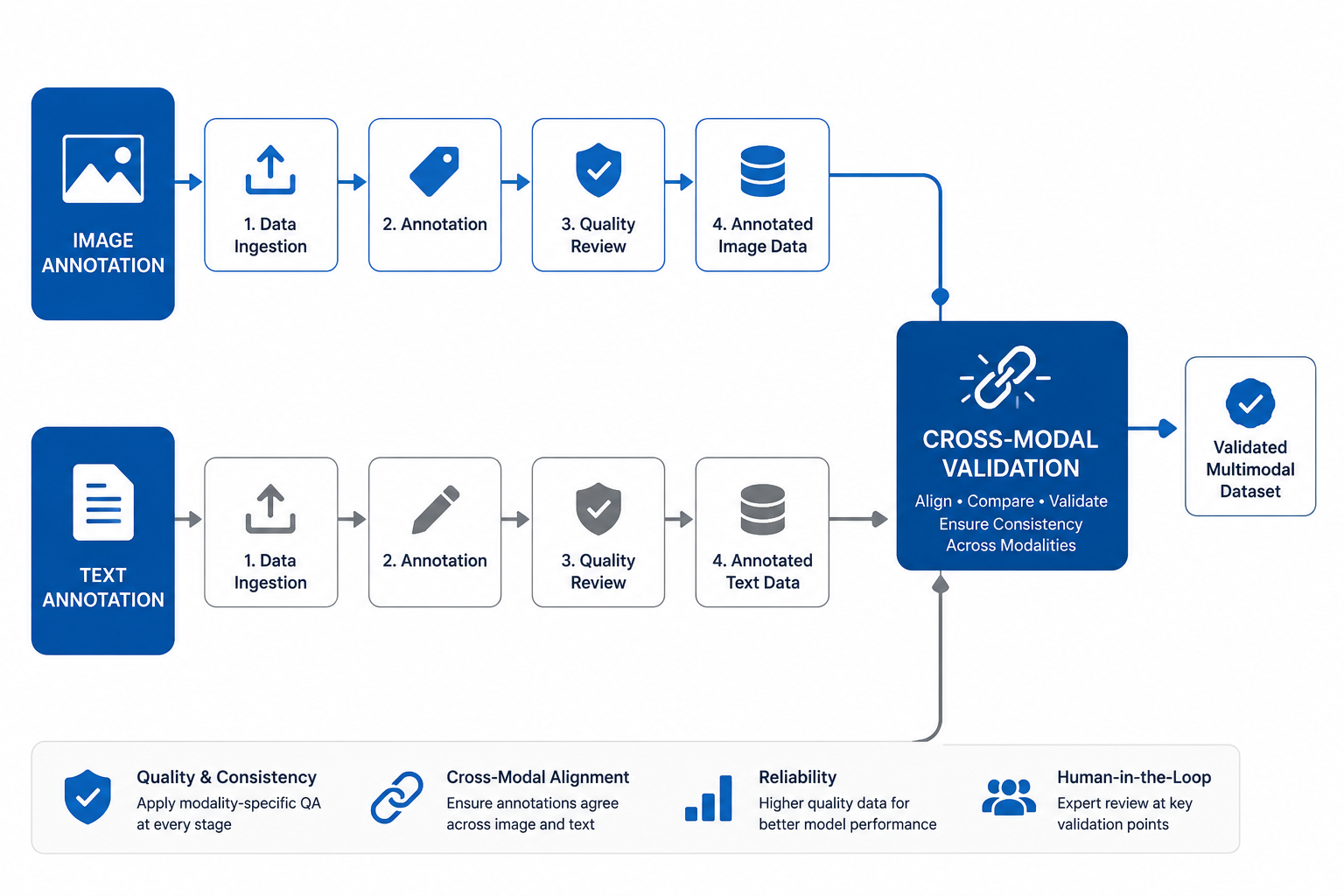
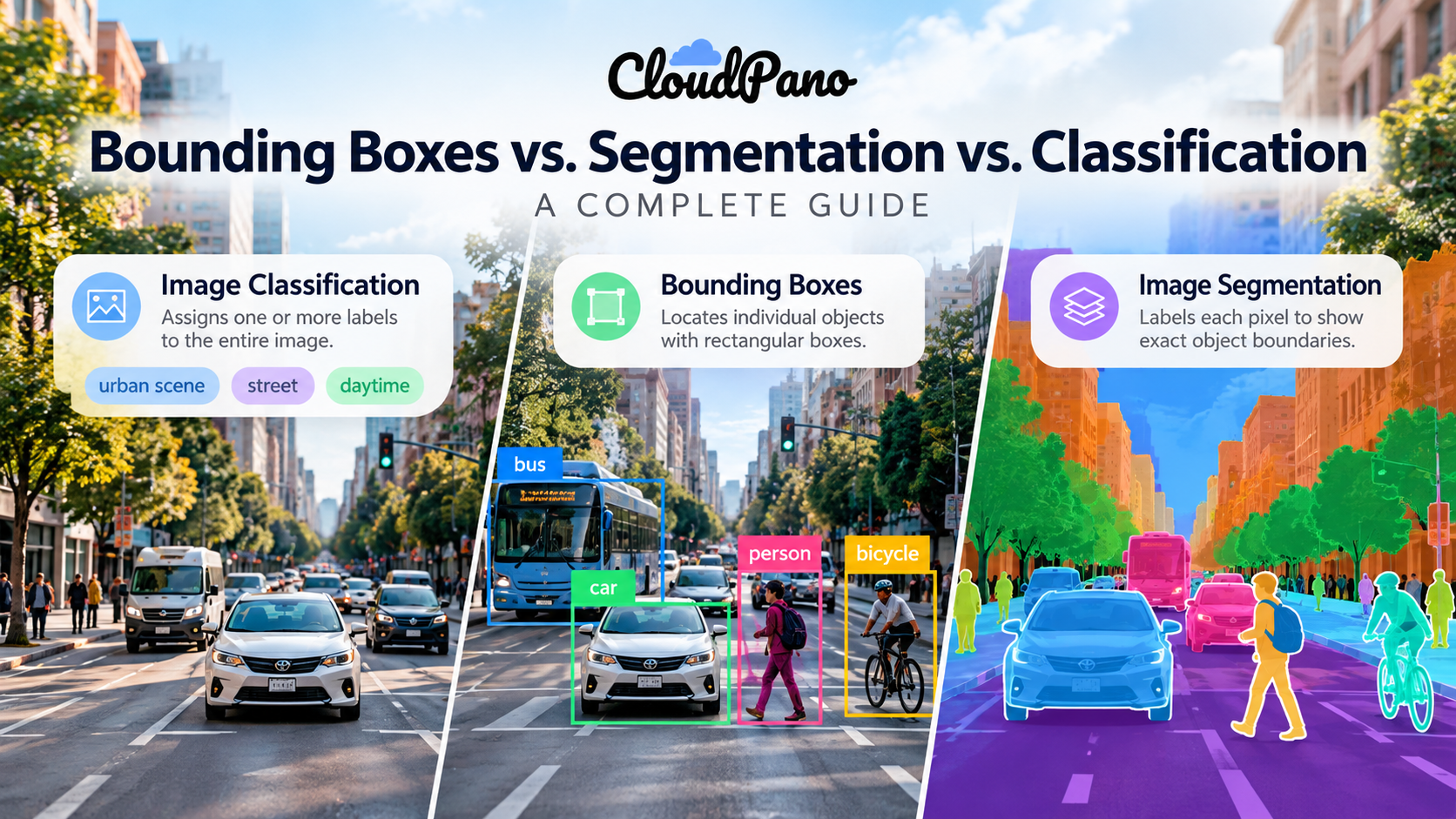
Image annotation covered product category, attributes (color, material, style), and bounding boxes for multi-item photos.
Text annotation covered descriptive accuracy, attribute consistency with the image, and natural language quality suitable for a search or recommendation context.
Cross-modal validation — the piece most teams underbuild — specifically checked whether the text description matched what the image actually showed, flagging mismatches like a text description mentioning a color or feature absent from the corresponding image.
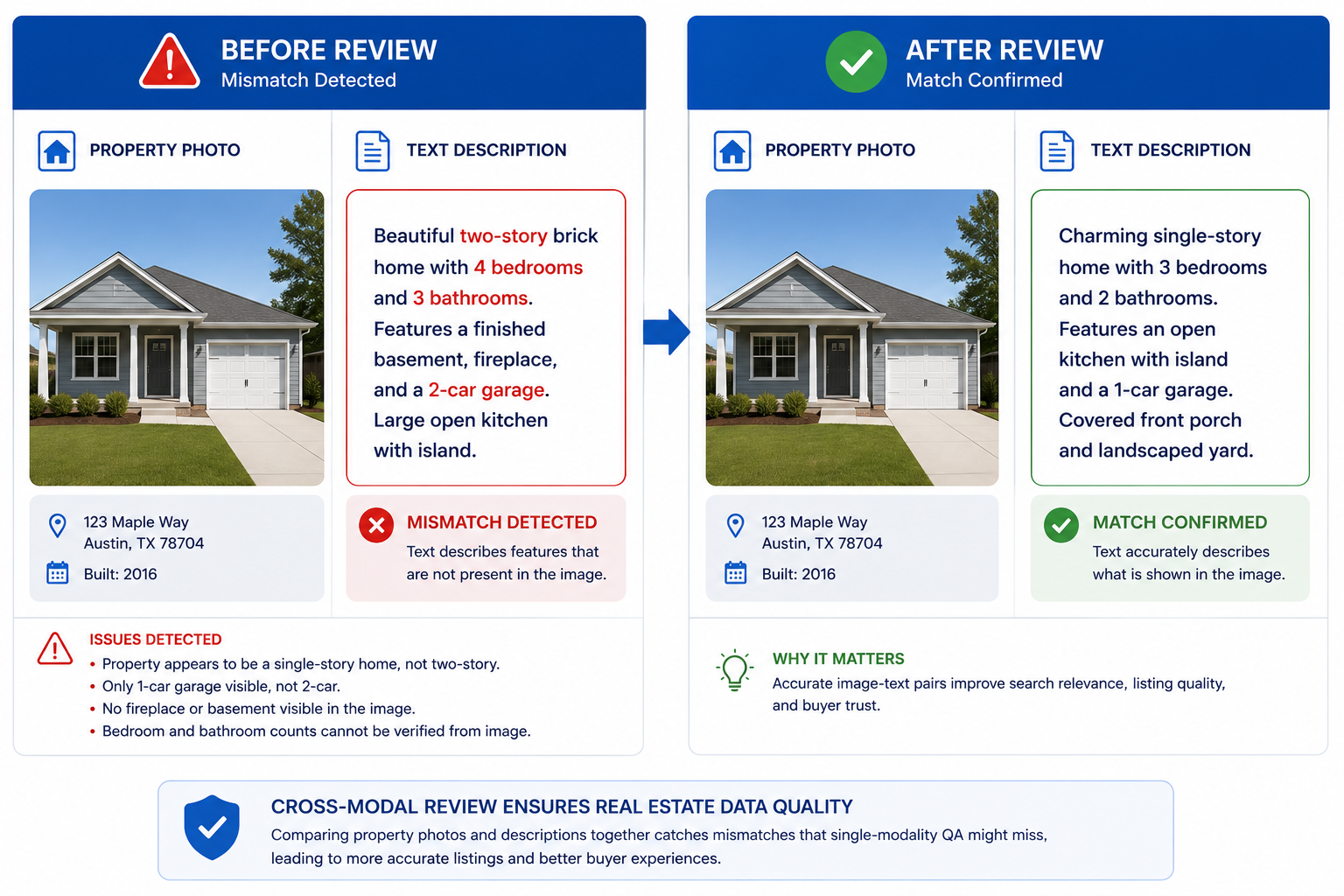
Multimodal data annotation like this needs guidelines written jointly for both modalities from the start, not adapted after the fact from separate image and text guideline documents. Understanding how these workflows operate as a single coordinated process, rather than two parallel ones, is the difference that showed up most clearly in this project.
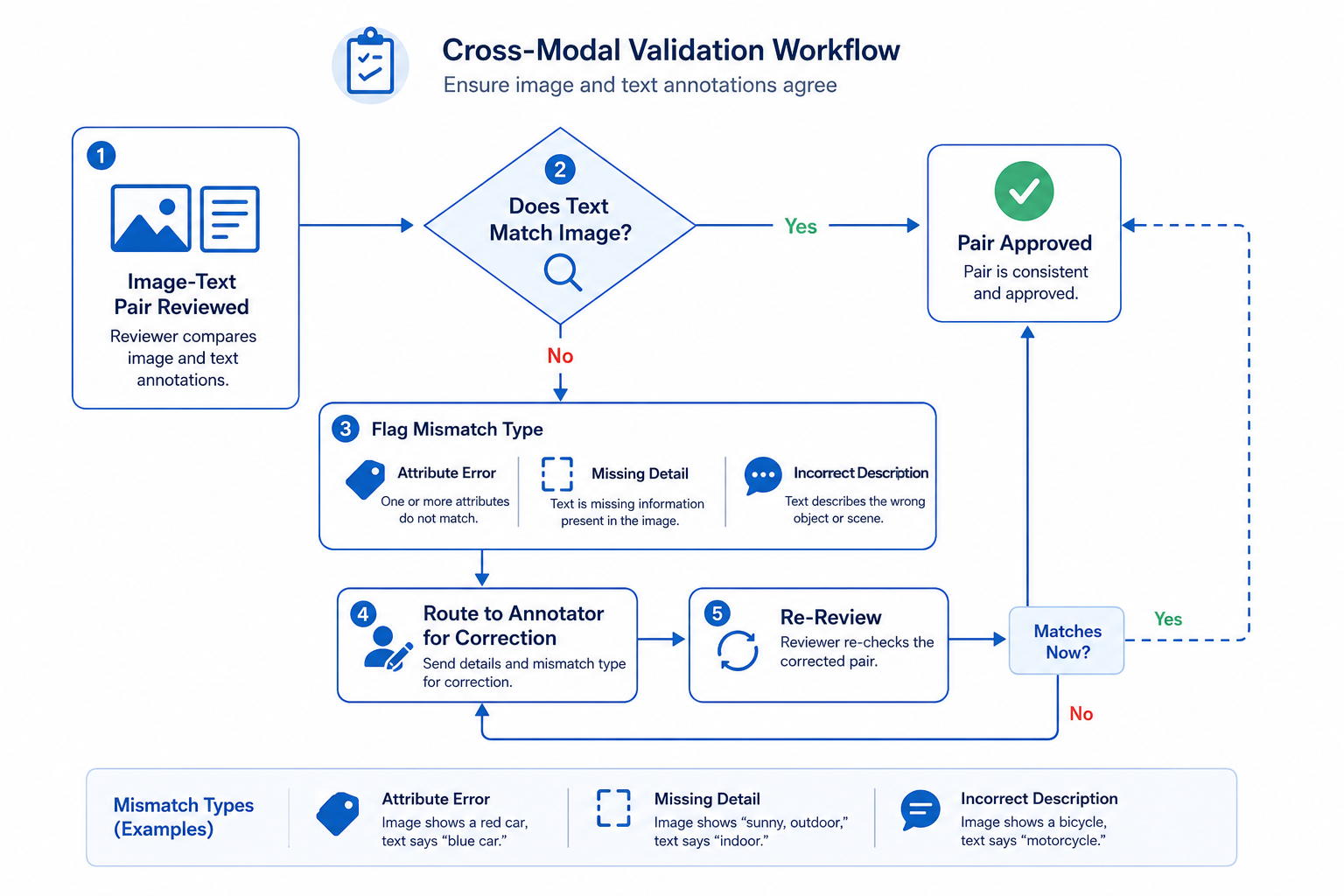
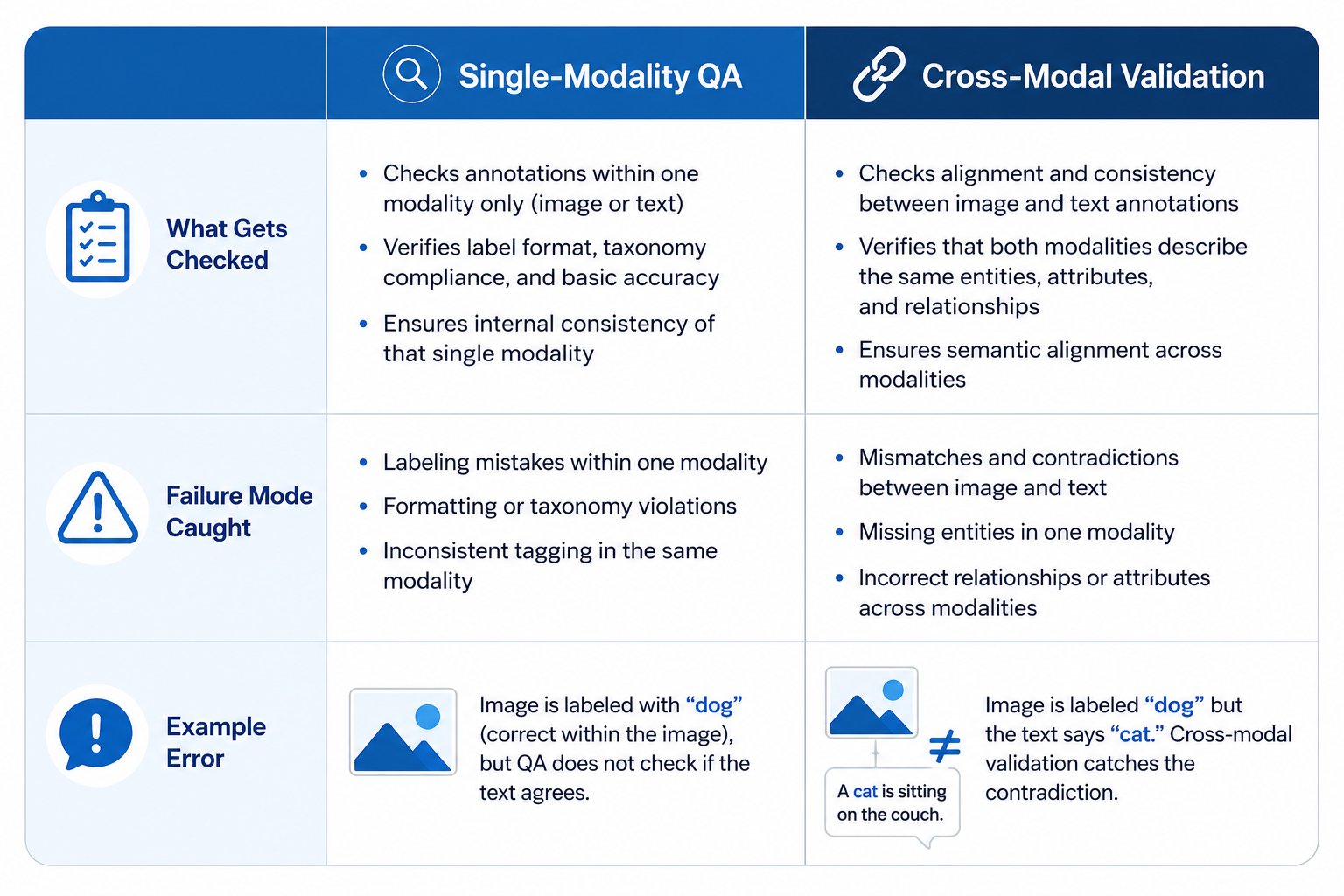
The core challenge shifts from labeling each modality accurately to also verifying the relationship between modalities — for image-text datasets, whether the text actually and completely describes the image.
Product search and recommendation datasets, visual question answering datasets, diagnostic imaging paired with clinical notes, and multimodal LLM training data that pairs images with descriptive or instructional text.
It requires joint guidelines covering both modalities together and a dedicated cross-modal validation step, since accurate individual labels don't guarantee an accurate pairing between them.
Cross-modal validation — specifically checking whether image and text labels are consistent with each other — is the step most frequently skipped when teams treat multimodal projects as two separate single-modality pipelines.
Through a dedicated review pass that specifically compares text descriptions against their paired images, rather than relying on each modality's own independent quality checks to catch pairing errors.
It's possible, but pairing quality needs to be explicitly validated afterward, since combining separately built datasets doesn't guarantee that the resulting pairs are actually consistent with each other.
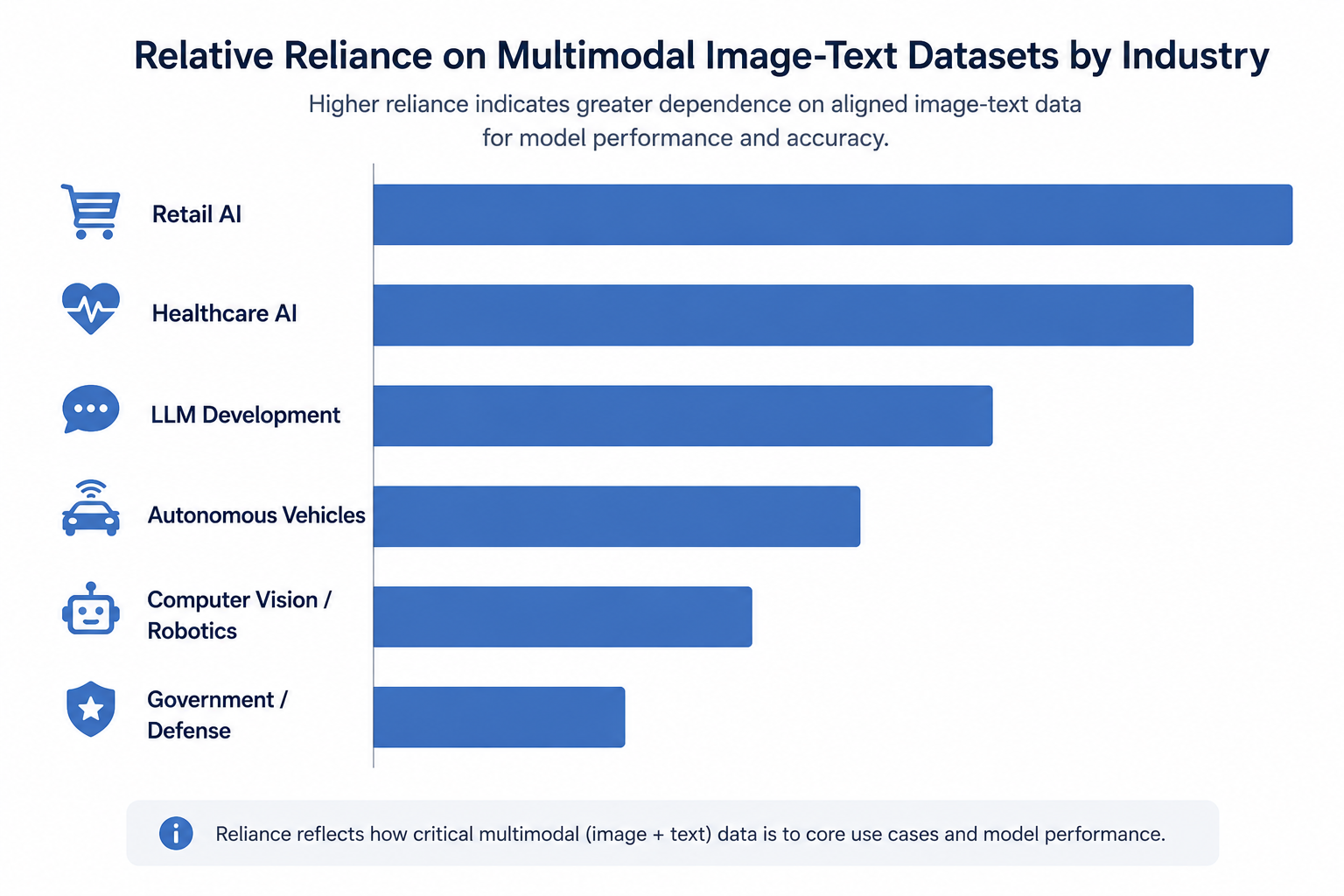
Retail (product search), healthcare (imaging paired with clinical text), autonomous vehicles (sensor data paired with scenario descriptions), and multimodal LLM development all depend significantly on well-paired image-text data.
This multimodal dataset case study illustrates a pattern that shows up across image-text projects regardless of industry: the failure mode that matters most isn't in either modality alone, it's in the relationship between them. Teams that treat multimodal annotation as one coordinated workflow — joint guidelines, dedicated cross-modal validation, shared terminology — consistently avoid the alignment problems that separately built pipelines tend to produce.


Compact, ready to go anywhere
Interchangeable lens that’s upgradeable
Dual 1-inch sensors for improved clarity and low light performance
Dynamic range and 6K 360° capture
360° photo resolution at 21MP

8K 360° video recording for ultra-detailed visuals.
4K single-lens mode for traditional wide-angle shots.
Invisible selfie stick effect for drone-like perspectives.
2.5-inch touchscreen with Gorilla Glass protection.
Waterproof up to 33ft for underwater shooting.

360° photo resolution in 23MP
Slim design at 24 mm thick
Built-in image stabilization for smooth video capture.
Internal 19GB storage for photo and video storage.
Wireless connectivity for remote control and sharing.

60MP 360° still images for high-resolution photography.
5.7K 360° video recording at 30fps.
2.25-inch touchscreen for intuitive control.
USB Type-C port for fast charging and data transfer.
MicroSD card slot for expandable storage.
.png)

.png)

Try it free. No credit card required. Instant set-up.






.svg)


.svg)