


.png)


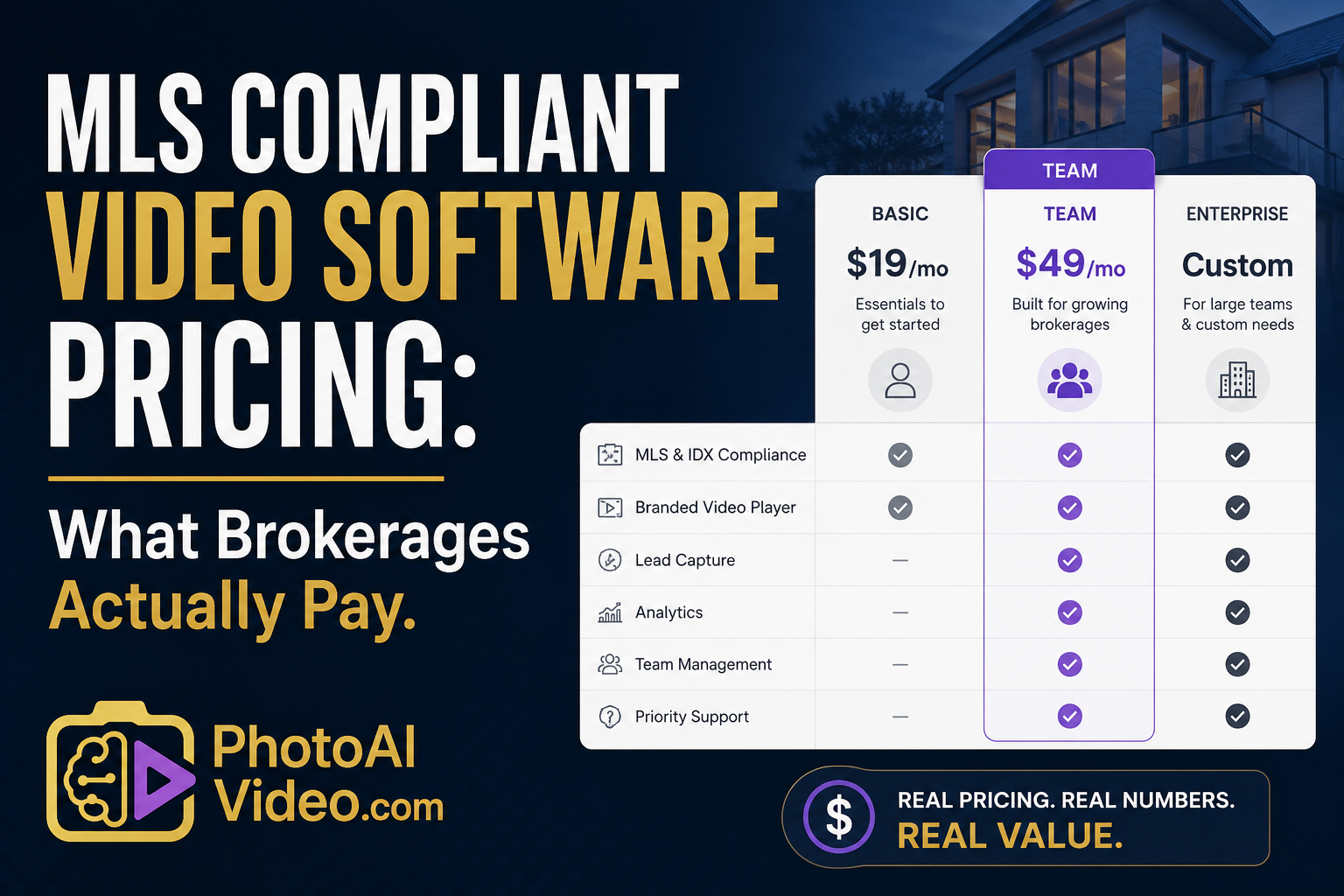
A brokerage operations manager told me she budgeted $49 a month for video software across her office, based on the pricing page she'd read. Eight months later, the actual invoice was closer to $340 a month — not because anyone lied to her, but because "$49/month" was the single-seat price, and compliance features that locked brand and disclosure elements centrally lived in a higher tier she hadn't noticed until she needed them.
That gap between the sticker price and the real invoice is the entire subject of this article. Searching MLS compliant real estate software comparison results, you'll find plenty of pages listing starting prices. Almost none of them walk through what a brokerage, specifically, ends up paying once seats, compliance tiers, and export limits enter the picture.
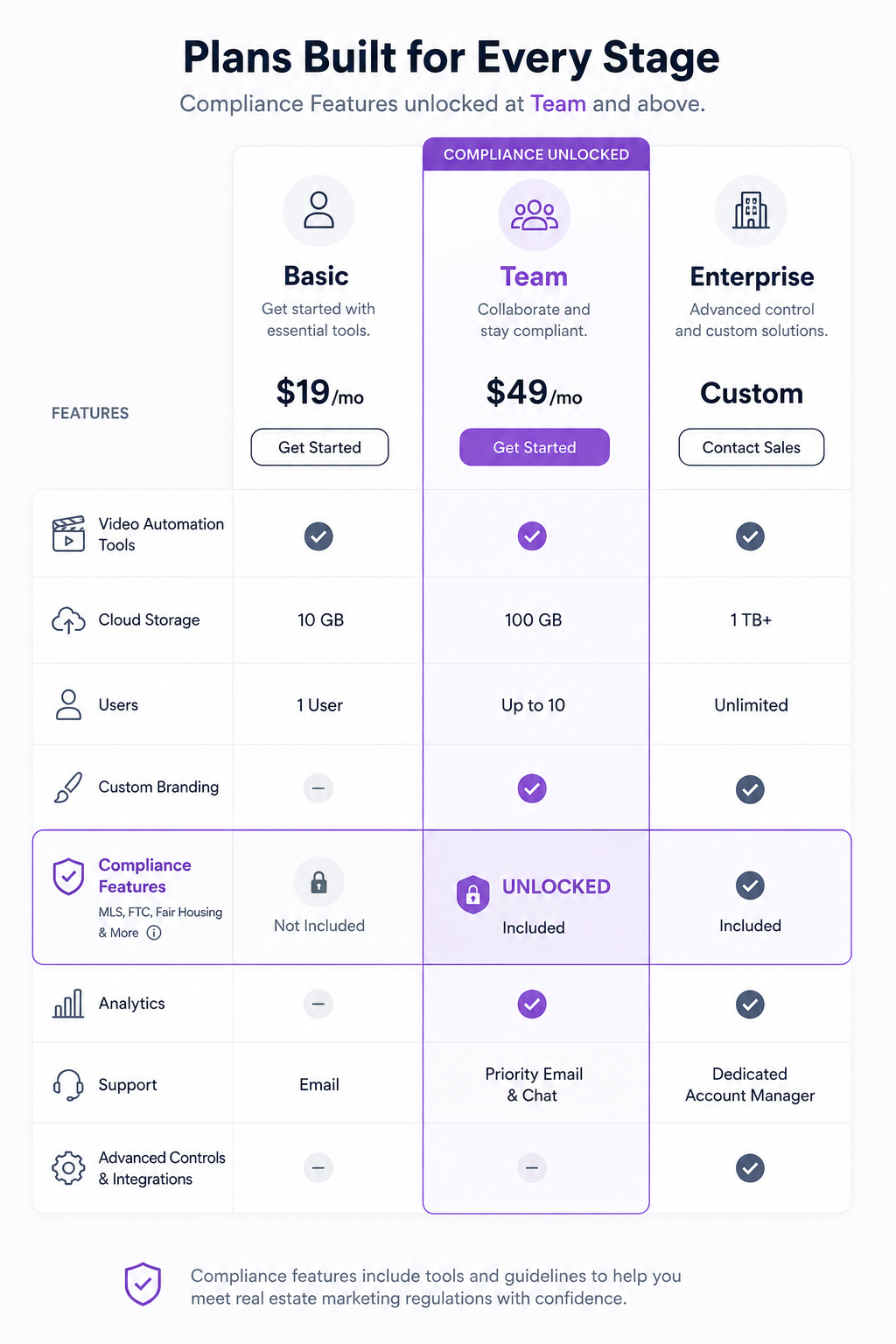
MLS compliance in video software usually refers to features like automatic brokerage disclosure text, equal housing language, licensing information, and consistent branding enforcement across every video an agent produces. The catch is that these features are frequently gated behind higher pricing tiers than the basic per-seat plan — a single agent testing the free or entry tier may never see a compliance requirement trigger, while a brokerage rolling the same tool out across a team discovers the compliance controls they actually need live one or two tiers up.
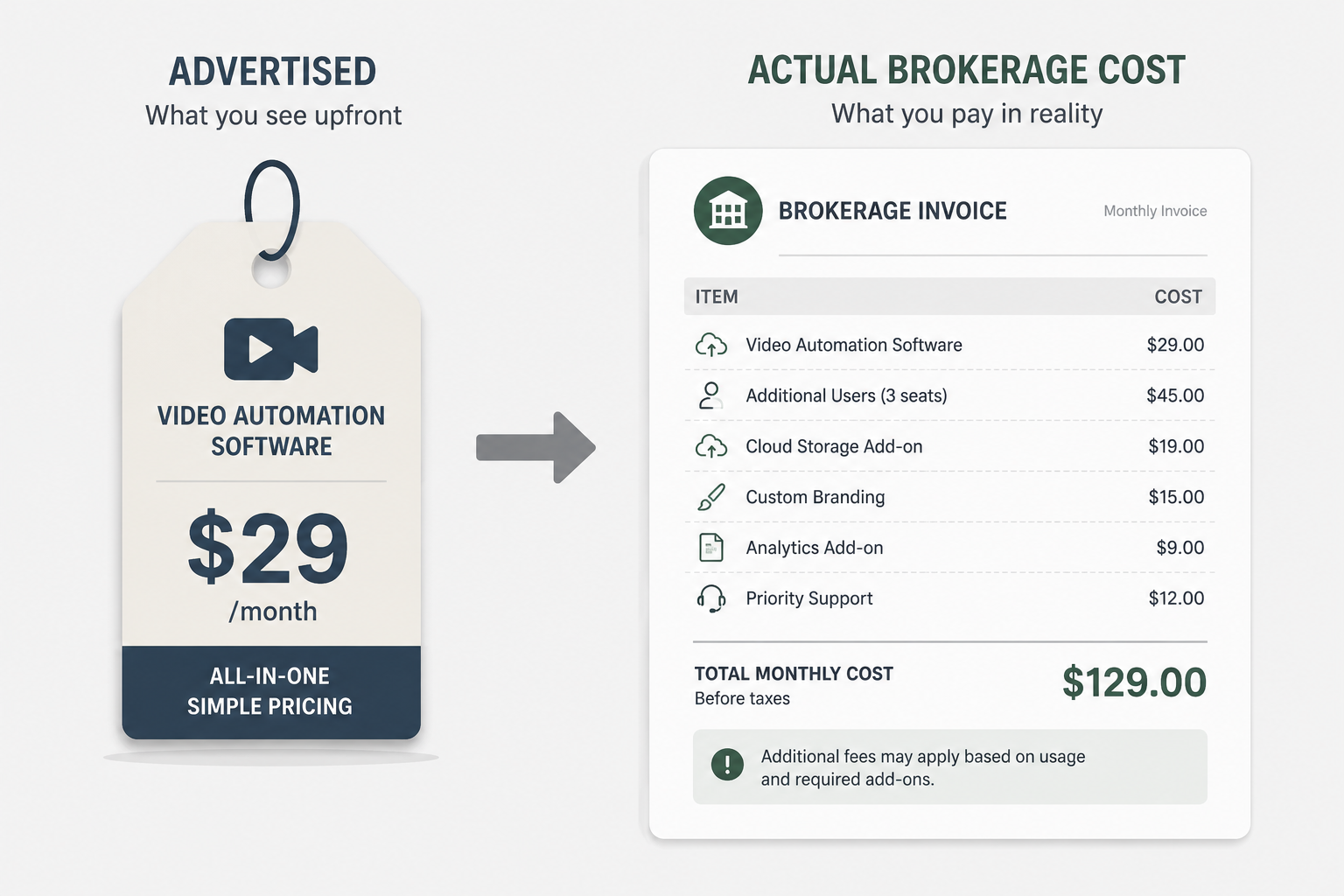
Pricing structure in this category typically breaks into three variables: per-seat cost (how many agents need logins), tier level (what features, including compliance controls, are unlocked), and volume limits (how many videos or how much storage before overage charges apply). Sticker prices usually quote the lowest number across all three variables at once — single seat, base tier, low volume — which is rarely what a real brokerage rollout looks like.
Getting the real number wrong doesn't just blow a budget line. It creates a rollout problem: leadership approves a tool at the advertised price, sets expectations with the team, and then discovers mid-rollout that centralized brand and compliance enforcement — the exact feature that justified going brokerage-wide instead of letting agents choose their own tools — requires an upgrade nobody budgeted for.
This has real compliance stakes too. The National Association of Realtors has highlighted consistent fair housing and disclosure language as an ongoing point of scrutiny in real estate marketing, and a brokerage that assumed compliance features were included at the base tier — only to find agents publishing videos without required disclosures for weeks before the gap was caught — is dealing with a bigger problem than a billing surprise.
Here's how it typically unfolds. A brokerage compares three real estate video generator software comparison tools using the advertised starting prices, picks the cheapest, and signs a handful of agents up individually rather than negotiating a team plan. Three months in, someone in compliance notices that disclosure text is inconsistent across agents — some have it, some don't, some have outdated licensing information — because the base tier didn't include centralized brand and compliance locking. Upgrading mid-contract to the tier that does include it costs more per seat than if they'd negotiated a team plan at that tier from day one.
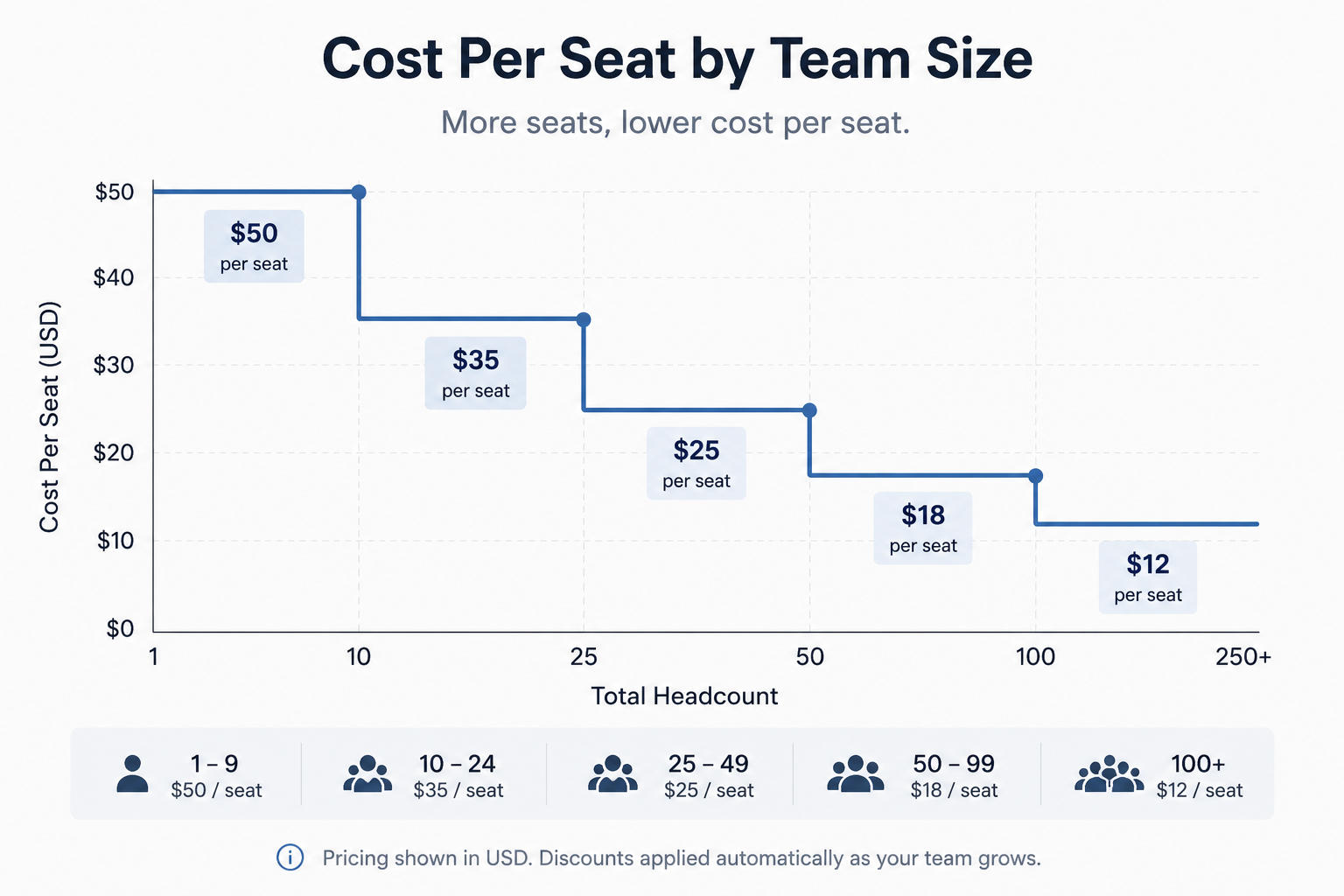
This actually happens constantly with per-seat pricing models: the incremental cost of adding "just one more agent" always looks small in isolation, so nobody stops to calculate the tier-level jump that happens once the headcount crosses whatever threshold triggers a plan change.
The practical approach with PhotoAIVideo — or any tool in this category — is to price out the brokerage's actual rollout before committing, not the single-seat demo experience. That means confirming what tier includes centralized compliance and branding controls, what the per-seat cost looks like at your actual headcount (not one seat), and what volume of videos your team realistically produces monthly, then pricing against that real number rather than the homepage's lowest advertised figure.
Step 1: Confirm which tier includes compliance and brand-locking features. Ask directly rather than assuming the base tier covers it — this is the single most common gap between advertised and actual pricing.
Step 2: Price at your real headcount, not one seat. Per-seat costs sometimes decrease at volume and sometimes increase past a threshold — get the number for your actual agent count, confirm brokerage-tier pricing directly rather than extrapolating from the single-user price.
Step 3: Ask about video or storage volume limits. A brokerage producing hundreds of listing and leasing videos a month can hit overage charges that a solo-agent demo would never encounter.
Step 4: Clarify contract terms for team accounts. Annual commitments sometimes apply differently to team plans than individual ones — confirm whether you can add or remove seats mid-contract as headcount changes.
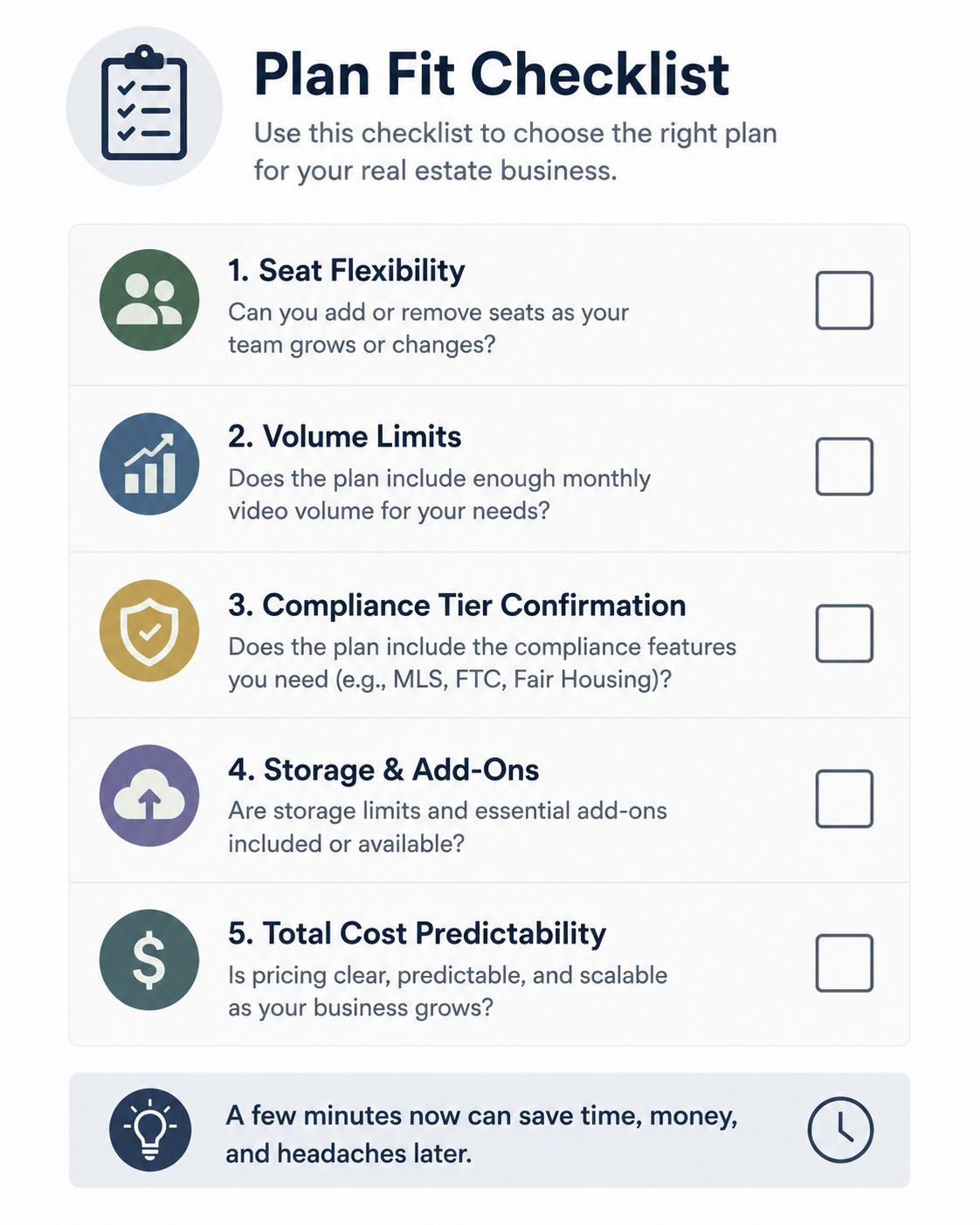
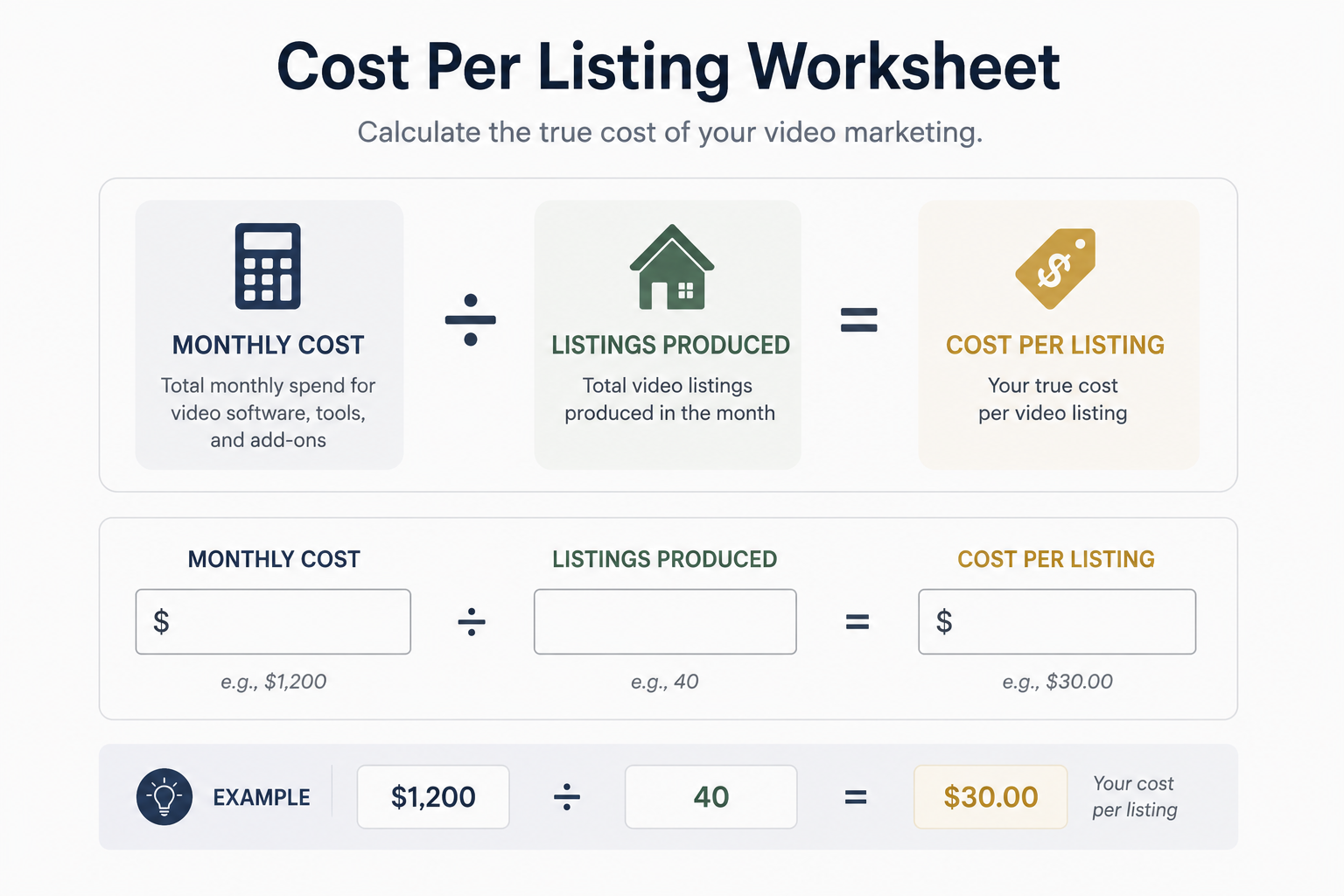
Step 5: Calculate cost per listing, not just cost per month. A higher monthly fee that includes unlimited exports can be cheaper per listing than a lower fee with volume caps, once your actual monthly listing count is factored in.
Why is the advertised price for video software often different from what brokerages actually pay?
Advertised prices typically reflect a single seat at the base tier with generous trial-level volume limits, while real brokerage rollouts involve multiple seats, often a higher tier for compliance features, and real production volume that can trigger overage costs.
Do MLS compliance features usually cost extra?
Often, yes. Centralized brand-locking and disclosure automation frequently live in a mid-tier or higher plan rather than the base subscription, which catches brokerages off guard if they budgeted from the entry-level price.
How should a brokerage estimate real costs before committing?
Confirm the tier that includes compliance and brand controls, get per-seat pricing at your actual headcount, ask about volume limits at your real production level, and calculate cost per listing rather than cost per month.
What happens if a brokerage's agent headcount changes mid-contract?
This depends on the specific contract terms — some plans allow adding or removing seats, others lock a fixed count for the term, which is why confirming flexibility before signing matters.
Is it cheaper to let agents choose their own individual plans instead of a brokerage-wide plan?
It depends on headcount and compliance needs. Individual plans can look cheaper per seat but often lack centralized compliance and branding enforcement, which creates a consistency risk a brokerage-wide plan is specifically designed to solve.
How do volume limits typically affect real estate video software costs?
Base tiers often cap the number of videos or storage included; brokerages and property managers producing high volumes can exceed these limits and incur overage charges that significantly change the effective monthly cost.
What's the best way to compare pricing across different MLS compliant video software options?
Convert every plan to a cost-per-listing basis at your actual expected volume, and confirm which tier includes the compliance features you specifically need, rather than comparing sticker prices alone.


Compact, ready to go anywhere
Interchangeable lens that’s upgradeable
Dual 1-inch sensors for improved clarity and low light performance
Dynamic range and 6K 360° capture
360° photo resolution at 21MP

8K 360° video recording for ultra-detailed visuals.
4K single-lens mode for traditional wide-angle shots.
Invisible selfie stick effect for drone-like perspectives.
2.5-inch touchscreen with Gorilla Glass protection.
Waterproof up to 33ft for underwater shooting.

360° photo resolution in 23MP
Slim design at 24 mm thick
Built-in image stabilization for smooth video capture.
Internal 19GB storage for photo and video storage.
Wireless connectivity for remote control and sharing.

60MP 360° still images for high-resolution photography.
5.7K 360° video recording at 30fps.
2.25-inch touchscreen for intuitive control.
USB Type-C port for fast charging and data transfer.
MicroSD card slot for expandable storage.
.png)

.png)

Try it free. No credit card required. Instant set-up.





.svg)


.svg)