


.png)


A regional brokerage operations director told me their compliance nightmare wasn't a single bad video — it was forty good ones, each perfectly correct for the wrong board. An agent working listings across two adjacent counties had her video template default to one region's disclosure language on a listing that belonged to a different MLS entirely, with its own required text. Nobody caught it for two weeks. The software wasn't broken. It just didn't know she'd crossed a boundary most single-office tools never have to think about.
Most MLS compliant real estate software comparison content is written for a brokerage operating under one board, with one set of disclosure rules, one template, one everything. That's a different, easier problem than the one multi-board brokerages actually face — where the same team, sometimes the same agent, produces listings that need to satisfy different compliance rules depending on which region a property sits in.
Every MLS board can set its own requirements for disclosure language, equal housing statements, brokerage identification, and sometimes even specific formatting or placement rules. A brokerage operating across three boards isn't managing one compliance standard — it's managing three, simultaneously, often with overlapping but not identical requirements.
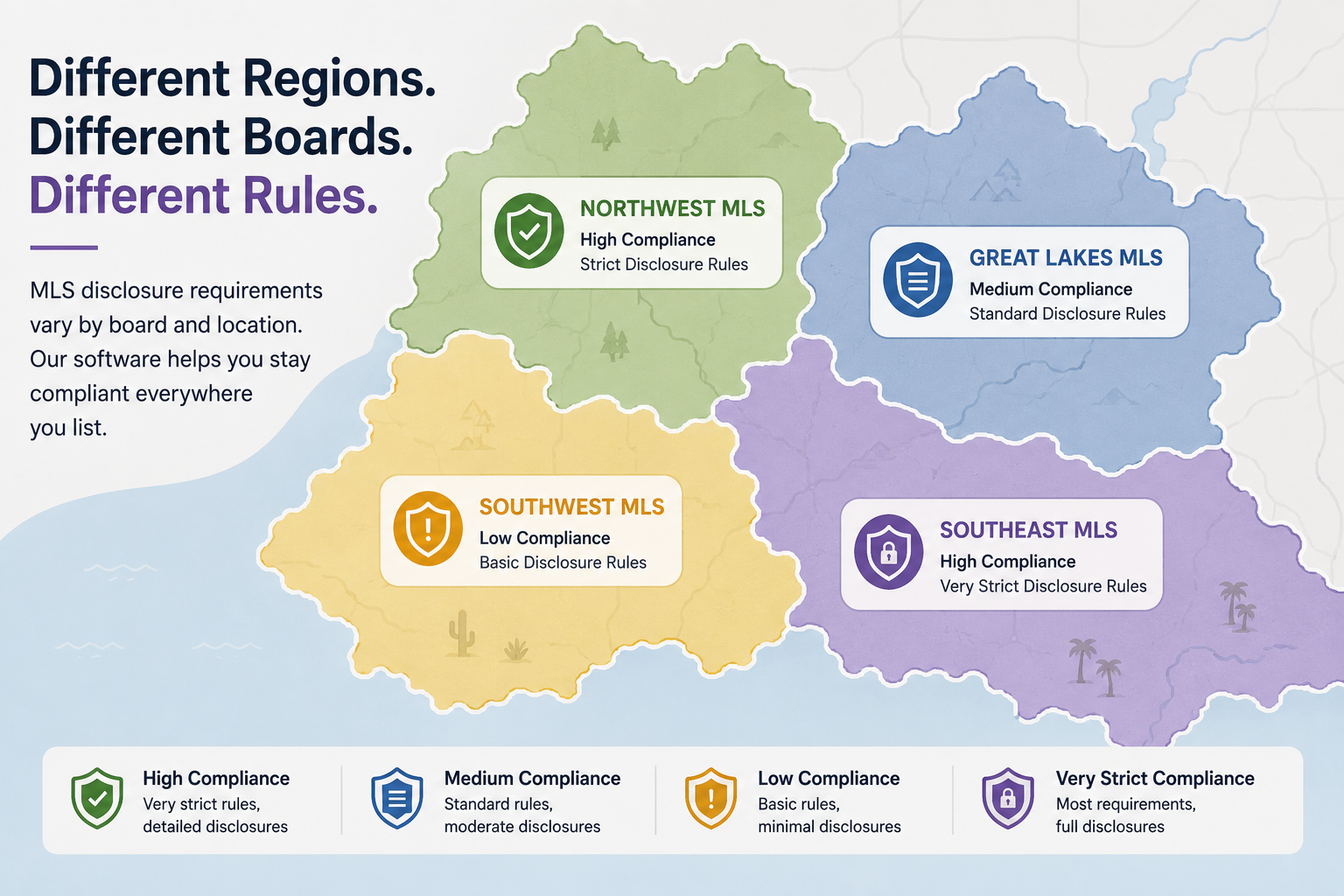
Single-board software handles this by assuming one fixed template covers every video. Multi-board software needs to do something structurally different: let an agent or admin select which board's ruleset applies to a specific listing, and have the compliance elements adjust automatically based on that selection — not rely on someone remembering which region's rules apply to which property, listing by listing.
The risk in multi-board operations isn't hypothetical — it's a numbers problem. A single-office brokerage has one way to get compliance wrong. A brokerage spanning four boards has, functionally, four times the surface area for a mismatch, and the mismatches are harder to catch because a video can look completely correct at a glance while still containing the wrong region's specific language.
This is exactly the kind of gap the National Association of Realtors has pointed to when discussing regional variation in fair housing and disclosure enforcement — rules aren't uniform nationally, and a brokerage assuming one compliance template travels safely across every market it operates in is building on a false assumption.
Here's how it typically breaks. A brokerage expands into a second region, either through growth or a merger, and continues using the video software they already had — configured for their original board's requirements. Agents in the new region start producing videos using the same default template, because nobody has explicitly told the software, or the agents, that a different ruleset now applies. The videos look fine. They pass a casual glance. They're wrong for their specific board.
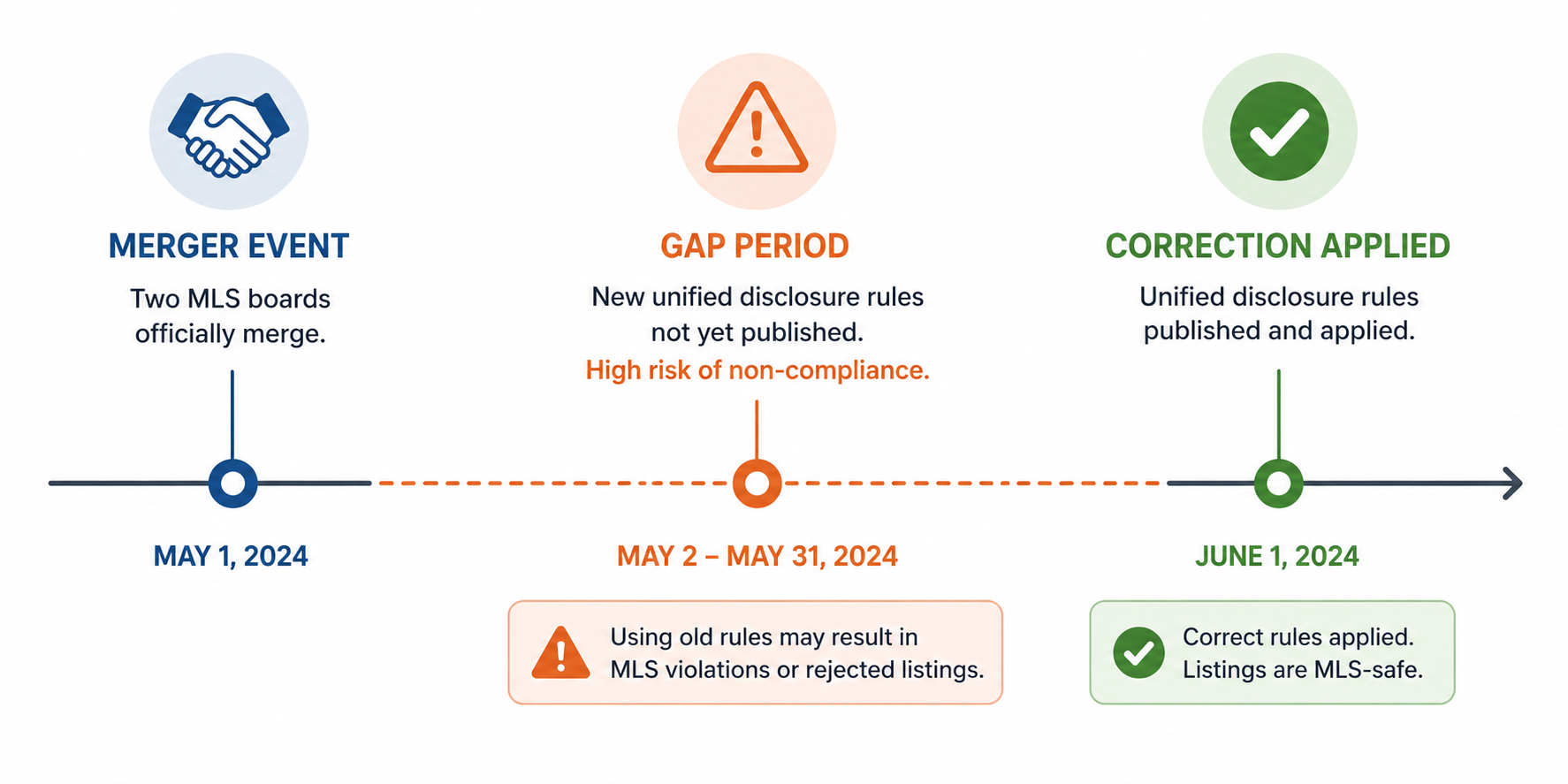
This actually happens constantly during brokerage mergers and multi-region expansions specifically, because the compliance gap isn't obvious until someone from the new region's board — or a sharp-eyed compliance officer doing an audit — notices the mismatch. By then, it's not one video. It's every video produced since the expansion.
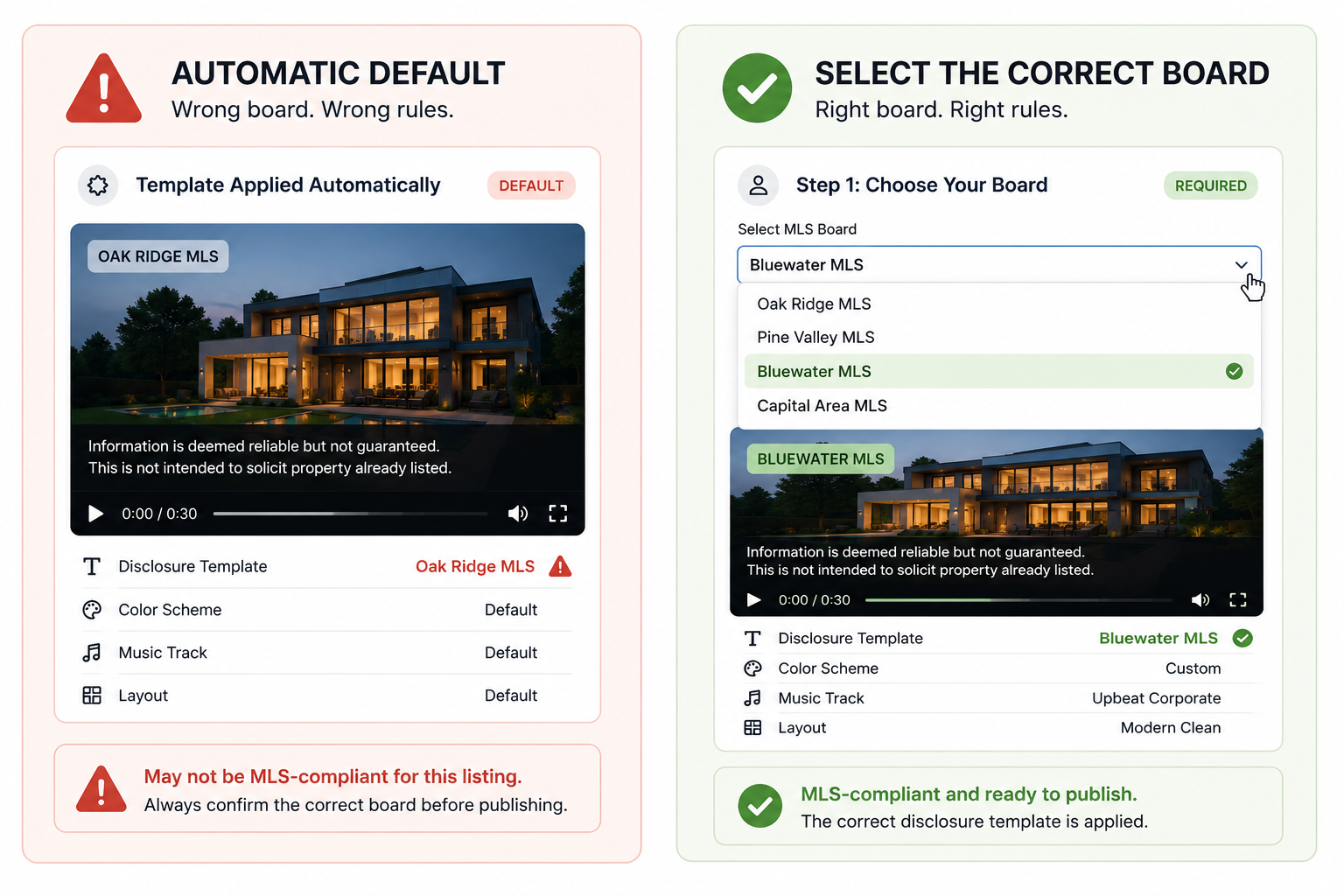
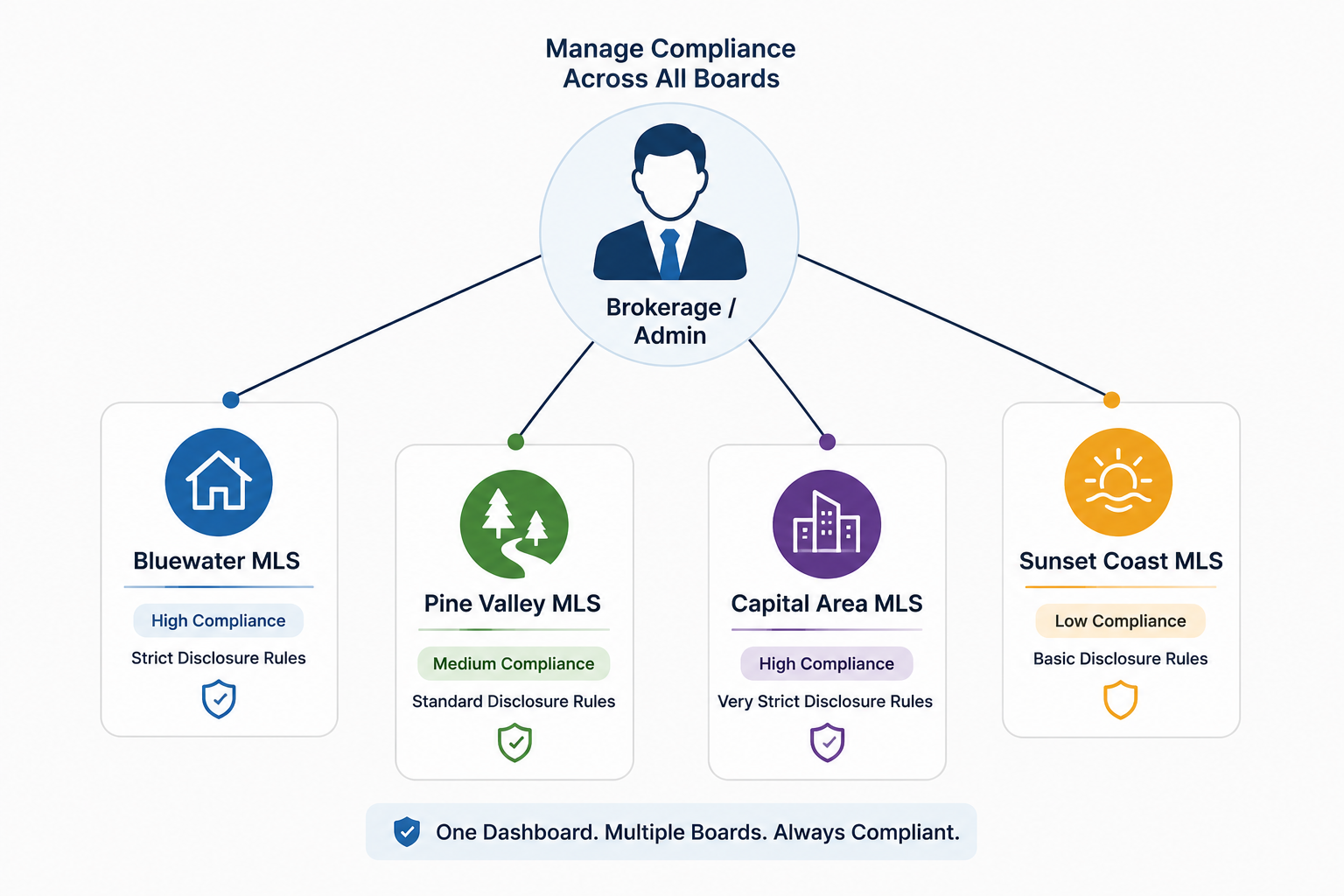
For a brokerage spanning multiple boards, the relevant question for PhotoAIVideo — or any comparable platform — isn't just "does it handle MLS compliance," it's "does it handle more than one compliance profile at once, and does switching between them require deliberate selection rather than defaulting silently." A platform built for multi-board operations should let admins configure separate compliance profiles per region, and require an active choice of which profile applies before a video is finalized — removing the silent-default risk that causes cross-board mistakes in the first place.
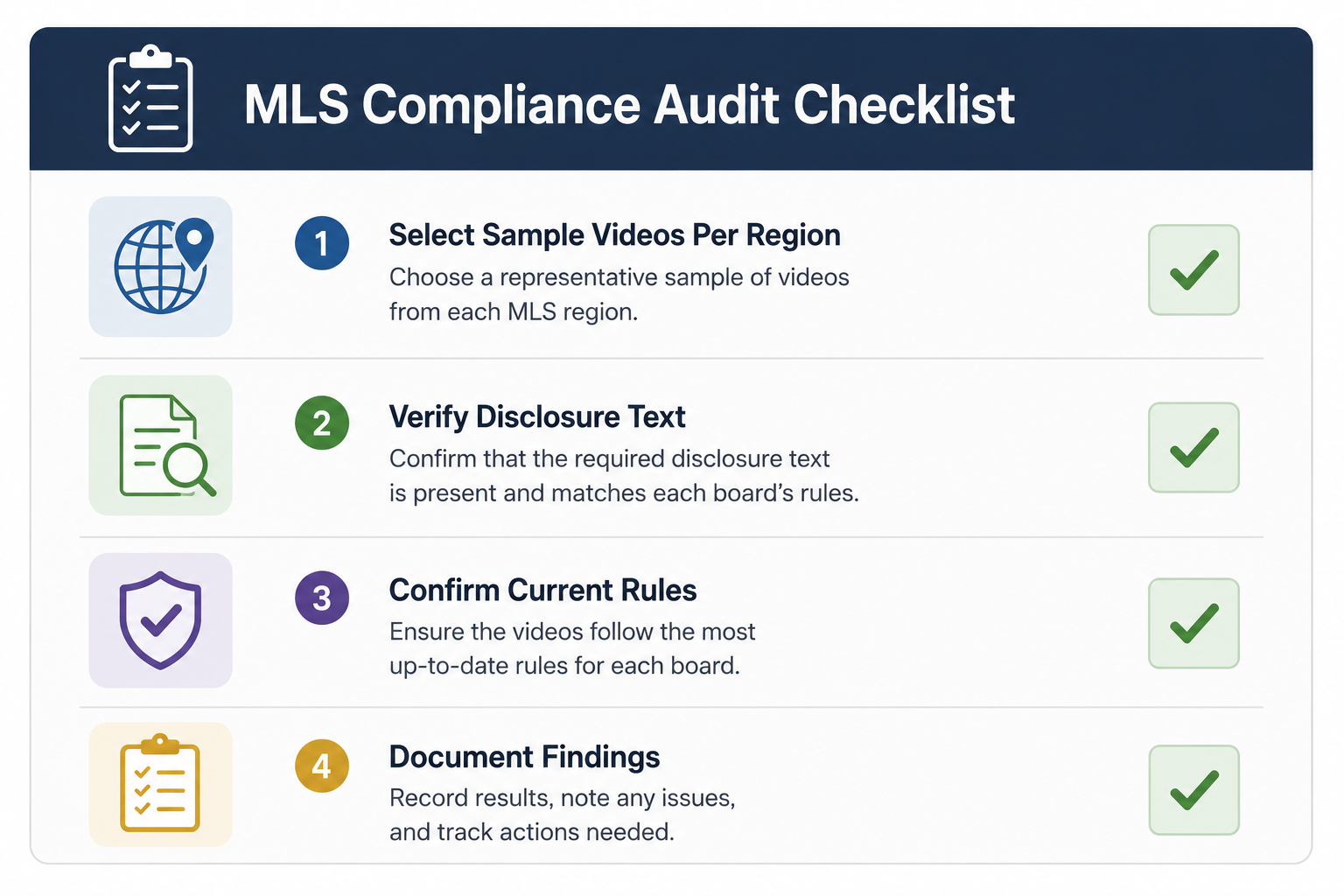
Step 1: List every board your brokerage currently operates under. This sounds obvious, but expanding brokerages often discover the list is longer, or more recently changed, than the person doing the software evaluation initially assumed.
Step 2: Confirm the software supports multiple simultaneous compliance profiles, not just one customizable template. Ask directly whether region-specific settings can coexist rather than requiring a full reconfiguration every time an agent switches regions.
Step 3: Test whether region selection is a required, active step — not a silent default. A platform that defaults to whichever profile was last used, rather than prompting a deliberate choice, recreates the exact risk that causes cross-board errors.
Step 4: Assign profile-ownership responsibility internally. Someone at the brokerage — not each individual agent — should own keeping each board's compliance profile current as rules change, since regional requirements do get updated over time.
Step 5: Run a cross-board spot audit periodically. Even with the right software, a scheduled compliance review across a sample of recent videos from each region catches drift before it becomes a pattern.
What makes multi-board compliance different from single-board compliance in real estate video software?
A single-board brokerage only needs one compliance template, while a multi-board brokerage needs multiple profiles managed simultaneously, with a reliable way to apply the correct one to each specific listing.
How do compliance mistakes typically happen in multi-board brokerages?
Most often through silent defaults — software or agents defaulting to whichever region's template was used most recently or first configured, rather than actively selecting the correct one for each listing.
Who should be responsible for managing compliance profiles across multiple boards?
Ideally a centralized owner, such as a compliance officer or operations lead, rather than leaving profile updates to individual agents who may not track regional rule changes closely.
Does merging with a brokerage in a different MLS region create compliance risk?
Yes — this is one of the most common triggers for multi-board compliance gaps, since the acquiring or expanding brokerage's existing software and templates often aren't reconfigured for the new region immediately.
How often should a multi-board brokerage audit its video compliance?
A periodic sample audit, checking recent videos from each board's region against current rules, helps catch drift before it becomes a widespread pattern rather than an isolated mistake.
Can one video template really handle multiple MLS boards safely?
Only if the software supports distinct, simultaneously maintained compliance profiles per board and requires active selection — a single flexible template without that structure tends to recreate the same silent-default risk.
What should a multi-board brokerage confirm before signing a software contract?
Confirm the platform supports multiple compliance profiles at once, requires active region selection rather than defaulting silently, and allows centralized profile management rather than per-agent configuration.


Compact, ready to go anywhere
Interchangeable lens that’s upgradeable
Dual 1-inch sensors for improved clarity and low light performance
Dynamic range and 6K 360° capture
360° photo resolution at 21MP

8K 360° video recording for ultra-detailed visuals.
4K single-lens mode for traditional wide-angle shots.
Invisible selfie stick effect for drone-like perspectives.
2.5-inch touchscreen with Gorilla Glass protection.
Waterproof up to 33ft for underwater shooting.

360° photo resolution in 23MP
Slim design at 24 mm thick
Built-in image stabilization for smooth video capture.
Internal 19GB storage for photo and video storage.
Wireless connectivity for remote control and sharing.

60MP 360° still images for high-resolution photography.
5.7K 360° video recording at 30fps.
2.25-inch touchscreen for intuitive control.
USB Type-C port for fast charging and data transfer.
MicroSD card slot for expandable storage.
.png)

.png)

Try it free. No credit card required. Instant set-up.







.svg)


.svg)