


.png)



"Is it worth it" is a fair, reasonable question to ask about any paid software, and it deserves a genuine answer rather than a reflexive yes. This article is a framework for answering is CloudPano worth it for your specific situation — including being direct about the circumstances where the honest answer might be no, or not yet.
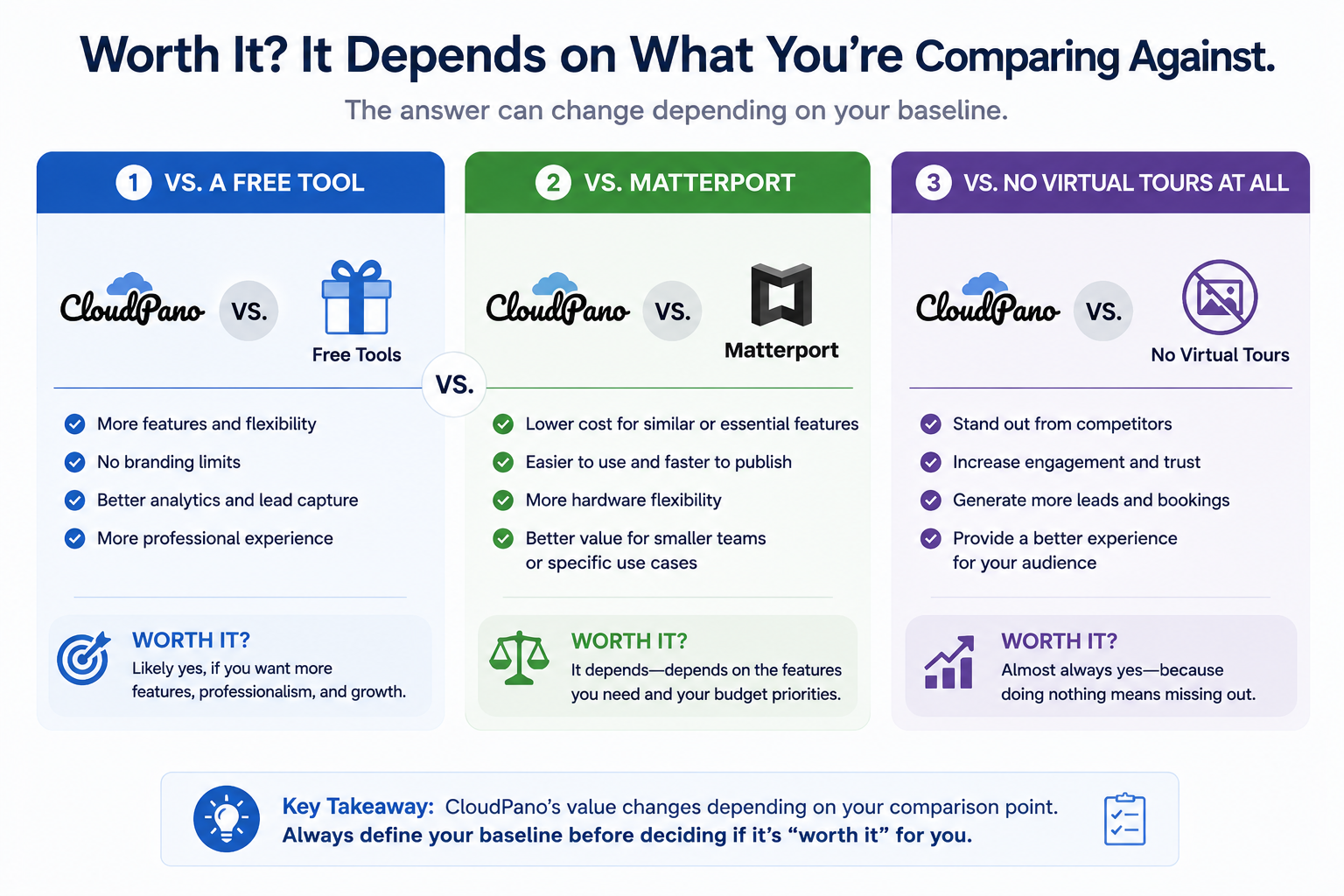
"Worth it" isn't a single, universal calculation — it depends on what you're actually comparing against and what you value in the tradeoff. Worth it compared to staying with a free tool is a different question than worth it compared to Matterport, which is different again from worth it compared to simply not using virtual tours at all. Getting clear on which comparison you're actually making is the first step toward a genuinely useful answer, rather than a vague gut feeling.
A useful starting point for CloudPano ROI is identifying what measurable benefit you're expecting from virtual tours in the first place — faster time-to-close on a listing, reduced in-person showing time, a documented increase in engagement on a property page, or simply a professional presentation standard your business wants to maintain. Whatever the specific benefit, it needs to be at least roughly measurable for an ROI calculation to mean anything concrete, rather than remaining a vague sense that tours "probably help."
Once you have a rough sense of that benefit's value — even an imperfect estimate is more useful than nothing — compare it against the actual cost of your relevant plan tier over the same period. If the estimated benefit meaningfully exceeds the cost, that's a reasonably strong signal. If it's close or unclear, that's worth investigating further before committing to a longer-term plan.

Not every benefit reduces cleanly to a dollar figure, which is why CloudPano value for money is a broader question than strict ROI alone. Time saved on tour creation and editing, reduced support friction, and the simple confidence of not worrying about a platform limitation mid-project all count as real value, even if they don't show up as a specific number in a spreadsheet.
This is worth taking seriously rather than dismissing as unquantifiable fluff — a platform that saves your team meaningful time or reduces recurring friction has genuine value, even when that value is harder to express as a single ROI percentage.
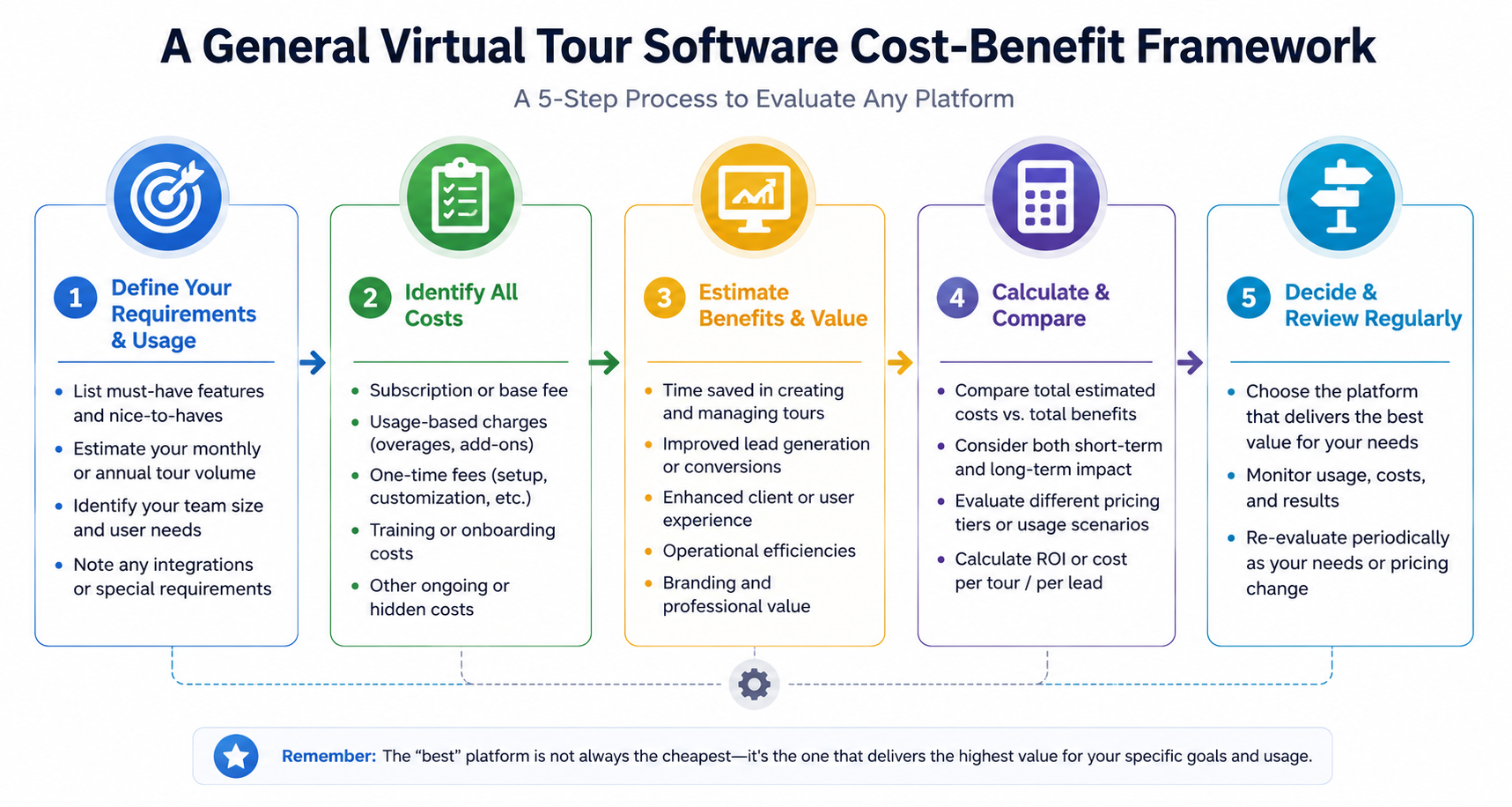
Stepping back from CloudPano specifically, it's worth having a general virtual tour software cost-benefit framework you could apply to any platform, since the same logic applies regardless of which specific vendor you're evaluating:
It's worth factoring in how long you expect to use the platform when running this calculation, since the same cost can look very different depending on the time horizon you're measuring against. A cost that looks marginal when spread across three years of steady use looks considerably less favorable if you're only confident in a six-month commitment before your needs might change entirely. This isn't a reason to avoid calculating value at all — it's a reason to be explicit about which time horizon you're actually using, since an ROI calculation implicitly assumes some duration of use, whether or not that assumption is stated out loud.
A reasonable approach is to calculate value across a few different horizons — six months, one year, two years — rather than picking a single number and treating it as definitive. If the calculation looks favorable across most of these horizons, that's a stronger signal than a calculation that only works out if you assume an optimistically long commitment.
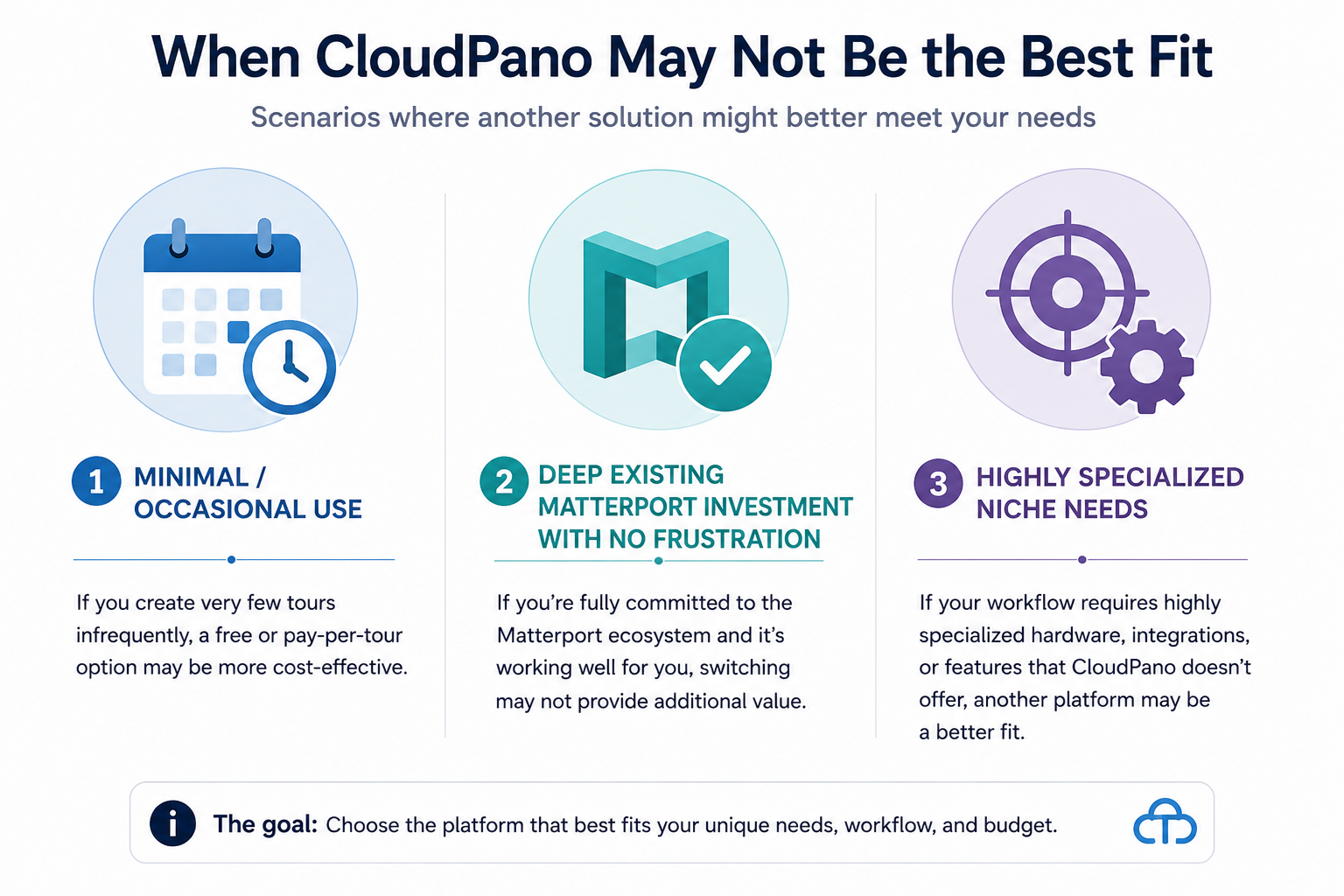
In the interest of an honest framework rather than a sales pitch, it's worth naming situations where CloudPano specifically may not be the best value: a business with extremely minimal, occasional tour needs may find a free tool sufficient and not need to pay for any dedicated platform yet. A business already deeply invested in Matterport's specific hardware ecosystem, with no particular frustration driving a change, may not have enough to gain from switching to justify the migration effort. And a business with highly specialized, niche requirements might be better served by a platform built specifically for that niche rather than a more general-purpose option.
None of this is a knock against CloudPano — it's simply an acknowledgment that "worth it" is conditional on fit, not a property any single platform has universally.
On G2's virtual tour software category page, reviewer sentiment around value tends to cluster around specific, named benefits (ease of use, hardware flexibility, cost predictability) rather than vague enthusiasm, which is a useful pattern to look for when reading any platform's reviews — specific, concrete praise is generally more trustworthy than generic positivity.
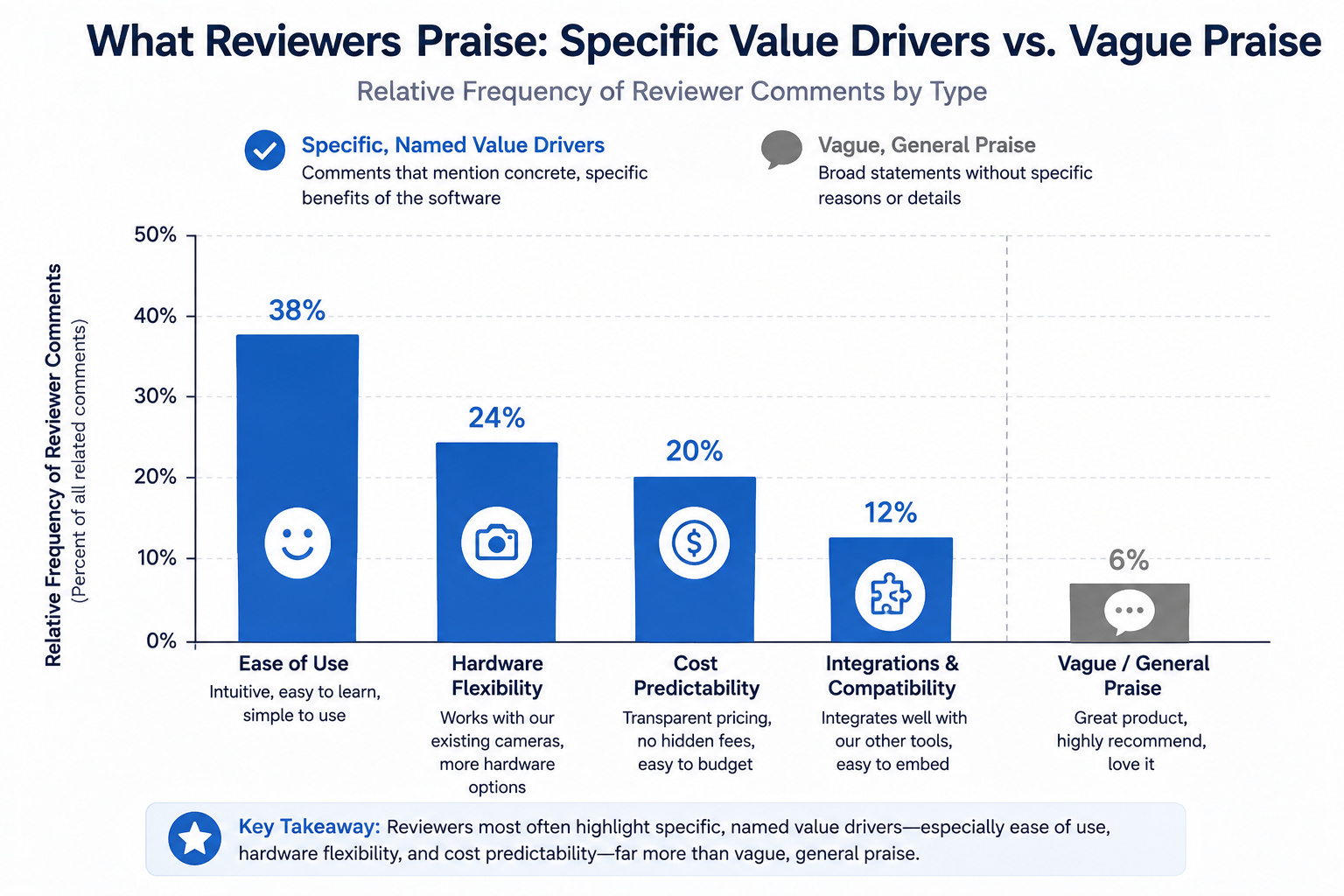
Capterra's virtual tour software listings offer a similar view, useful for cross-checking whether the specific value drivers that matter to you show up consistently across multiple independent reviewers, rather than relying on a single account.
It's tempting to shortcut this whole process by simply asking someone else who already uses CloudPano, or Matterport, or any specific alternative, whether they think it's "worth it." Other people's experiences are useful data points, but their answer reflects their specific usage pattern and priorities, not necessarily yours. Someone with a much larger or smaller tour library, a different team size, or different priorities around ease-of-use versus advanced features can reasonably reach a different "worth it" conclusion than you would, even using an identical platform. Treat other people's answers as one input into your own calculation, not a substitute for running it yourself.
"Isn't this framework just going to conclude that CloudPano is worth it, since that's obviously the point of the article?"
That's a fair skepticism to bring to any company's content about its own product, which is exactly why the section above naming genuine non-fits exists. The framework itself — identify the benefit, estimate its value, compare against real cost, weigh softer factors, revisit periodically — is genuinely useful regardless of which platform you apply it to, including ones that aren't CloudPano at all.
"What if I can't measure the benefit clearly enough to run a real calculation?"
This is common, and it's worth treating as useful information rather than a dead end — if you genuinely can't articulate what benefit you're expecting from virtual tours, that's worth resolving before spending money on any platform, not just CloudPano specifically.
Whether CloudPano is worth it depends on your specific situation — what benefit you're actually expecting, how that compares to the real cost at your usage level, and whether the less quantifiable factors (ease of use, flexibility, support) matter enough to you to tip a close calculation. The framework above applies regardless of the specific numbers, and it's worth running honestly rather than assuming the answer in either direction before you've actually done the math.
If you want to run this calculation with real numbers, a free trial is the most direct way to test your assumptions about time savings and ease of use before committing financially. And if you're still comparing CloudPano against other options more broadly, our complete guide on choosing a Matterport alternative covers that wider decision. Whichever conclusion your own calculation points toward, running it deliberately — rather than deciding based on a gut feeling or a single glowing testimonial — is what actually makes the answer trustworthy, for this platform or any other you might be weighing it against.


Compact, ready to go anywhere
Interchangeable lens that’s upgradeable
Dual 1-inch sensors for improved clarity and low light performance
Dynamic range and 6K 360° capture
360° photo resolution at 21MP

8K 360° video recording for ultra-detailed visuals.
4K single-lens mode for traditional wide-angle shots.
Invisible selfie stick effect for drone-like perspectives.
2.5-inch touchscreen with Gorilla Glass protection.
Waterproof up to 33ft for underwater shooting.

360° photo resolution in 23MP
Slim design at 24 mm thick
Built-in image stabilization for smooth video capture.
Internal 19GB storage for photo and video storage.
Wireless connectivity for remote control and sharing.

60MP 360° still images for high-resolution photography.
5.7K 360° video recording at 30fps.
2.25-inch touchscreen for intuitive control.
USB Type-C port for fast charging and data transfer.
MicroSD card slot for expandable storage.
.png)

.png)

Try it free. No credit card required. Instant set-up.







.svg)


.svg)