


.png)


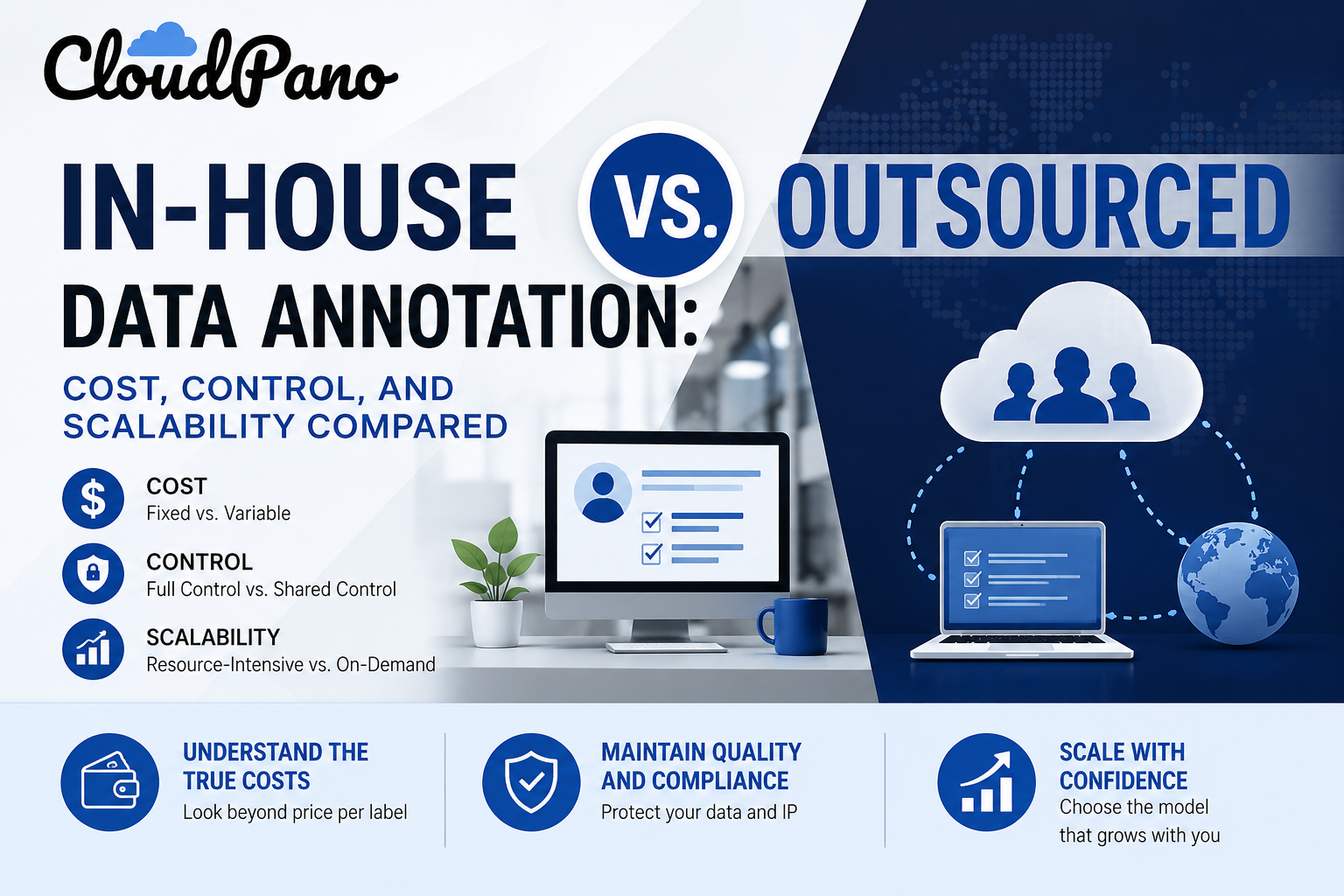
The in-house vs outsourced data labeling decision usually surfaces the moment a team's data volume outgrows what a few internal reviewers can reasonably handle. At that point, the instinct is often to compare hourly rates — which is the wrong comparison to start with.
The real question isn't which option is cheaper per label. It's which option gets you accurate, consistent training data fast enough to hit your model timeline, without creating a management burden or a quality risk you didn't budget for.
Labeling decisions compound. A model trained on inconsistent or low-quality labels doesn't fail obviously — it fails in specific edge cases that are hard to trace back to their source, a pattern Google Research's "Data Cascades" study documented in detail across real production AI systems (Sambasivan et al., Google Research).
NIST's AI Risk Management Framework treats data quality and provenance as foundational to trustworthy AI, which means the in-house vs. outsourced decision isn't purely operational — it has downstream implications for how defensible your model's behavior is later (NIST AI RMF).
Timing matters too. Stanford HAI's AI Index has tracked how quickly organizations are moving models from research into production (Stanford HAI, AI Index Report), and annotation capacity is frequently the bottleneck that determines whether a team hits that timeline or slips it by months.
In-house data annotation means hiring, training, and managing your own annotation team — sometimes full-time employees, sometimes internal contractors — using tools you select and guidelines your own team writes and revises directly.
Outsourced data labeling services mean contracting an external vendor who supplies the workforce, and often the tooling and QA process, while your team defines requirements and reviews output rather than managing annotators day to day.
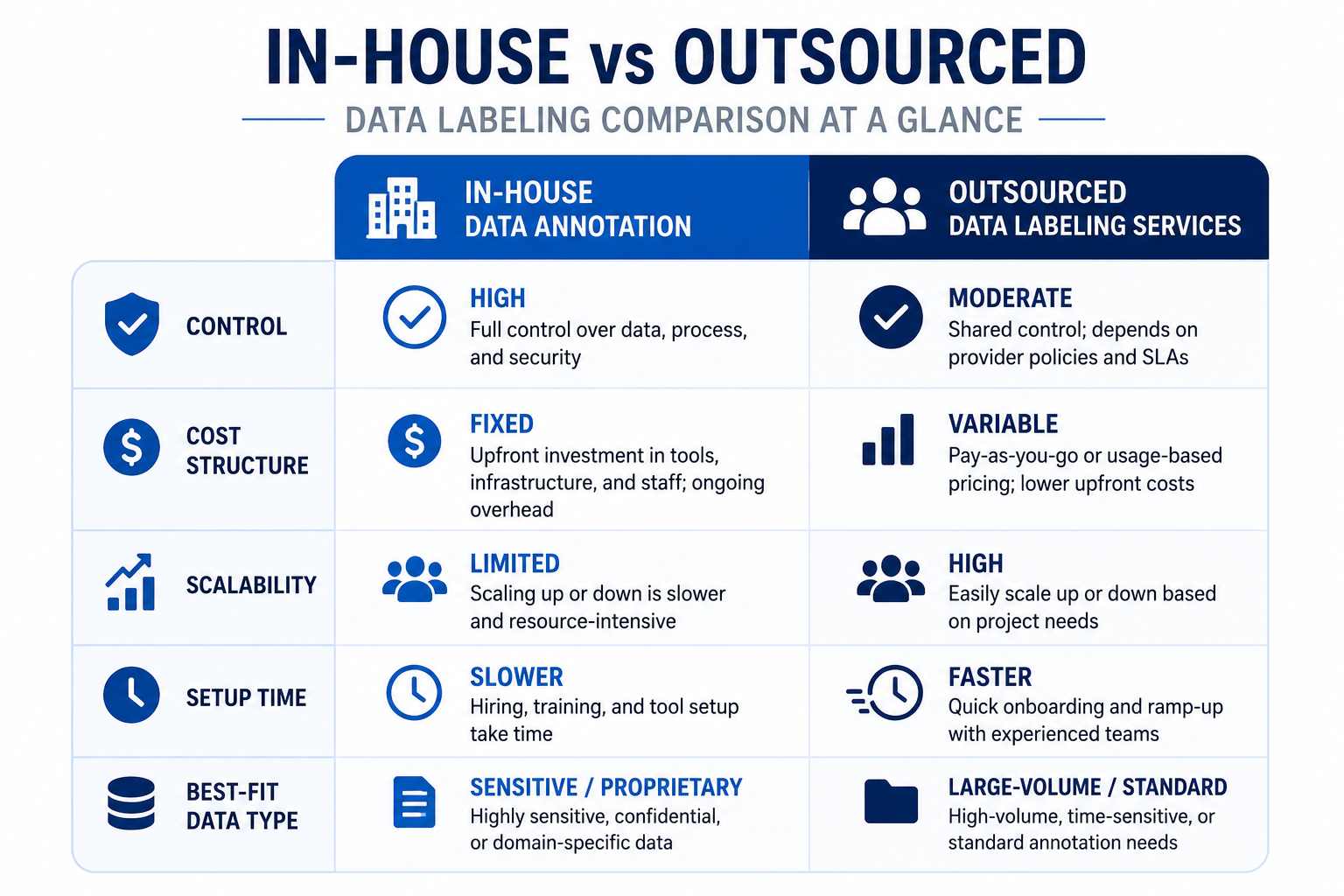
Understanding how these workflows operate in practice matters more than the label itself, because the real differences show up in three areas: control over quality processes, cost structure, and how quickly each model can scale up or down with demand.
Control: In-house teams give you direct oversight of guidelines, QA, and annotator training. Outsourced teams give you oversight through contractual QA commitments and audits, which requires more upfront diligence but less day-to-day management.
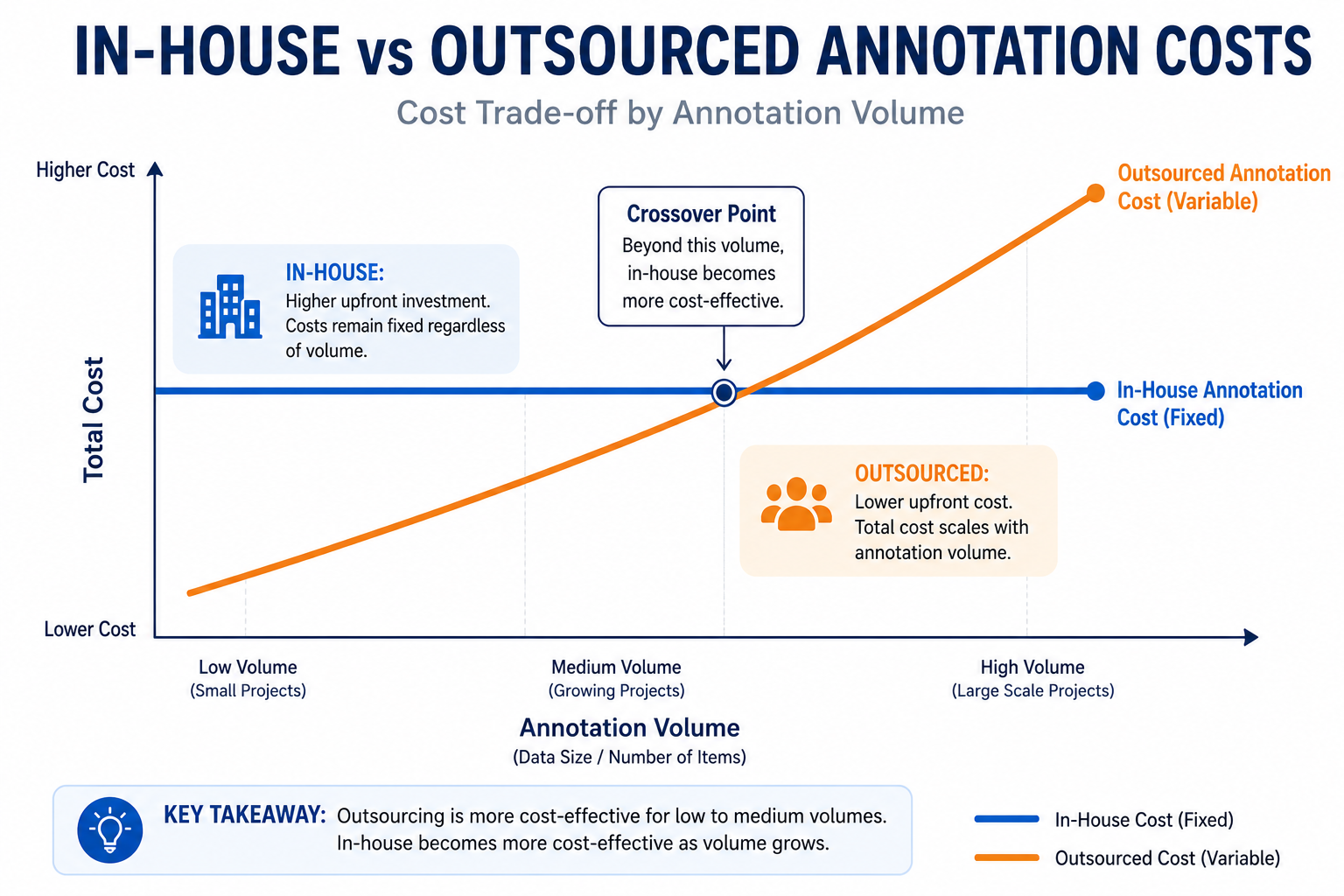
Cost structure: In-house annotation carries fixed costs — salaries, benefits, tooling licenses, management overhead — regardless of volume. Outsourced data labeling costs scale more directly with volume, which can be cheaper at low or highly variable volume and more expensive at sustained high volume.
Scalability: In-house teams take time to hire and train for a volume spike; outsourced vendors can often scale workforce faster, provided their quality processes hold up under that scale.
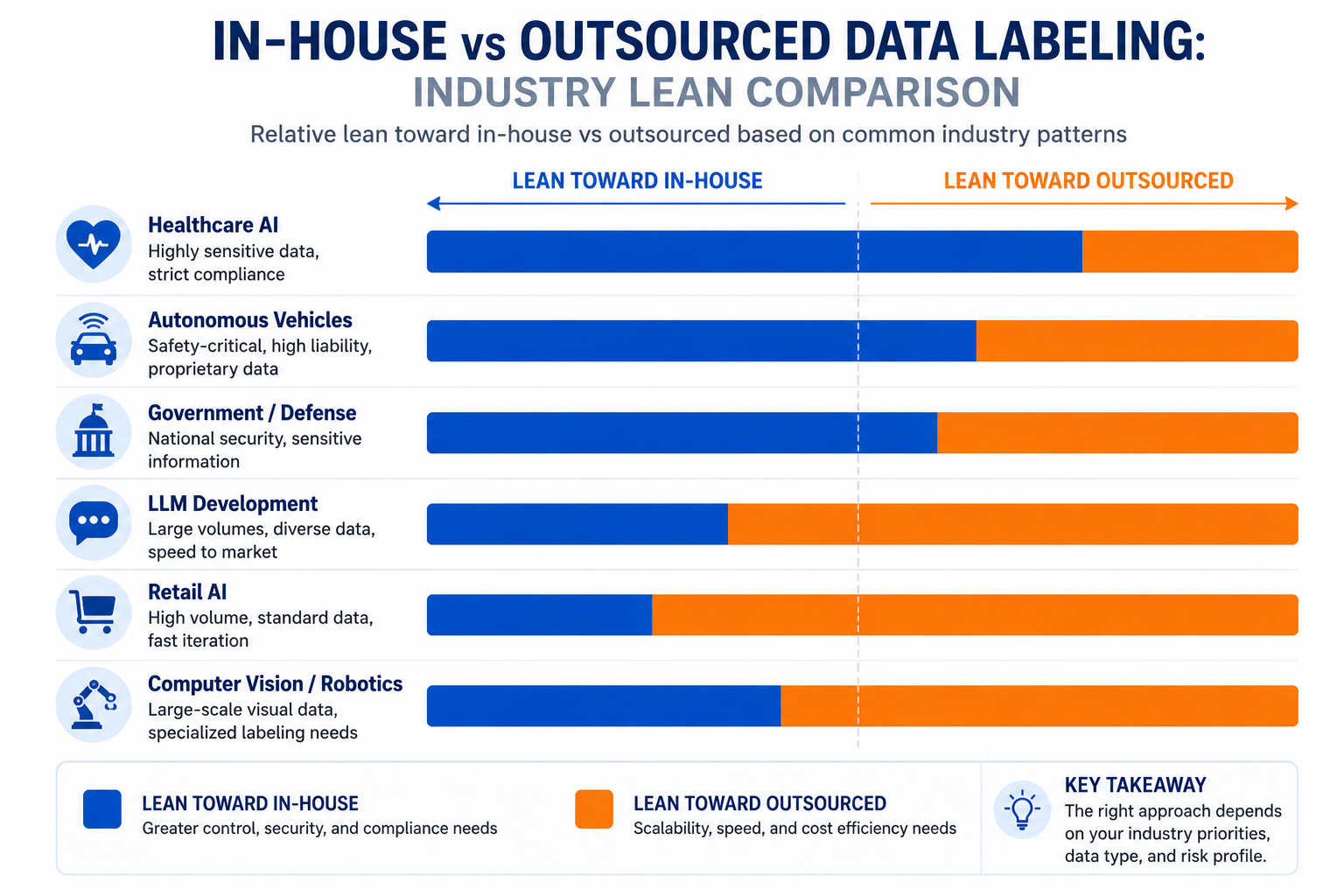
In-house data annotation offers:
Outsourced data labeling services offer:
A hybrid model offers:
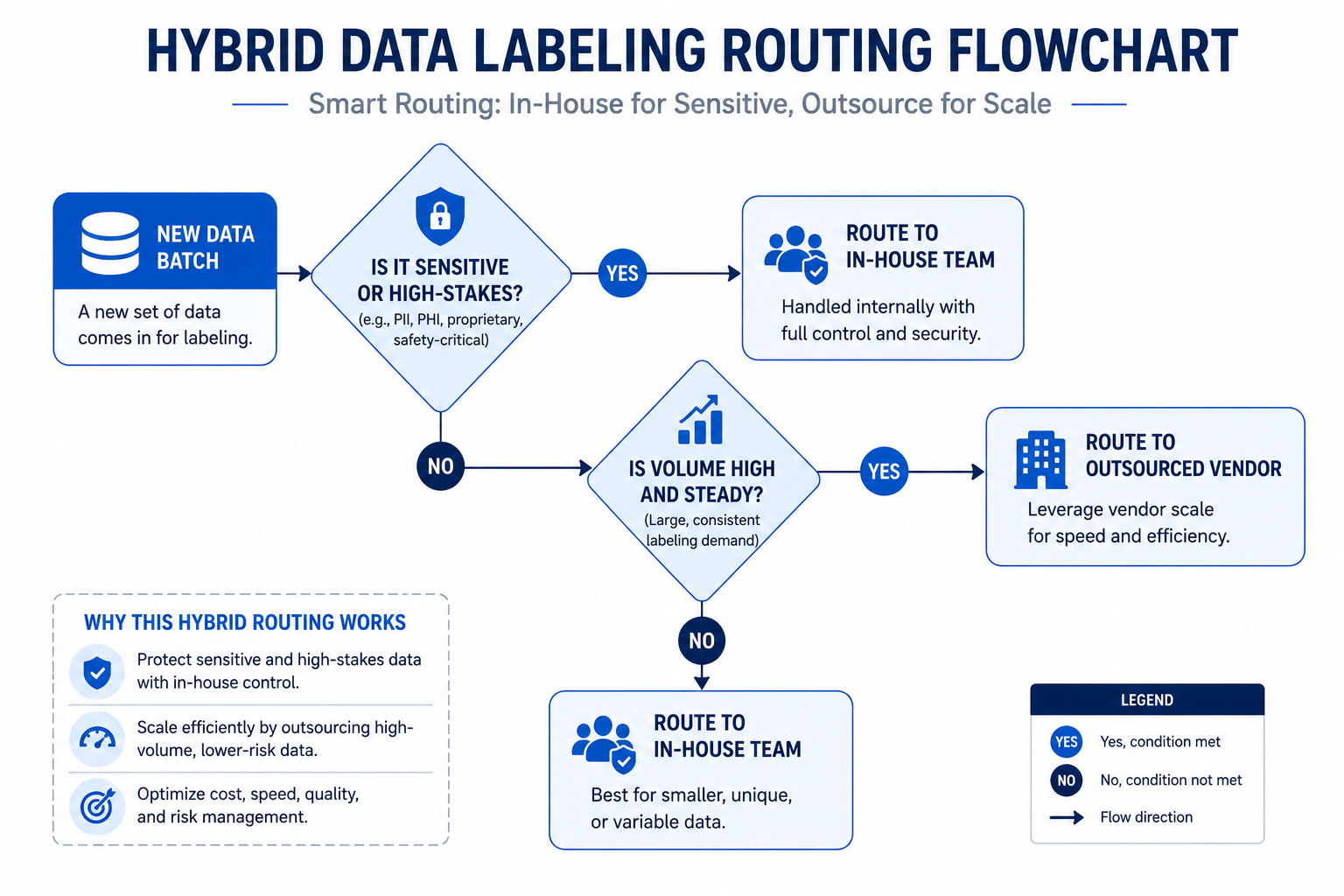
It depends on volume and consistency: in-house carries fixed costs regardless of volume, which can be cheaper at sustained high volume, while outsourced data labeling costs scale with volume, which is often cheaper for variable or lower-volume needs.
When data is highly sensitive, regulated, or requires deep domain expertise your team already has — and when your annotation volume is steady enough to justify the fixed cost of a dedicated team.
When volume is high, variable, or spiky, and the data isn't so sensitive or specialized that external annotators can't be trained on clear guidelines and monitored through QA processes.
Yes, provided you build clear guidelines, quality assurance commitments, and audit rights into the vendor relationship — quality gaps usually come from insufficient oversight, not from outsourcing itself.
Costs include salaries and benefits, management overhead, tooling licenses, and ramp-up time for hiring and training.
Yes. Many mature AI teams keep a small in-house team for sensitive or high-stakes data and outsource higher-volume, lower-ambiguity work, adjusting the ratio as needs change.
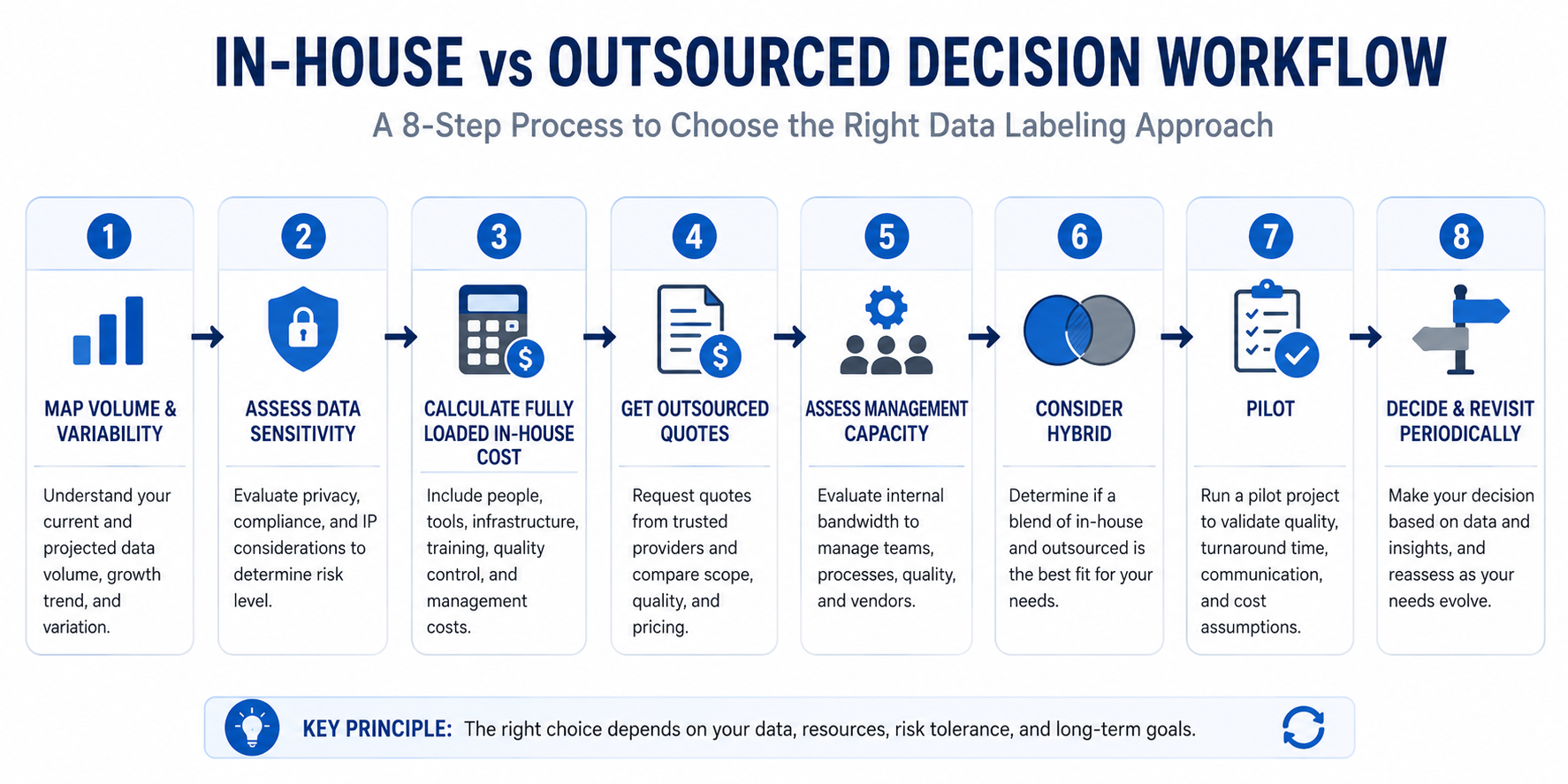
Map your data's sensitivity and volume variability first, calculate fully loaded costs for both options, and pilot whichever approach you're leaning toward before committing to it at full scale.
In-house vs outsourced data labeling isn't a decision you make once and forget — it's one worth revisiting as your data volume, sensitivity, and timeline change. The teams that get the most value out of either option are the ones that compare fully loaded costs honestly and build in the oversight needed to protect quality, regardless of which model they choose.


Compact, ready to go anywhere
Interchangeable lens that’s upgradeable
Dual 1-inch sensors for improved clarity and low light performance
Dynamic range and 6K 360° capture
360° photo resolution at 21MP

8K 360° video recording for ultra-detailed visuals.
4K single-lens mode for traditional wide-angle shots.
Invisible selfie stick effect for drone-like perspectives.
2.5-inch touchscreen with Gorilla Glass protection.
Waterproof up to 33ft for underwater shooting.

360° photo resolution in 23MP
Slim design at 24 mm thick
Built-in image stabilization for smooth video capture.
Internal 19GB storage for photo and video storage.
Wireless connectivity for remote control and sharing.

60MP 360° still images for high-resolution photography.
5.7K 360° video recording at 30fps.
2.25-inch touchscreen for intuitive control.
USB Type-C port for fast charging and data transfer.
MicroSD card slot for expandable storage.
.png)

.png)

Try it free. No credit card required. Instant set-up.




.svg)


.svg)