


.png)


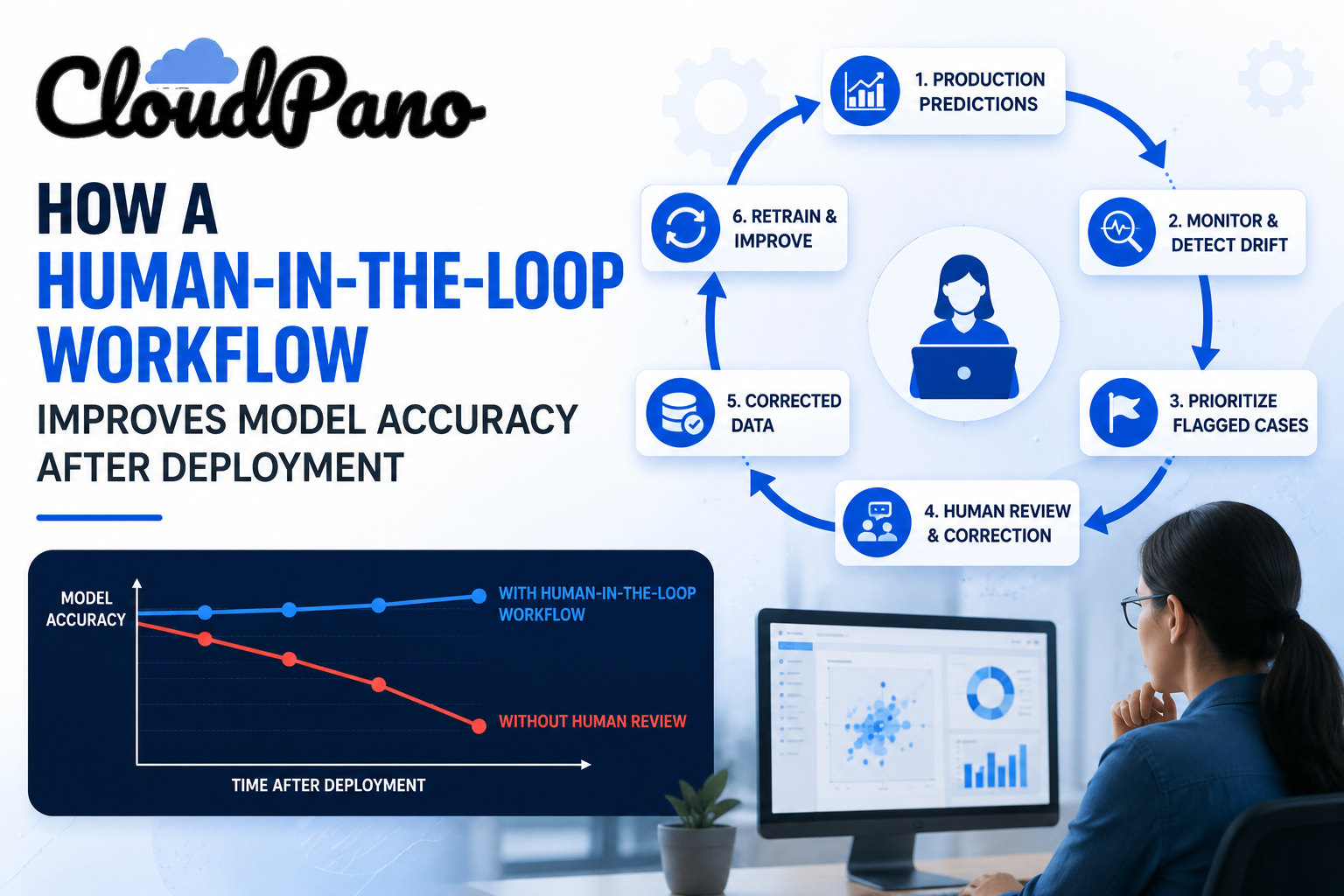
Most human-in-the-loop discussions focus on training or launch. A human-in-the-loop workflow model accuracy program that only exists before deployment misses where a model actually starts drifting — in production, on real-world inputs that differ from the training distribution in ways nobody fully anticipated.
Post-deployment human review isn't a backup plan for a model that "didn't work." It's an expected, ongoing part of maintaining accuracy on a system operating in a changing environment, and it works best as a specific, measurable workflow rather than an informal habit of occasionally checking outputs.
Accuracy drift after deployment isn't a sign of a failed model — it's a predictable consequence of real-world data shifting away from what a model was trained on. Google Research's "Data Cascades" study documented how unresolved data issues compound over time, and post-deployment drift is exactly the kind of gradual, easy-to-miss problem that a structured review process is built to catch before it compounds further (Sambasivan et al., Google Research).

NIST's AI Risk Management Framework treats ongoing monitoring as a distinct, necessary function separate from pre-deployment validation, reinforcing that human-in-the-loop quality assurance doesn't end once a model ships (NIST AI RMF).
The pace of AI deployment raises the cost of skipping this. Stanford HAI's AI Index has tracked how quickly organizations are pushing models into production (Stanford HAI, AI Index Report), which means more models are running in live conditions where drift can accumulate before anyone notices, unless a monitoring workflow is specifically built to catch it.
A post-deployment human-in-the-loop workflow connects three specific mechanisms.

Confidence and anomaly monitoring. Tracking prediction confidence scores and flagging inputs that fall outside the distribution the model was trained on, rather than waiting for an obvious failure to surface.
Prioritized human review. Routing flagged cases to reviewers based on severity and frequency, so the highest-impact accuracy gaps get attention first rather than reviewing everything with equal priority.
Feedback-driven retraining. Feeding corrected cases from review back into the training data, closing the loop so the same drift pattern becomes less frequent after the next model update.
This is what separates AI model accuracy improvement driven by a real workflow from ad hoc spot-checking: our training data services team sees the difference show up directly in how consistently accuracy issues get caught and corrected versus discovered late, after they've already affected real outcomes.
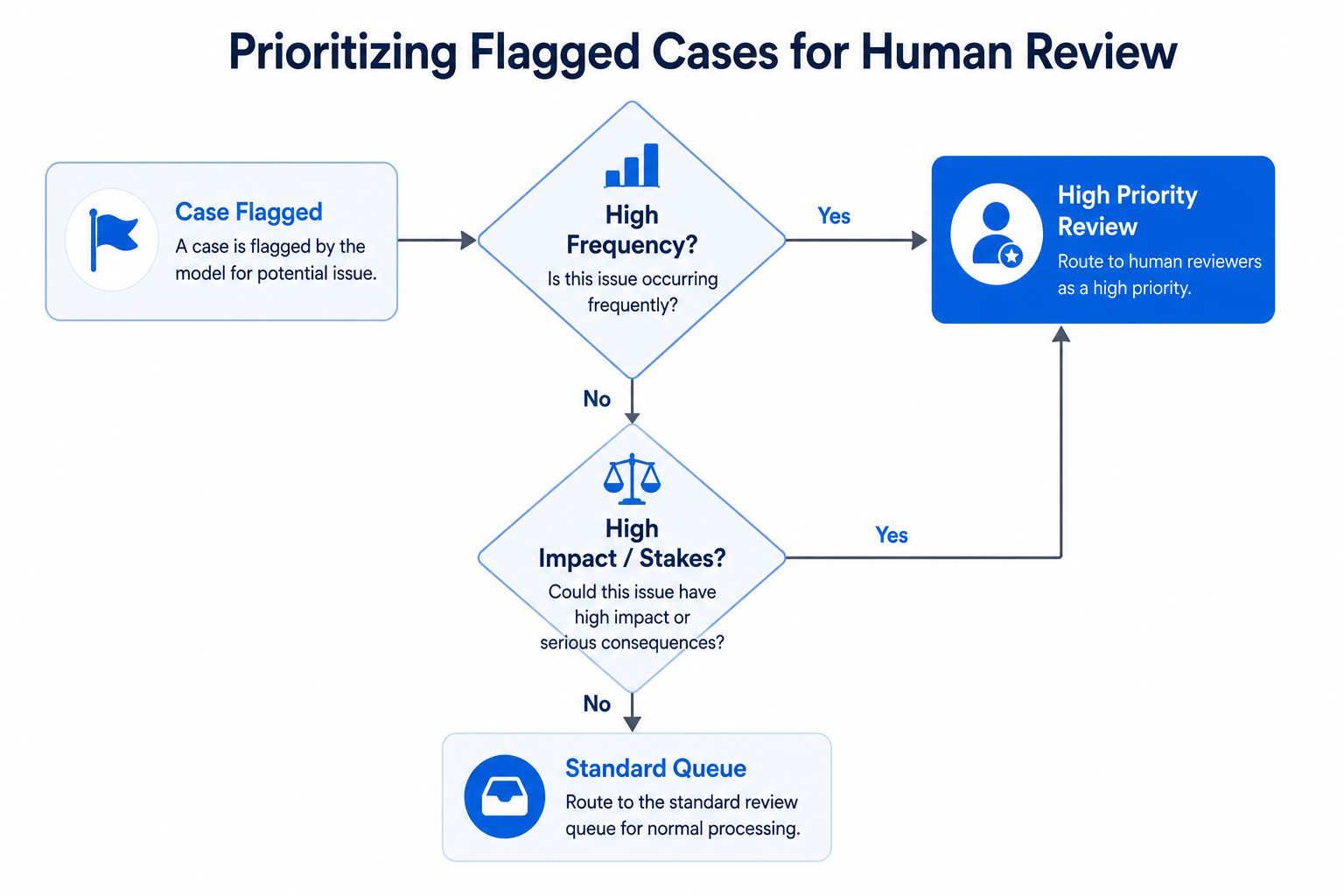

A structured process that monitors production model confidence and anomalies, routes flagged cases to prioritized human review, and feeds corrected cases back into retraining to close the loop on specific accuracy gaps.
Real-world data shifts over time in ways the original training data may not have fully represented, and this gradual mismatch is a predictable, expected part of running a model in production, not a sign of failure.
Prioritize by frequency (how often a pattern occurs) and impact (how much a given error type affects outcomes), rather than reviewing every flagged case with equal urgency.
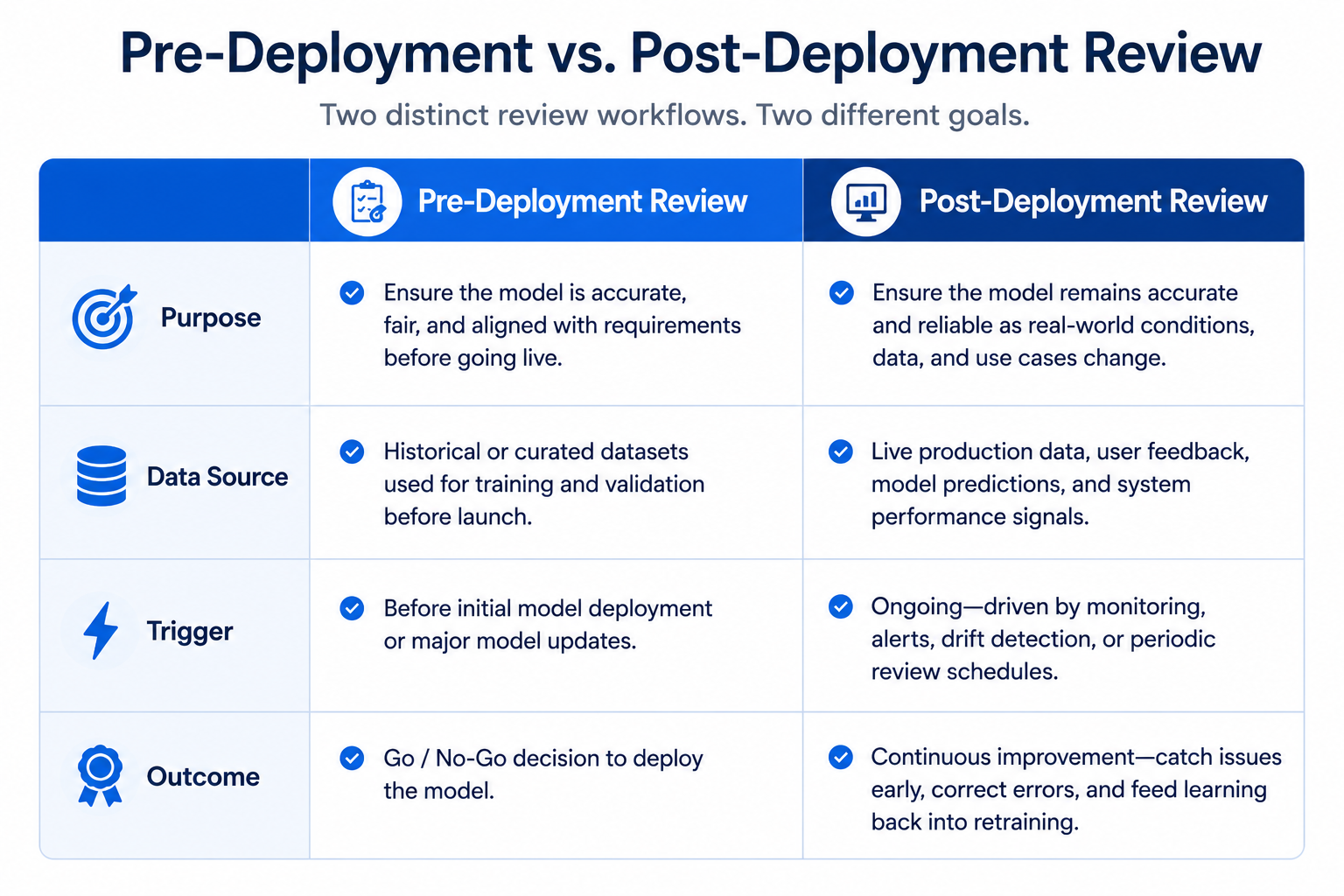
Before deployment, review typically validates training data and initial model performance; after deployment, it specifically monitors for drift in real-world conditions and feeds corrections back into ongoing retraining.
Periodically, and especially after any retraining cycle or significant shift in the model's input environment, since a threshold set at launch can become outdated as conditions change.
No. Automated monitoring identifies which cases need review; human review provides the judgment automated systems can't reliably apply to ambiguous or novel cases. The two work together, not as substitutes.
Track whether the specific drift patterns that triggered review become less frequent after retraining — if the same issues keep recurring at the same rate, the feedback loop isn't actually closing.
A human-in-the-loop workflow aimed at model accuracy doesn't stop at launch. Confidence and anomaly monitoring, prioritized review, and feedback-driven retraining work together as an ongoing cycle that catches and corrects the drift every production model eventually experiences. Building this as a defined, measurable workflow — not an occasional spot-check — is what turns human review into a genuine accuracy improvement lever rather than a reactive scramble after something goes visibly wrong.


Compact, ready to go anywhere
Interchangeable lens that’s upgradeable
Dual 1-inch sensors for improved clarity and low light performance
Dynamic range and 6K 360° capture
360° photo resolution at 21MP

8K 360° video recording for ultra-detailed visuals.
4K single-lens mode for traditional wide-angle shots.
Invisible selfie stick effect for drone-like perspectives.
2.5-inch touchscreen with Gorilla Glass protection.
Waterproof up to 33ft for underwater shooting.

360° photo resolution in 23MP
Slim design at 24 mm thick
Built-in image stabilization for smooth video capture.
Internal 19GB storage for photo and video storage.
Wireless connectivity for remote control and sharing.

60MP 360° still images for high-resolution photography.
5.7K 360° video recording at 30fps.
2.25-inch touchscreen for intuitive control.
USB Type-C port for fast charging and data transfer.
MicroSD card slot for expandable storage.
.png)

.png)

Try it free. No credit card required. Instant set-up.






.svg)


.svg)