


.png)


Deciding you need human oversight is the easy part. How to build a human-in-the-loop program that actually functions requires answering a different set of questions: who reviews flagged cases, what tools they use to do it, how their work gets back into the model, and who they report to when something doesn't add up.
Most teams that stall here aren't unclear on the concept — they're missing the organizational blueprint. This is that blueprint: the roles, tooling, and structure a working program actually requires.
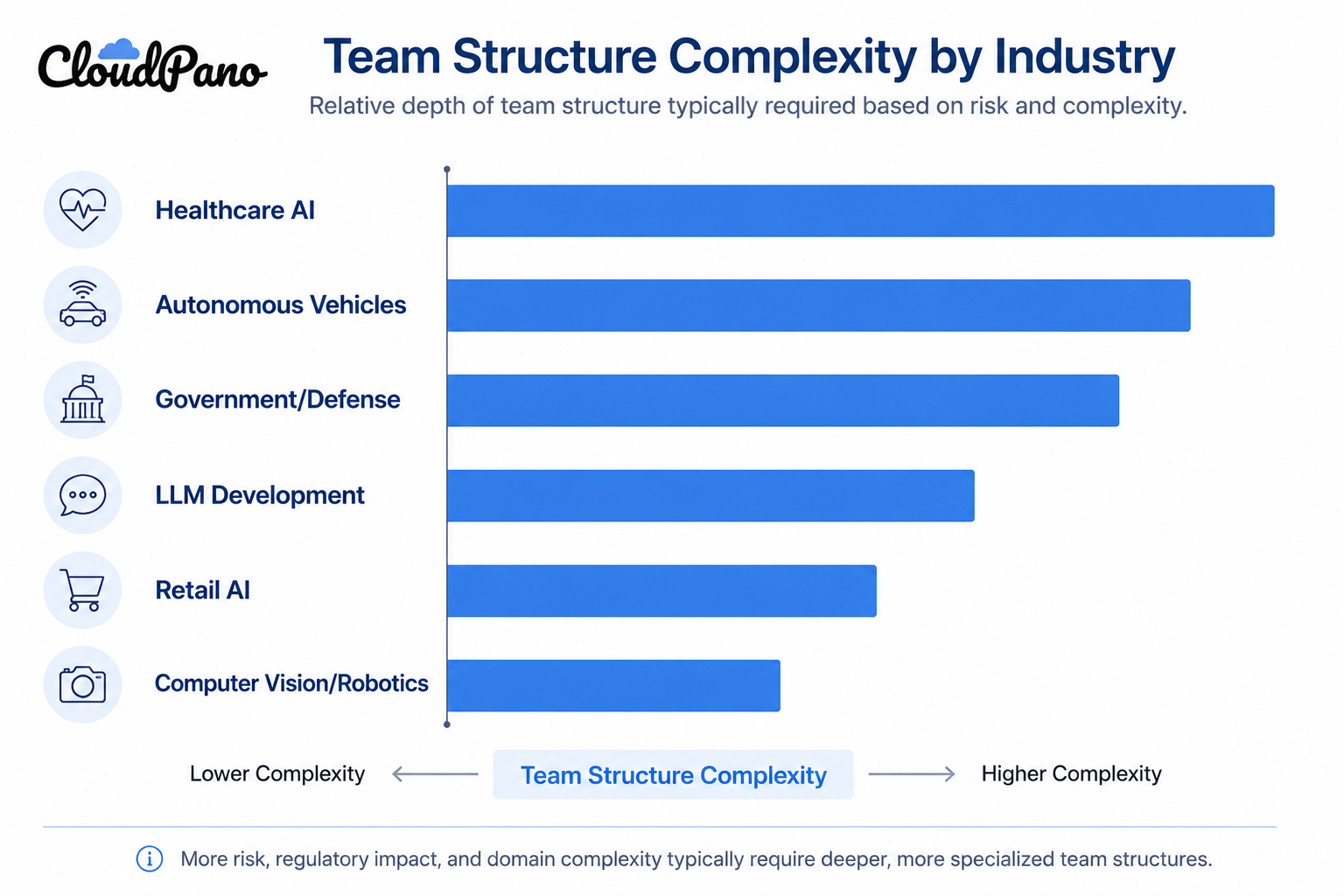
A human-in-the-loop program that exists on paper but lacks real organizational structure tends to produce inconsistent review, unclear accountability, and a feedback loop that never actually closes. Google Research's "Data Cascades" study documented how unaddressed structural gaps in a data or AI process compound over time into much larger problems (Sambasivan et al., Google Research), and an under-built oversight function is exactly this kind of gap.
NIST's AI Risk Management Framework treats human oversight as something that needs defined roles and processes to function as intended, not an informal practice layered on top of an existing team's other responsibilities (NIST AI RMF).
The pressure to move fast makes skipping this organizational work tempting. Stanford HAI's AI Index has tracked how quickly organizations are deploying AI systems into production (Stanford HAI, AI Index Report), and a program built without real structure tends to become a bottleneck or a formality exactly when it's needed most.
A functioning human-in-the-loop workflow at the organizational level requires three things working together.
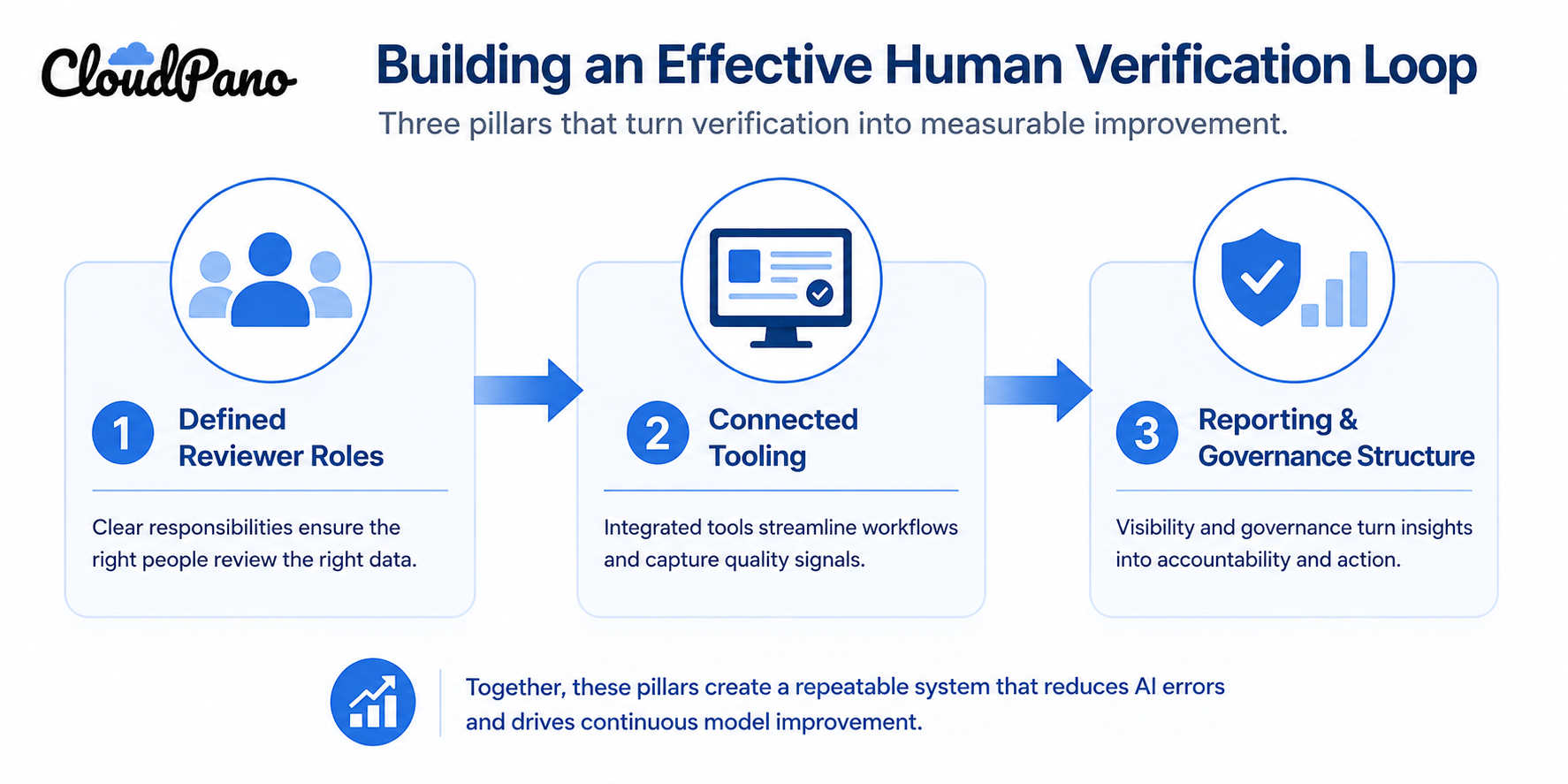
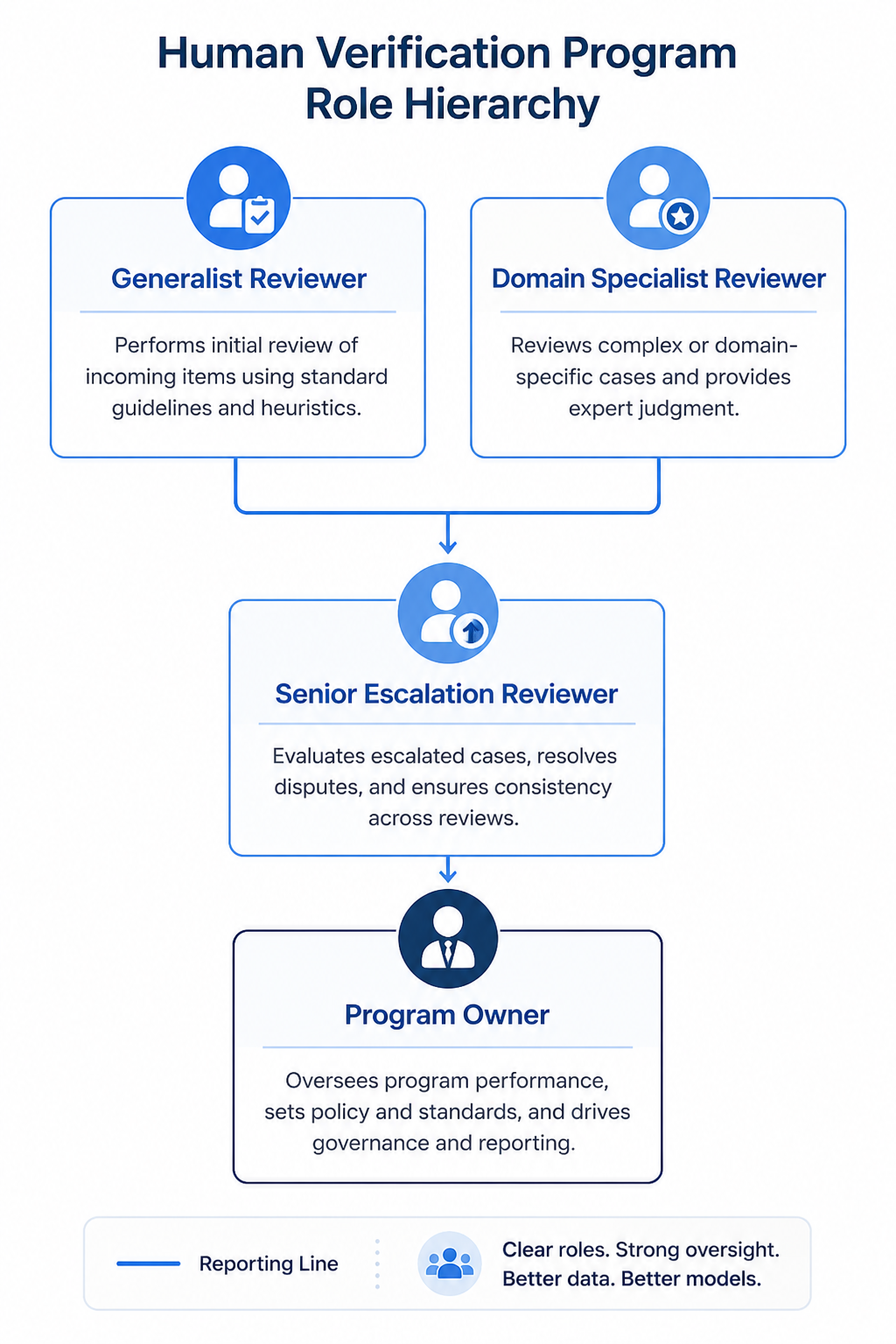
Defined reviewer roles. Not just "someone checks flagged cases," but specific roles — generalist reviewer, domain specialist, senior escalation reviewer — each with clear responsibilities and the training to match.
Tooling that connects the pipeline. A system that routes flagged cases to the right reviewer, captures their decision in a structured format, and feeds that decision back into training data or model updates — not a spreadsheet and an email chain.
Reporting and governance structure. A clear line of accountability for the program itself — who owns trigger conditions, who reviews review-quality metrics, and who escalates when the program isn't functioning as intended.
Understanding how these workflows operate as an organizational system, not just a technical add-on, is what separates a human-in-the-loop implementation that actually runs from one that exists mostly in a slide deck.

Typically a generalist reviewer tier for straightforward ambiguity, a domain-specialist tier for technical or specialized cases, and a senior escalation role for cases even reviewers are uncertain about.
Systems that route flagged cases to the right reviewer automatically, capture their decisions in a structured, retraining-ready format, and connect that data back into the model pipeline, rather than relying on manual coordination.
It depends on whether the required expertise exists internally; domain-specific review sometimes benefits from a provider with specialized reviewer pools your internal team doesn't have.
Check whether reviewer roles are clearly defined, whether tooling actually closes the feedback loop into retraining, and whether there's clear ownership and reporting for the program itself, not just individual reviews.
Cost varies significantly based on reviewer staffing model, tooling choice, and case volume; [VERIFY] before citing a specific budget benchmark, since this depends heavily on program scope and industry.
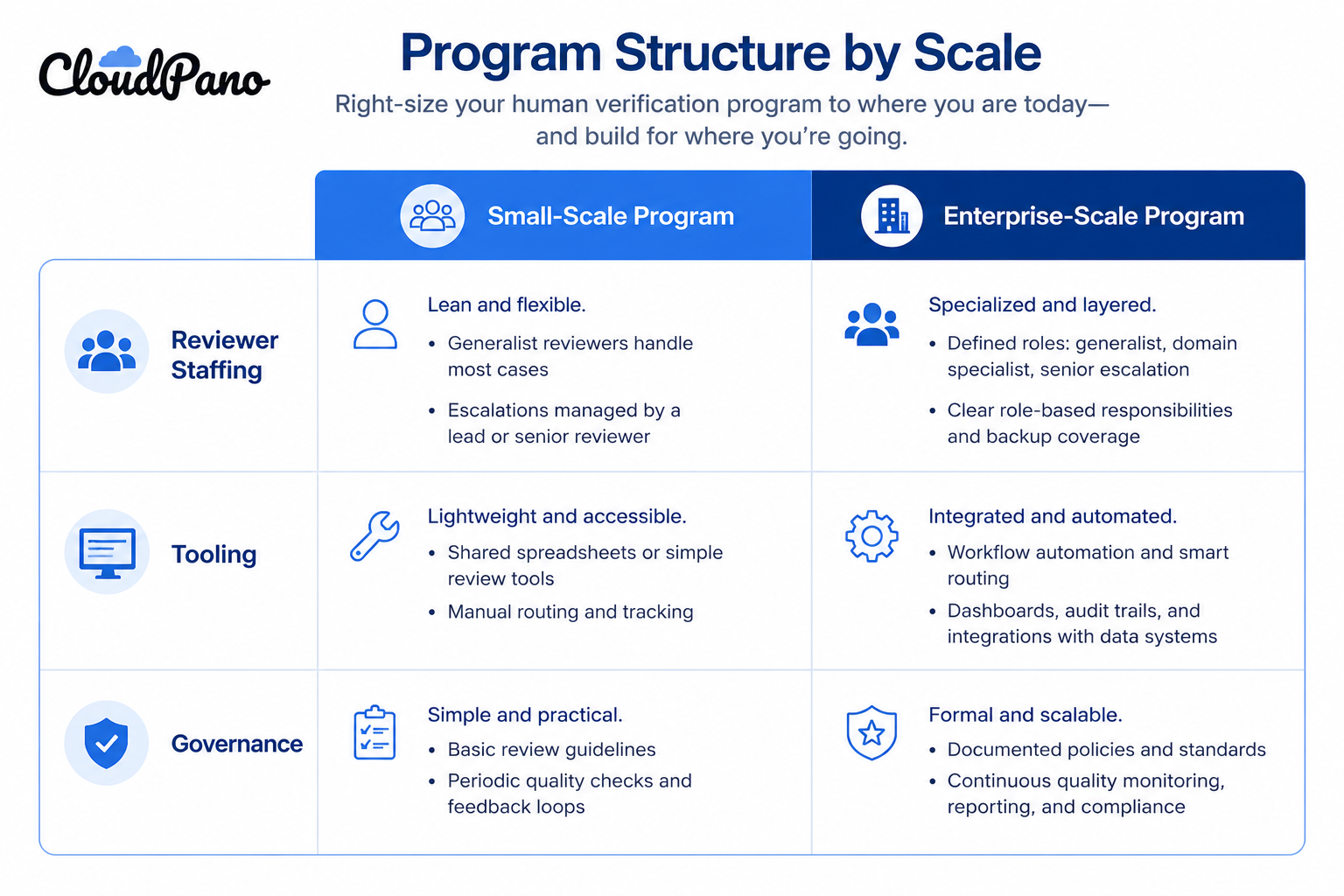
Yes, at a small scale, by assigning existing team members specific reviewer responsibilities and using lighter-weight tooling, though this typically needs more formal structure as volume grows.
If flagged cases sometimes leave even generalist or specialist reviewers uncertain, a defined escalation path prevents those cases from being resolved inconsistently or left unresolved.
How to build a human-in-the-loop program comes down to treating it as an organizational build, not a policy statement: specific reviewer roles matched to real case types, tooling that actually closes the feedback loop, and a reporting structure that gives the program clear ownership. Teams that build all three together get a program that functions; teams that build only one or two tend to end up with oversight that exists in name only.


Compact, ready to go anywhere
Interchangeable lens that’s upgradeable
Dual 1-inch sensors for improved clarity and low light performance
Dynamic range and 6K 360° capture
360° photo resolution at 21MP

8K 360° video recording for ultra-detailed visuals.
4K single-lens mode for traditional wide-angle shots.
Invisible selfie stick effect for drone-like perspectives.
2.5-inch touchscreen with Gorilla Glass protection.
Waterproof up to 33ft for underwater shooting.

360° photo resolution in 23MP
Slim design at 24 mm thick
Built-in image stabilization for smooth video capture.
Internal 19GB storage for photo and video storage.
Wireless connectivity for remote control and sharing.

60MP 360° still images for high-resolution photography.
5.7K 360° video recording at 30fps.
2.25-inch touchscreen for intuitive control.
USB Type-C port for fast charging and data transfer.
MicroSD card slot for expandable storage.
.png)

.png)

Try it free. No credit card required. Instant set-up.





.svg)


.svg)