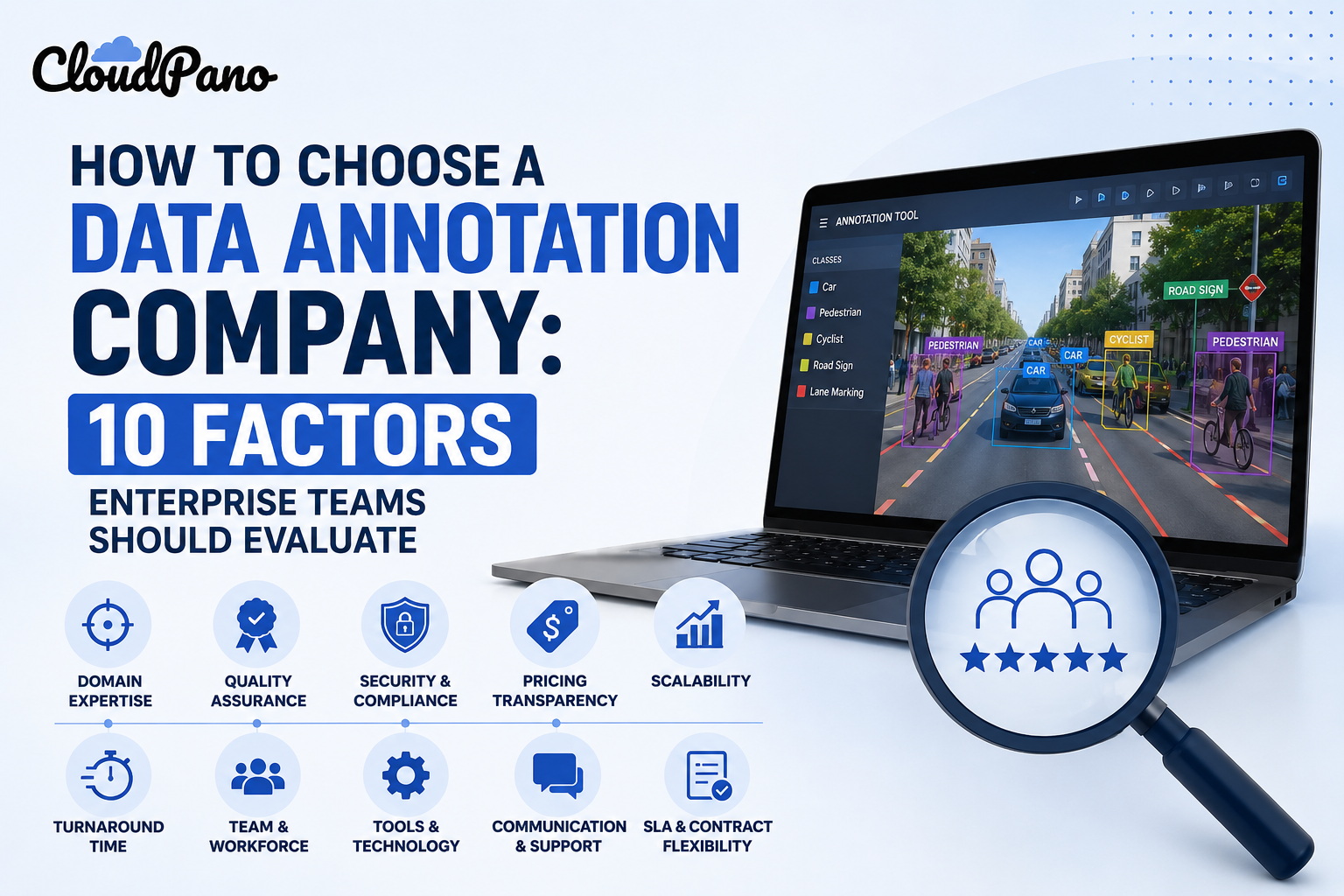
How to Choose a Data Annotation Company: 10 Factors Enterprise Teams Should Evaluate
Cloudpano
July 18, 2026
•
5 min read
Share this post
How to Choose a Data Annotation Company: 10 Factors Enterprise Teams Should Evaluate
Most teams researching how to choose a data annotation company are past the point of wondering whether they need outside help — they've already decided they can't scale labeling in-house. What they lack is a way to tell a genuinely capable AI training data provider apart from one that just has a polished sales deck.
That distinction matters more than it looks on paper. A vendor's marketing site rarely tells you how they handle inter-annotator disagreement, what happens when your taxonomy changes mid-project, or whether their "domain experts" have actually touched your kind of data before.
Why It Matters
Annotation is the input every downstream model decision depends on, and a bad vendor choice doesn't show up immediately — it shows up months later as unexplained model drift or edge-case failures nobody can trace back to their source. NIST's AI Risk Management Framework treats data quality and provenance as foundational to trustworthy AI, which means vendor selection is effectively a risk-management decision, not just a procurement one (NIST AI RMF).
The stakes scale with how fast organizations are moving models into production. Stanford HAI's AI Index has tracked the accelerating rate of enterprise AI deployment (Stanford HAI, AI Index Report), and a slow or inconsistent annotation vendor becomes a bottleneck exactly when speed matters most.
There's also a well-documented failure mode where small data problems compound invisibly until they surface as expensive production issues. Google Research's "Data Cascades" study is one of the clearest accounts of this dynamic, and it's a useful lens for auditing any vendor's quality control claims rather than taking them at face value (Sambasivan et al., Google Research).
How It Works
A capable data annotation company isn't just a labor pool — it's a combination of workforce, tooling, and process. Understanding how these workflows operate helps you ask sharper questions during vendor evaluation instead of relying on their answers alone.
Workforce model: Vendors typically use some mix of managed in-house teams, crowdsourced contractors, or specialized domain experts (clinicians, engineers, linguists). The right mix depends on how technical and how ambiguous your data is.
Tooling: Annotation platforms handle task assignment, quality checks, and label export. Some vendors build proprietary tools; others integrate with tools you already use, which matters if you need tight control over your pipeline.
Quality assurance layer: This is the part that separates good vendors from mediocre ones — consensus labeling, gold-standard test sets, inter-annotator agreement tracking, and a defined escalation path when annotators disagree.
Step-by-Step Workflow for Vendor Evaluation
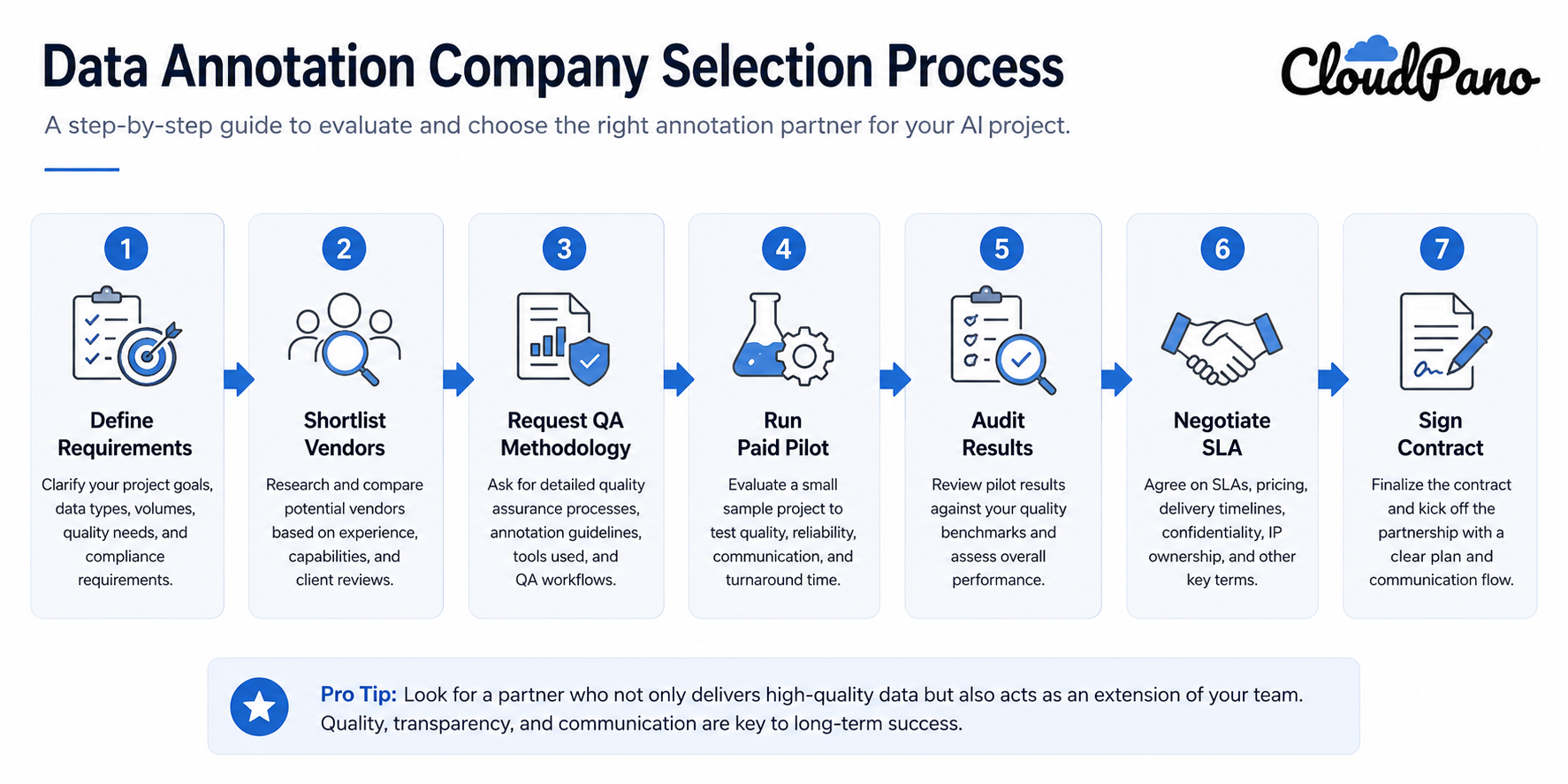
Define your annotation requirements first. Data type, volume, taxonomy complexity, and turnaround time — before you talk to a single vendor.
Shortlist based on domain fit, not just industry logos. A vendor's healthcare case study means little if the actual annotators never worked with clinical imaging.
Request their annotation quality assurance methodology in writing. Ask specifically how they measure and report annotation accuracy, not just that they "guarantee quality."
Ask about workforce vetting and specialization. Are annotators trained specifically for your data type, or generalists spread across many client accounts?
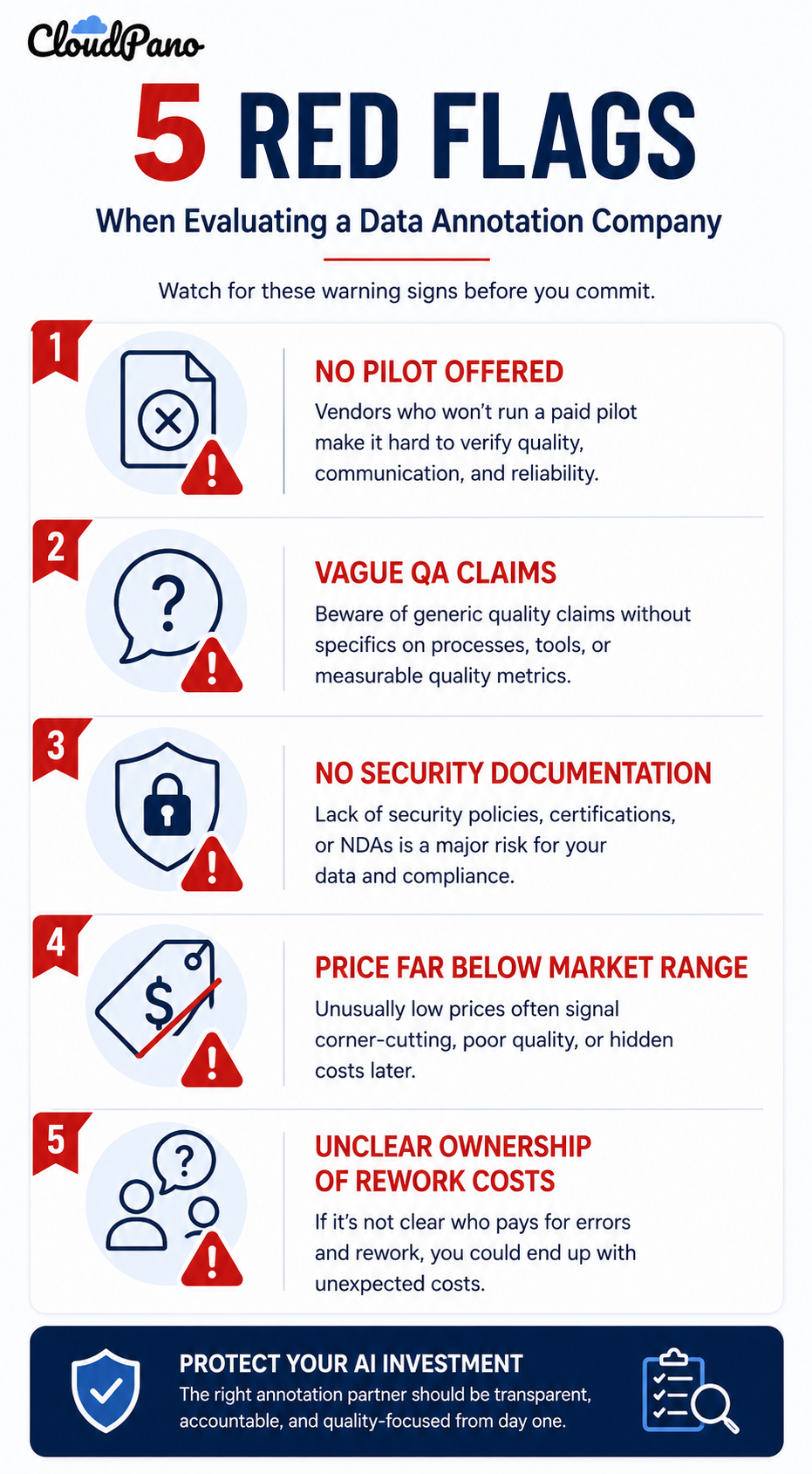
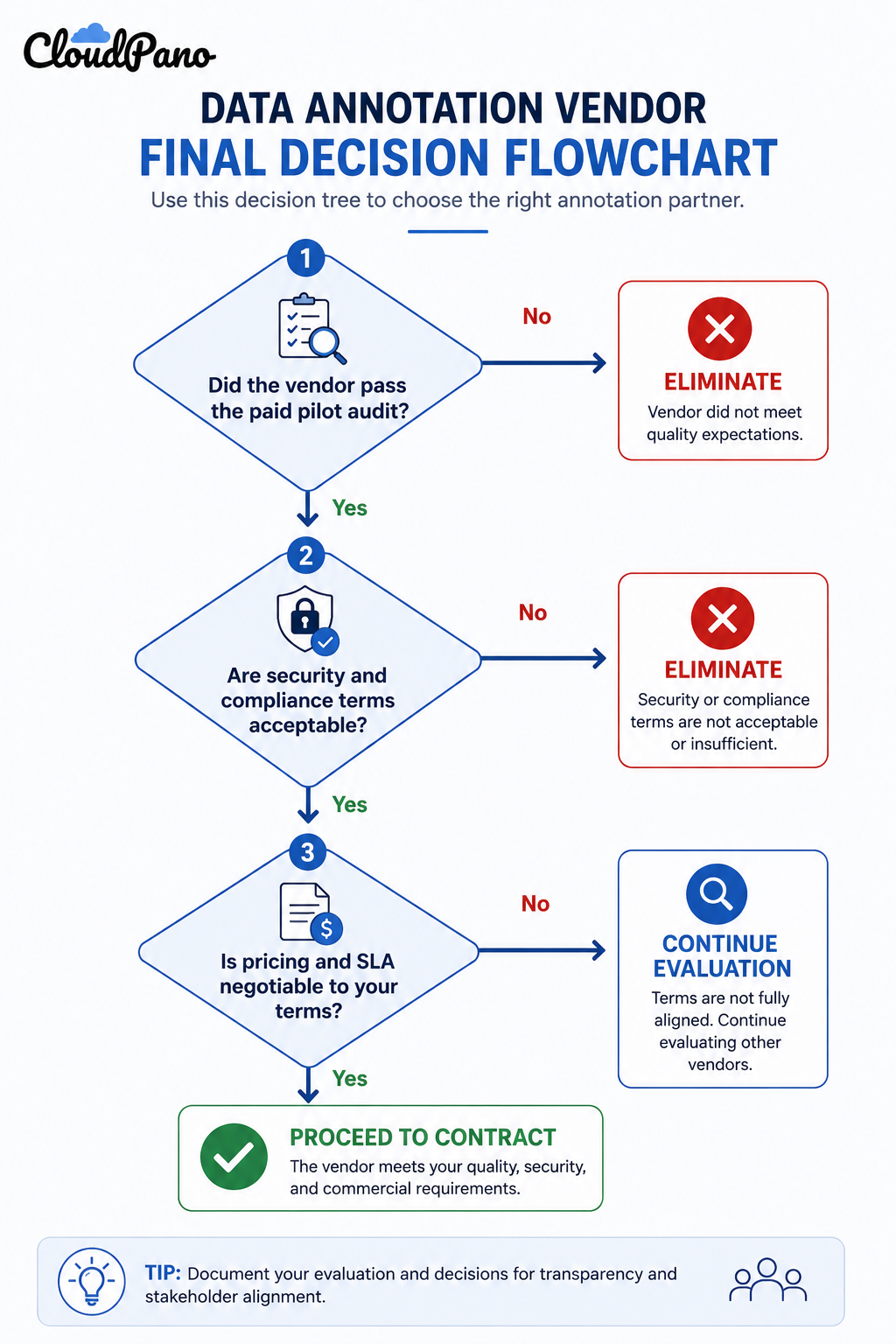
Run a paid pilot on your actual data. Never skip this — case studies describe someone else's data, not yours.
Audit the pilot output against your own gold-standard sample. Measure agreement independently rather than trusting the vendor's self-reported metrics.
Review data security and compliance posture. Confirm certifications, data handling location, and contractual data deletion terms before any sensitive data changes hands.
Evaluate scalability and turnaround under load. Ask how throughput and quality change when volume increases 5x or 10x, not just at pilot scale.
Clarify pricing structure and hidden costs. Per-label pricing, minimum commitments, and rework costs for rejected batches all affect real total cost.
Negotiate an SLA with accuracy and turnaround commitments. A vendor confident in their process should have no issue committing to measurable terms.
Industry Use Cases
Computer vision / robotics: Look for vendors with proven throughput on bounding box, segmentation, and keypoint annotation at production volume, not just pilot-scale samples.
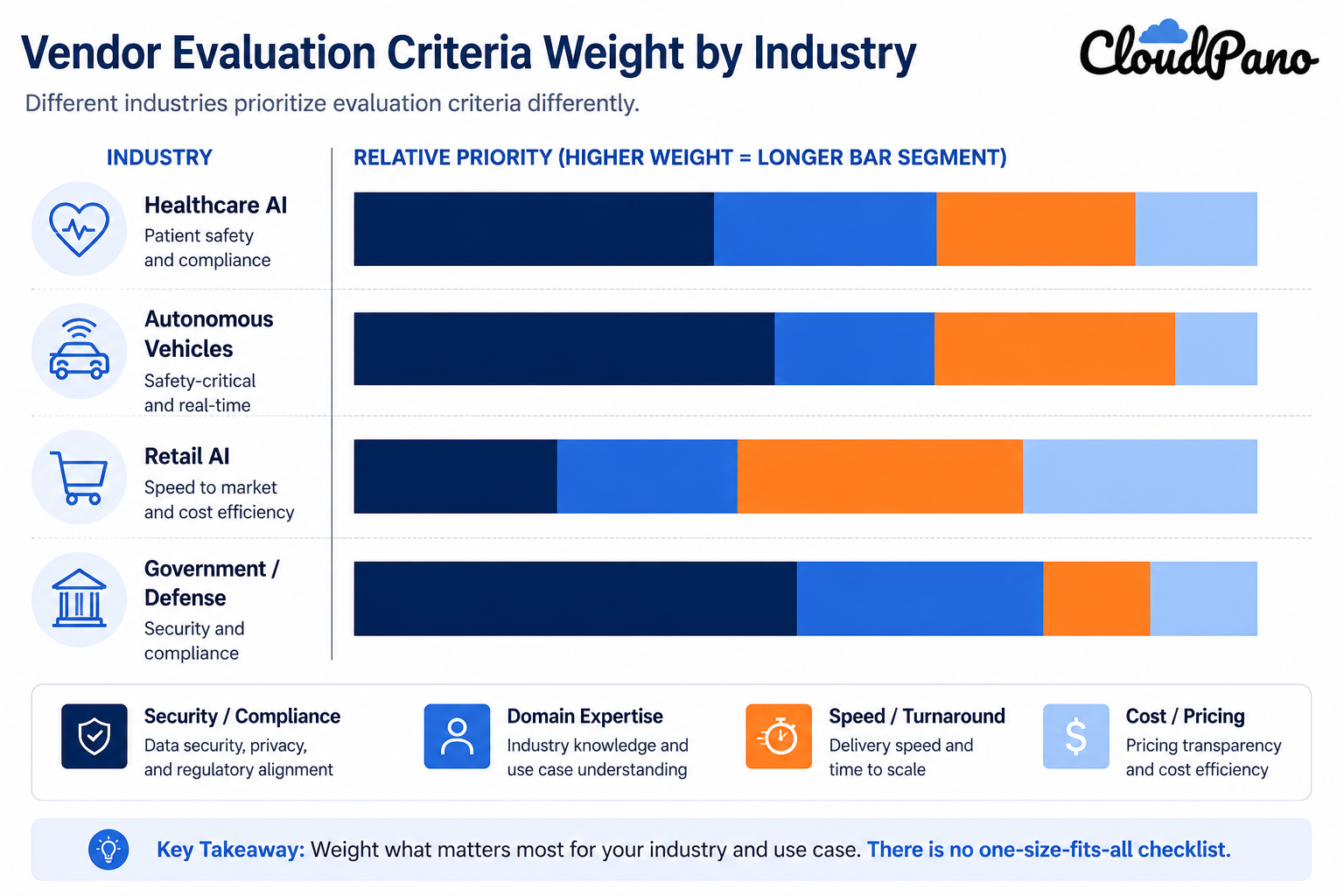
Autonomous vehicles: Vendor evaluation should weight safety-critical QA processes heavily — multi-pass review and edge-case escalation are non-negotiable here.
Healthcare AI: Prioritize vendors with clinically trained annotators and documented compliance with relevant data-handling regulations for patient data.
Retail AI: Speed and cost efficiency at high volume typically matter more here than deep domain specialization, since most retail labeling tasks are lower-ambiguity.
LLM developers: Look for vendors experienced in nuanced tasks like preference labeling, red-teaming, and instruction-following annotation — different skill set than image labeling.
Government & defense: Security clearance, data residency requirements, and audit-trail documentation often disqualify vendors before quality even enters the conversation.
Benefits of a Structured Vendor Evaluation Process
Reduces costly rework. Catching quality gaps in a pilot is far cheaper than discovering them after a full dataset has been labeled.
Shortens time-to-production. A vendor genuinely matched to your data type ramps up faster than one learning your domain on your dime.
Improves model reliability. Consistent, well-validated annotation quality assurance processes translate directly into fewer downstream model errors.
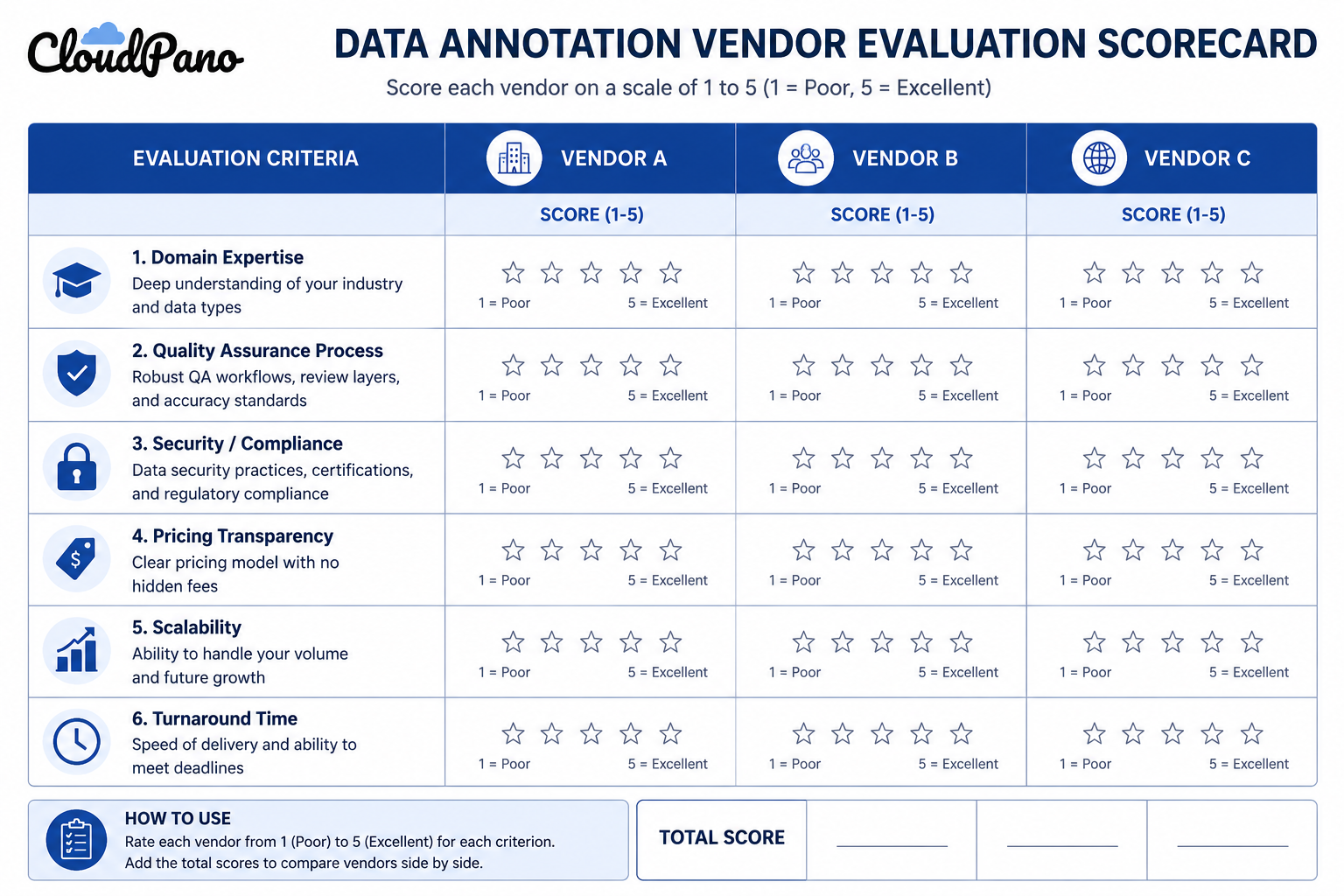
Creates negotiating leverage. Comparing vendors against the same evaluation criteria makes pricing and SLA negotiations far more concrete.
Protects sensitive data. A rigorous security review during evaluation prevents compliance problems that are difficult to unwind after a contract is signed.
Common Mistakes
Choosing based on price alone. The cheapest per-label rate often correlates with the least experienced workforce and the highest rework rate.
Skipping the paid pilot. Relying on a vendor's case studies and demo data instead of testing on your actual dataset is the single most common evaluation mistake.
Not defining quality metrics upfront. Without a clear, mutually agreed definition of annotation accuracy, "quality" becomes whatever the vendor claims it is.
Overlooking data security terms. Assuming a vendor's general compliance claims cover your specific regulatory requirements without verifying it contractually.
Underestimating onboarding time for domain-specific data. Complex taxonomies take longer to train annotators on than either party initially expects.
Failing to plan for scale. A vendor that performs well at pilot volume can behave very differently at 10x throughput.
Best Practices
Treat the pilot as the real evaluation — everything before it is just narrowing the shortlist.
Ask vendors for their actual inter-annotator agreement data, not a summary claim of "high quality."
Get quality and turnaround commitments written into the contract as measurable SLAs, not verbal assurances.
Match the vendor's workforce model to your data's complexity — generalist crowdsourcing works for simple tasks, domain experts for specialized ones.
Build in a feedback loop so your team can flag errors and see them addressed, not just reported.
Revisit vendor performance quarterly rather than assuming quality holds steady over a long-term contract. McKinsey's research on generative AI adoption notes that data readiness remains an ongoing operational discipline, not a one-time procurement decision (McKinsey, "The economic potential of generative AI").
FAQ
What should I look for first when evaluating a data annotation company?
Start with domain fit — whether the vendor's annotators have direct experience with your specific data type — before comparing price or platform features.
How do I evaluate a data annotation vendor's quality assurance process?
Ask for their specific methodology (consensus labeling, gold-standard sets, inter-annotator agreement tracking) in writing, then verify it independently with a paid pilot rather than accepting the claim at face value.
Should I always run a pilot before signing a contract?
Yes. A pilot on your actual data is the only reliable data annotation vendor evaluation method — case studies and demos reflect someone else's dataset, not the edge cases in yours.
What data security questions should I ask an annotation vendor?
Ask where data is stored and processed, who has access to it, what certifications they hold, and what the contractual terms are for data deletion after project completion.
How much does data annotation typically cost?
Cost varies significantly by data type, task complexity, and required annotator expertise.
What's the difference between a generalist and specialized annotation vendor?
Generalist vendors handle high-volume, low-ambiguity tasks efficiently across industries, while specialized vendors employ domain-trained annotators for technical, clinical, or safety-critical data where context matters.
How do I know if a vendor will scale with my project?
Ask directly how throughput and quality metrics change at higher volume, and request references from clients who scaled with them beyond the pilot phase.
Conclusion
Choosing a data annotation company comes down to verifying claims instead of trusting them — pilot results over case studies, written quality metrics over marketing language, and contractual SLAs over verbal reassurance. The vendors worth working with won't hesitate to be evaluated this way.
Create an interactive virtual showroom and engage affluent digital buyers with live 360º video calls, all through the CloudPano mobile app for a complete automotive sales solution.
Create 2D and 3D floor plans with measurements in 4 minutes or less, all from your phone. Download the Floor Plan Scanner app and get your first scan free.
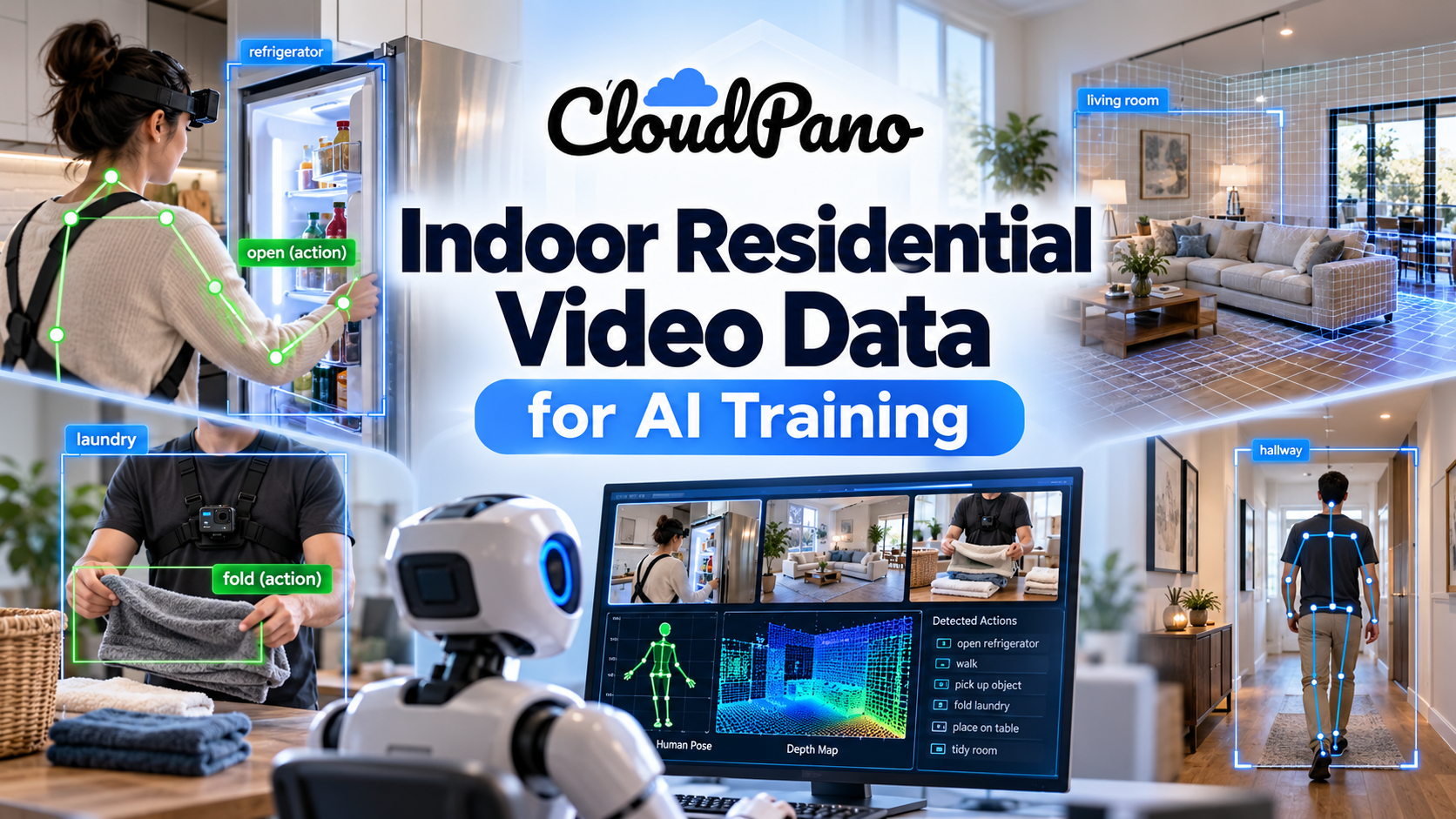
Home robots and vision models need video from real homes, yet the best-known indoor datasets cover a few dozen kitchens or a few hundred people. This guide explains why home footage is scarce, what public datasets offer, and how custom in-home collection works.
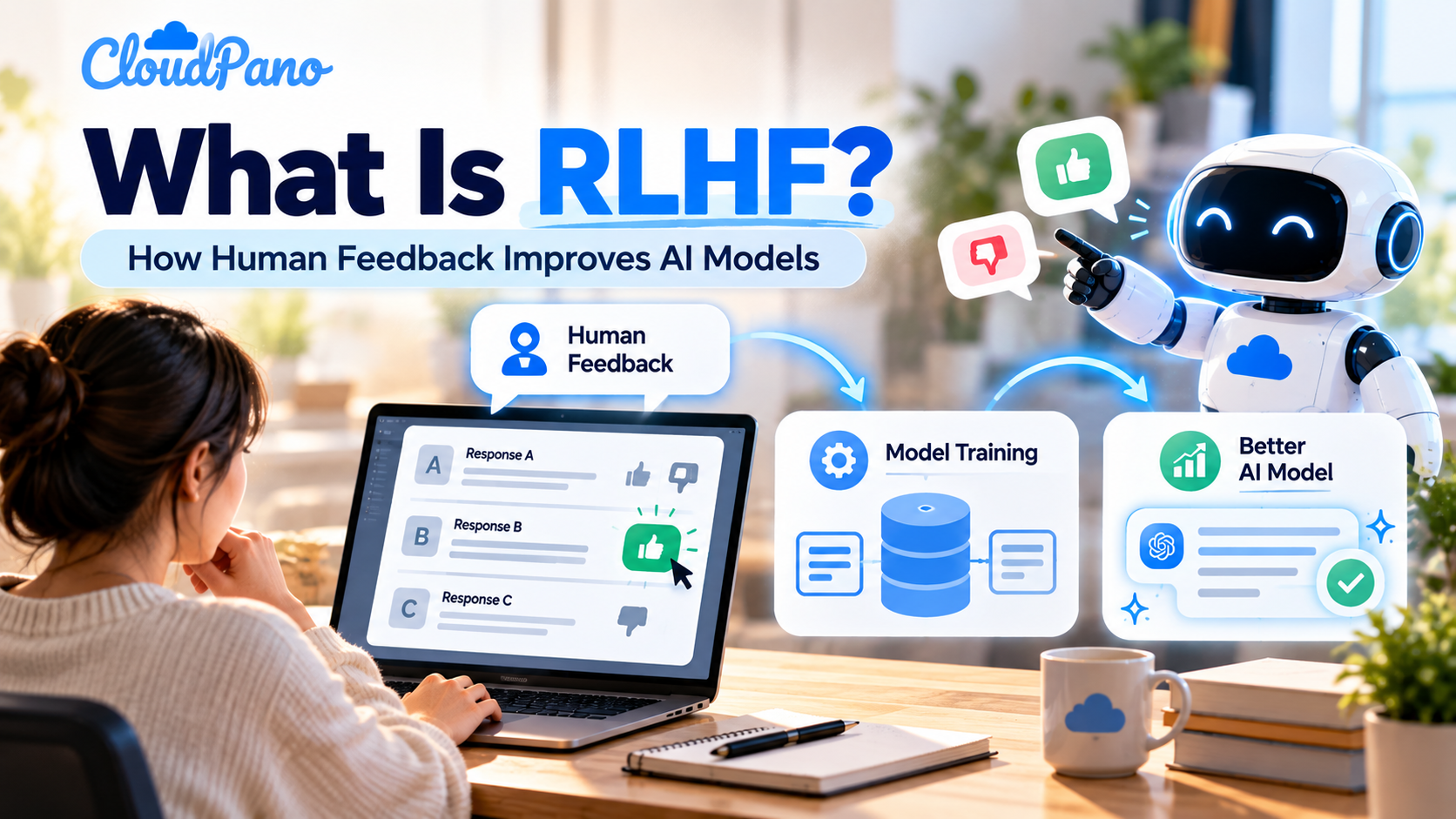
Learn how Reinforcement Learning from Human Feedback (RLHF) helps improve AI models through human preferences, response rankings, reward modeling, and evaluation. Explore how RLHF services support better instruction following, helpfulness, safety, and overall LLM performance.
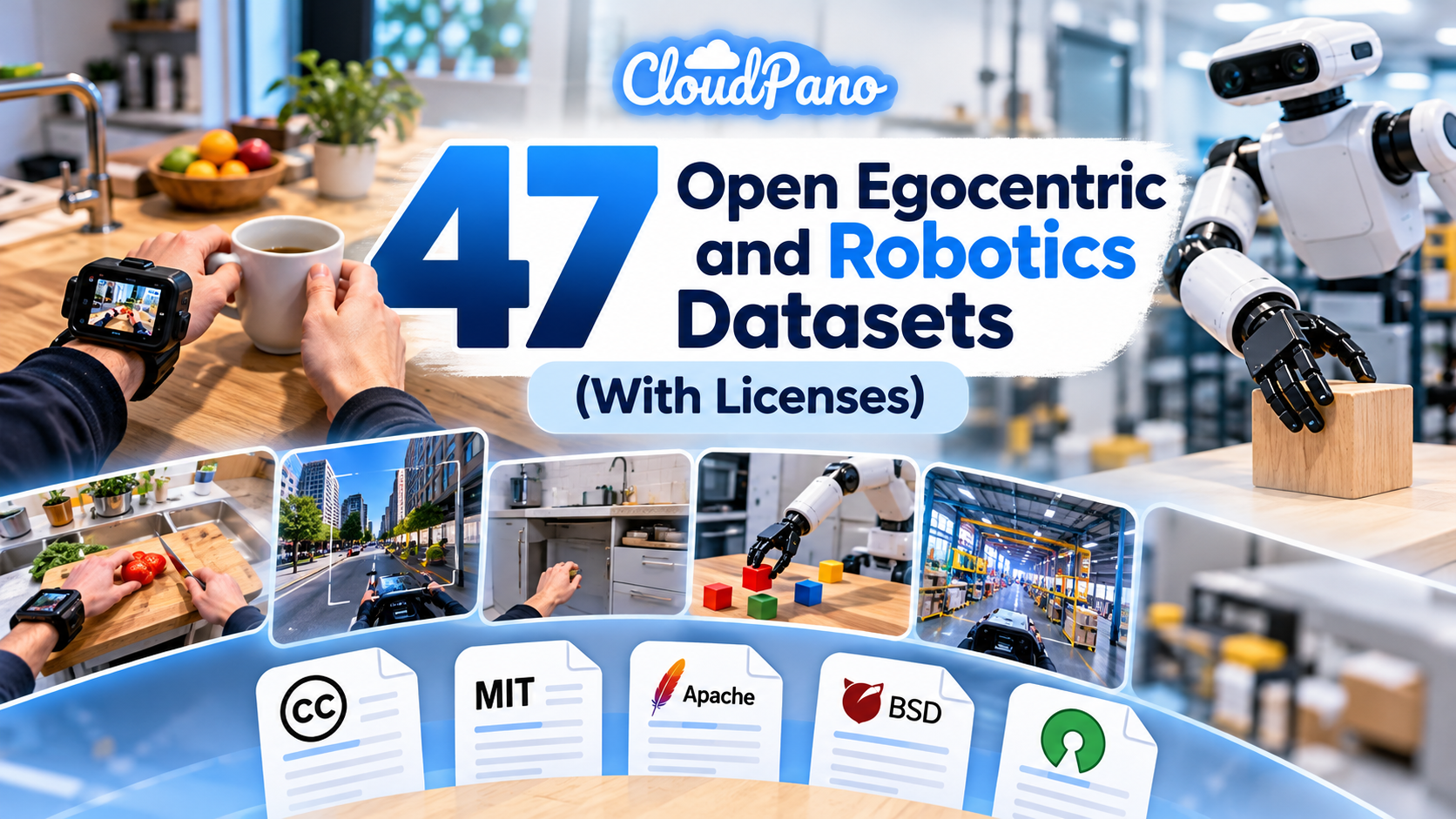
Explore 47 open egocentric and robotics datasets for AI, computer vision, embodied AI, and robot learning. This guide compares each dataset’s primary focus and license or access terms to help researchers identify suitable training data and understand what to verify before commercial use.


.png)




.png)

.png)





.svg)


.svg)