


.png)


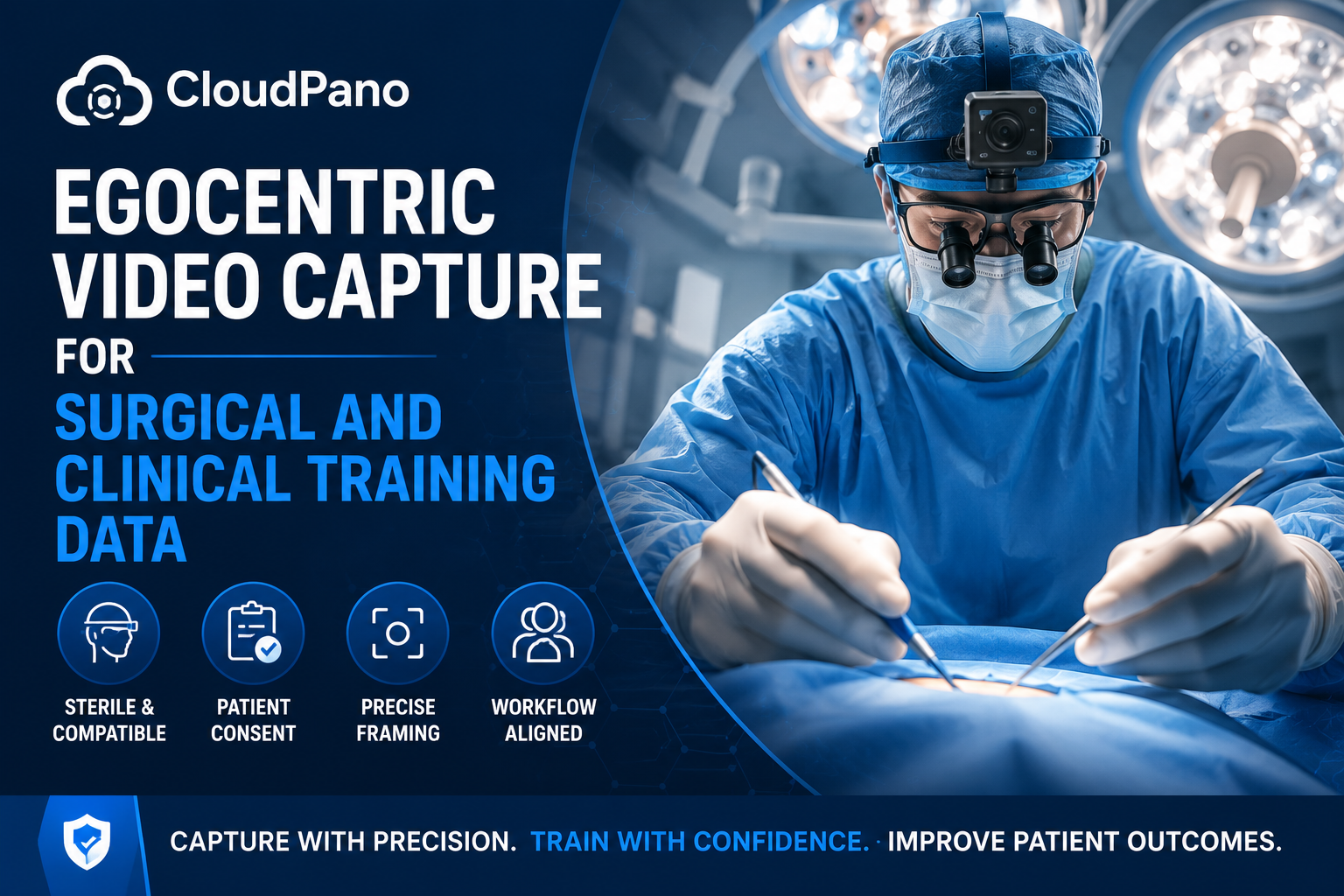
General egocentric capture practices don't fully transfer to a clinical setting, where a wearable camera has to coexist with a sterile field, a patient's direct clinical consent, and procedural requirements that have nothing to do with typical activity recognition data collection. Egocentric video for healthcare AI requires addressing these clinical-specific constraints directly, not treating a hospital or clinic as just another collection environment.
Surgical POV Data Collection in particular introduces constraints most egocentric capture planning never has to consider — sterility requirements that limit what hardware and mounting approaches are viable, and a level of procedural precision where framing and stability genuinely affect clinical usefulness, not just general data quality.
A capture approach that doesn't account for clinical-specific constraints doesn't just produce lower-quality data — it can compromise sterile field integrity or fail to capture the specific procedural detail a training task actually needs, discovered only once footage proves clinically unusable. Google Research's "Data Cascades" study documented how such gaps introduced early in a data pipeline compound into larger problems as a project progresses (Sambasivan et al., Google Research), and clinical capture mistakes are especially costly given the constrained opportunities to recollect procedural footage.

NIST's AI Risk Management Framework treats data fitness for the intended task as foundational to trustworthy AI, directly relevant to Clinical Wearable Camera Capture needing hardware and protocol decisions matched specifically to clinical precision and sterility requirements (NIST AI RMF).
The stakes rise given how much clinical AI development depends on genuinely representative procedural data. Stanford HAI's AI Index has tracked growing interest in AI applications supporting surgical and clinical training (Stanford HAI, AI Index Report), and capture mistakes in this specific context carry both data quality and clinical safety implications that general egocentric collection doesn't.
First-Person Medical Training Data collection generally requires addressing a few clinical-specific considerations.

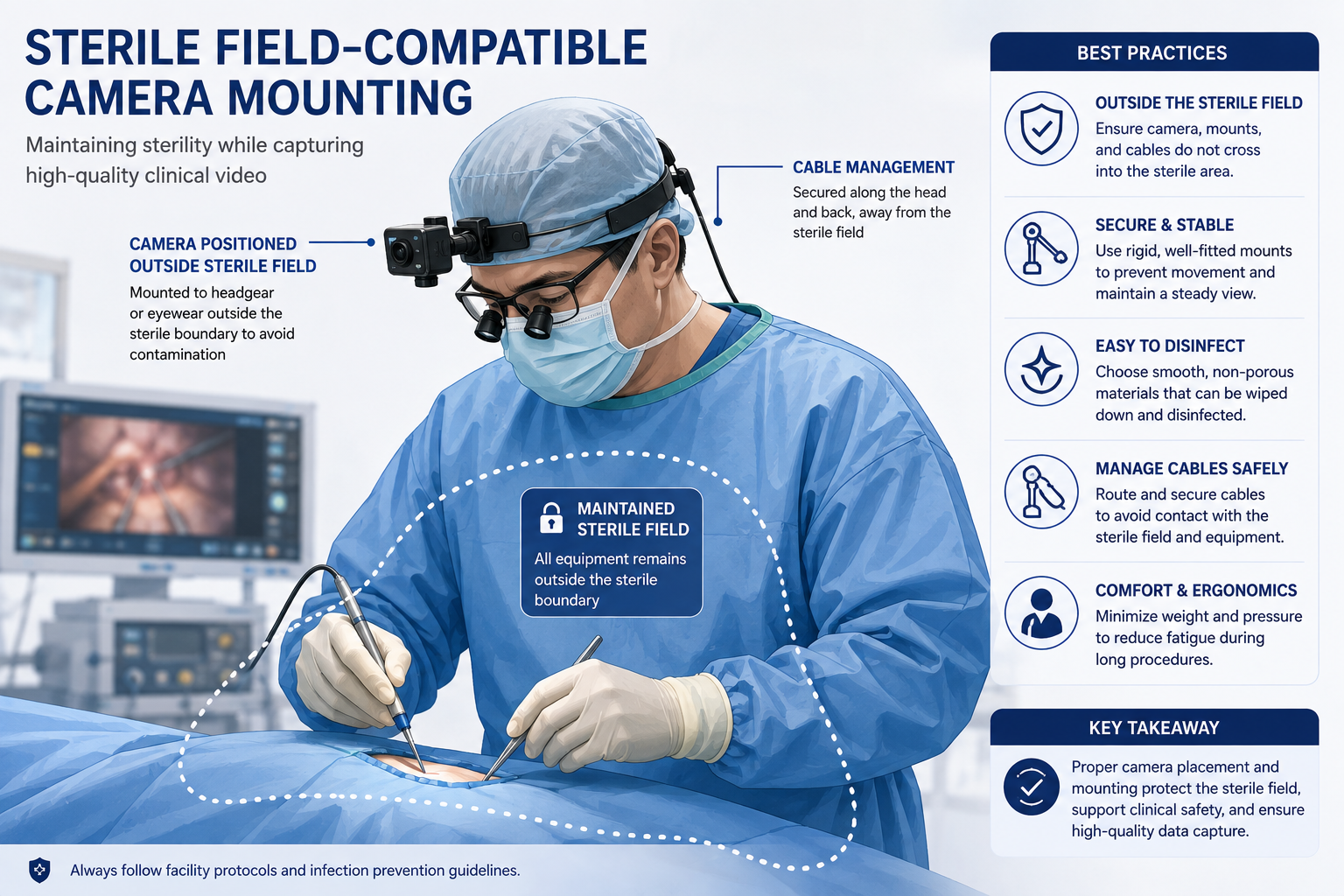
Sterile field compatibility. Hardware and mounting approaches need to be selected and used in ways that don't compromise sterile field integrity, which places real constraints on camera placement and handling that non-clinical settings don't face.
Patient consent obligations. Beyond general bystander privacy considerations, patients in a clinical setting require dedicated informed consent processes specific to their role as the subject of a procedure being recorded, distinct from incidental bystander presence.
Procedural framing and stability requirements. Clinical usefulness often depends on capturing specific anatomical detail with a level of framing precision and stability that general activity-recognition egocentric capture doesn't need to achieve.
Clinical staff and workflow coordination. Capture needs to be planned around actual procedural workflow, coordinating with clinical staff so data collection doesn't interfere with patient care or procedural timing.
Understanding how these workflows operate as requiring genuine clinical-context expertise — not simply general egocentric capture practices applied to a hospital setting — is what actually produces footage clinically usable for its intended training purpose.


Sterile field compatibility requirements, dedicated patient consent processes, and procedural framing precision that general activity-recognition egocentric capture doesn't need to address.
Patients as the subject of a recorded procedure require dedicated informed consent addressing their specific role, distinct from the general bystander privacy considerations that apply to incidental presence in non-clinical settings.
Selecting and using capture hardware and mounting approaches in ways that don't compromise the sterility required in a surgical or procedural environment, which places real constraints on equipment choice and handling.
Because surgical and clinical procedures generally can't be simply repeated for re-collection, making careful upfront planning and piloting more important than in contexts where additional collection sessions are easier to arrange.
Clinical stakeholders including surgeons, clinical staff, and compliance personnel, alongside the AI or data collection team, ideally from the earliest planning stages rather than brought in after a collection approach is already designed.
Often yes, given sterile field compatibility requirements and the precision needed for certain procedural detail, which may not be priorities in non-clinical egocentric capture contexts.
By planning collection specifically around actual procedural timing and clinical staff responsibilities, ensuring data collection doesn't interfere with patient care or introduce workflow disruption.
Egocentric video for healthcare AI requires treating clinical settings as a genuinely distinct collection context, not a hospital-flavored version of general egocentric capture. Sterile field compatibility, dedicated patient consent, procedural framing precision, and careful clinical workflow coordination are what separate surgical and clinical data collection that's actually usable from an approach that discovers its gaps only after a limited, hard-to-repeat procedural opportunity has already passed.


Compact, ready to go anywhere
Interchangeable lens that’s upgradeable
Dual 1-inch sensors for improved clarity and low light performance
Dynamic range and 6K 360° capture
360° photo resolution at 21MP

8K 360° video recording for ultra-detailed visuals.
4K single-lens mode for traditional wide-angle shots.
Invisible selfie stick effect for drone-like perspectives.
2.5-inch touchscreen with Gorilla Glass protection.
Waterproof up to 33ft for underwater shooting.

360° photo resolution in 23MP
Slim design at 24 mm thick
Built-in image stabilization for smooth video capture.
Internal 19GB storage for photo and video storage.
Wireless connectivity for remote control and sharing.

60MP 360° still images for high-resolution photography.
5.7K 360° video recording at 30fps.
2.25-inch touchscreen for intuitive control.
USB Type-C port for fast charging and data transfer.
MicroSD card slot for expandable storage.
.png)

.png)

Try it free. No credit card required. Instant set-up.






.svg)


.svg)