


.png)


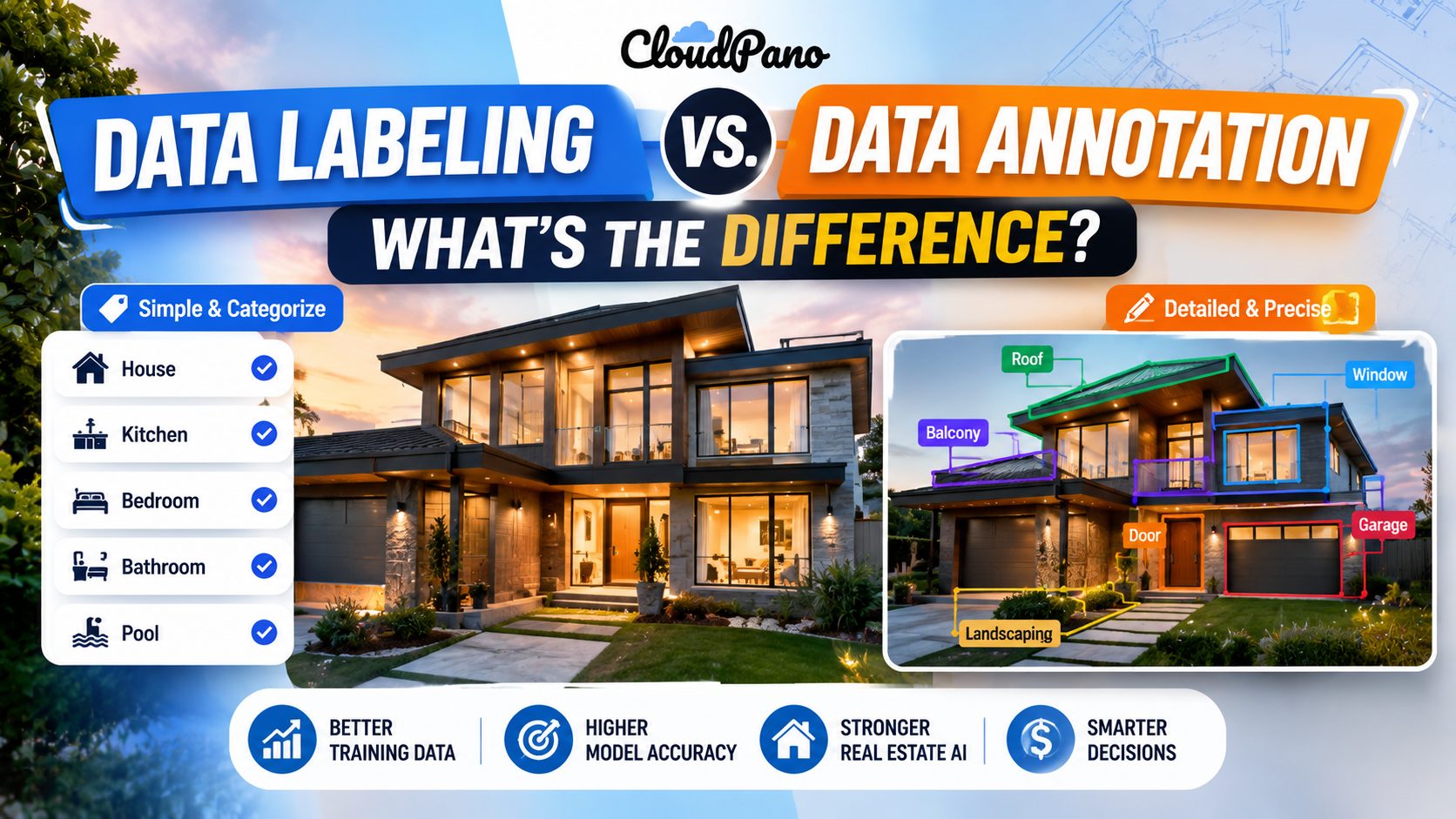
The data labeling vs data annotation question comes up constantly, and the honest answer is that the two terms overlap far more than they diverge. Most people use them interchangeably, and in casual conversation that's rarely a problem.
Where it does matter is in scoping a project or writing a vendor requirement, because the terms carry slightly different connotations that can shape what a provider assumes you need. Getting the distinction right — even a rough one — makes those conversations more precise.
Precise terminology isn't pedantry here — it affects how a project gets scoped, priced, and staffed. A vendor who reads "data labeling" and assumes simple classification work may under-scope a project that actually requires the more structured, technical annotation process needed for computer vision or NLP tasks.
That kind of scoping mismatch is exactly the sort of small, early-stage problem that compounds downstream. Google Research's "Data Cascades" study documented how unaddressed issues in data preparation — including mismatched expectations about what the data work actually involves — tend to surface later as expensive, hard-to-trace model failures (Sambasivan et al., Google Research).
NIST's AI Risk Management Framework treats data quality and provenance as foundational to trustworthy AI systems, which is a reminder that getting the labeling and annotation process right from the start matters more than getting the terminology exactly right — but the terminology is often the first place misunderstandings begin (NIST AI RMF).
Data labeling, in its narrower usage, typically refers to assigning a category, tag, or class to a piece of data — marking an email as spam or not spam, tagging an image as "cat" or "dog," classifying a support ticket by topic.
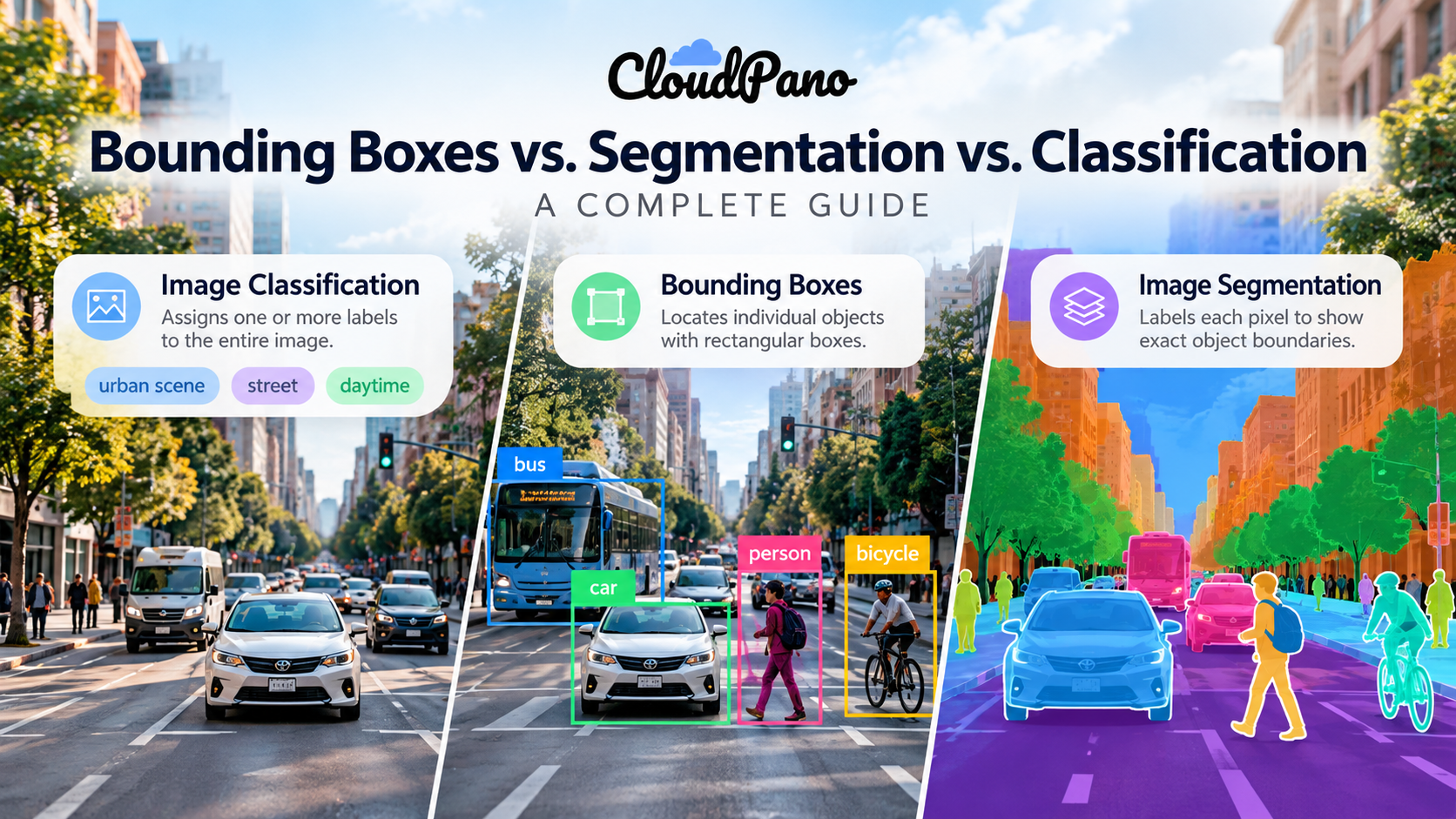
Data annotation, in its broader usage, typically refers to the full set of techniques used to add structured information to data for machine learning — which includes labeling, but also bounding boxes, semantic segmentation, keypoint annotation, transcription, and entity tagging.
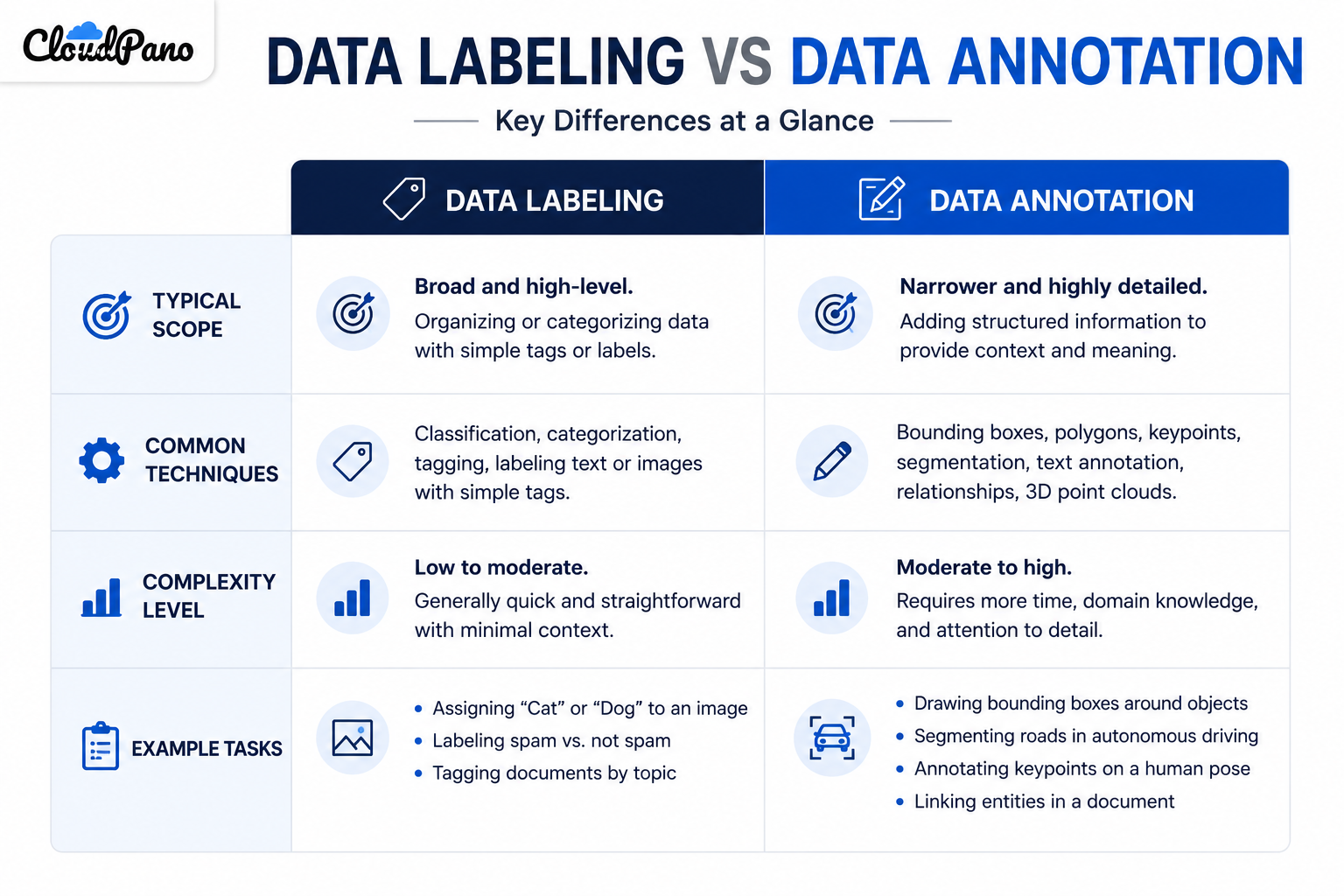
In practice, most of the industry — including most vendors and most job postings — uses the two terms interchangeably, and understanding how these workflows operate in a given project matters more than which term is used to describe them. The distinction is useful mainly as a mental model: if "labeling" describes the simplest end of the spectrum and "annotation" describes the full range including more complex techniques, you have a rough but workable way to communicate project complexity.
Common data labeling techniques include binary classification, multi-class classification, and simple tagging — tasks where each item gets one of a defined set of labels.
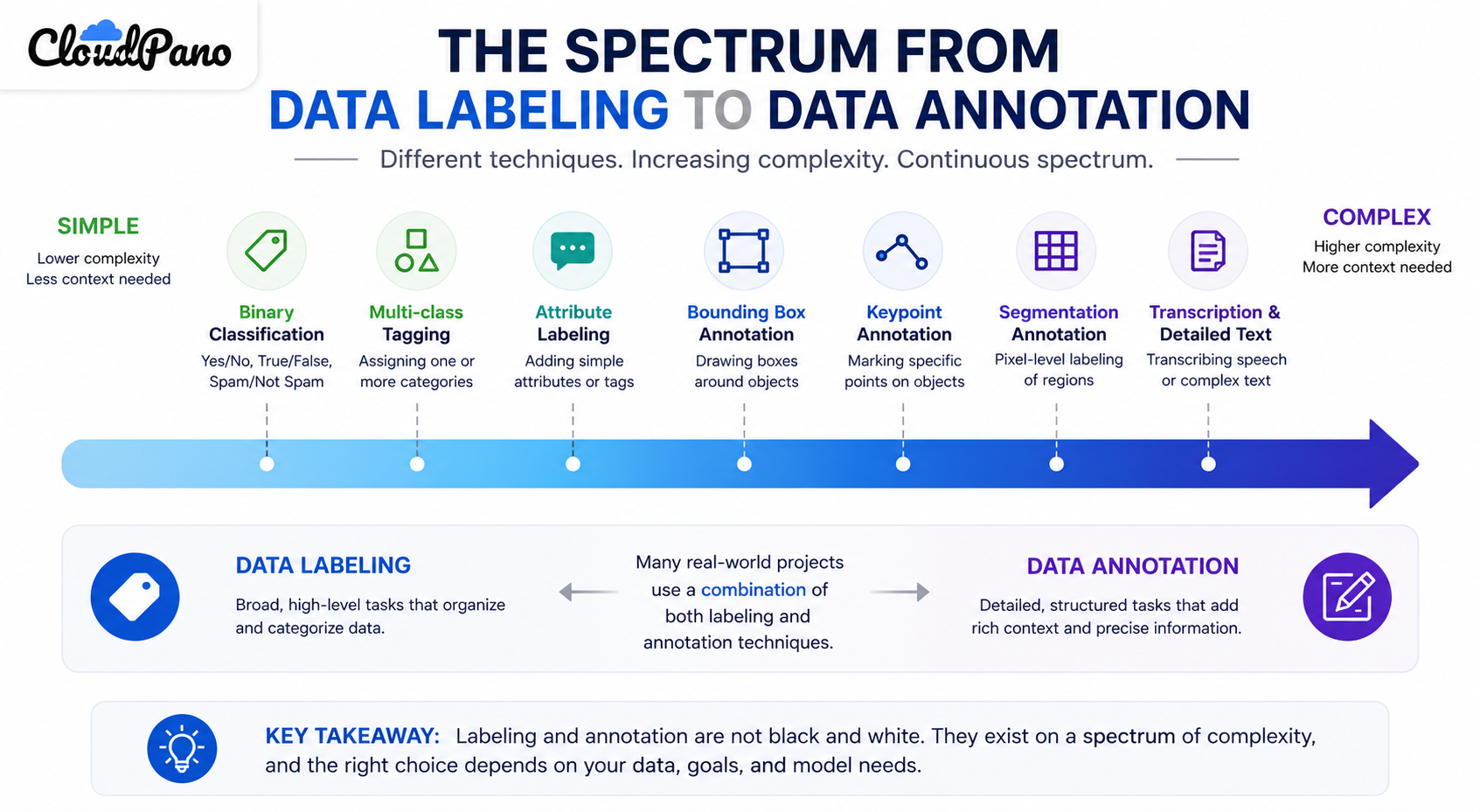
Broader data annotation techniques include bounding boxes and segmentation for images, named entity recognition and sentiment tagging for text, and time-stamped event tagging for audio or video.
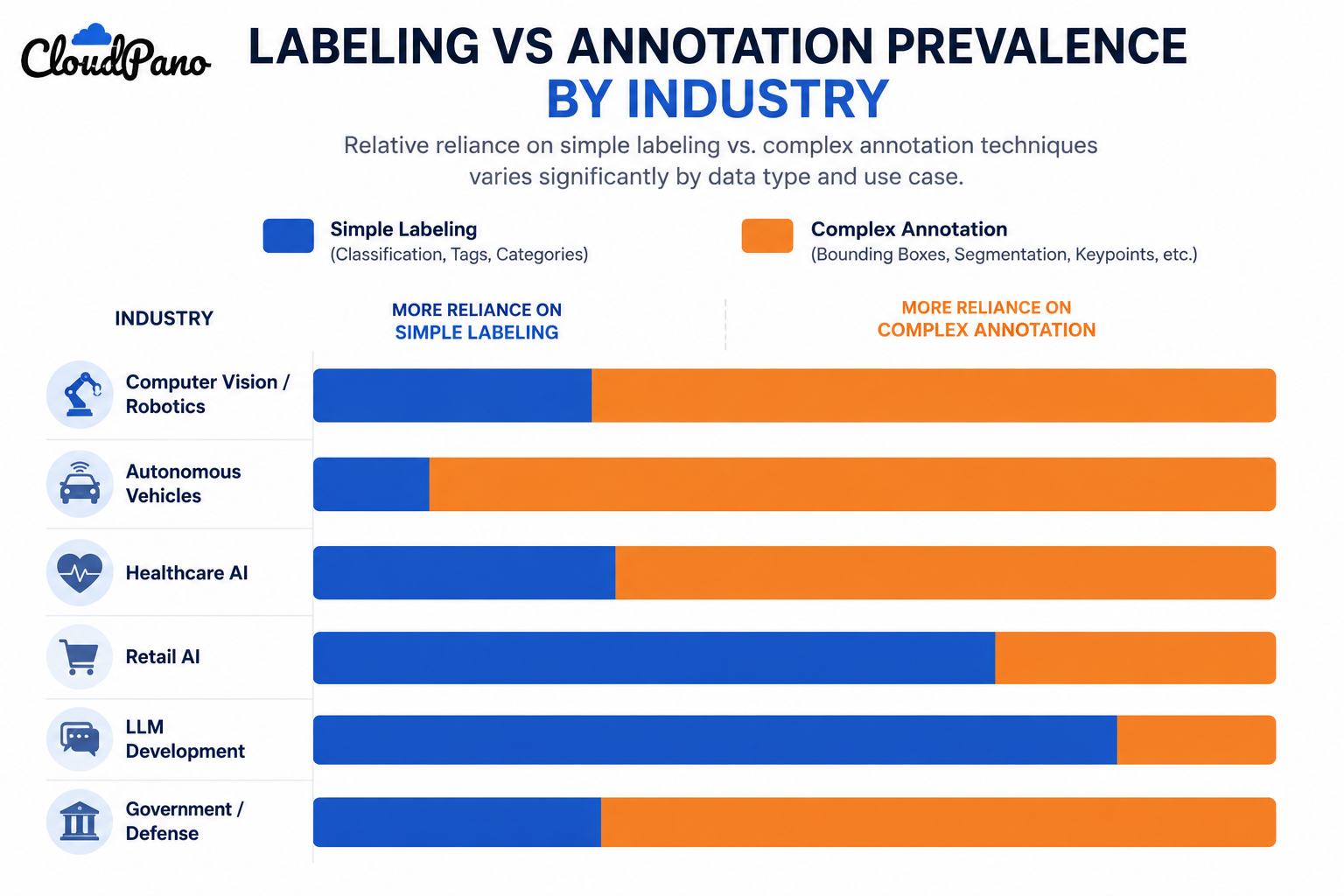
Largely, yes, in everyday use — most people and vendors use the terms interchangeably. Where a distinction is drawn, "labeling" usually refers to simpler categorical tagging, while "annotation" covers a broader range of more structured techniques.
Neither term alone is precise enough for scoping — specify the actual technique needed (classification, bounding boxes, segmentation, transcription) so a vendor or internal team understands the real complexity involved.
Binary classification, multi-class classification, and simple categorical tagging are the most common — tasks where each item receives one of a defined, limited set of labels.
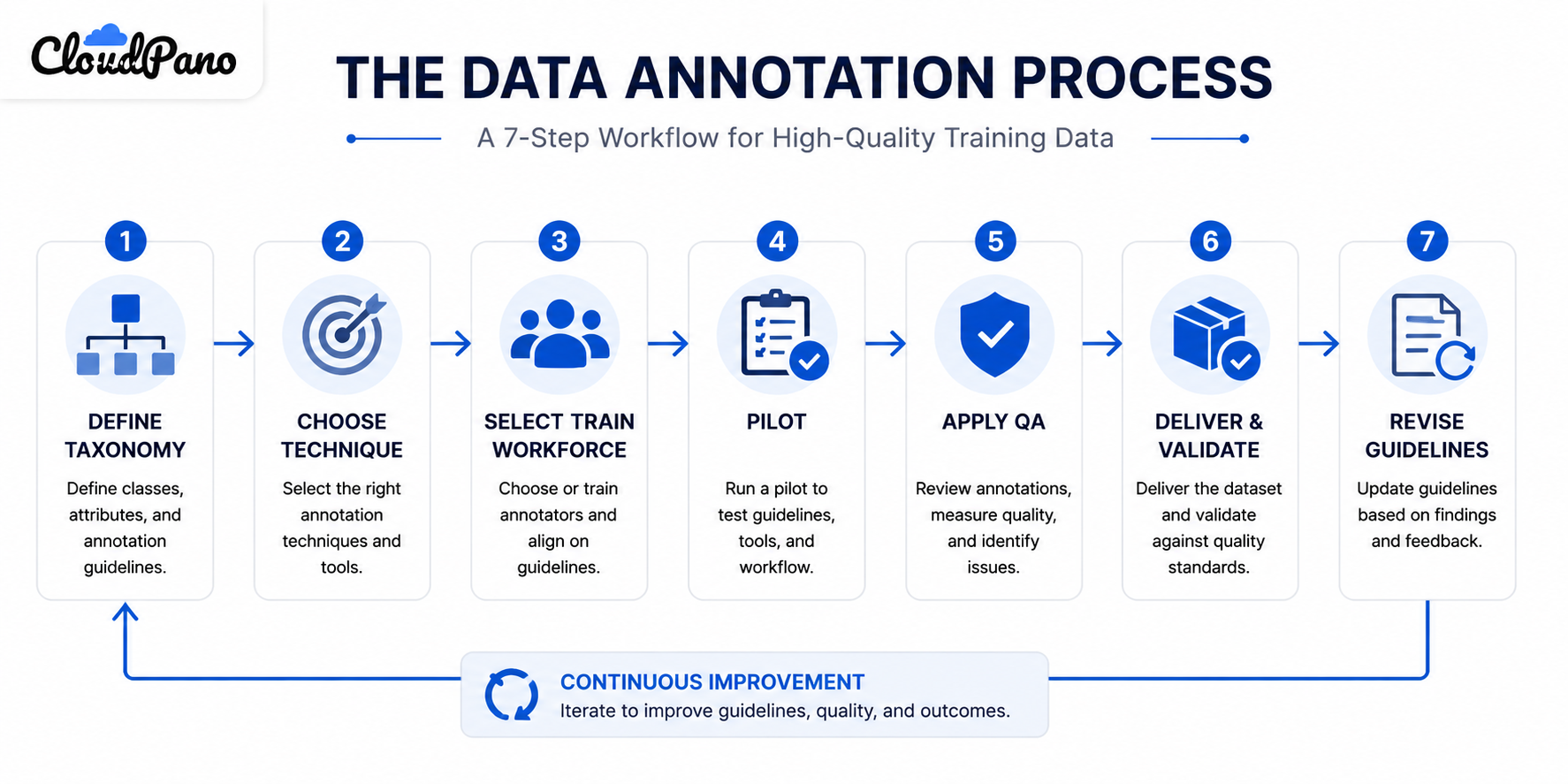
Defining a taxonomy, selecting the appropriate technique for the data type, training or selecting a workforce, running a pilot, applying quality assurance throughout, and validating delivered data against your training pipeline's requirements.
Almost always annotation in the broader sense — bounding boxes, segmentation, and keypoint annotation are standard for computer vision, well beyond simple classification-style labeling.
No. AI training data can come from manual annotation, automated or model-assisted labeling, or a hybrid human-in-the-loop process, depending on data complexity and available resources.
Not as much as what the vendor actually includes — focus on the specific techniques, workforce expertise, and quality assurance process they offer rather than whether they market themselves as a "labeling" or "annotation" provider.
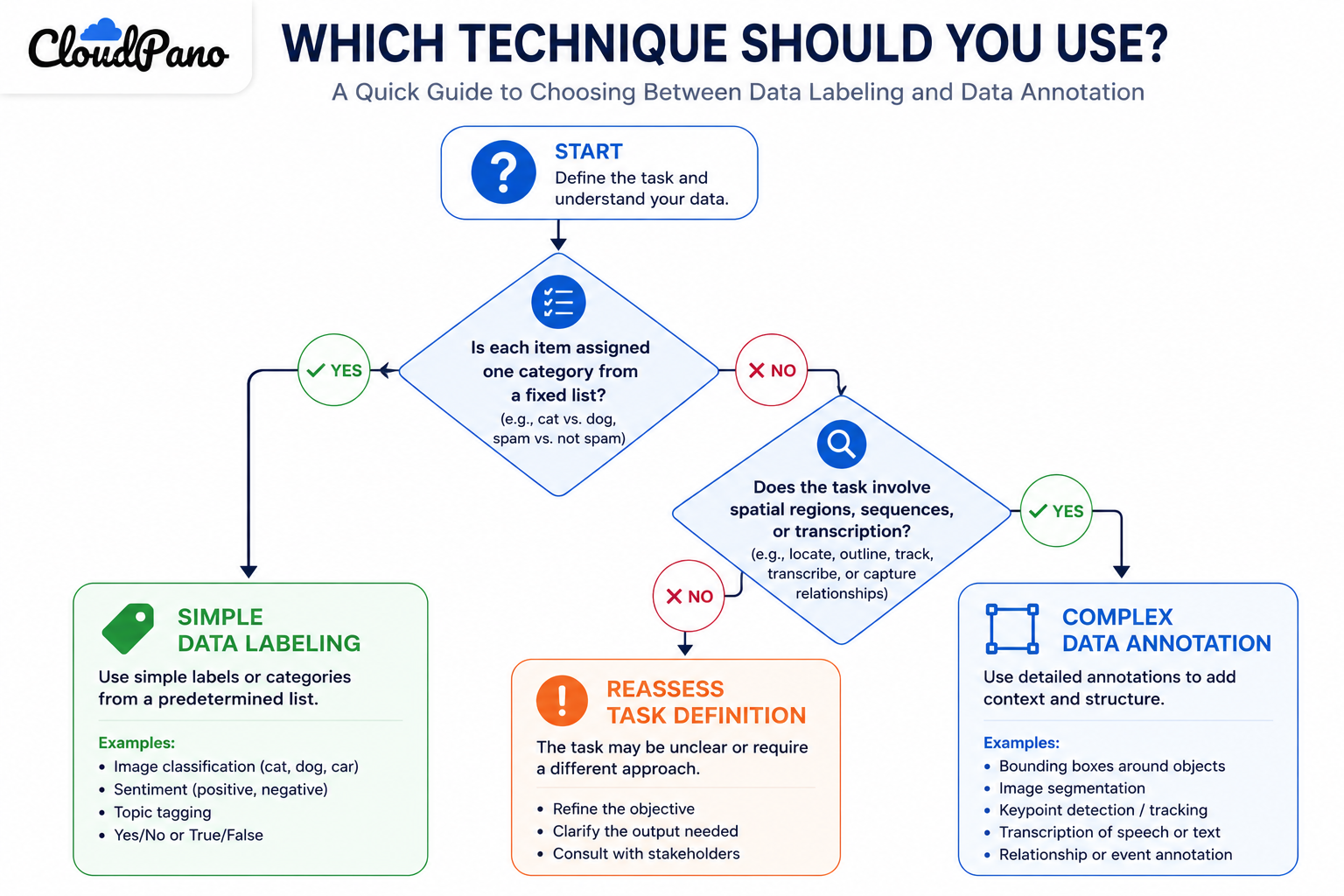
Data labeling vs data annotation isn't a meaningful distinction in most everyday conversations, but it's worth being precise about when scoping a project, writing a vendor requirement, or hiring for a role. The technique and quality process behind the work matter far more than which umbrella term gets used to describe it.


Compact, ready to go anywhere
Interchangeable lens that’s upgradeable
Dual 1-inch sensors for improved clarity and low light performance
Dynamic range and 6K 360° capture
360° photo resolution at 21MP

8K 360° video recording for ultra-detailed visuals.
4K single-lens mode for traditional wide-angle shots.
Invisible selfie stick effect for drone-like perspectives.
2.5-inch touchscreen with Gorilla Glass protection.
Waterproof up to 33ft for underwater shooting.

360° photo resolution in 23MP
Slim design at 24 mm thick
Built-in image stabilization for smooth video capture.
Internal 19GB storage for photo and video storage.
Wireless connectivity for remote control and sharing.

60MP 360° still images for high-resolution photography.
5.7K 360° video recording at 30fps.
2.25-inch touchscreen for intuitive control.
USB Type-C port for fast charging and data transfer.
MicroSD card slot for expandable storage.
.png)

.png)

Try it free. No credit card required. Instant set-up.






.svg)


.svg)