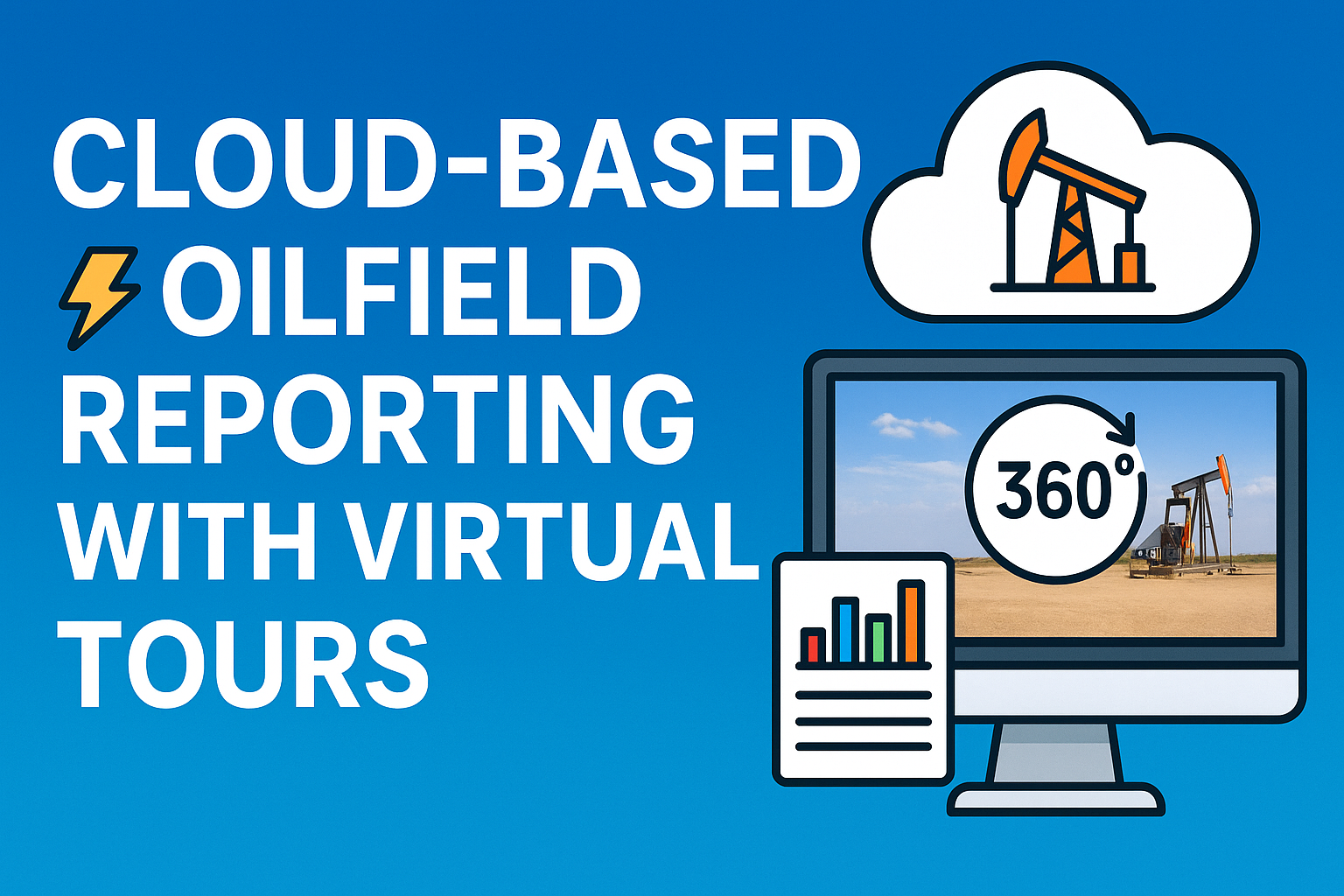
Cloud-Based Oilfield Reporting with Virtual Tours

Cloudpano
July 25, 2025
5 min read
Share this post

☁️ Cloud-Based Oilfield Reporting with Virtual Tours: A Complete Guide 🛢️📊

In oil and gas operations, accurate reporting is everything — but traditional reporting tools often fall short. Spreadsheets, PDF files, and static reports are hard to keep updated, harder to interpret, and often disconnected from what’s really happening on-site.

That’s why modern operators are turning to cloud-based oilfield reporting powered by 360° virtual tours. This powerful combination turns your daily field data into a dynamic, visual-first reporting system — accessible from anywhere, anytime. 🌍💻

In this guide, we’ll break down exactly how to use cloud-based virtual tours for reporting, what tools to use, and how to boost visibility, compliance, and communication across your oilfield operations.

🧾 The Problem with Traditional Oilfield Reports

Let’s face it. The old way of reporting includes:

  • 📄 PDF summaries that quickly go out of date
  • 📷 Photos without context or location tags
  • 🧾 Spreadsheets no one wants to open
  • 🕐 Delays between what’s happening in the field and what gets reported

As a result, decision-makers are blind, teams work in silos, and regulatory submissions become a nightmare.

🔗 Related: Building a Centralized Oilfield Documentation System with 360 Tours

🌀 Enter: Cloud-Based Reporting with 360° Virtual Tours

360° virtual tours allow you to capture real, immersive visuals of your sites — and cloud-based reporting platforms let you organize, timestamp, annotate, and share those visuals in real time.

Benefits include:

✅ Instant visibility into remote sites
✅ Versioned records with historical comparisons
✅ Interactive reports with embedded notes and files
✅ One-click sharing for internal teams, clients, or regulators

🔗 Related: From Ground to Cloud: Tracking Oilfield Workflows with 360 Virtual Tours

🛠️ What You Need to Build a Cloud-Based Reporting System

1. 360° Capture Tools

Use 360° cameras or drones to document sites visually:

  • Insta360 One RS – Great for walk-throughs
  • Ricoh Theta Z1 – High-resolution stills
  • DJI Mavic 3 Enterprise – Perfect for aerial overviews

🔗 More options: Best Cameras and Drones for Oilfield Virtual Tours in 2025

2. Virtual Tour & Reporting Software (e.g. CloudPano)

These platforms let you:

  • Upload and organize 360° images
  • Add hotspots, labels, and inspection notes
  • Timestamp changes over time
  • Export or share reports with stakeholders

3. Cloud Storage & Access Control

Store all visual data in the cloud with:

  • Secure login permissions
  • View/edit roles for teams
  • Device-agnostic access (mobile, tablet, desktop)

✅ Step-by-Step: How to Implement Cloud-Based Reporting

🔍 Step 1: Define What to Report

Choose what matters most to your team:

  • Daily equipment status 📦
  • Weekly construction progress 🏗️
  • Monthly compliance inspections 📋
  • Incident reporting and root cause tracking 🚧

📸 Step 2: Capture the Visuals

Use your 360° camera or drone to capture:

  • Site entrances
  • Equipment areas
  • Storage and tank locations
  • Control rooms and walkways

🔗 Related: 360° Virtual Tours for Oilfield Project Updates: A Complete Guide

🧠 Step 3: Build the Report in Your Virtual Tour Platform

Inside the platform:

  • Upload the imagery
  • Tag critical areas
  • Add checklists and comments
  • Include embedded PDFs or inspection forms

🔗 Related: Streamlining Oilfield Inspections Using 360 Virtual Tours

📤 Step 4: Share and Collaborate

Generate secure links for:

  • Internal teams
  • Project managers
  • Regulators or auditors
  • Clients or vendors

Allow stakeholders to comment directly inside the tour — no need for email threads or phone calls.

🔁 Step 5: Version and Archive

Keep weekly or monthly versions to compare:

  • Equipment installations
  • Repairs and maintenance
  • Compliance checks
  • Spill or hazard remediation

🔗 Related: Real-Time Oilfield Development Tracking with 360° Virtual Tours

🔍 Real-World Use Case

A midstream operator in Texas implemented cloud-based reporting with 360° tours across five compressor stations.

Results included:

  • ⏱️ 60% faster project update reviews
  • 🧾 Reduced reporting errors by 80%
  • 📤 Shared real-time visuals with regulatory bodies during permit audits
  • ✅ Created a permanent visual archive for every milestone

📌 Full story here: Case Study: Virtual Tour Implementation for Oilfield Workflow Visibility

🔐 Use Cases for Cloud-Based Oilfield Reporting

🛠️ Construction Project Updates

Show real-time visual proof of project milestones.

📋 Safety & Compliance Records

Embed incident documentation and verify that safety gear, signage, and fire suppression systems are in place.

🧪 Asset Inspections

Document tank conditions, pipeline welds, and equipment status visually.

🧠 Executive Dashboards

Let stakeholders browse and understand site conditions without visiting the field.
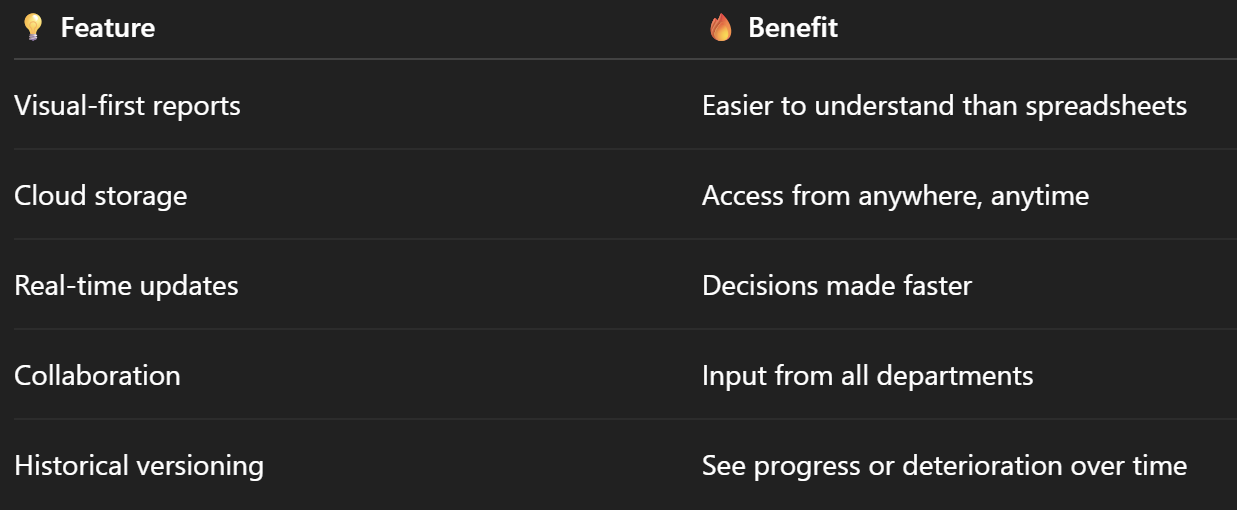
📈 Why It Works: Key Benefits

🎯 Final Thoughts

In 2025 and beyond, oilfield reporting must evolve — not just to keep up with regulations, but to unlock efficiency, transparency, and smarter decisions.

360° virtual tours combined with cloud-based platforms offer:

✅ Remote visibility
✅ Faster reporting
✅ Stronger compliance
✅ Permanent, searchable records

If your reports still live in folders and email threads, it's time to upgrade your process — and your visibility. 💡

Share this post
Cloudpano

Choose The Right 360° Camera

Insta360 ONE RS 1-Inch 360 Edition

  • Compact, ready to go anywhere

  • Interchangeable lens that’s upgradeable

  • Dual 1-inch sensors for improved clarity and low light performance

  • Dynamic range and 6K 360° capture

  • 360° photo resolution at 21MP

Learn More

Insta360 X4

  • 8K 360° video recording for ultra-detailed visuals.

  • 4K single-lens mode for traditional wide-angle shots.

  • Invisible selfie stick effect for drone-like perspectives.

  • 2.5-inch touchscreen with Gorilla Glass protection.

  • Waterproof up to 33ft for underwater shooting.

Learn More

Ricoh Theta Z1

  • 360° photo resolution in 23MP

  • Slim design at 24 mm thick

  • Built-in image stabilization for smooth video capture.

  • Internal 19GB storage for photo and video storage.

  • Wireless connectivity for remote control and sharing.

Learn More

Ricoh Theta X

  • 60MP 360° still images for high-resolution photography.

  • 5.7K 360° video recording at 30fps.

  • 2.25-inch touchscreen for intuitive control.

  • USB Type-C port for fast charging and data transfer.

  • MicroSD card slot for expandable storage.

Learn More
Property Marketing
Allows potential buyers to explore properties in detail from anywhere, enhancing the real estate marketing process.
Automotive Spins
Create an interactive virtual showroom and engage affluent digital buyers with live 360º video calls, all through the CloudPano mobile app for a complete automotive sales solution.
Interactive Floor Plans
Create 2D and 3D floor plans with measurements in 4 minutes or less, all from your phone. Download the Floor Plan Scanner app and get your first scan free.

360 Virtual Tours With CloudPano.com. Get Started Today.

Try it free. No credit card required. Instant set-up.

Try it free
Latest posts

See our other posts

Interviews, tips, guides, industry best practices, and news.

Mastering Compliance: The Future of Automated Property Video

This article provides a definitive guide for real estate professionals on navigating strict MLS branding regulations through AI-driven automation. It addresses the risks of compliance violations, details the limitations of manual editing workflows, and introduces a scalable, "compliance-first" system for generating high-quality, MLS-approved property videos. The post serves as a strategic blueprint for agents aiming to maintain listing visibility, avoid regulatory penalties, and streamline their marketing operations.
Read post

Future-Proofing Your Business with MLS Safe AI Video for Listings

This high-authority guide focuses on long-term operational stability and the strategic advantages of leveraging artificial intelligence to bypass the industry-wide friction between high-impact marketing and regulatory compliance. Key Takeaways & Content Structure: The Reputation-Risk Factor: Explains the high cost of compliance errors, focusing on how a single technical oversight—such as a misplaced logo or branded watermark—can trigger a systemic board audit, leading to immediate listing suspension and lasting reputational damage with sellers. The Production Disconnect: Breaks down the "two-version" operational tax, where marketing teams suffer from repetitive rendering, file-management bloat, and the persistent danger of human error when manually managing branded vs. unbranded media assets. AI as a Compliance Engine: Defines how advanced AI media platforms move beyond mere aesthetics to function as regulatory safeguards. It illustrates the technical architecture where the AI engine isolates branding data from structural property data at the rendering level, effectively "forking" the output into two distinct, safe-to-use tracks. Operational Blueprint: Maps out a transparent, 6-step automation funnel that takes a listing from flat photograph ingestion to syndicate-ready, neutral-hosted media in minutes. Strategic Scalability: Demonstrates why centralizing production into a single SaaS platform is the only way for growing brokerages to maintain consistency, remove contractor-level liability, and recover significant administrative time. The PhotoAIVideo.com Edge: Concludes by positioning the platform as a purpose-built solution that combines high-definition parallax AI motion with an automated "compliance-first" export workflow, ensuring Realtors can generate professional, engaging video content that passes even the most stringent board audits on the first attempt.
Read post

Streamlining Your Workflow with a Specialized MLS Compliant Real Estate Media App

This article functions as a tactical operations guide for real estate marketers and brokerage leaders focused on reducing technical friction and human error in their media publishing pipeline. Key Takeaways & Content Structure: The "Stop-Work" Order: Addresses the high-stakes reality of MLS compliance flags, where automated rules block properties from IDX feeds due to accidental branding, causing immediate listing velocity loss. The Fragmented Workflow Problem: Identifies the "manual bottleneck"—the inefficiency of having field photographers deliver single assets that then require internal staff to manually strip, re-render, and verify separate branded and unbranded versions. Architecture of Dual-Path Rendering: Illustrates the technological shift toward programmatic asset management. It explains how a modern app processes a single source file into two isolated rendering tracks: a lead-gen-heavy marketing track and a strictly compliant, unbranded track for MLS syndication. Operational Workflow Mapping: Provides a clear, 6-step blueprint for moving from raw photography ingestion to compliant deployment, including automated motion application, metadata scrubbing, and neutral link hosting. Risk Mitigation for Brokerages: Highlights how centralized management dashboards eliminate the "wild west" of agent-led media creation, providing brokers with a single-pane-of-glass view to ensure compliance across all active listings. The PhotoAIVideo.com Advantage: Positions the platform as the ideal MLS compliant real estate media app that leverages AI to inject cinematic motion into flat listing photos, effectively automating the entire compliance-forking process and increasing overall production capacity by up to 94%.
Read post