


.png)



A computer vision team spends four months training a model on a licensed dataset that looked complete on paper. It performs well in the lab. Then it goes into a real environment — uneven lighting, cluttered backgrounds, edge cases nobody labeled — and accuracy drops fast enough to delay the launch. The problem was never the model architecture. It was the data underneath it, collected in conditions too clean to represent what the model would actually face.
This is the quiet failure point behind a lot of AI projects that miss their timeline. Teams optimize the model and treat the dataset as a checkbox, when the dataset is usually the bigger lever. AI training data services exist to close that gap — not by generating more data faster, but by capturing the real-world variation a model needs before it's deployed into conditions nobody fully controlled.
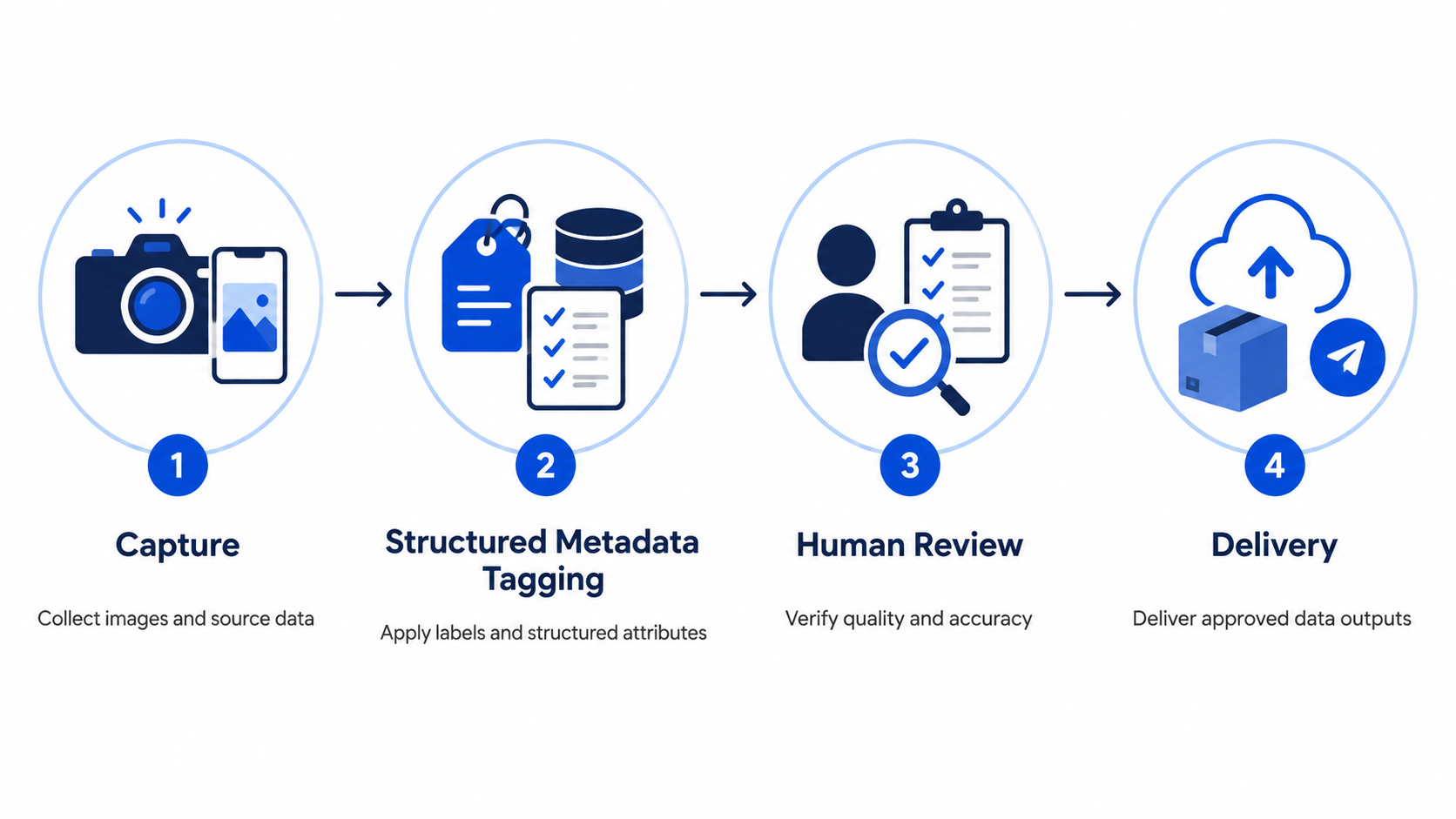
AI training data services cover the full pipeline of gathering, structuring, and verifying the data a machine learning model learns from — video, images, audio, and text captured under real-world conditions, tagged with structured metadata, and reviewed by humans before it ever reaches a training pipeline. This is different from simply licensing an existing dataset or generating synthetic data in a lab.
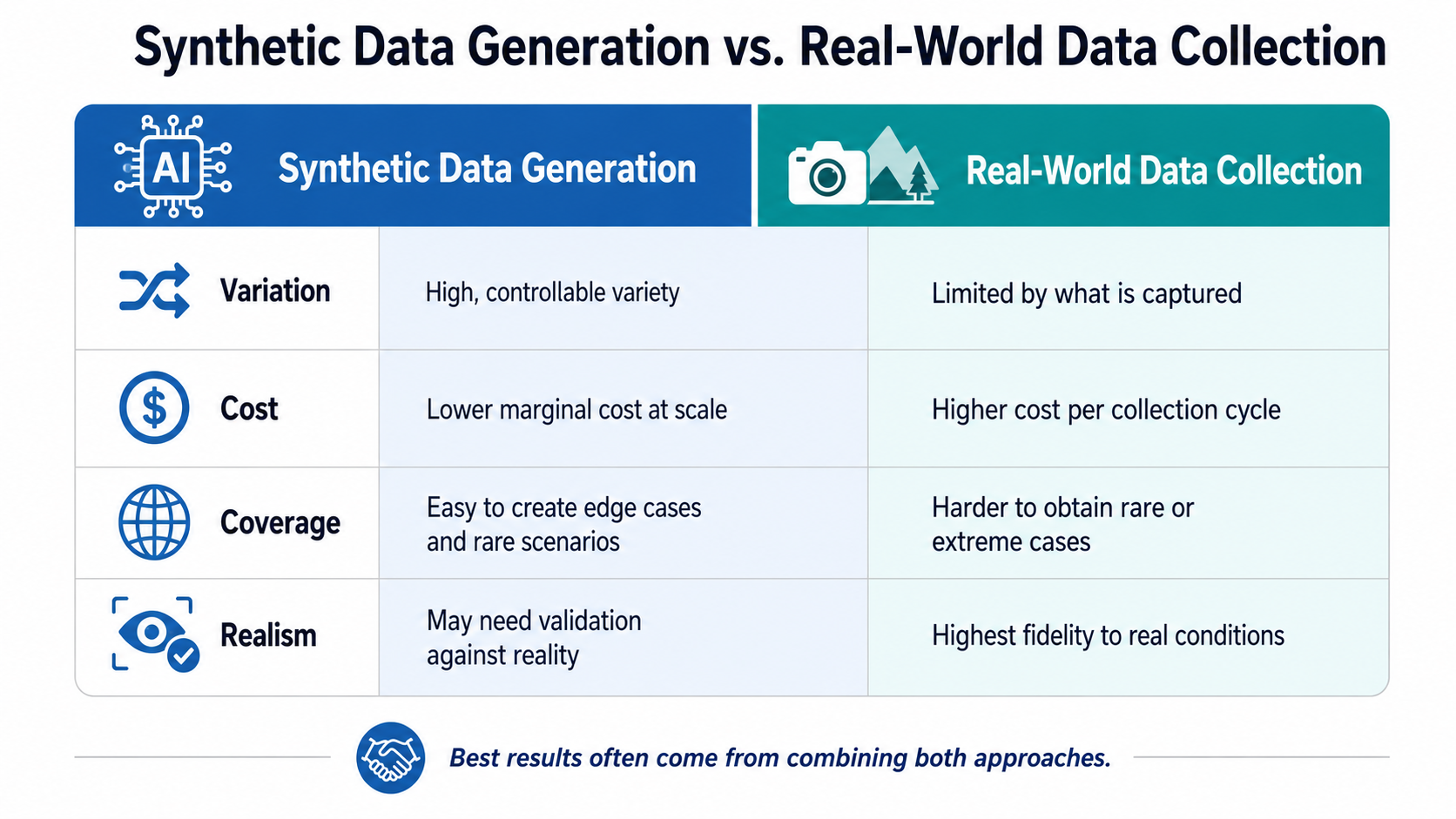
The distinction matters. Synthetic data is useful for filling gaps, but it can't fully replicate the unpredictability of real environments — inconsistent lighting, partial occlusion, regional variation, unexpected human behavior. AI data collection services exist specifically to capture that unpredictability on purpose, so a model trained on the data has already seen something close to what it will encounter in production.
For engineering leads, data science teams, and product managers building computer vision or multimodal AI systems, this isn't an abstract quality concern — it's a timeline and cost concern. Retraining a model because the original dataset didn't reflect real-world conditions is expensive in a way that's hard to see coming. It shows up as a delayed launch, a spike in false negatives after deployment, or a customer escalation that traces back to a scenario the training data never included.
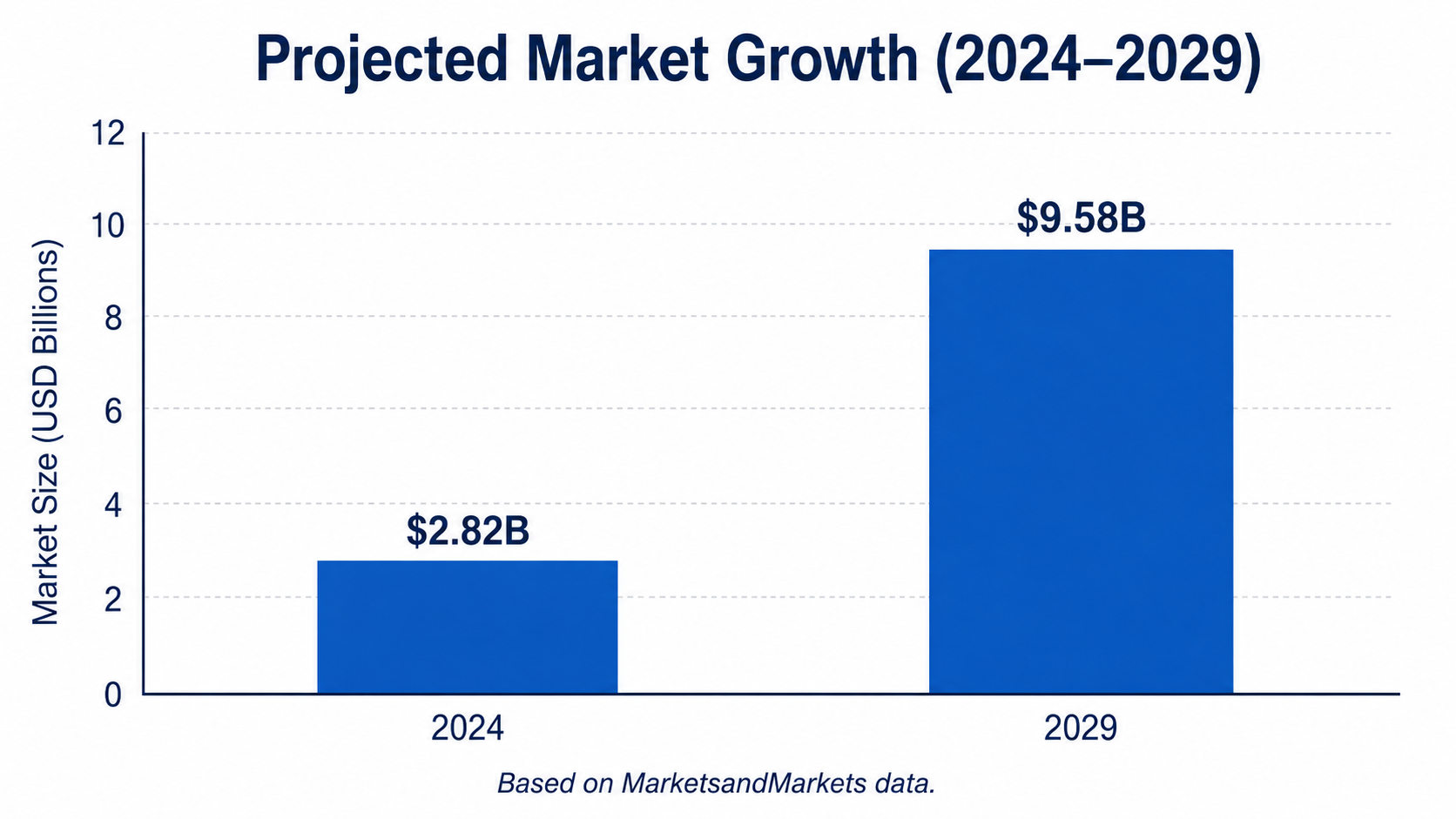
Teams that get this right treat data collection as a scoped, ongoing part of the build — not a one-time purchase. According to Markets and Markets' analysis of the AI training dataset market, the category is projected to grow from roughly $2.82 billion in 2024 to $9.58 billion by 2029, which reflects how many teams are shifting budget away from "buy a dataset once" toward "maintain a data pipeline that keeps up with the model." Separately, Grand View Research's data collection and labeling market analysis puts the segment's growth at roughly 18% CAGR through 2030 — a pace that outstrips a lot of other AI infrastructure spending, because teams are learning the hard way that model performance is bottlenecked by data quality long before it's bottlenecked by compute.
Here's what actually happens inside most teams before they bring in a dedicated data partner. Someone on the ML team is assigned to "handle data" alongside their actual job — building the model. They license a dataset that's close enough, supplement it with a scraping script, and label a subset internally when time allows. Metadata is inconsistent because three different people tagged it three different ways. Edge cases get skipped because nobody had time to go find them deliberately.
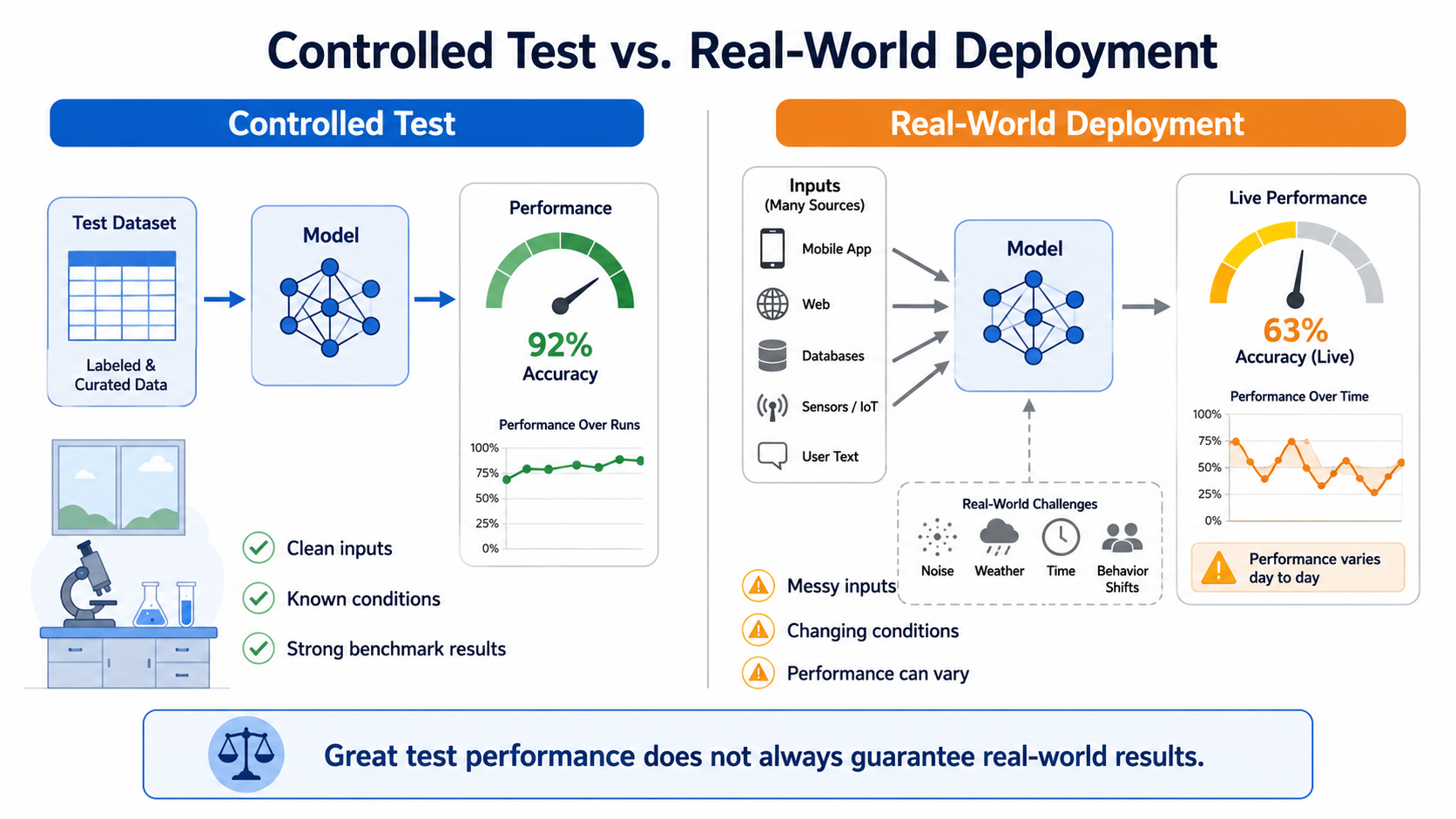
This works until the model reaches a real environment. Then the gaps show up all at once — an autonomous system that hasn't seen enough night driving footage, a retail vision model that hasn't seen enough cluttered shelf conditions, a voice model that hasn't heard enough regional accents. Nobody planned to skip this coverage; it happened because data collection was treated as a task instead of a discipline with its own workflow, tooling, and review process.
CloudPano is building its AI training data services offering around exactly this gap — real-world, multimodal, human-verified data collection, rather than one-off dataset licensing. The approach centers on three things most in-house teams struggle to sustain on their own: a distributed capture network that can gather footage and imagery across real, varied conditions; structured metadata applied consistently at scale; and human review built into the pipeline rather than bolted on afterward.
Through the [CloudPano AI Training Data Services Page], teams will be able to scope a custom dataset creation project around their specific model requirements — a particular environment, a specific edge case category, a modality combination that off-the-shelf datasets don't cover well. That specificity is the difference between data that technically exists and data that actually improves model performance in production. Teams can review CloudPano's broader platform capabilities on the CloudPano Homepage or get an overview of prior projects and use cases through the CloudPano Blog before scoping a custom engagement.

What are AI training data services?
They're end-to-end services for collecting, structuring, and human-verifying the data used to train machine learning models, typically covering real-world video, image, audio, or text capture rather than pre-existing licensed datasets alone.
How is this different from buying a public or licensed dataset?
A licensed dataset is fixed and general-purpose. AI training data services scope collection around your specific model's deployment conditions and known gaps, which produces data that's more directly useful for your use case.
What is custom dataset creation, exactly?
It's a data collection project scoped to your model's specific requirements — a particular environment, edge case, or modality combination — rather than a generic, one-size-fits-all dataset.
Why does real-world data matter more than synthetic data for some use cases?
Synthetic data is useful for filling specific gaps, but it struggles to fully replicate the unpredictability of real environments, which matters most for computer vision and multimodal systems deployed in uncontrolled conditions.
Do AI data collection services include human review, or just automated labeling?
It depends on the provider. Services built around quality, including CloudPano's approach, build structured human review into the pipeline rather than relying on automated labeling alone.
How much training data does a model actually need?
It depends heavily on the model type and deployment complexity, but the more relevant question is usually coverage, not volume — whether the dataset represents the actual conditions the model will face, not just how many samples it contains.
Can this work for ongoing model updates, not just an initial launch?
Yes. Many teams scope data collection in ongoing increments, refreshing training data as deployment conditions evolve rather than treating it as a single static delivery.


Compact, ready to go anywhere
Interchangeable lens that’s upgradeable
Dual 1-inch sensors for improved clarity and low light performance
Dynamic range and 6K 360° capture
360° photo resolution at 21MP

8K 360° video recording for ultra-detailed visuals.
4K single-lens mode for traditional wide-angle shots.
Invisible selfie stick effect for drone-like perspectives.
2.5-inch touchscreen with Gorilla Glass protection.
Waterproof up to 33ft for underwater shooting.

360° photo resolution in 23MP
Slim design at 24 mm thick
Built-in image stabilization for smooth video capture.
Internal 19GB storage for photo and video storage.
Wireless connectivity for remote control and sharing.

60MP 360° still images for high-resolution photography.
5.7K 360° video recording at 30fps.
2.25-inch touchscreen for intuitive control.
USB Type-C port for fast charging and data transfer.
MicroSD card slot for expandable storage.
.png)

.png)

Try it free. No credit card required. Instant set-up.





.svg)


.svg)