


.png)


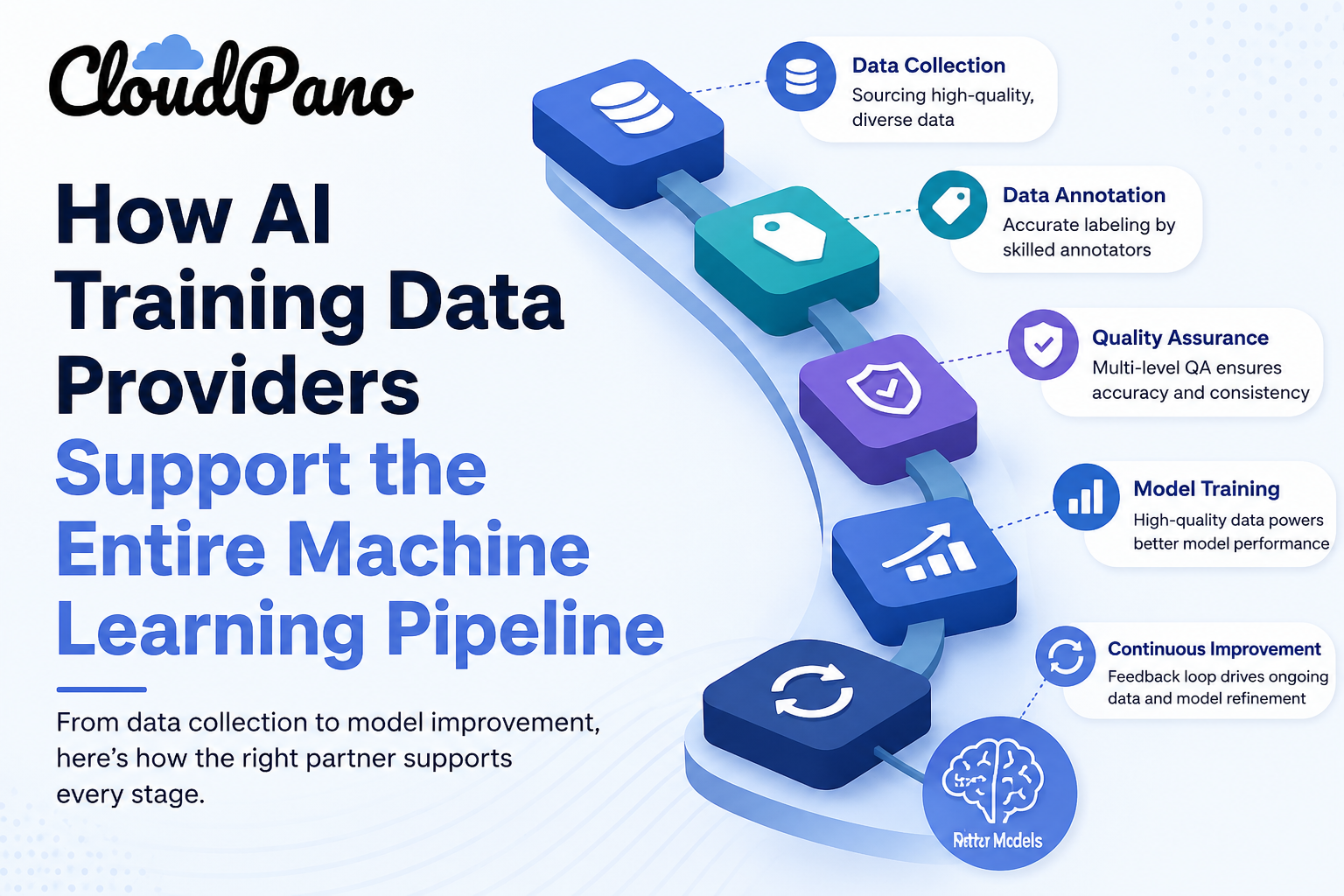
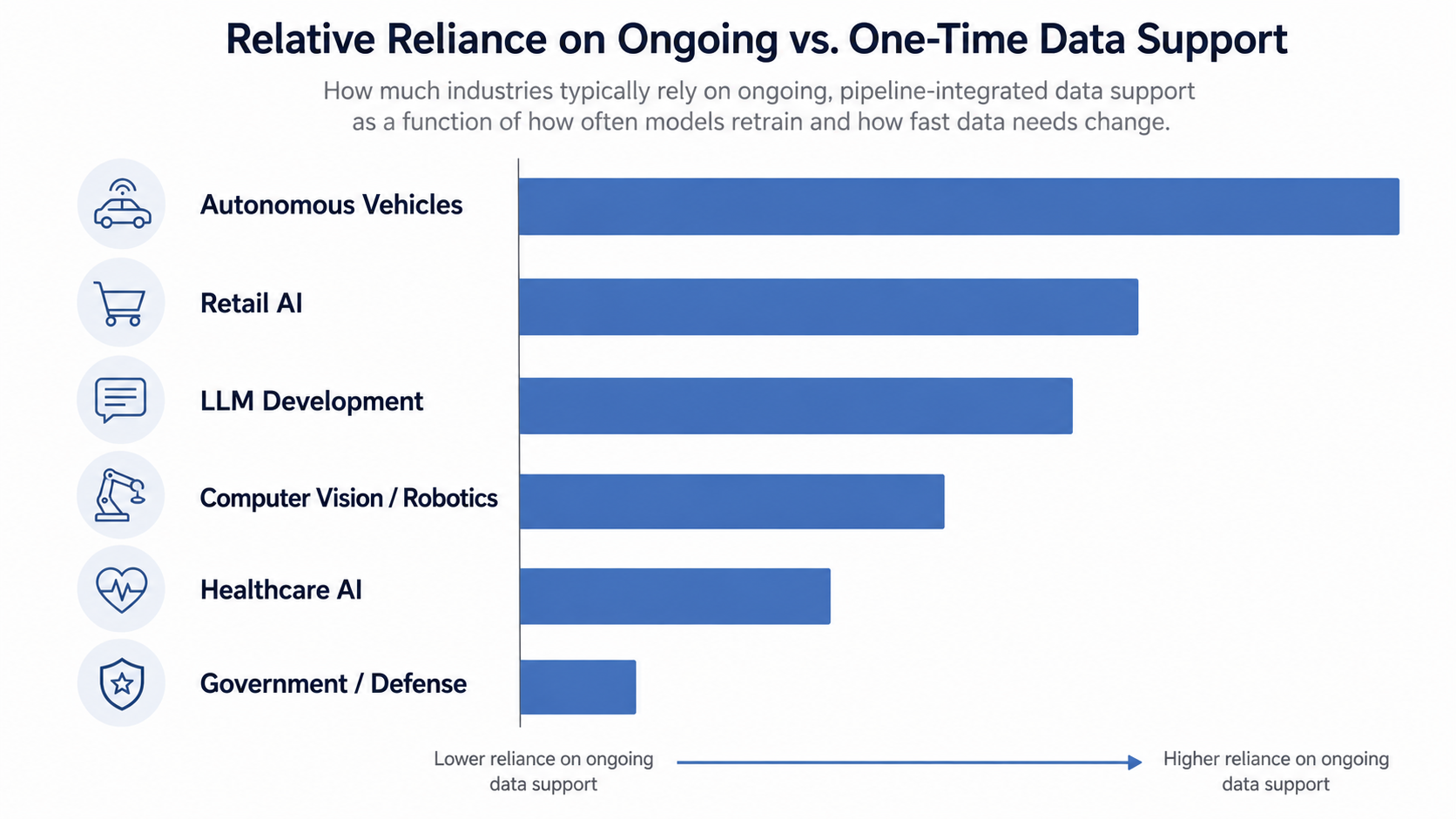
Most teams scope AI training data provider services as a one-time engagement: build the dataset, deliver it, move on to training. That framing works for a single model build, but it breaks down the moment a model needs retraining, a production issue surfaces a data gap, or a new use case needs incremental data.
A provider that only shows up for the initial delivery leaves a gap right where AI development actually lives most of the time — the ongoing cycle of monitoring, retraining, and incremental data collection that continues long after a model first ships.
Models degrade or need expansion over time, and the training data pipeline needs to keep pace with that reality rather than treating data work as a single, closed chapter. Google Research's "Data Cascades" study documented how data issues that seem resolved at one point in a project can resurface as models evolve and encounter new conditions (Sambasivan et al., Google Research).
NIST's AI Risk Management Framework treats ongoing monitoring and data governance as continuous responsibilities, not one-time deliverables — reinforcing that a training data provider relationship scoped only for initial delivery misses a core part of responsible AI development (NIST AI RMF).
The pace of AI iteration makes this more pressing. Stanford HAI's AI Index has tracked how quickly organizations are updating and redeploying models in production (Stanford HAI, AI Index Report), and a provider relationship that has to be re-scoped from scratch for every retraining cycle slows exactly the iteration speed most teams are trying to achieve.
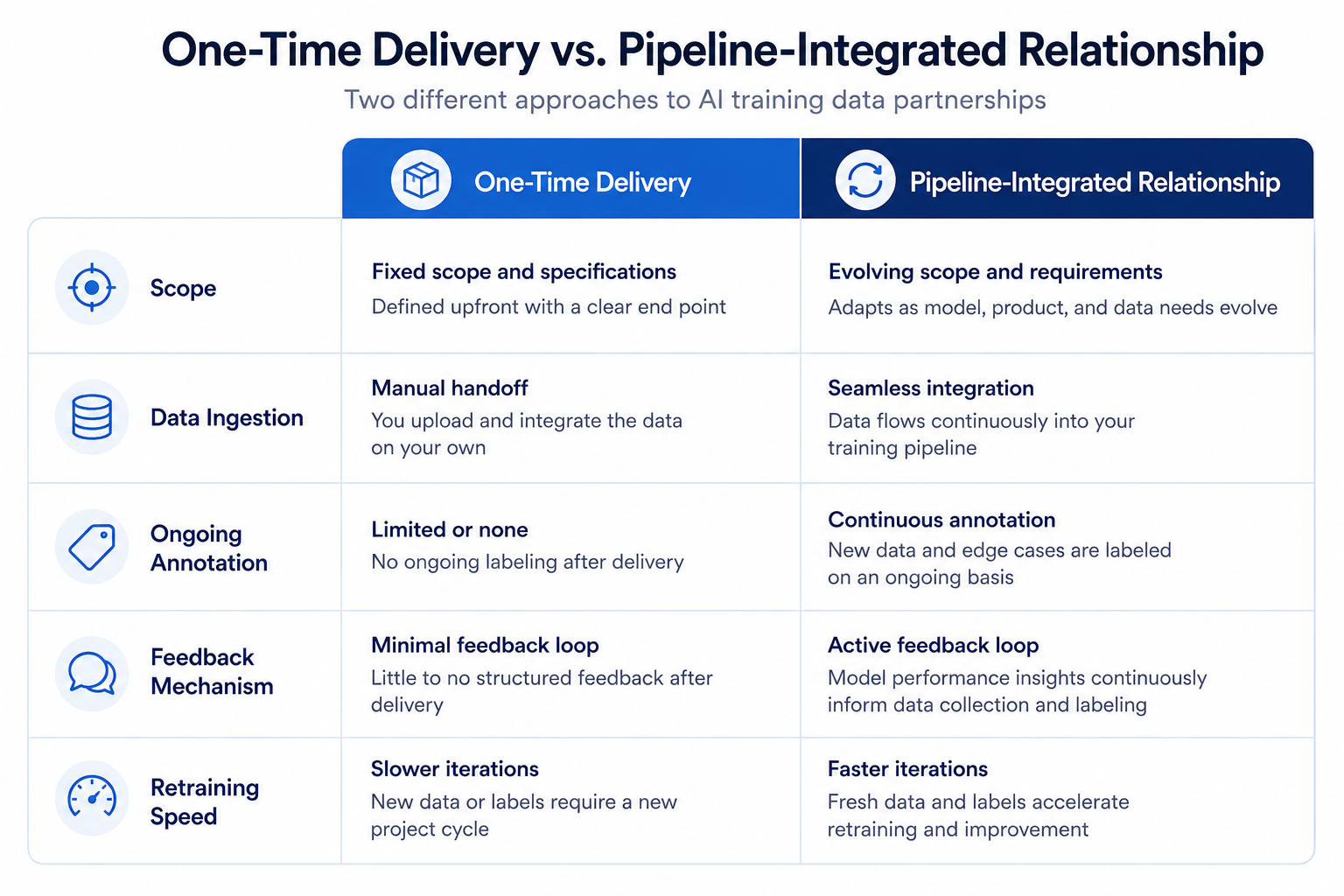
A provider integrated across the full pipeline typically supports several connected stages, not just the initial dataset build.
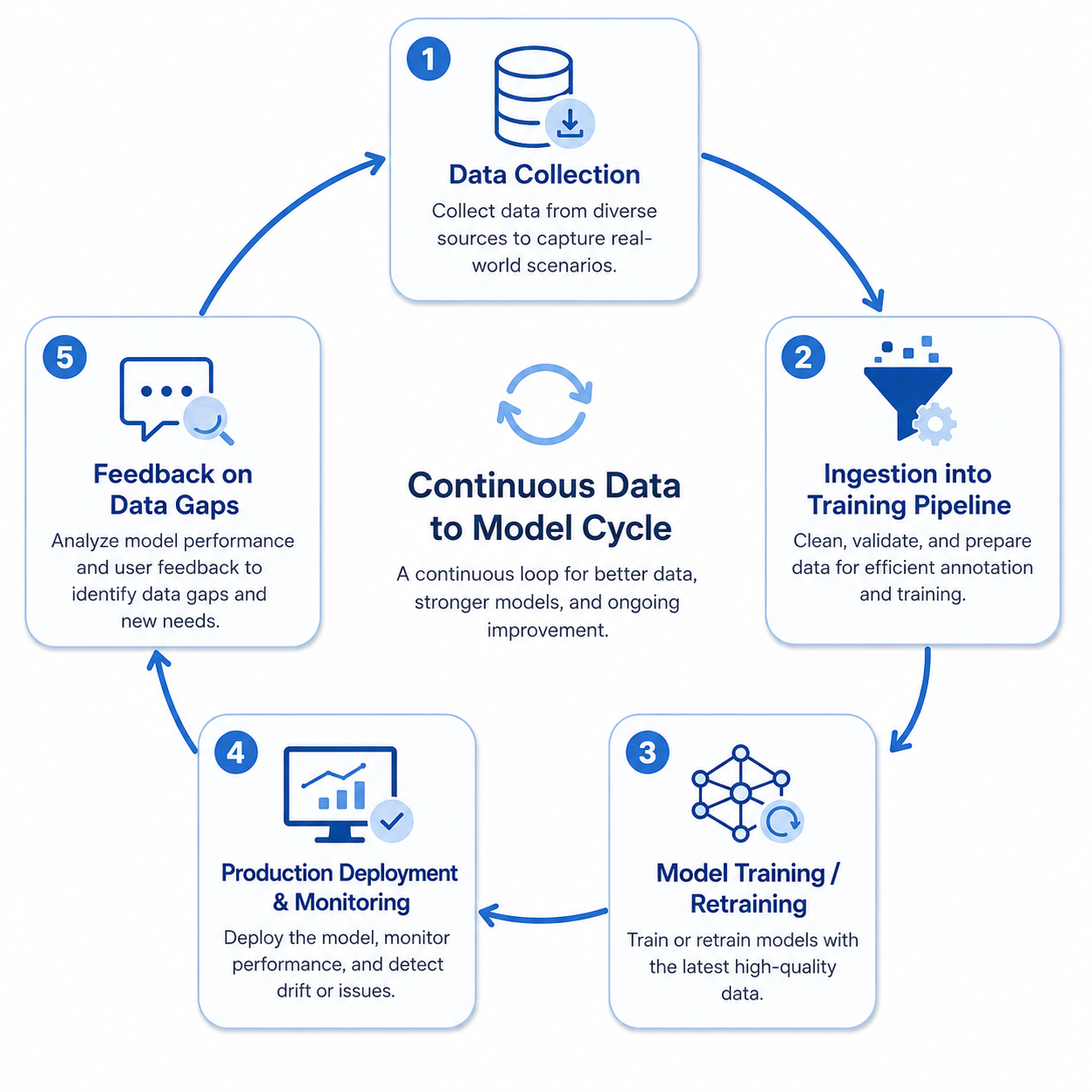
AI data collection services for the initial dataset, and ongoing collection as new scenarios, use cases, or data types emerge over a model's lifecycle.
Ingestion into the training data pipeline — delivering data in formats and structures that plug directly into a team's existing training infrastructure, rather than requiring manual reformatting each time.
Ongoing annotation as models retrain. New data collected from production or expanded use cases needs the same annotation quality and consistency as the original dataset, on a recurring basis rather than a one-time pass.
Feedback loop integration. Production monitoring often surfaces model failures tied to specific data gaps; a provider integrated into the pipeline can receive that feedback and prioritize new data collection or annotation around it.
Understanding how these workflows operate as a continuous pipeline — not a single delivery followed by silence — is what separates a provider relationship that scales with a model's lifecycle from one that has to be renegotiated every time the model needs more data.
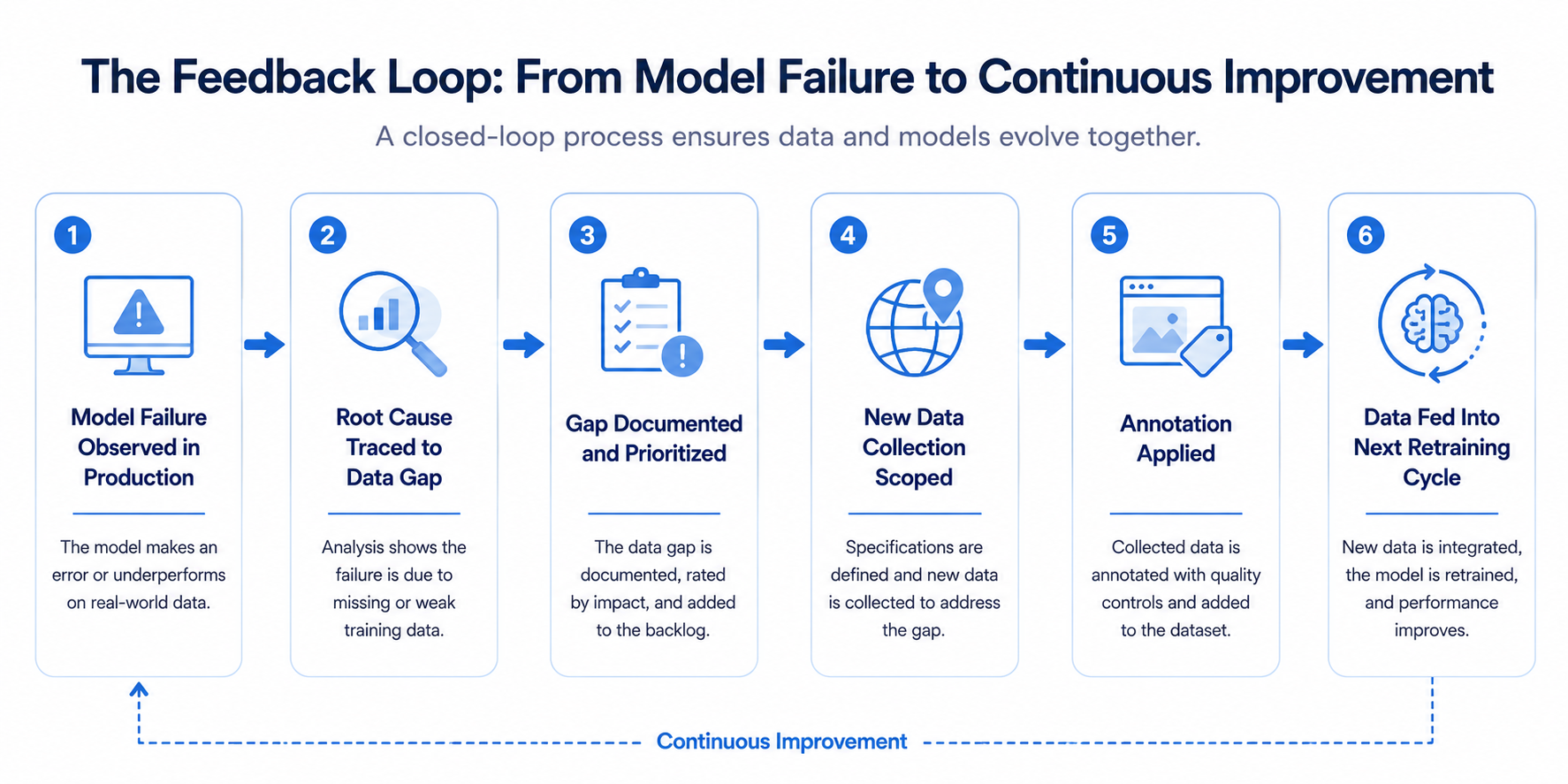
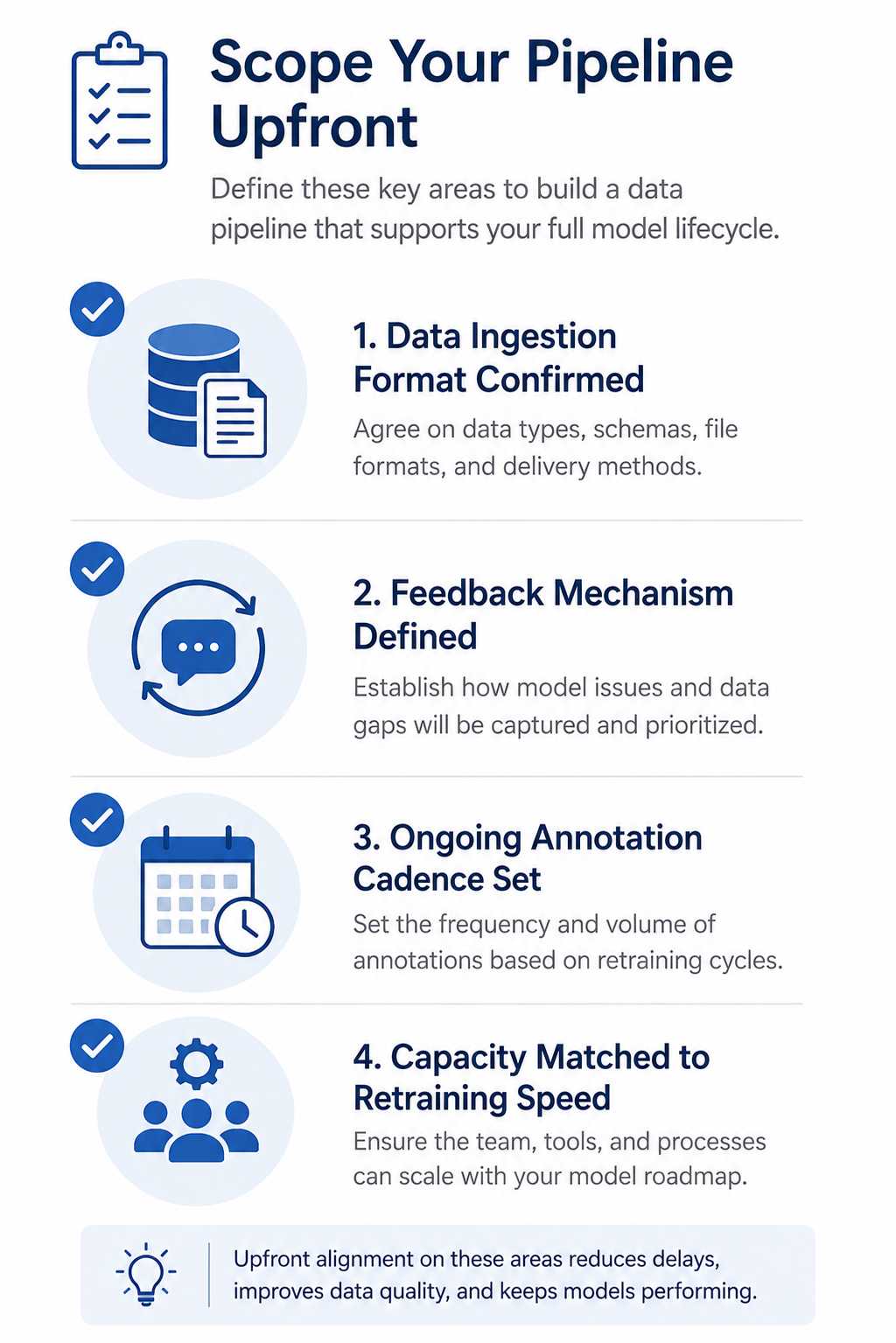
Ongoing data collection, ingestion into the training pipeline, continued annotation as models are retrained, and feedback loop integration connecting production monitoring to new data prioritization.
The process of gathering new raw data — not just for an initial dataset, but continuously as a model encounters new scenarios, use cases, or conditions in deployment.
By maintaining a consistent data ingestion format, ongoing annotation cadence, and feedback mechanism so new data flows into retraining cycles without requiring the relationship to be re-scoped each time.
A provider relationship that bundles ongoing collection, annotation, and quality assurance into a continuous engagement matched to a model's evolving lifecycle, rather than a single project delivery.
Model failures observed in production often trace back to specific data gaps; feeding that information back to a training data provider lets new collection and annotation be prioritized around the actual failure modes observed.
It often makes sense for consistency in guidelines, format, and quality, but the relationship should be explicitly scoped for that ongoing role from the start rather than assumed.
Check whether there's a defined feedback mechanism from production monitoring, a consistent data ingestion format, and a scope that already accounts for ongoing needs rather than requiring renegotiation for every new data request.
AI training data provider services deliver the most value when they're scoped as an ongoing part of the machine learning pipeline, not a single dataset delivery followed by silence. A provider integrated across collection, ingestion, ongoing annotation, and production feedback keeps pace with a model's actual lifecycle, rather than requiring a fresh engagement every time the model needs more data.


Compact, ready to go anywhere
Interchangeable lens that’s upgradeable
Dual 1-inch sensors for improved clarity and low light performance
Dynamic range and 6K 360° capture
360° photo resolution at 21MP

8K 360° video recording for ultra-detailed visuals.
4K single-lens mode for traditional wide-angle shots.
Invisible selfie stick effect for drone-like perspectives.
2.5-inch touchscreen with Gorilla Glass protection.
Waterproof up to 33ft for underwater shooting.

360° photo resolution in 23MP
Slim design at 24 mm thick
Built-in image stabilization for smooth video capture.
Internal 19GB storage for photo and video storage.
Wireless connectivity for remote control and sharing.

60MP 360° still images for high-resolution photography.
5.7K 360° video recording at 30fps.
2.25-inch touchscreen for intuitive control.
USB Type-C port for fast charging and data transfer.
MicroSD card slot for expandable storage.
.png)

.png)

Try it free. No credit card required. Instant set-up.




.svg)


.svg)