


.png)


A brokerage marketing coordinator in Nashville left a five-star review for a video tool the week she signed up, calling it "a total game-changer." Ninety days later, she quietly downgraded her plan and started shopping alternatives, without ever going back to edit that review. Nobody asked her to remove it. It's still up, still glowing, still the first thing a prospective customer sees — and it no longer reflects how she actually feels about the product.
This happens constantly in AI real estate video software reviews, and it's the reason star ratings alone are a weak signal in this category. Week-one enthusiasm and quarter-three reality are often two different opinions from the same person, and almost nobody goes back and updates the public review to reflect the second one.
A 90-day review isn't a different rating scale — it's a different vantage point. In the first week, an agent is comparing a new tool against the frustration of whatever they used before, and almost anything feels like an improvement. By day 90, the comparison has shifted. They're no longer measuring the tool against their old pain point; they're measuring it against the reality of using it 20 or 30 times in a row, under real deadlines, with real listings.
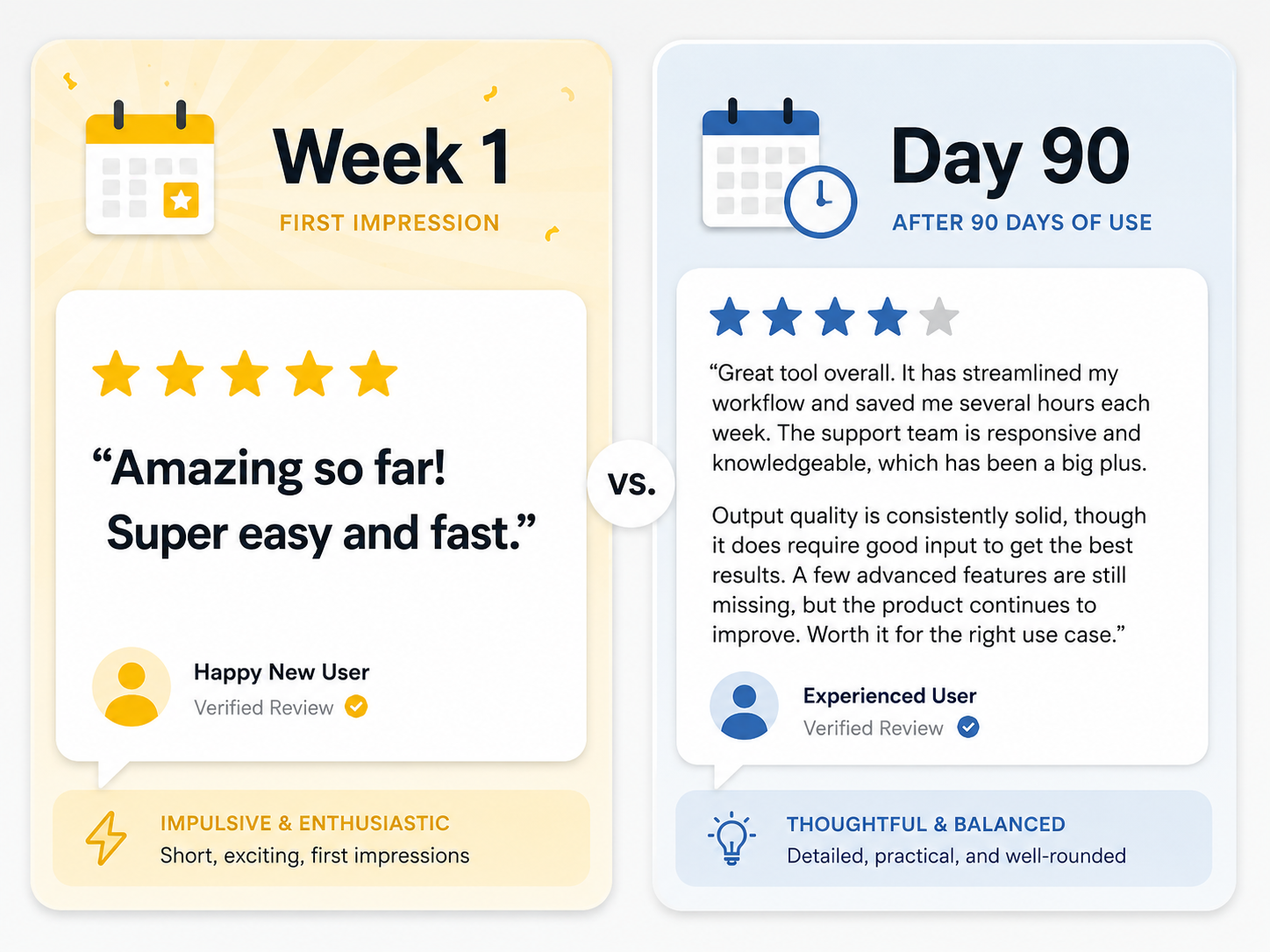
That shift in comparison point is why early reviews tend to praise features and design, while honest 90-day feedback tends to focus on friction: how often support was actually needed, whether the tool's speed held up under volume, and whether the brand consistency promised in onboarding actually stayed consistent listing after listing.
If you're making a decision based on a wall of five-star reviews, you're mostly reading week-one impressions, because that's when most reviews get written — usually right after onboarding, when a company prompts for feedback, or right after a good first experience. Genuinely skeptical, longer-term perspectives are rarer, simply because fewer people go back and log an update three months later, even when their opinion has changed.
This matters more in real estate video software than in a lot of other categories, because the workflow only gets stress-tested once volume picks up. A tool can feel excellent through five calm, unhurried test listings and then reveal real friction during a week with eight live listings and three showings booked the same day. Google's Search Central guidance on evaluating product reviews has noted that authentic, experience-based reviews tend to be far more useful than aggregate star ratings alone — and nowhere is that more true than in a workflow tool that only reveals its real character under pressure.
Across the agents and coordinators who do report back at the 90-day mark, a consistent pattern shows up, regardless of which specific tool they're describing:
Week one feedback is almost always about the interface — how clean it looks, how nice the templates are, how easy the first video was to make. By day 30, feedback starts shifting toward speed and consistency — whether the fifth listing was as easy as the first, or whether shortcuts started appearing (skipping branding steps, reusing the same template out of habit because trying a new one takes too long). By day 90, the feedback that actually predicts long-term retention is almost entirely about whether the tool disappeared into the background of a normal week, or whether it kept demanding attention.
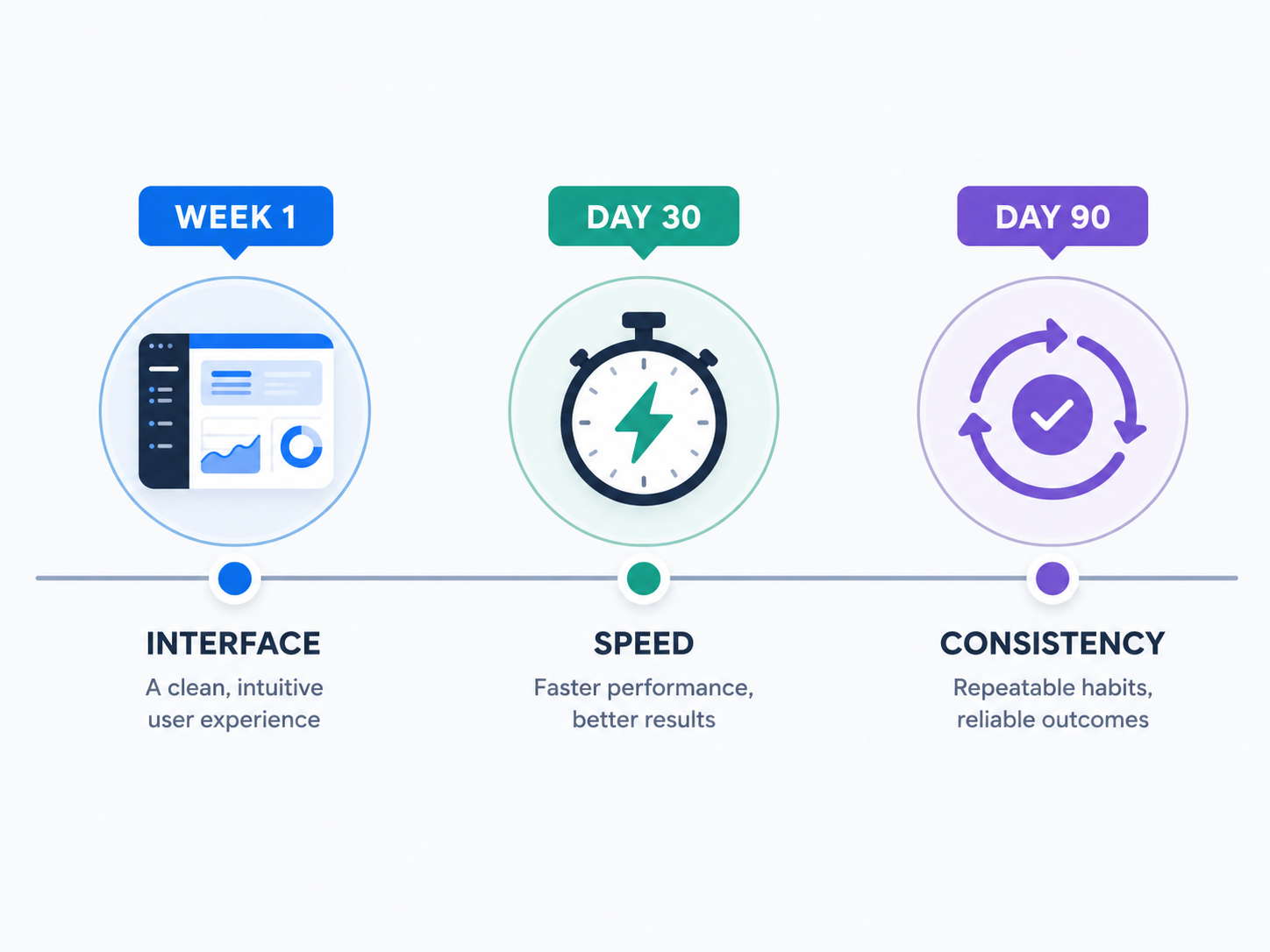
This is usually the point where agents start describing a tool as either "I don't even think about it anymore, it just works" or "I still have to work around it" — and that distinction matters far more than anything captured in an initial star rating.
PhotoAIVideo was built around the idea that the real test of a video tool isn't the first listing, it's the fiftieth — whether brand kits still apply correctly without re-entering information, whether render speed holds up during a high-volume week, and whether the export process is still as fast the fiftieth time as the first. Onboarding is intentionally simple, not because first impressions don't matter, but because a workflow that only looks good on day one and gets more cumbersome from there isn't actually solving the underlying problem.
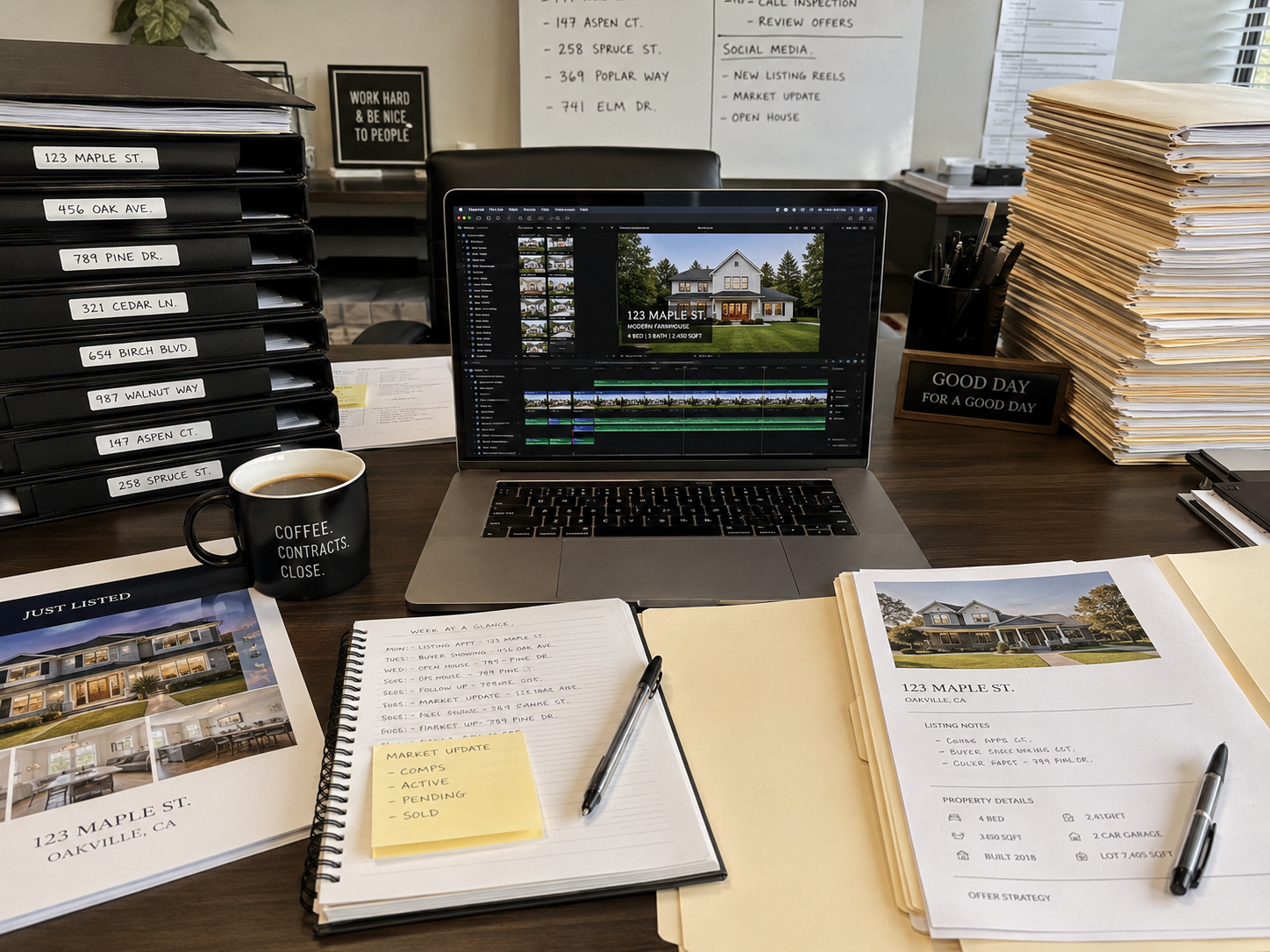
The more useful way to evaluate this, rather than trusting either glowing week-one reviews or a vendor's own claims, is to run your own quiet 90-day test: track how a tool feels not in the first week, but during your busiest week of the quarter. That's the moment that actually predicts whether you'll still be using it — and recommending it — three months from now.
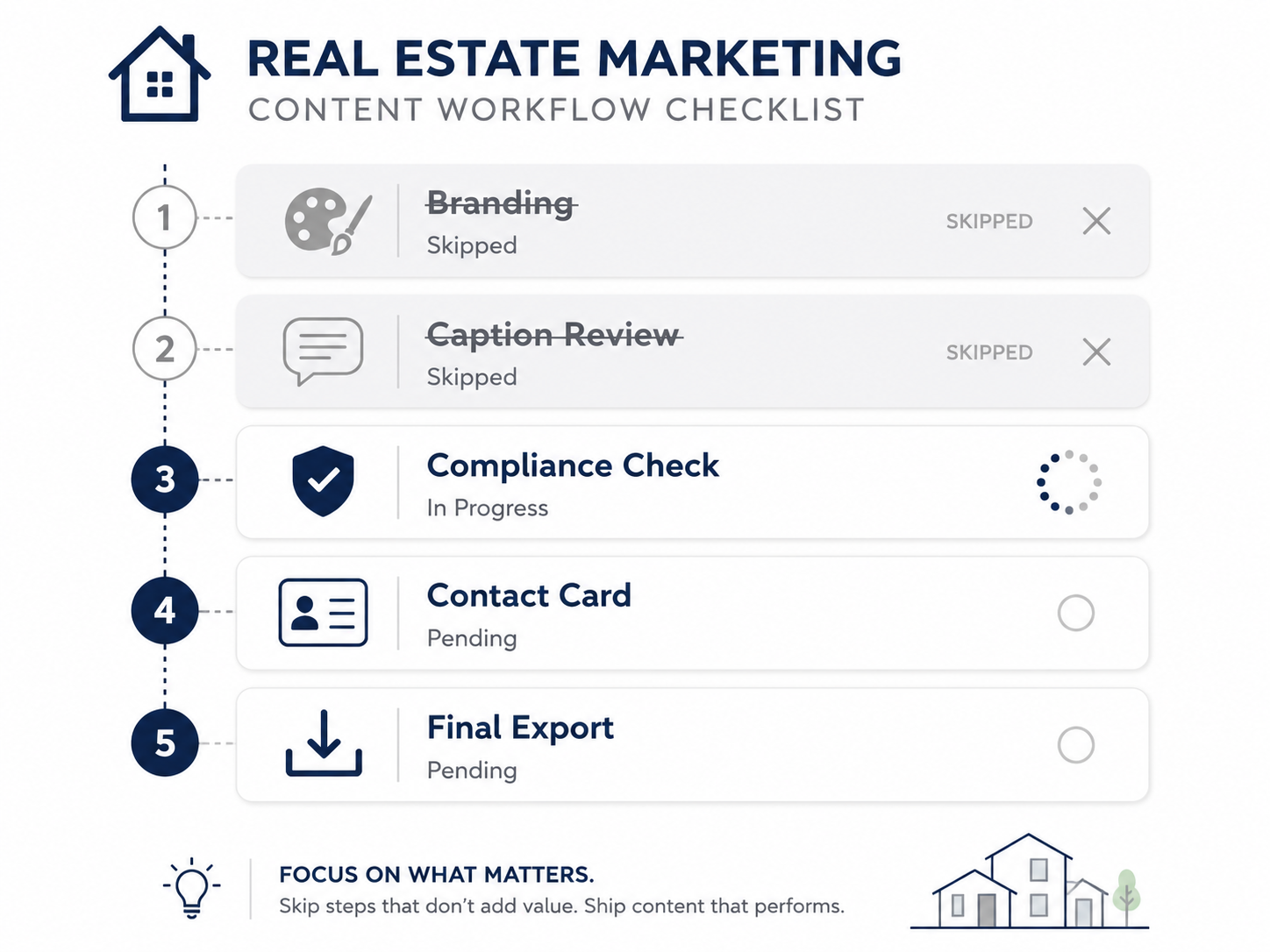
Step 3 is worth doing even if you're not planning to write a public review. Most people don't realize their opinion has shifted until they compare notes from two different points in time.
If you're comparing an AI listing video software alternative to your current tool, weigh this list more heavily than initial impressions — it's a better predictor of whether you'll still be using either option a quarter from now.

An agent choosing between two tools with similar star ratings. Look past the aggregate score and search specifically for reviews mentioning sustained use over months, not just onboarding experiences.
A brokerage collecting internal feedback before renewing a contract. Ask your team directly about their busiest week with the tool, not their general impression — the answers are often more honest and more useful.
A marketing coordinator writing an internal recommendation. Frame the recommendation around 90-day performance specifically, since that's what will actually hold up when volume increases later in the year.
A photographer recommending tools to real estate clients. Base recommendations on tools you've personally used through a real busy stretch, not just an initial demo — clients will notice if the recommendation doesn't hold up under their own volume.
A solo agent reading online reviews before committing. Filter mentally for reviews that specifically mention "still using" or a timeframe beyond the first month — these carry more predictive weight than enthusiastic first impressions.
Trusting aggregate star ratings without reading individual review timing. A 4.8-star average built entirely on week-one reviews tells you less than a lower-rated tool with detailed, longer-term feedback.
Writing off your own early impression as final. If a tool felt great in week one, that's useful information — but it isn't the whole picture, and it's worth revisiting after real volume.
Not tracking your own workaround habits. If you've quietly started skipping steps a tool was supposed to automate, that's a meaningful signal worth acting on, not ignoring.
Judging a tool's speed from a calm testing period. The real test is your busiest week, not your first, easiest one.
Assuming a public review reflects a person's current opinion. Many reviews are never updated after initial posting — a glowing review from month one may not represent how that person feels by month four.
Why do week-one reviews of real estate video software tend to be more positive than later feedback?
Early reviews are usually written right after onboarding, when the comparison point is a person's previous frustration — not the tool's actual performance under sustained, high-volume use.
How can I tell if an online review reflects long-term satisfaction?
Look for language indicating ongoing use — mentions of months of use, sustained volume, or specific busy-week performance carry more weight than general first-impression praise.
What should I personally track if I'm evaluating a tool over 90 days?
Your own workaround habits — if you're skipping steps the tool was supposed to automate, that's a clearer signal of real friction than your initial impression.
Does a high star rating mean a real estate video tool is reliable long-term?
Not necessarily — aggregate ratings often skew toward early, enthusiastic reviews rather than reviews written after real, sustained use.
Is it worth writing my own 90-day review after trying real estate video editing software for agents?
Yes — even a private note comparing your week-one and week-twelve impressions is useful for your own future decision-making, whether or not you publish it.
What's the best way to stress-test AI video tools for real estate marketing before fully committing?
Deliberately test the tool during your busiest week, not your calmest one — that's the only condition that reveals real speed and consistency issues.
How do 90-day reviews differ between solo agents and brokerages?
Brokerages tend to surface team-wide friction — inconsistent use across agents — while solo agent feedback at 90 days is usually more about whether the tool has genuinely disappeared into a routine or still requires active effort.


Compact, ready to go anywhere
Interchangeable lens that’s upgradeable
Dual 1-inch sensors for improved clarity and low light performance
Dynamic range and 6K 360° capture
360° photo resolution at 21MP

8K 360° video recording for ultra-detailed visuals.
4K single-lens mode for traditional wide-angle shots.
Invisible selfie stick effect for drone-like perspectives.
2.5-inch touchscreen with Gorilla Glass protection.
Waterproof up to 33ft for underwater shooting.

360° photo resolution in 23MP
Slim design at 24 mm thick
Built-in image stabilization for smooth video capture.
Internal 19GB storage for photo and video storage.
Wireless connectivity for remote control and sharing.

60MP 360° still images for high-resolution photography.
5.7K 360° video recording at 30fps.
2.25-inch touchscreen for intuitive control.
USB Type-C port for fast charging and data transfer.
MicroSD card slot for expandable storage.
.png)

.png)

Try it free. No credit card required. Instant set-up.







.svg)


.svg)