


.png)


Property marketing has quietly gone through one of its biggest shifts in a decade, and most agents felt it happen before they could name it. AI real estate video tools took what used to require a videographer, a production budget, and a week of turnaround time, and compressed it into something an agent can do from their phone between showings. The result is a marketing playbook that looks completely different from the one agents were using just a few years ago.
In this article, we'll look at what's actually driving that shift, how it's changing what "real estate video marketing services" even means, and what it looks like to build a modern marketing routine around it.
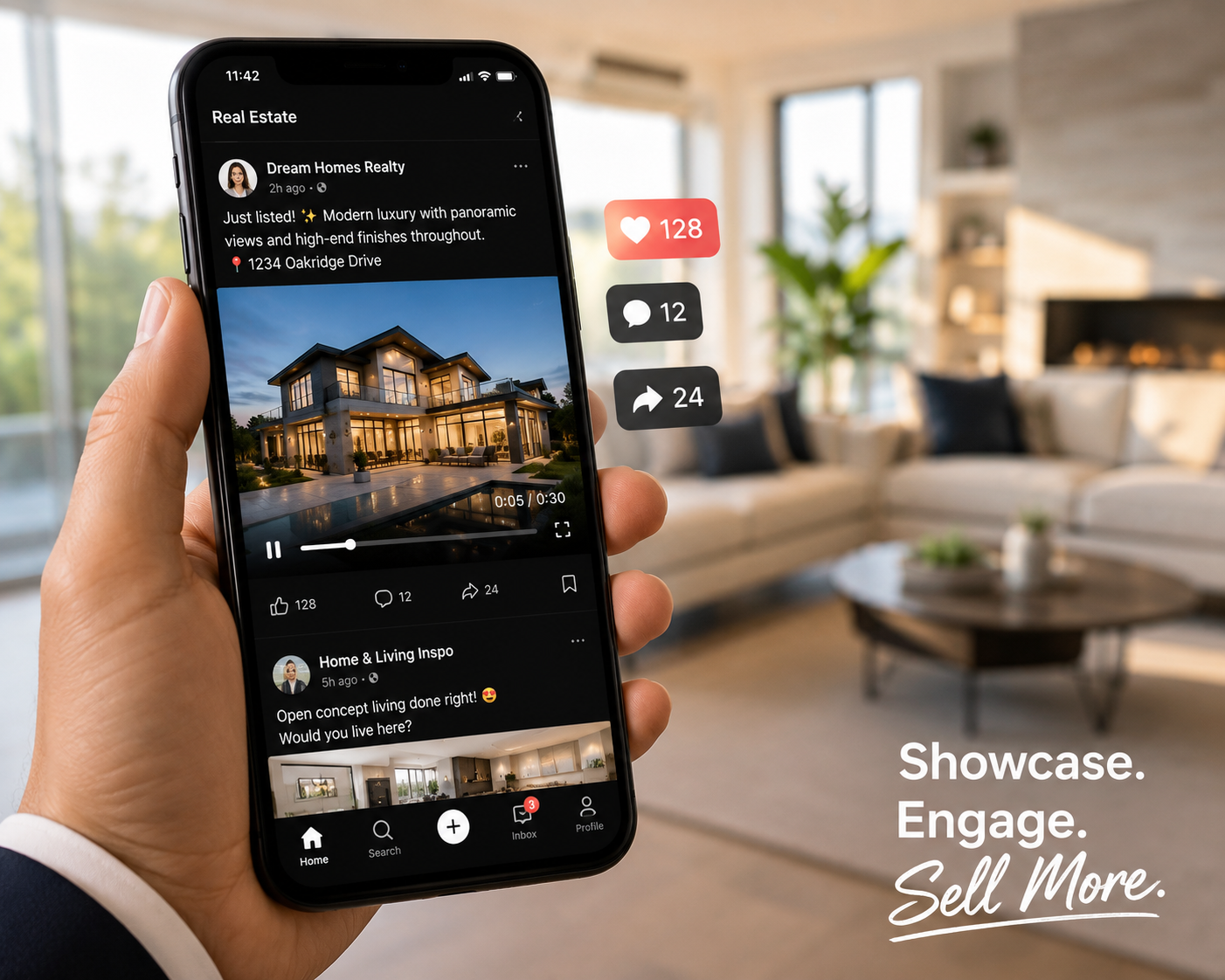
For years, a listing's marketing plan started and ended with professional photos. A gallery of well-lit rooms was the standard, and video was treated as a luxury add-on reserved for high-end properties.
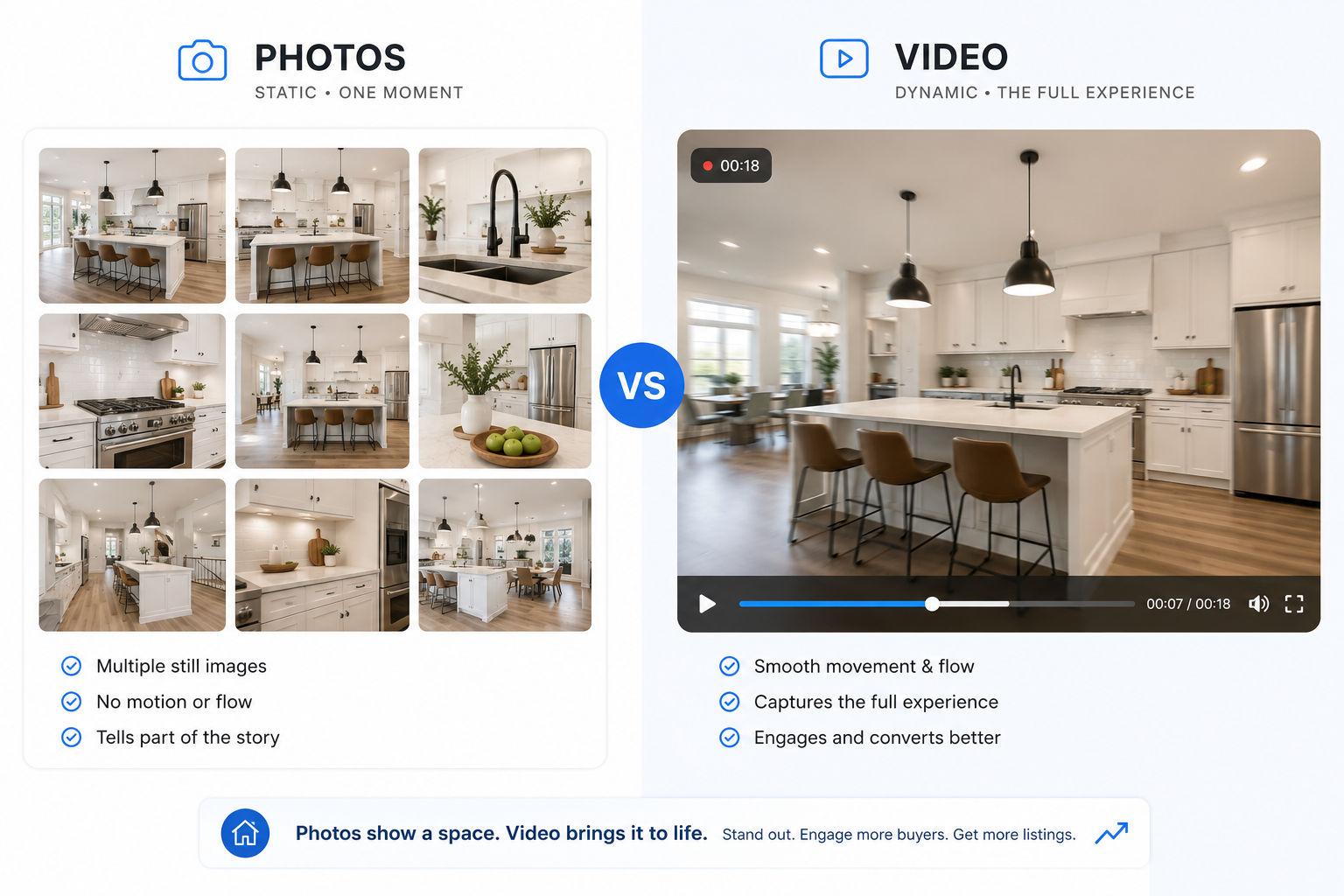
That's no longer how buyers browse. Social feeds, MLS platforms, and even Google Business listings now favor video, and buyers scroll past static photos faster than ever. Real estate videos for marketing have moved from "nice to have" to expected — buyers want to see the flow of a home, not just isolated rooms.
The technology behind this shift is straightforward: AI models got good enough to turn a set of property photos into a smooth, watchable video without a human editor touching a single frame. Instead of manually adding pans, transitions, and music, the software analyzes each photo and builds a video automatically.
This is the core of what makes an AI real estate video app different from a traditional editing tool. It doesn't ask the agent to make creative decisions about pacing or framing — it makes reasonable ones automatically, then lets the agent adjust from there.
Marketing runs on consistency and volume. An agent posting one polished video a month doesn't build the same recognition as one posting several a week. AI real estate video tools make that volume realistic without turning marketing into a second full-time job.
Agencies and agents offering real estate video marketing services are rethinking what they actually deliver. A few years ago, that meant hiring out video production per listing. Now, it increasingly means managing a content pipeline: shoot, generate, brand, post, repeat.
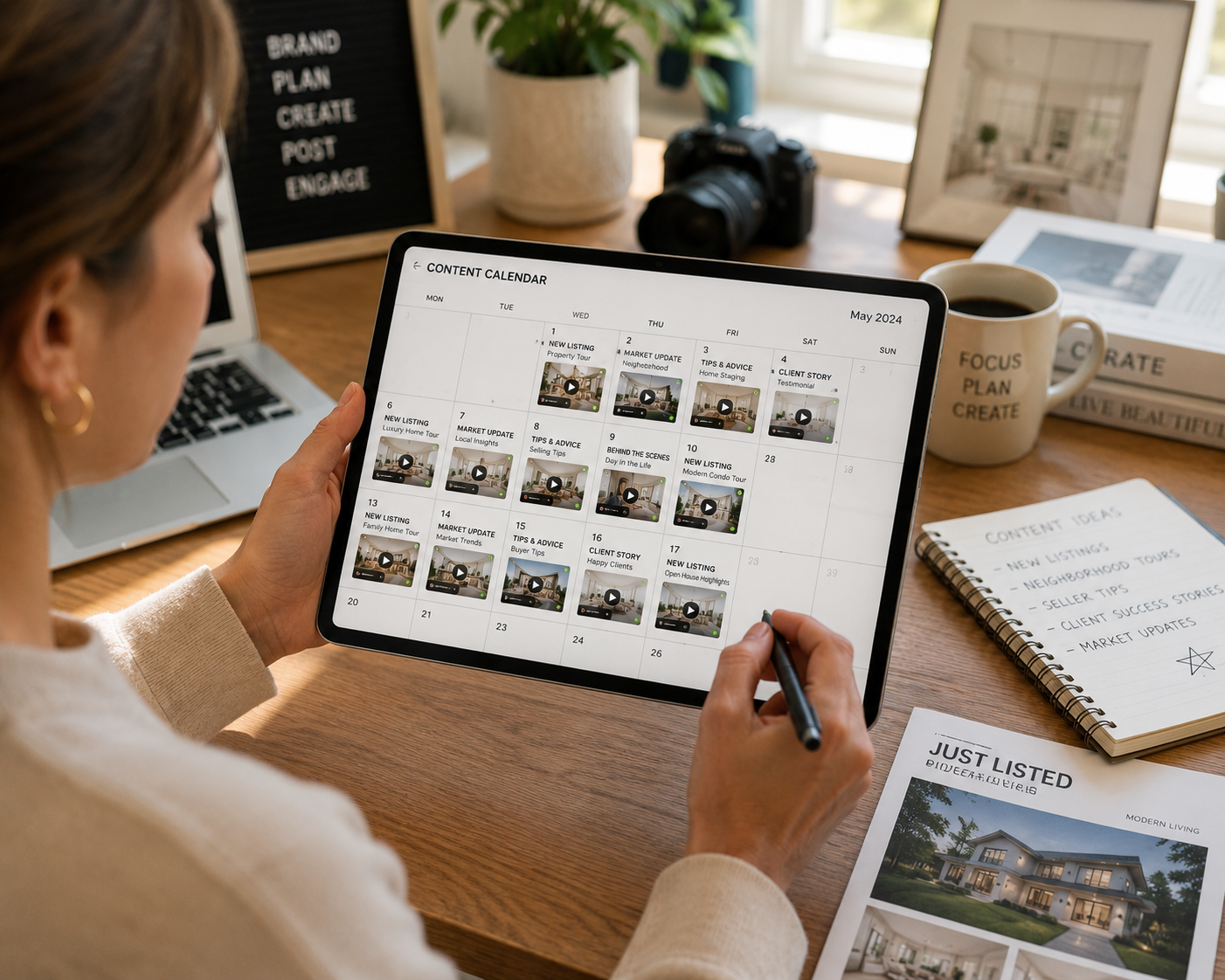
This shift shows up in a few concrete ways:
If you're building or refining a marketing service around this, it's worth adopting a real estate video maker that fits your marketing workflow rather than treating video as a one-off deliverable per listing.
A lot of this shift is happening on phones, not desktops. Agents shoot their walkthrough photos on an Android device, and increasingly, they want to finish the video there too — no transferring files, no waiting to get back to a laptop.
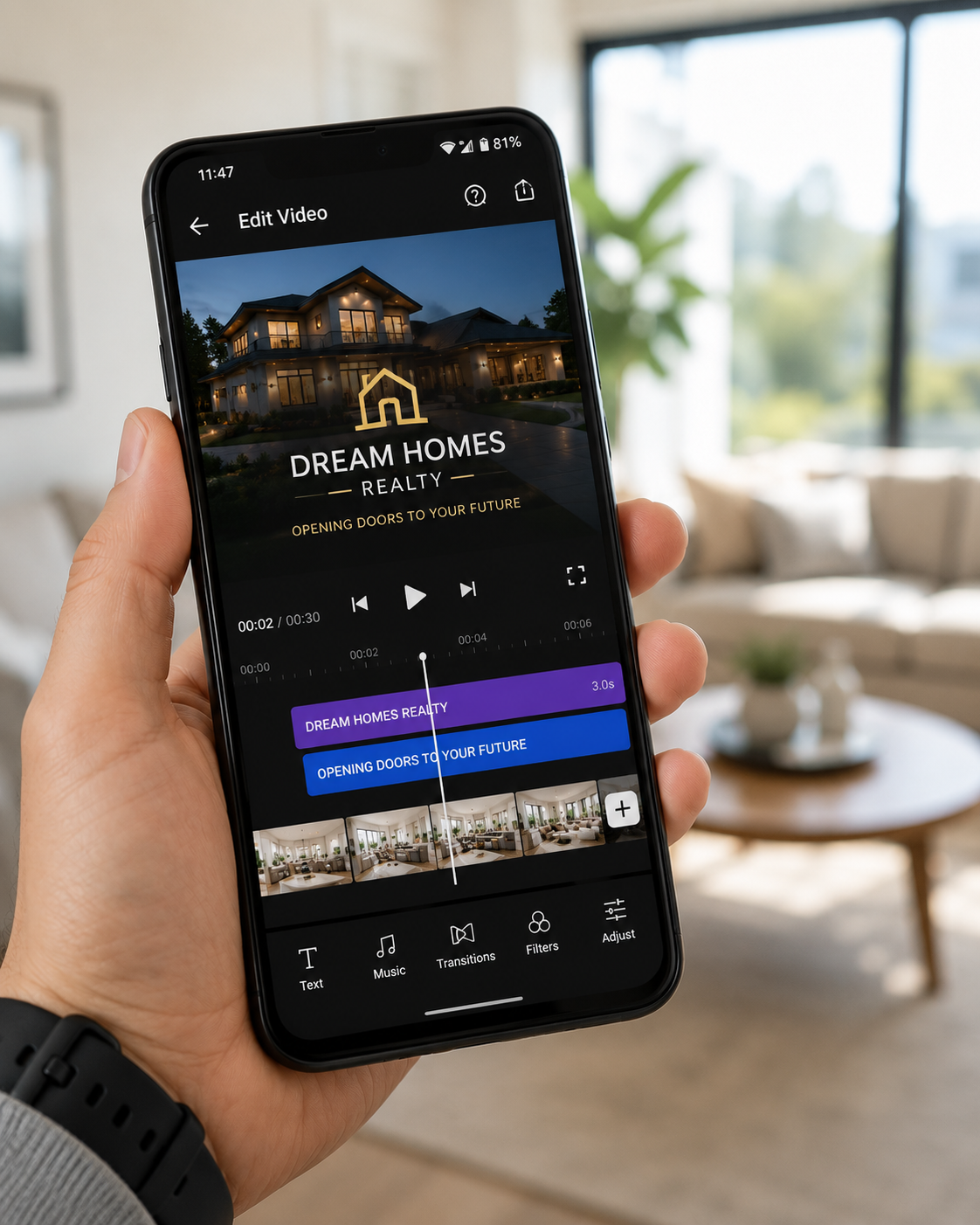
This is where a dedicated Android app becomes part of the marketing stack rather than a convenience. A good one lets an agent go from photos to a branded, ready-to-post video before they've left the property, which matters enormously when speed is part of what clients are paying for.
If you're evaluating tools for this, look for an Android app built for real estate video marketing specifically — not a general video editor repurposed for listings. Real estate-specific templates, branding presets, and export formats built for MLS and social platforms make a measurable difference in how fast content actually gets published.
A few adjustments make this shift easier to act on rather than just observe:
AI real estate video hasn't just made listing videos easier to produce — it's changed what "marketing a property" actually means day to day. Agents who've adapted are treating video as a routine part of every listing, not a special project reserved for the ones worth the extra budget.
If your current marketing plan still treats video as an occasional extra, it might be worth testing an AI-powered app on your next listing and seeing how much faster the whole process feels.


Compact, ready to go anywhere
Interchangeable lens that’s upgradeable
Dual 1-inch sensors for improved clarity and low light performance
Dynamic range and 6K 360° capture
360° photo resolution at 21MP

8K 360° video recording for ultra-detailed visuals.
4K single-lens mode for traditional wide-angle shots.
Invisible selfie stick effect for drone-like perspectives.
2.5-inch touchscreen with Gorilla Glass protection.
Waterproof up to 33ft for underwater shooting.

360° photo resolution in 23MP
Slim design at 24 mm thick
Built-in image stabilization for smooth video capture.
Internal 19GB storage for photo and video storage.
Wireless connectivity for remote control and sharing.

60MP 360° still images for high-resolution photography.
5.7K 360° video recording at 30fps.
2.25-inch touchscreen for intuitive control.
USB Type-C port for fast charging and data transfer.
MicroSD card slot for expandable storage.
.png)

.png)

Try it free. No credit card required. Instant set-up.





.svg)


.svg)