


.png)


In the high-stakes arena of automotive retail, the "first look" is no longer happening on your physical lot—it is happening on a smartphone screen, often at 11:00 PM. As a senior content strategist and industry SME, I’ve observed a radical shift: visual fidelity is now the primary currency of trust.
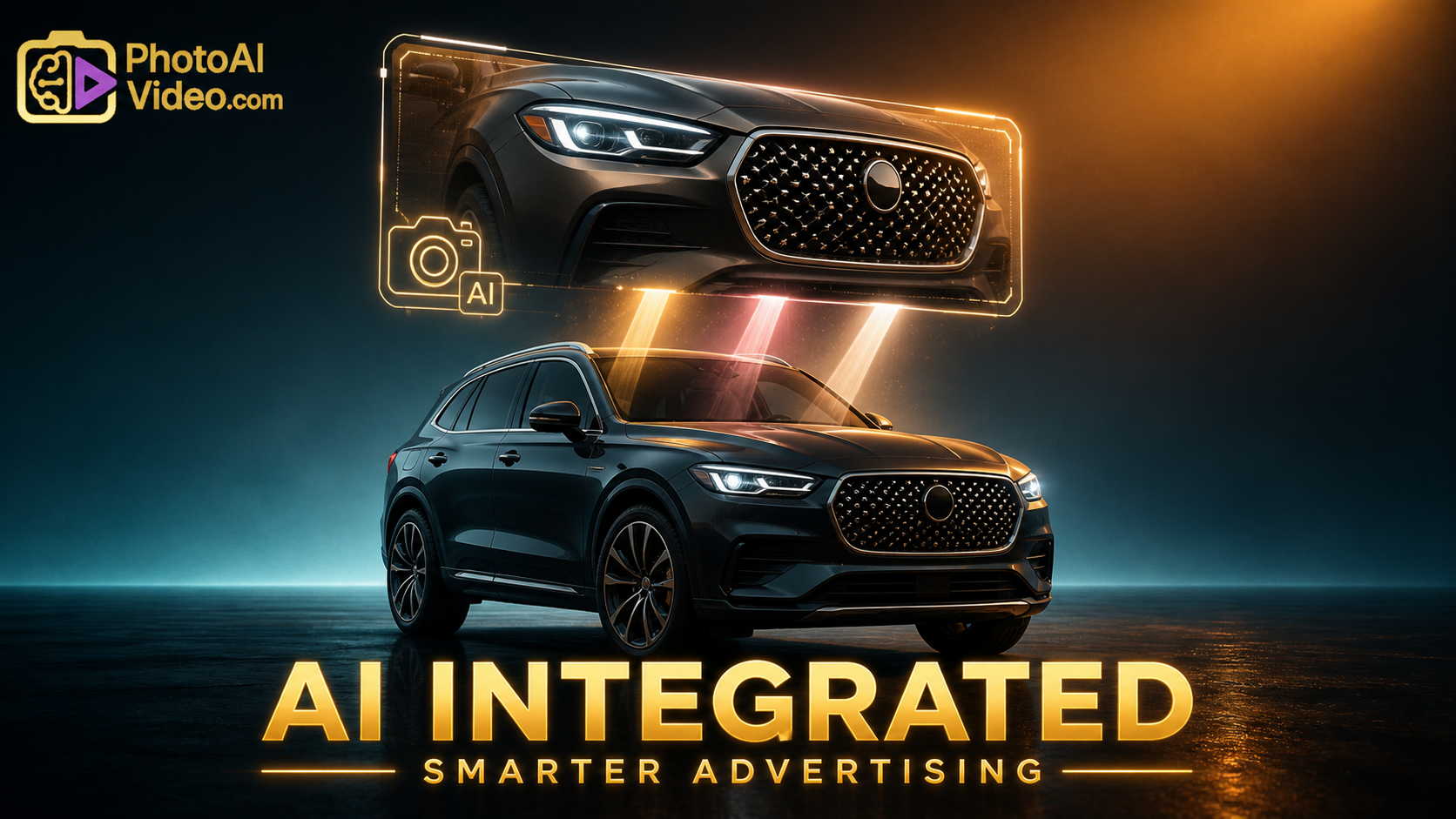
The integration of Artificial Intelligence (AI) into photography isn't just a trend; it is a fundamental pillar of modern dealership marketing ideas. By replacing inconsistent, weather-dependent photoshoots with AI-enhanced imagery, dealerships are solving the age-old problem of how to market car inventory online with speed, scale, and surgical precision.
The human brain processes images 60,000 times faster than text. In the context of car dealership advertising ideas, this means your photography does the heavy lifting of "evaluation" before a buyer ever reads a single spec.
Traditionally, dealerships relied on "lot photography"—cars parked in uneven lines with distracting backgrounds, reflections of other vehicles, and inconsistent lighting. This creates a "mental friction" for the buyer. According to Harvard Business Review, reducing friction in the customer journey is the single most effective way to increase conversion.
AI-generated backgrounds and lighting corrections remove this friction. They place the vehicle in a "hero" environment (e.g., a sleek studio or a scenic mountain pass) that aligns with the brand’s aspiration, not the reality of a crowded asphalt lot.
Google’s search algorithms increasingly prioritize "Information Gain"—content that provides a unique and superior experience compared to competitors. High-quality AI photos provide a clearer, more comprehensive view of the vehicle, which signals to both search engines and users that your dealership is a premium, authoritative source.
Transitioning to AI-driven imagery isn't just about software; it’s about a repeatable ROI model. To master how to market car inventory online, your workflow must be automated and integrated with your Dealer Management System (DMS).
You don't need a professional photographer. A lot porter with a smartphone can take 360-degree raw shots. The "intelligence" happens in the cloud. Research from McKinsey & Company suggests that AI automation in retail operations can improve productivity by up to 20%.
Software layers (such as those powered by Generative Adversarial Networks) analyze the vehicle’s contours.
Once the AI finishes the render, the image is pushed via API to your VDPs, Google Vehicle Ads, and social marketplaces. This ensures that your car dealership advertising ideas are always fueled by high-quality assets.
New cars have high-quality manufacturer assets. Used cars do not. The biggest opportunity for dealership marketing ideas lies in used inventory. AI photos can make a 5-year-old trade-in look as prestigious as a showroom-floor model, significantly increasing its "perceived value."
Facebook and Instagram are visual-first platforms. Generic lot photos are ignored. AI-enhanced "Lifestyle" photos—where the car is placed in a suburban driveway or a city street—perform 3x better in click-through rates (CTR) than standard inventory shots.
Advanced dealerships are using AI photos to create "interactive brochures." This allows users to toggle exterior colors or wheel packages digitally on actual in-stock units, providing a level of personalization previously reserved for luxury custom builds.
Data from Cox Automotive indicates that vehicles with professional-grade photography receive 2.5x more engagement. When we move to AI, the ROI is twofold: we increase the engagement (top line) while slashing the cost of photography (bottom line).
While AI is transformative, a "lazy" implementation can damage your brand. As an industry strategist, I recommend avoiding these common pitfalls:
To truly master car dealership advertising ideas, you must track the influence of your imagery. High-quality visuals should correlate directly with reduced "Days-to-Sale" and lower "Cost-per-Lead."
The future of how to market car inventory online is not just about having the best cars; it’s about having the best representation of those cars. AI photos allow you to compete with national aggregators on a local budget. By integrating these visual tools into your dealership marketing ideas, you aren't just taking photos—you are building a high-conversion digital storefront.
The question isn't whether you should use AI imagery, but how fast you can implement it before your competition makes your lot look obsolete.


Compact, ready to go anywhere
Interchangeable lens that’s upgradeable
Dual 1-inch sensors for improved clarity and low light performance
Dynamic range and 6K 360° capture
360° photo resolution at 21MP

8K 360° video recording for ultra-detailed visuals.
4K single-lens mode for traditional wide-angle shots.
Invisible selfie stick effect for drone-like perspectives.
2.5-inch touchscreen with Gorilla Glass protection.
Waterproof up to 33ft for underwater shooting.

360° photo resolution in 23MP
Slim design at 24 mm thick
Built-in image stabilization for smooth video capture.
Internal 19GB storage for photo and video storage.
Wireless connectivity for remote control and sharing.

60MP 360° still images for high-resolution photography.
5.7K 360° video recording at 30fps.
2.25-inch touchscreen for intuitive control.
USB Type-C port for fast charging and data transfer.
MicroSD card slot for expandable storage.
.png)

.png)

Try it free. No credit card required. Instant set-up.






.svg)


.svg)