


.png)


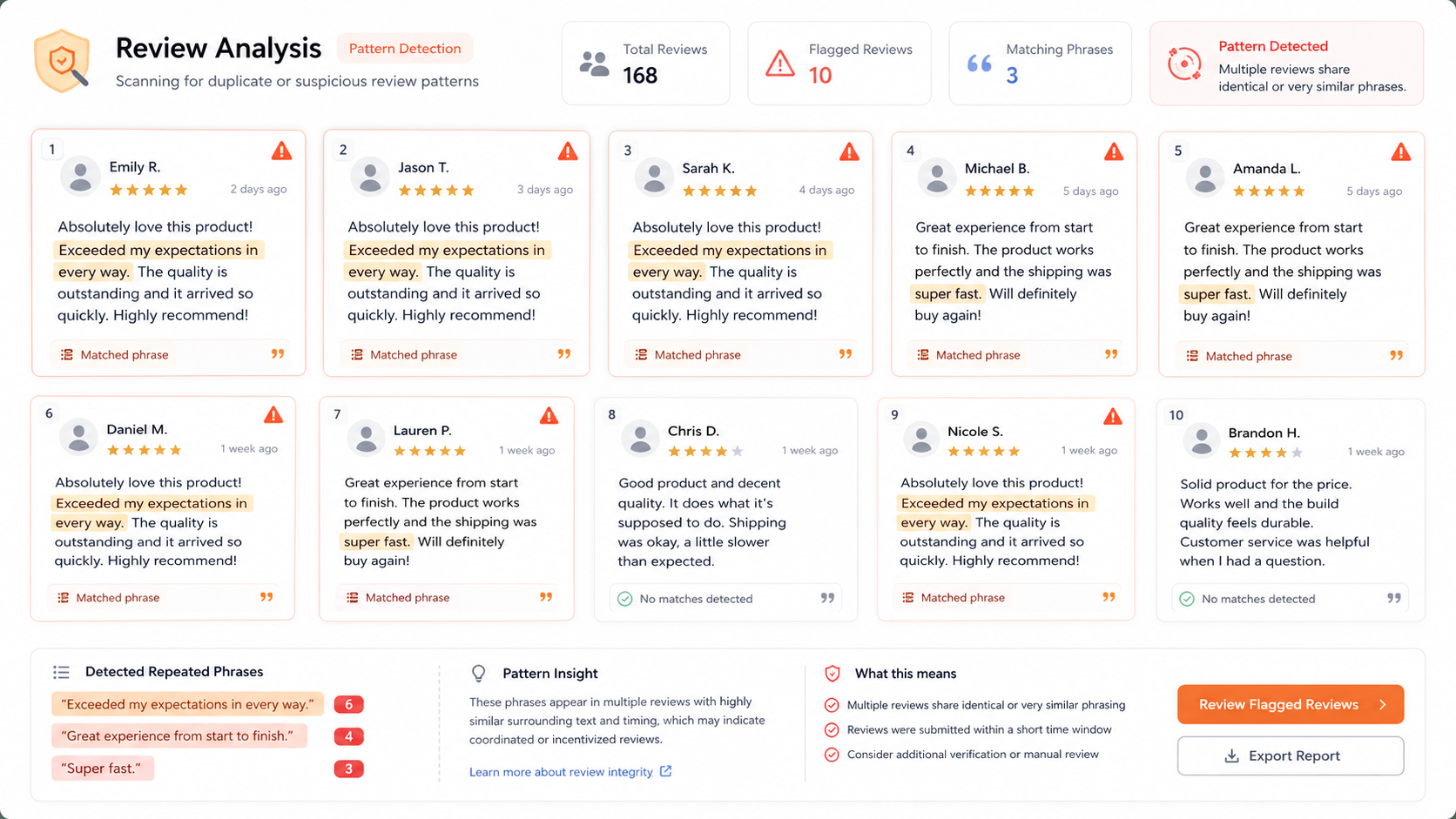
A photographer researching video tools for her real estate clients found six nearly identical five-star reviews on the same product page, each written within two days of each other, each using the phrase "game-changer for my business" almost word for word. None of them mentioned a specific listing, a specific workflow detail, or anything that suggested the reviewer had actually used the tool for more than a single test video. She almost skipped past them entirely — and that instinct was the right one.
Most people searching for AI real estate video software reviews treat every review on a page as equally credible. They aren't. Some are written by people who used a product for years and have real, specific feedback. Others are incentivized, copy-pasted, or written by someone whose use case has nothing to do with yours. Learning to tell the difference is a skill, and it's one that saves a lot of wasted money on the wrong tool.
Reading critically doesn't mean assuming every review is fake or dismissing positive feedback out of suspicion. It means applying a few consistent checks before letting any single review — good or bad — meaningfully influence your decision: does the reviewer's situation resemble yours, is the feedback specific enough to be believable, and does the pattern across multiple independent sources actually agree with each other.
A five-star review from a wedding photographer dabbling in one real estate side project tells you less than a three-star review from a brokerage marketing coordinator managing forty listings a month, even though the star rating alone suggests the opposite conclusion. Context matters more than the number attached to it.
Real estate video tools are a growing category, which means review pages are increasingly targeted by both incentivized review campaigns and genuinely enthusiastic early adopters who haven't used the product long enough to have a full picture. Google Search Central's guidance on evaluating online content has specifically flagged review authenticity as a growing concern across product categories, encouraging readers to look for depth and specificity rather than sentiment alone — advice that applies directly here.
The financial stakes are real too. A brokerage signing an annual contract based on a page of reviews that turn out to be unrepresentative isn't just disappointed — they're locked into a tool that doesn't fit their actual workflow, often for a full contract term. The five minutes it takes to read reviews more critically is cheap insurance against that outcome.
Here's what tends to show up when a review page isn't fully trustworthy, or simply isn't representative of your situation:
A cluster of reviews appear within a tight time window, often right after a product launch or a promotional push, using strikingly similar language — "game-changer," "so easy," "highly recommend" — without any specific detail about what was actually done with the tool. Meanwhile, reviews from people whose businesses clearly resemble yours (in volume, role, or use case) are sparse, buried, or simply don't exist yet if the product is newer to your particular niche.
This is usually the point where someone starts specifically searching for real estate video AI software comparison content written by other real estate professionals rather than trusting a product page's review section alone — because the review section wasn't actually answering the question they needed answered.
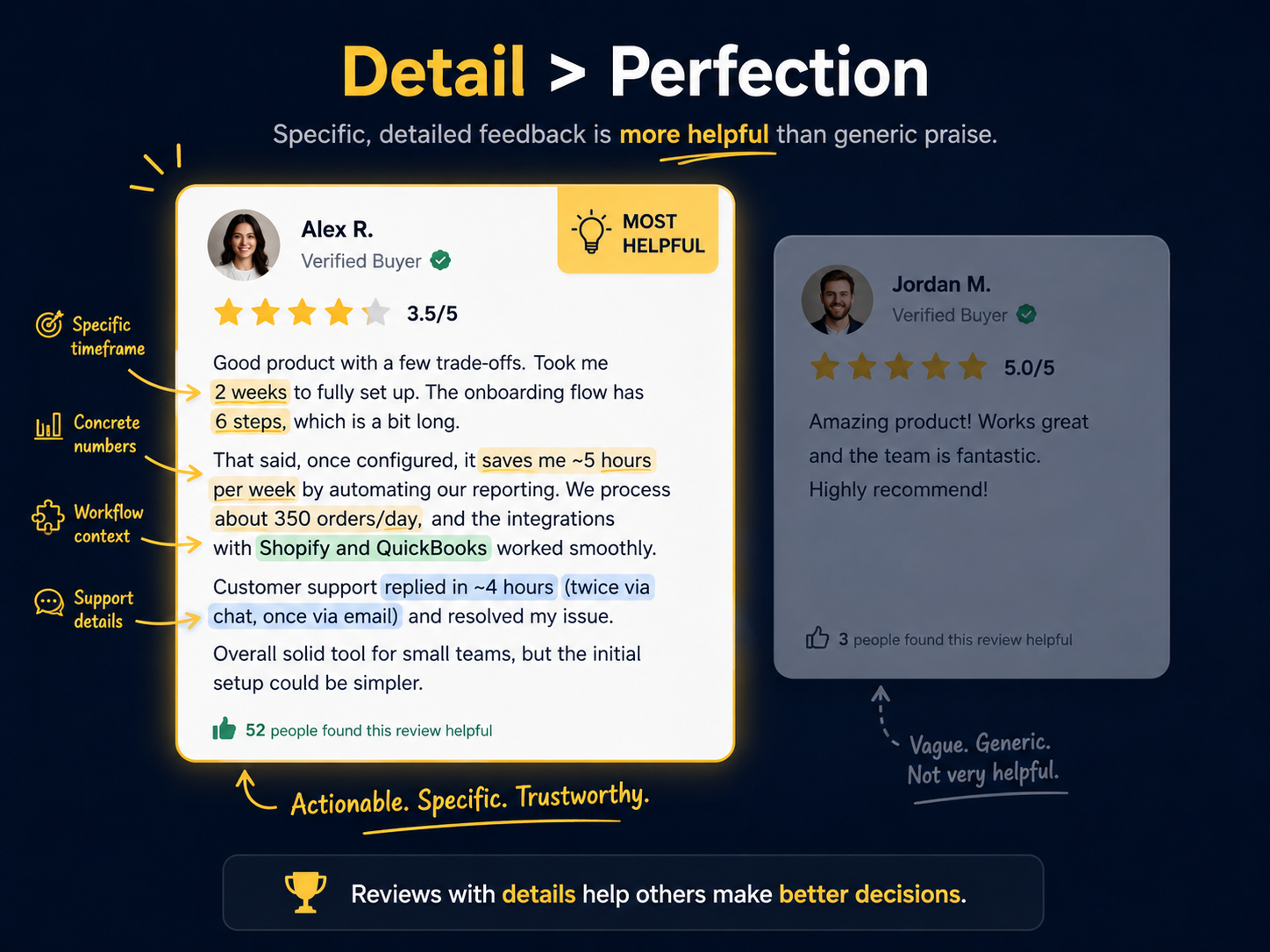
Whether you're researching PhotoAIVideo or any competing platform, the same critical approach applies. Look specifically for feedback from people in a similar role — a solo agent's experience is a different data point than a fifteen-agent brokerage's, and a property manager's priorities differ from a Realtor's, as covered in other comparisons of how those two roles actually diverge. Look for reviews that mention specific numbers — how many listings, how much time saved, what specifically changed in their workflow — rather than general enthusiasm.
The most useful thing you can do, regardless of which platform you're evaluating, is treat any review page as a starting point for questions to verify yourself, not a final verdict. If a reviewer claims a tool saves significant time per listing, that's a claim worth testing directly on your own real listing, rather than accepting on faith.
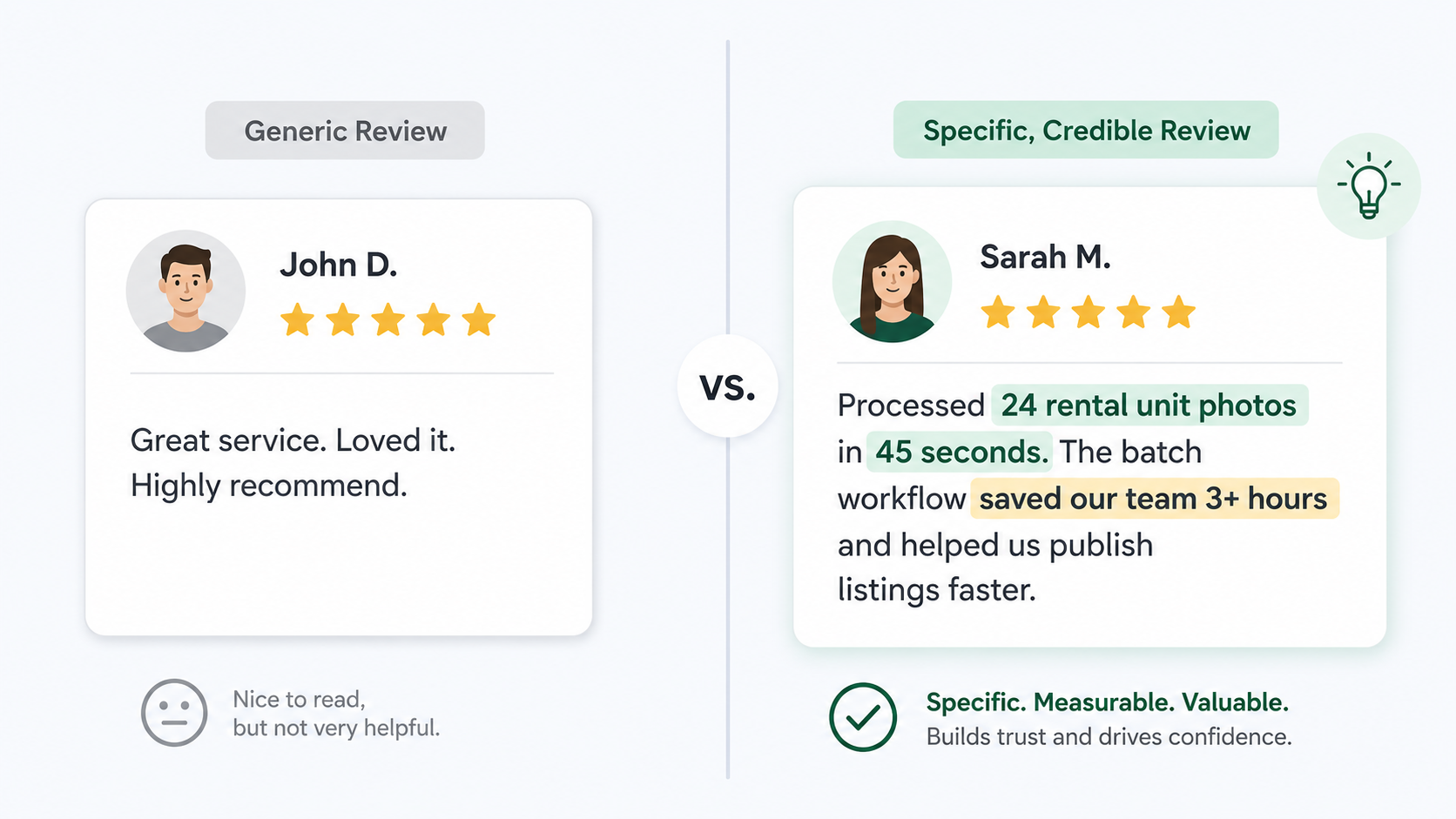
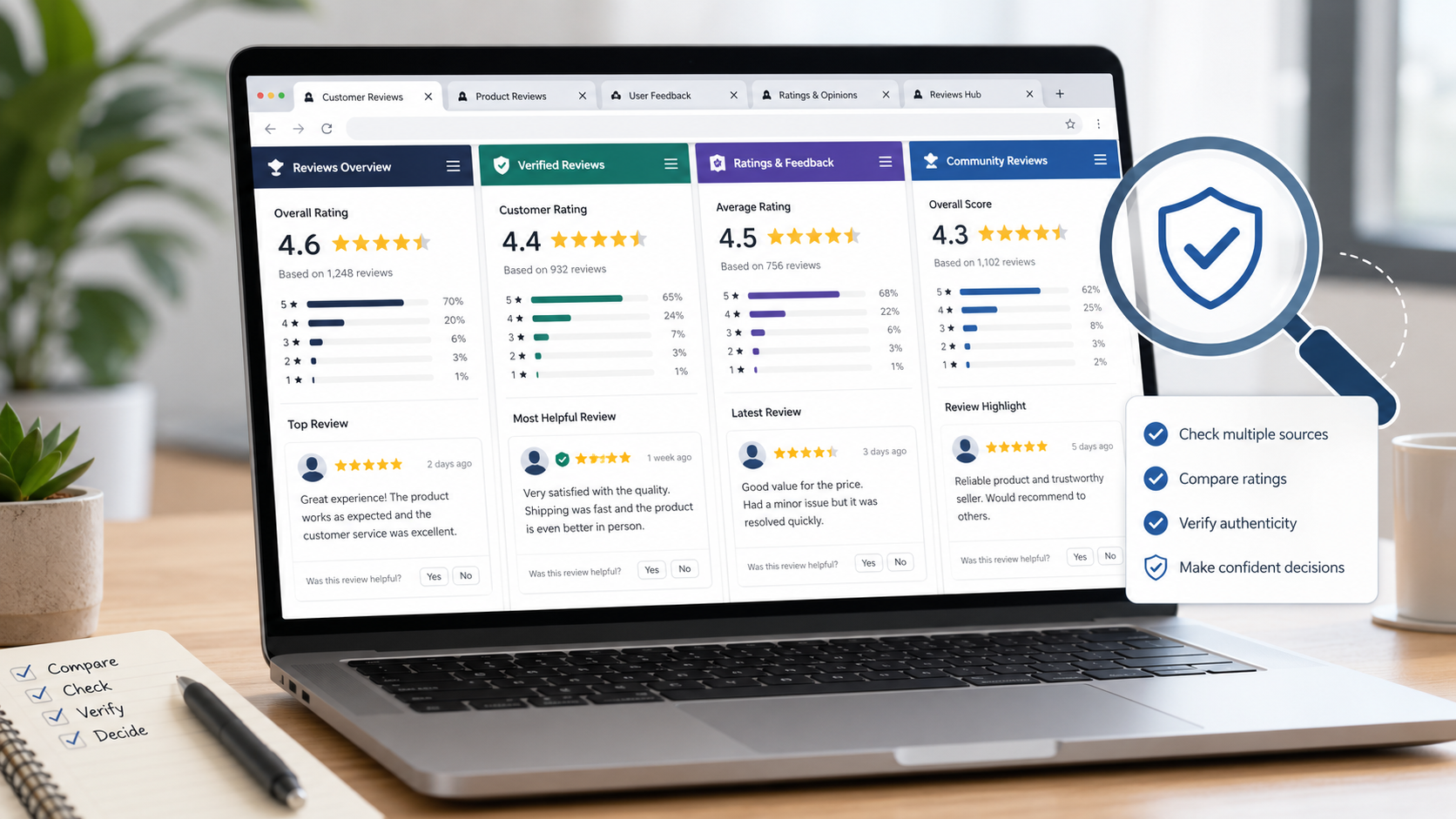
Step 3 is the one that changes outcomes the most. Two completely honest reviews can reach opposite conclusions about the same software simply because the reviewers had different jobs to do with it.
Weigh more heavily:
Weigh less heavily:
If you're building an AI real estate video software comparison spreadsheet across a few finalists, these two columns are worth tracking explicitly rather than relying on an at-a-glance star average.
An agent comparing two similarly rated tools. Read past the star average and specifically look for reviewers who mention volume or workflow details resembling your own situation.
A brokerage marketing director building an internal recommendation. Cross-reference the vendor's own testimonials against independent review sites — a significant gap between the two is worth investigating before signing a contract.
A photographer new to recommending software to real estate clients. Prioritize reviews from other photographers or media professionals over general end-user reviews, since the workflow needs often differ.
A property manager researching tools primarily reviewed by Realtors. Recognize that most available reviews may not reflect your actual use case, and weight vendor claims about leasing-specific features more cautiously as a result.
Anyone encountering a suspiciously uniform cluster of five-star reviews. Treat that pattern as a reason to look elsewhere for corroborating feedback, not as confirmation of quality.
Trusting star averages without reading the actual review text. A high average can be built on a handful of generic, non-specific reviews rather than genuine depth of experience.
Assuming all reviews apply equally to your situation. A review from someone with a completely different role, volume, or use case is a weaker data point than the star rating alone suggests.
Ignoring timing patterns in when reviews were posted. Reviews clustered right after a launch or promotion deserve extra scrutiny compared to reviews spread naturally over time.
Dismissing detailed negative reviews too quickly. A specific, well-explained complaint is often more useful for decision-making than a wall of generic positive ones.
Relying on a single review platform. Checking only one source, especially a vendor's own website, misses the discrepancies that show up when you compare against independent sources.
How do I know if online reviews for real estate video software are fake?
Look for clusters of similarly worded reviews posted in a tight timeframe, especially right after a launch or promotion — that pattern is one of the more reliable signs of an incentivized or coordinated review campaign.
Should I trust a product's star rating on its own?
Not on its own — star averages can be built on a small number of generic reviews, so it's worth reading the actual text behind the number before drawing conclusions.
What makes a review actually useful when comparing AI video tools for real estate marketing?
Specificity — mentions of listing volume, measurable time saved, or a particular workflow detail carry more weight than general enthusiasm or frustration.
Are negative reviews always a red flag?
No — a detailed, specific negative review often provides more useful information than a vague positive one, especially if it explains exactly what limitation the reviewer ran into.
How much does a reviewer's role matter when evaluating real estate video editing software for agents?
Significantly — a review from someone in a similar role, volume, or business size to yours is a far more relevant data point than one from someone with a completely different use case.
Should I check more than one review platform before deciding?
Yes — comparing a vendor's own website testimonials against independent review sites often reveals gaps worth investigating before committing to a contract.
What's the best way to verify a review's claims before trusting them?
Test the specific claim yourself on a real listing whenever possible, rather than accepting a reviewer's stated time savings or workflow improvement at face value.


Compact, ready to go anywhere
Interchangeable lens that’s upgradeable
Dual 1-inch sensors for improved clarity and low light performance
Dynamic range and 6K 360° capture
360° photo resolution at 21MP

8K 360° video recording for ultra-detailed visuals.
4K single-lens mode for traditional wide-angle shots.
Invisible selfie stick effect for drone-like perspectives.
2.5-inch touchscreen with Gorilla Glass protection.
Waterproof up to 33ft for underwater shooting.

360° photo resolution in 23MP
Slim design at 24 mm thick
Built-in image stabilization for smooth video capture.
Internal 19GB storage for photo and video storage.
Wireless connectivity for remote control and sharing.

60MP 360° still images for high-resolution photography.
5.7K 360° video recording at 30fps.
2.25-inch touchscreen for intuitive control.
USB Type-C port for fast charging and data transfer.
MicroSD card slot for expandable storage.
.png)

.png)

Try it free. No credit card required. Instant set-up.






.svg)


.svg)