How Real Estate Agencies Scale Clients with AI Real Estate Video Presenter

Cloudpano
March 27, 2026
•
5 min read
Share this post

🚀 How Real Estate Agencies Scale Clients with AI Real Estate Video Presenter

If you run or manage a real estate agency, you already know the biggest challenge:

👉 How do you scale client acquisition without scaling your workload?

More listings mean more marketing.
More marketing means more time, more people, and more cost.

But what if you could scale your output… without scaling your effort?

That’s exactly what agencies are doing with an ai real estate video presenter.

By using automated real estate video presenters and building smart systems around them, agencies are increasing visibility, generating more leads, and onboarding more clients—without burning out their teams.

Let’s break down how it works.

🤖 What Is an AI Real Estate Video Presenter?

An ai real estate video presenter is a digital avatar that delivers property walkthroughs, listing highlights, and marketing messages through video.

Instead of:

  • Recording agents on camera
  • Hiring videographers
  • Editing content manually

You can:

  • Upload property media
  • Add a script
  • Generate a professional video instantly

This is the foundation of modern ai video spokesperson real estate strategies.

To understand how AI is transforming business operations, check out:
https://www.mckinsey.com/capabilities/quantumblack/our-insights/the-state-of-ai-in-2023

📈 Why Agencies Struggle to Scale

Before AI, scaling required:

  • Hiring more agents 👥
  • Increasing marketing budgets 💰
  • Expanding operations ⚙️

But this creates bottlenecks:

  • Inconsistent content
  • Slow production
  • High costs

Agencies hit a ceiling.

⚙️ How AI Video Presenters Enable Scaling

1. Content at Scale 📊

With automated real estate video presenters, agencies can:

  • Create videos for every listing
  • Publish daily content
  • Stay visible across platforms

2. Consistent Branding 🎯

AI ensures:

  • Uniform messaging
  • Consistent tone
  • Professional delivery

No more variation between agents.

3. Faster Campaign Launches ⚡

Instead of waiting days:

  • Videos are created instantly
  • Listings go live faster
  • Campaigns launch immediately

4. Lower Operational Costs 💸

Reduce reliance on:

  • Videographers
  • Editors
  • Production teams

5. Increased Lead Volume 📩

More content = more exposure = more leads.

🧠 The Agency Scaling Framework

To scale effectively, agencies need systems—not just tools.

Here’s a proven framework:

Step 1: Standardize Content Templates 📂

Create templates for:

  • Residential listings
  • Luxury properties
  • Commercial spaces

This ensures consistency.

Step 2: Centralize Script Creation ✍️

Develop scripts for:

  • Property introductions
  • Feature highlights
  • Calls-to-action

This saves time and improves quality.

Step 3: Automate Video Production 🎬

Use an ai real estate video presenter to:

  • Generate videos quickly
  • Maintain quality
  • Scale output

Step 4: Distribute Across Channels 📲

Your videos should be used in:

  • Social media
  • Email campaigns
  • Listing pages
  • Paid ads

Step 5: Track and Optimize 📊

Measure:

  • Engagement
  • Click-through rates
  • Lead conversions

For insights into AI-driven marketing, explore:
https://www.forbes.com/sites/forbestechcouncil/2023/07/18/how-ai-is-transforming-video-content-creation/

🔥 How Agencies Use AI to Acquire More Clients

🏡 Listing Marketing at Scale

Agencies can:

  • Create videos for every property
  • Impress sellers with strong marketing
  • Win more listings

📢 Paid Advertising Campaigns

Using ai video spokesperson real estate, agencies can:

  • Run high-performing ads
  • Test multiple creatives
  • Optimize campaigns

📧 Lead Nurturing

Videos can be used in:

  • Email follow-ups
  • Drip campaigns
  • Retargeting

📱 Social Media Domination

Daily posting leads to:

  • Increased visibility
  • More engagement
  • Stronger brand presence

💡 Pro Tips for Agencies

1. Build Systems, Not Workflows 🧱

Systems scale—manual processes don’t.

2. Train Your Team 🎓

Ensure everyone knows how to use AI tools effectively.

3. Focus on Volume + Quality ⚖️

You need both to succeed.

4. Test Different Content Styles 🔄

Experiment to find what works.

5. Always Include a Call-to-Action 🔥

Guide viewers to the next step.

🌍 Expanding into New Markets

With automated real estate video presenters, agencies can:

  • Create multilingual videos 🌐
  • Target international buyers
  • Expand geographically

Learn more about AI language processing:
https://www.ibm.com/topics/natural-language-processing

⚠️ Common Mistakes Agencies Make

❌ No Standardization

Without templates, content becomes inconsistent.

❌ Underutilizing Automation

Manual work slows growth.

❌ Ignoring Data

Analytics drive better decisions.

❌ Weak Messaging

Even AI needs strong scripts.

🏆 Real-World Example

Let’s compare two agencies:

Agency A (Traditional Approach)

  • Limited content output
  • High production costs
  • Slow growth

Agency B (AI-Driven)

  • Uses ai real estate video presenter tools
  • Produces content daily
  • Scales quickly

Over time, Agency B dominates market share.

🔮 The Future of Real Estate Agencies

The agencies that win will:

  • Automate content creation
  • Scale marketing systems
  • Leverage AI tools

An ai video spokesperson real estate strategy is no longer optional—it’s essential.

🏁 Final Thoughts: Scale Smarter, Not Harder

Scaling your agency doesn’t require more effort—it requires better systems.

With an ai real estate video presenter, you can:

  • Create more content
  • Reach more clients
  • Grow faster

✅ Key Takeaways

  • AI enables scalable content creation
  • Automation reduces cost and increases output
  • Consistency builds trust and visibility
  • Systems drive long-term growth

🚀 Your All-In-One Virtual Experience Stack Starts Here

‍

Share this post
Cloudpano

Choose The Right 360° Camera

Insta360 ONE RS 1-Inch 360 Edition

  • Compact, ready to go anywhere

  • Interchangeable lens that’s upgradeable

  • Dual 1-inch sensors for improved clarity and low light performance

  • Dynamic range and 6K 360° capture

  • 360° photo resolution at 21MP

Learn More

Insta360 X4

  • 8K 360° video recording for ultra-detailed visuals.

  • 4K single-lens mode for traditional wide-angle shots.

  • Invisible selfie stick effect for drone-like perspectives.

  • 2.5-inch touchscreen with Gorilla Glass protection.

  • Waterproof up to 33ft for underwater shooting.

Learn More

Ricoh Theta Z1

  • 360° photo resolution in 23MP

  • Slim design at 24 mm thick

  • Built-in image stabilization for smooth video capture.

  • Internal 19GB storage for photo and video storage.

  • Wireless connectivity for remote control and sharing.

Learn More

Ricoh Theta X

  • 60MP 360° still images for high-resolution photography.

  • 5.7K 360° video recording at 30fps.

  • 2.25-inch touchscreen for intuitive control.

  • USB Type-C port for fast charging and data transfer.

  • MicroSD card slot for expandable storage.

Learn More
Property Marketing
Allows potential buyers to explore properties in detail from anywhere, enhancing the real estate marketing process.
Automotive Spins
Create an interactive virtual showroom and engage affluent digital buyers with live 360º video calls, all through the CloudPano mobile app for a complete automotive sales solution.
Interactive Floor Plans
Create 2D and 3D floor plans with measurements in 4 minutes or less, all from your phone. Download the Floor Plan Scanner app and get your first scan free.

360 Virtual Tours With CloudPano.com. Get Started Today.

Try it free. No credit card required. Instant set-up.

Try it free
Latest posts

See our other posts

Interviews, tips, guides, industry best practices, and news.

Common Data Labeling Mistakes That Hurt Model Accuracy

Data labeling mistakes can significantly affect AI model accuracy, reliability, and real-world performance. This guide explores 10 common annotation errors, including inconsistent labeling guidelines, incorrect annotations, missing edge cases, class imbalance, and inadequate quality assurance. Learn practical strategies to improve annotation consistency, train reviewers, monitor labeling quality, and prevent costly model errors. Discover how professional data labeling services can help organizations build accurate, reliable datasets for computer vision, large language models, robotics, and other AI applications.
Read post

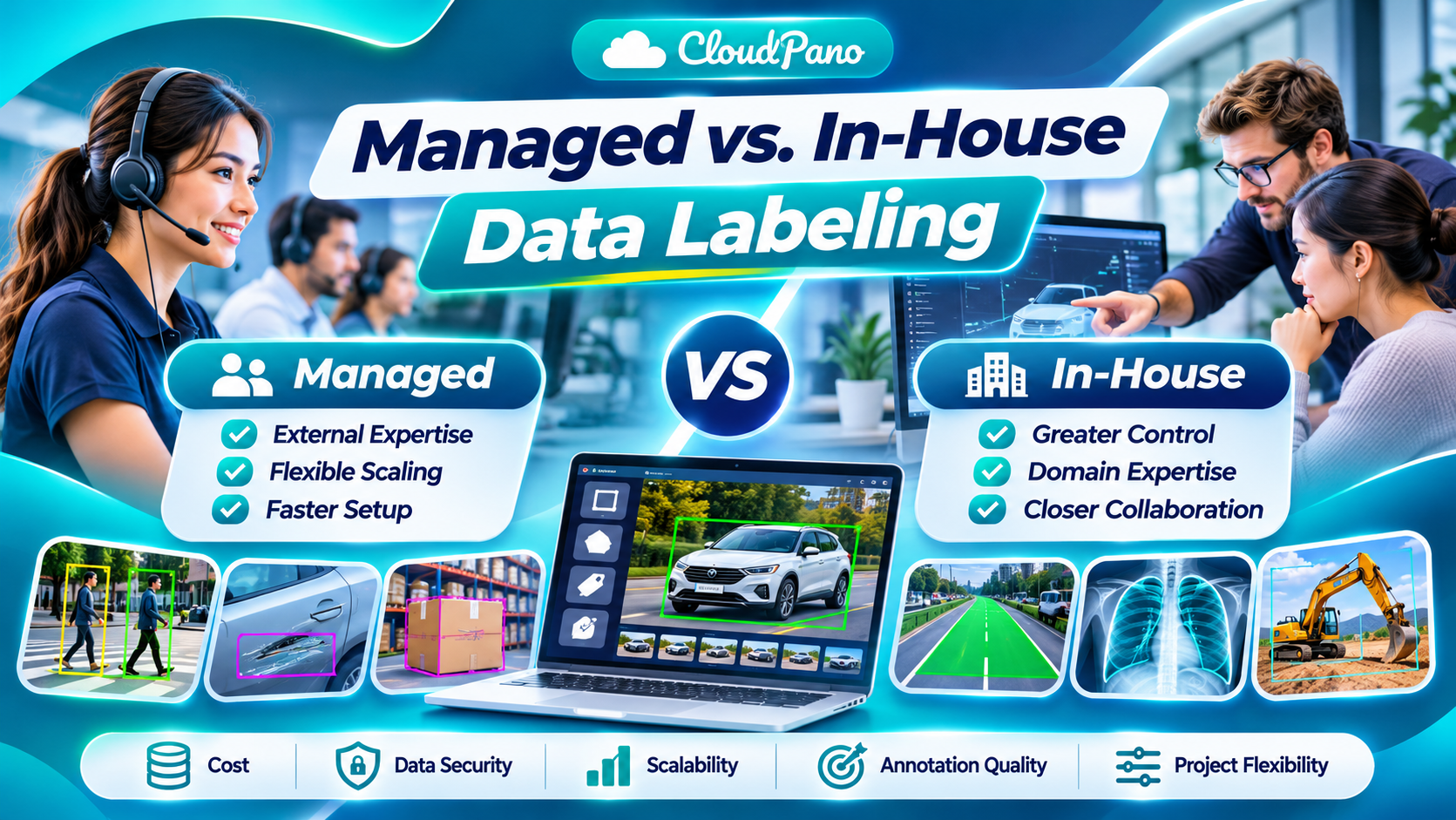
Managed vs. In-House Data Labeling

Choosing between managed and in-house data labeling is an important decision for AI development teams. This guide explores the key differences between managed vs in-house labeling, including costs, annotation quality, data security, scalability, and operational control. Discover the advantages and limitations of each approach, practical examples from computer vision and robotics, and how hybrid labeling workflows can combine external capacity with internal expertise. Learn how to select the right annotation strategy for your project's requirements, resources, and long-term AI goals.
Read post

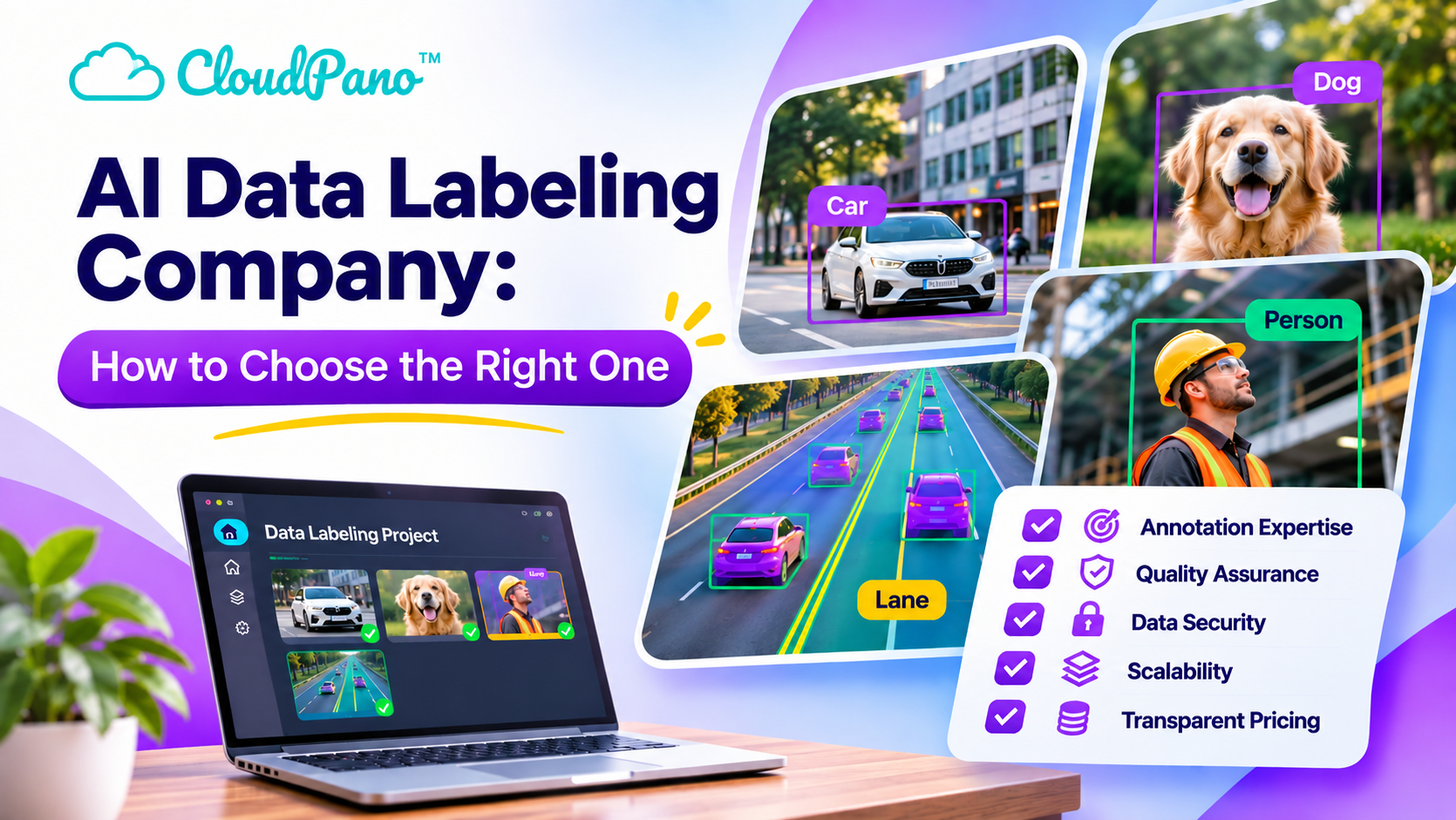
AI Data Labeling Company: How to Choose the Right One

Choosing the right AI data labeling company is essential for developing accurate and reliable artificial intelligence systems. This guide explains how to evaluate annotation providers based on data quality, industry expertise, security, scalability, pricing, and project management. Learn about different annotation services, common mistakes to avoid, and the importance of human review. Discover a practical five-step evaluation process to help you select a trustworthy labeling partner that meets your AI development requirements.
Read post