


.png)


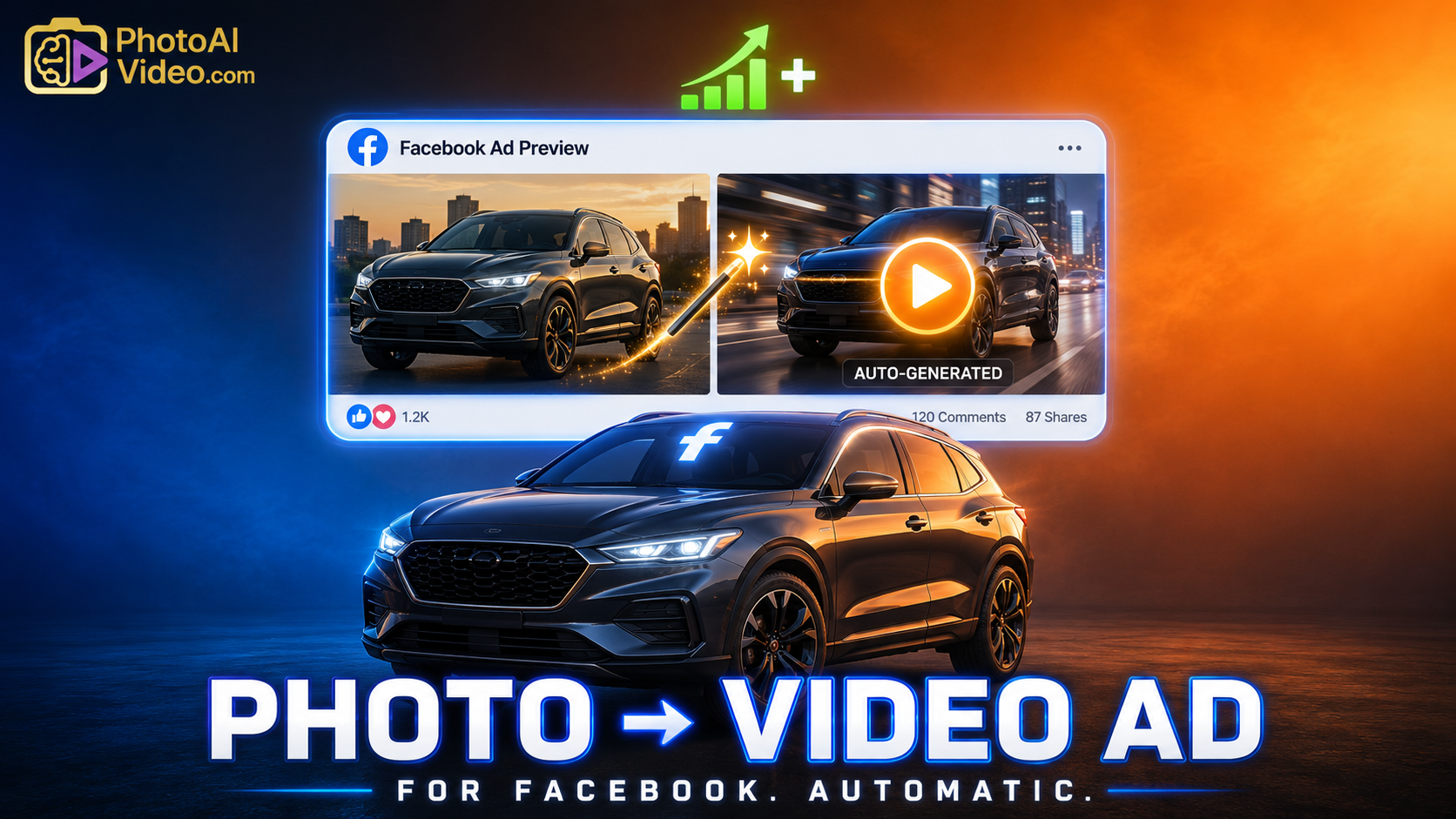
In the current attention economy, the automotive dealership that relies solely on static image carousels is essentially invisible. Facebook's algorithm has shifted aggressively toward "Video First" consumption, rewarding high-retention motion content with lower CPMs and broader reach. However, for most dealerships, the friction of video production is the primary barrier to entry.
The solution isn't hiring an expensive production house; it’s the transition from manual filming to automated orchestration. By using specialized software to turn car listings into video, dealerships can now create car video ads from photos automatically, turning their existing inventory feeds into high-performance Facebook ad assets in real-time.
Why does video outperform static images so consistently on social platforms? The answer lies in Cognitive Load and Information Gain. According to research from Harvard Business Review, consumers process visual information 60,000 times faster than text, but motion triggers a primitive orienting response that static images cannot replicate.
When a Facebook user scrolls past a static photo of a Ford F-150, they see a product. When they scroll past an automated video walkaround, they experience a virtual inspection. This reduction in "psychological distance" is critical for high-ticket items like vehicles. Automation allows you to provide this "virtual inspection" for every single VIN on your lot, ensuring that 100% of your inventory is working to capture leads 24/7.
Traditionally, Facebook Automotive Inventory Ads (AIA) used static carousels. While functional, they have become "white noise" to the average user. By integrating automotive CRM marketing tools with automated video engines, you can serve dynamic video ads that show the exact vehicle a user was browsing, but in a cinematic, motion-driven format.
The process of creating car video ads from photos automatically relies on a technical stack that bridges your DMS (Dealer Management System) with Facebook’s Ad Manager.
Your automotive CRM marketing tools or inventory management software (like vAuto) sends a high-resolution photo feed to the video automation engine. This happens via a secure XML or JSON API feed.
Before the video is rendered, AI cleans up the "noise." Distracting lot backgrounds, power lines, and neighboring cars are removed and replaced with a clean, branded virtual showroom. This creates a "premium" brand perception that McKinsey & Company identifies as a key driver in digital retail success.
The software doesn't just "pan" across a photo. It uses neural mapping to understand the geometry of the car, applying 3D parallax effects that simulate a drone or gimbal move. This creates the illusion of a full-scale video production from a simple 2D image.
A critical mistake in automotive advertising is designing for sound. Data from Statista shows that 80% of social media users watch video with the sound off. Your automated video ads must be visually communicative.
According to Think with Google, 60% of auto shoppers visit a dealership or dealer website after watching a video on a social platform. By automating the production of these "high-intent" videos, you are capturing that 60% with zero manual effort.
Automated video ads solve the "Volume vs. Value" problem. In a traditional dealership model:
By using automation to create car video ads from photos automatically, you treat every vehicle as a hero car. This is particularly vital for used inventory where the sales cycle is faster and margins are thinner. You cannot afford to spend $100 filming a car that might sell in 72 hours, but you can afford $1.00 for an automated video that sells it in 24.
Industry reports from NADA (National Automobile Dealers Association) emphasize that "Time to Market" is the strongest correlate to inventory turn. Automation reduces that time to zero.
While automation is a superpower, it is not a magic wand. Poor implementation will still lead to poor results.
In the next 24 months, the distinction between "marketing" and "sales" will continue to blur. Automated video won't just be for ads; it will be for the entire lifecycle. Imagine a lead comes into your CRM; instead of a text email, they receive an automated video of the exact car they inquired about, narrated by an AI voice with the salesperson's name.
This is the promise of software to turn car listings into video. It democratizes high-end production, allowing every dealership—from the small independent lot to the global franchise group—to compete on a level playing field.


Compact, ready to go anywhere
Interchangeable lens that’s upgradeable
Dual 1-inch sensors for improved clarity and low light performance
Dynamic range and 6K 360° capture
360° photo resolution at 21MP

8K 360° video recording for ultra-detailed visuals.
4K single-lens mode for traditional wide-angle shots.
Invisible selfie stick effect for drone-like perspectives.
2.5-inch touchscreen with Gorilla Glass protection.
Waterproof up to 33ft for underwater shooting.

360° photo resolution in 23MP
Slim design at 24 mm thick
Built-in image stabilization for smooth video capture.
Internal 19GB storage for photo and video storage.
Wireless connectivity for remote control and sharing.

60MP 360° still images for high-resolution photography.
5.7K 360° video recording at 30fps.
2.25-inch touchscreen for intuitive control.
USB Type-C port for fast charging and data transfer.
MicroSD card slot for expandable storage.
.png)

.png)

Try it free. No credit card required. Instant set-up.







.svg)


.svg)