


.png)



Virtual tours have been technically possible for a long time. What's changed recently isn't the concept — it's the production bottleneck that used to make them impractical for anything but a small slice of listings. That shift is worth paying attention to, because it's quietly changing who gets to offer this kind of media and how standard it's likely to become.
For most of the time virtual tours have existed, the hard part was never the photography. Capturing a set of 360 panoramas has always been reasonably fast once you have the equipment. The bottleneck was everything that happened after the shoot: manually linking every panorama together, hotspot by hotspot, room by room.
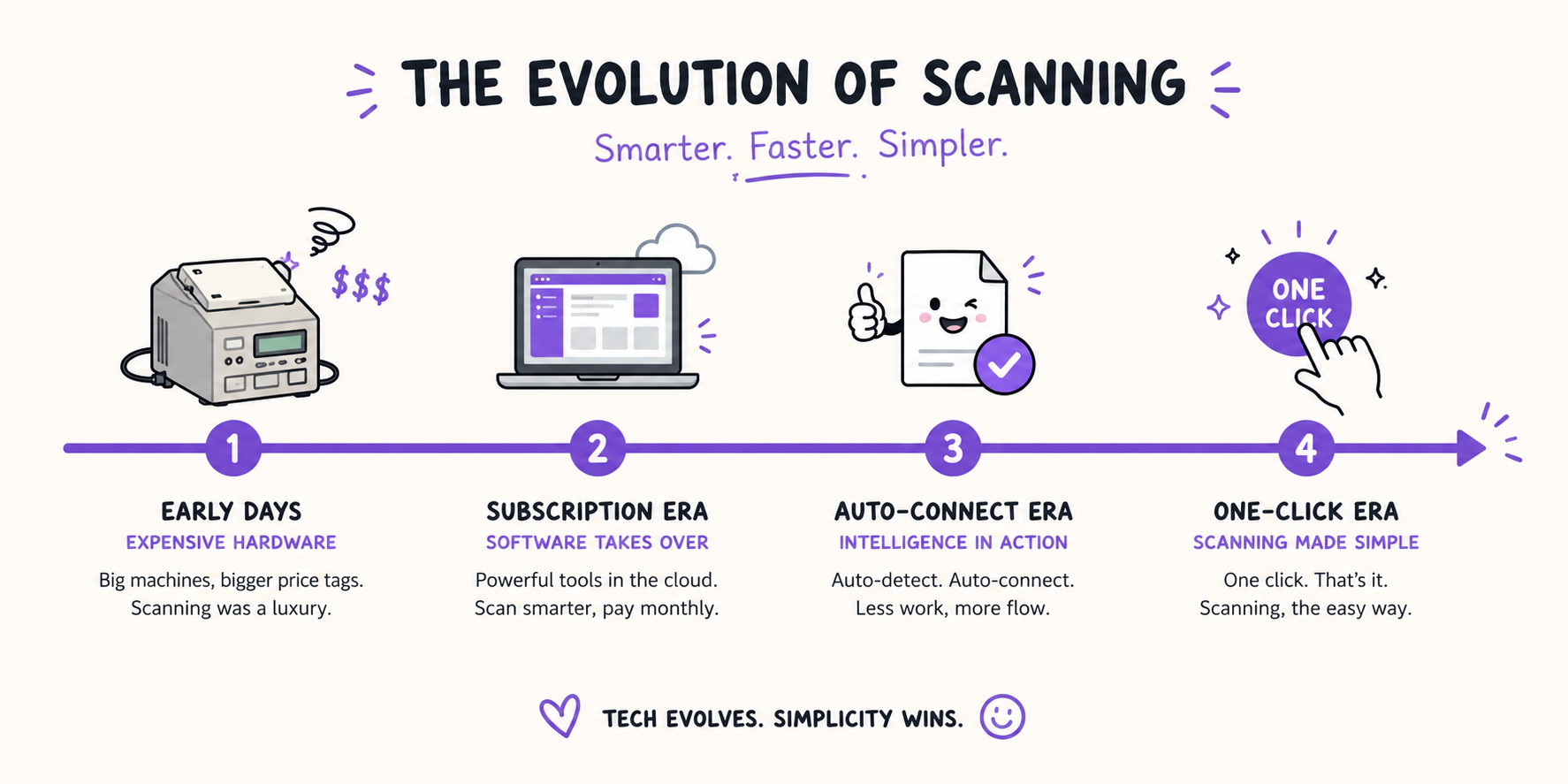
On a small property, that manual work was tolerable. On a larger home, a commercial space, or anything with more than a couple dozen capture points, it turned into hours of tedious, error-prone data entry — placing arrows, aiming them at the correct doorway, testing the result, and fixing whatever got missed. That cost, in time if nothing else, is a big part of why virtual tours stayed a premium offering for years rather than a standard one. Agencies and independent photographers reserved them for high-end listings where the extra hours were easier to justify against the sale price, while more modest listings went without.
Auto-connect tools like TourFlash attack that bottleneck directly, rather than trying to make the manual process marginally faster. Instead of a person manually deciding and placing every connection, the software evaluates the panoramas themselves and detects which ones have a clear visual line of sight to each other — and builds the links automatically wherever that sightline exists.
This is a meaningfully different approach from earlier attempts to streamline tour production. Rather than better tooling for the same manual workflow, it removes the manual step almost entirely. The photographer's job shifts from "manually build every connection" to "capture with line of sight in mind," which is a much smaller and more teachable skill than learning to hand-link a complex property. That's the real shift underlying the shift toward one-click virtual tours more broadly across the industry — the labor-intensive part of tour production is being automated out, not just sped up.
The interesting second-order effect isn't really about time savings for people who were already producing tours — it's about who gets to participate at all.
Manual linking had a real labor cost attached to every tour, and that cost scaled with property complexity. For a solo agent or a small independent agency without in-house production staff, that made virtual tours a hard business case outside of their most valuable listings — you either paid someone else to handle the linking, or absorbed the hours yourself, and either way it only made sense often enough to bother with when the listing was worth it.
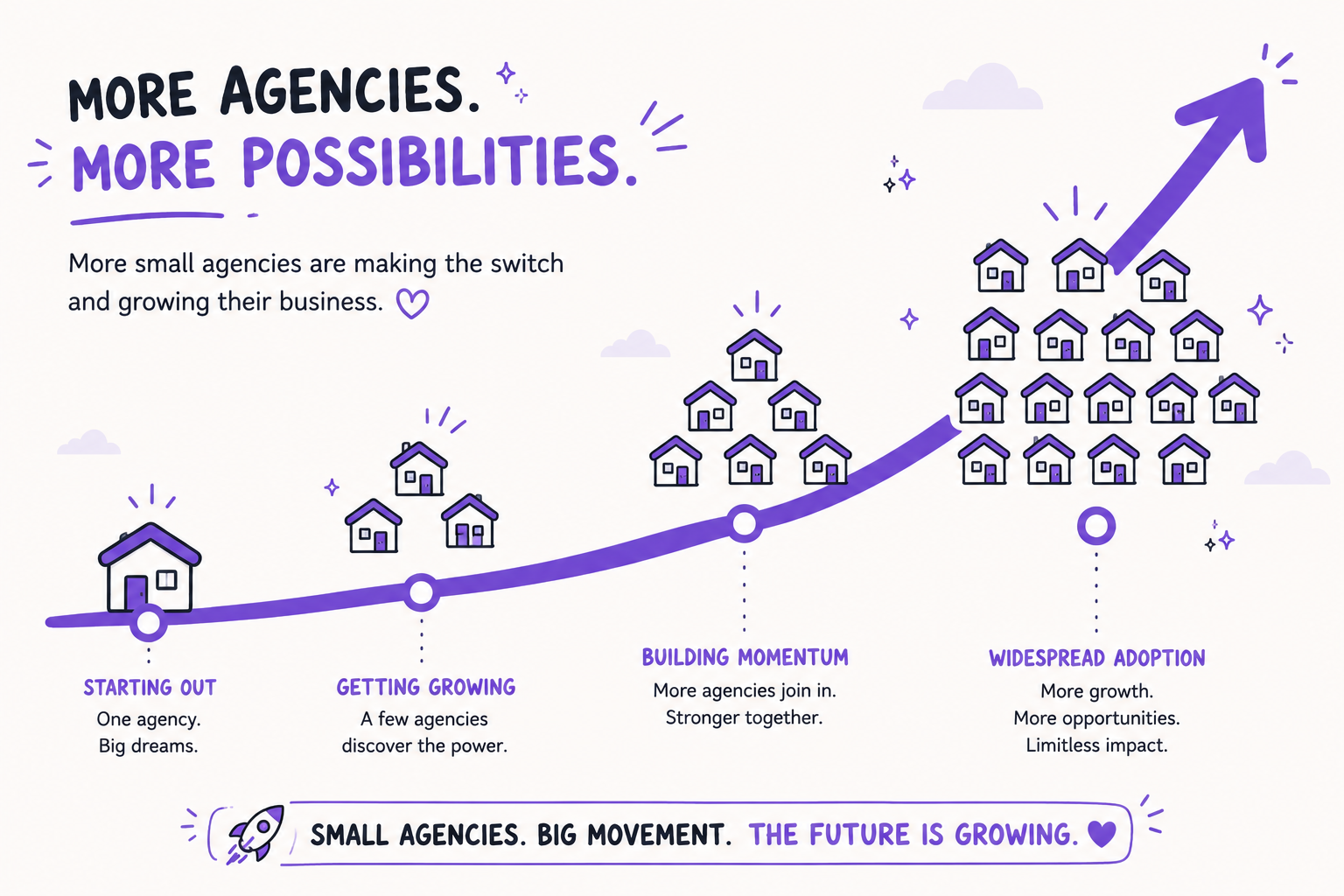
Removing that labor cost changes the calculation for exactly this group. When auto-connect tools like TourFlash turn the linking step into a single click rather than an hour of manual work, the marginal cost of adding a tour to a listing drops close to just the software fee. That makes it realistic for smaller agencies and independent agents — the group with the least capacity to absorb production overhead — to offer virtual tours across their entire listing volume, not just flagship properties. NAR's research on technology adoption among real estate professionals has generally tracked this kind of pattern: as a technology's cost and complexity drop, adoption spreads well beyond the early, well-resourced adopters into the broader base of the industry.
It's reasonable to expect this to continue playing out the way similar shifts have elsewhere in real estate media. Professional photography followed a comparable arc — once a premium differentiator, now baked into the cost of doing business for most serious listings, because buyer expectations shifted once it became widely available and affordable.
Virtual tours look like they're on a similar trajectory. As production cost and time investment keep shrinking, a reasonable expectation is that a virtual tour stops signaling a "premium" listing and starts being assumed by default, the same way professional photos already are in most markets. Buyers increasingly expect to preview a property in depth before committing to an in-person showing, and listings that can't offer that compete at a real disadvantage. Industry coverage of proptech trends — outlets like Inman News regularly track this kind of shift — has pointed to similar patterns as production friction drops across other categories of real estate media.
This is a prediction, not a certainty, and adoption curves rarely move in a straight line. But the underlying economics point in a fairly consistent direction: when the cost and skill barrier to producing something drops sharply, its use tends to broaden until it becomes the baseline rather than the exception.
If automated line-of-sight detection is the current inflection point, a few likely directions follow naturally from here.
Faster processing. As detection algorithms and infrastructure improve, the gap between uploading panoramas and getting a finished, connected tour is likely to keep shrinking — moving toward something closer to instantaneous rather than today's already-fast turnaround.
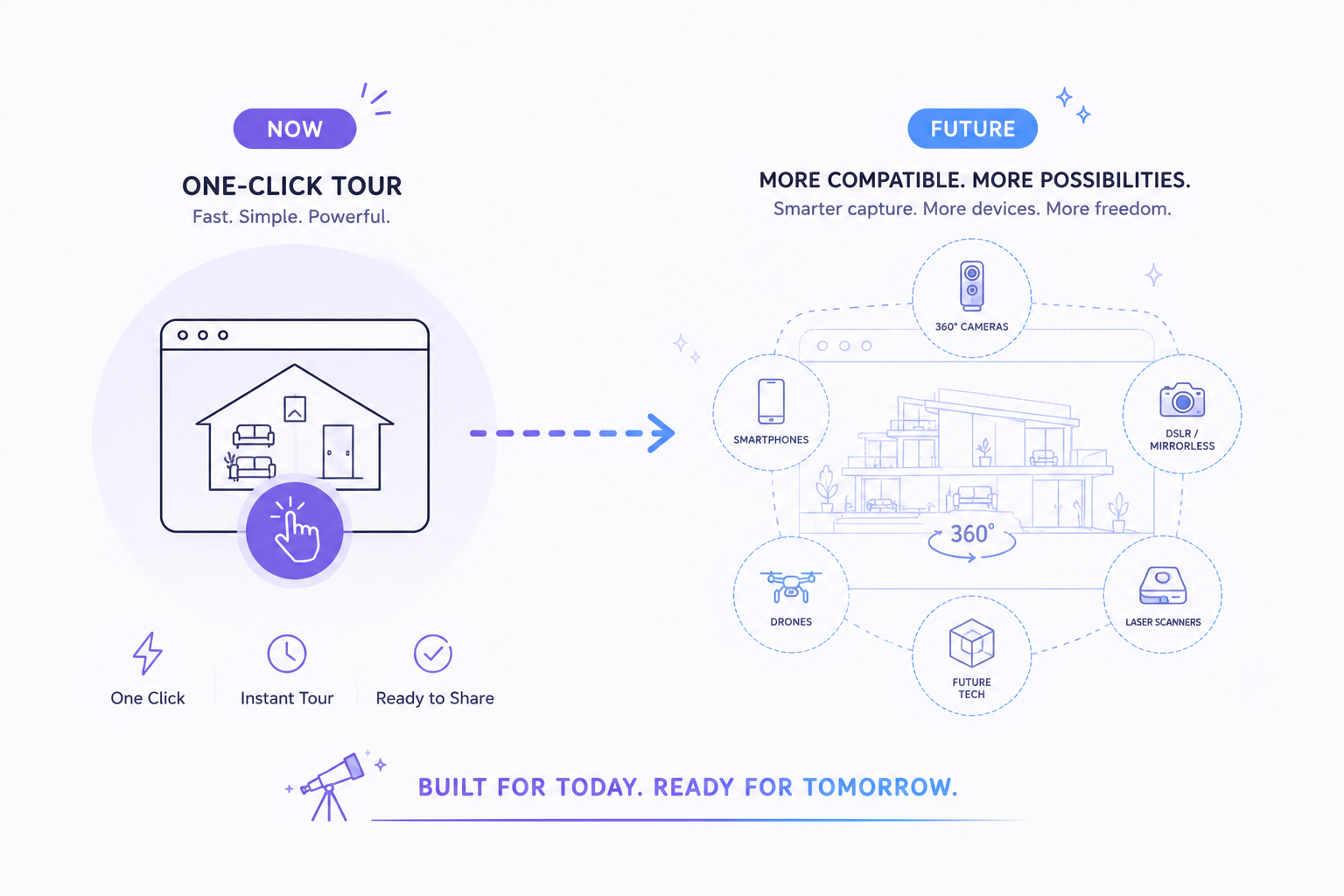
Broader camera compatibility. Auto-connect tools that work with whatever 360 camera a photographer already owns, rather than requiring specific hardware, lower the barrier to entry further. It's reasonable to expect that flexibility to keep expanding as more camera models and image formats become standard inputs.
Smarter connection detection. Line of sight is a strong, simple rule today. Future iterations may get better at handling trickier edge cases — larger open-plan spaces, unconventional layouts, or partially obstructed sightlines — without requiring the capture discipline that currently makes or breaks a clean auto-connect result.
None of this requires speculation about entirely new categories of technology — it's a fairly natural continuation of the trend already underway: removing friction from tour production until the remaining barrier is closer to zero.
The story here isn't really about any single piece of software — it's about a bottleneck quietly disappearing. For years, the cost of linking a tour, not capturing one, kept virtual tours out of reach for a large share of the market. If you want to see how TourFlash fits into this shift, it's worth watching this space less as a product feature and more as an early sign of where real estate media production is generally headed: faster, cheaper, and available to a much wider range of agents and photographers than it used to be.


Compact, ready to go anywhere
Interchangeable lens that’s upgradeable
Dual 1-inch sensors for improved clarity and low light performance
Dynamic range and 6K 360° capture
360° photo resolution at 21MP

8K 360° video recording for ultra-detailed visuals.
4K single-lens mode for traditional wide-angle shots.
Invisible selfie stick effect for drone-like perspectives.
2.5-inch touchscreen with Gorilla Glass protection.
Waterproof up to 33ft for underwater shooting.

360° photo resolution in 23MP
Slim design at 24 mm thick
Built-in image stabilization for smooth video capture.
Internal 19GB storage for photo and video storage.
Wireless connectivity for remote control and sharing.

60MP 360° still images for high-resolution photography.
5.7K 360° video recording at 30fps.
2.25-inch touchscreen for intuitive control.
USB Type-C port for fast charging and data transfer.
MicroSD card slot for expandable storage.
.png)

.png)

Try it free. No credit card required. Instant set-up.






.svg)


.svg)