


.png)


Step into the marketing suite of any fast-growing brokerage on a Friday afternoon. The atmosphere isn't filled with quiet coordination; it's usually defined by pure frustration over production backlogs. While traditional property portals still hold a baseline position in the transaction ecosystem, the actual battlefield for homebuyer eyeballs has moved entirely to mobile feeds.
The structural landscape of real estate marketing has shifted. If your agency is still relying entirely on flat, two-dimensional photo carousels to showcase an expansive suburban estate or a modern urban loft development, you are effectively burning your reach potential.
The math behind organic network visibility is simple yet brutal. Social delivery systems have configured their distribution weights to heavily favor video layouts. When you post unmoving image grids, network nodes downrank the impressions, burying your asset beneath an endless stream of moving content. This operational friction traps busy agents in a difficult position. Sourcing specialized media crews to shoot cinematic raw footage for every single mid-market house, commercial retail space, or multi-family flat destroys your operating margins.
You find yourself navigating booking conflicts, high invoice charges, and sudden weather cancellations. Trying to sidestep these issues by forcing your internal team to manually stitch graphics inside rigid design frameworks wastes their core field hours. Every minute an agent spends cutting video frames on a desktop is a minute they are not on the phone closing deals or taking high-intent listings.
To secure a sustainable edge in local markets, your agency must stop treating video creation as an expensive, manual art project. It needs to be approached as a standardized software workflow. Look at your asset library. Your team is already investing significant capital every week to capture pristine, high-resolution architectural photography for the local MLS directory. Leaving those premium visual assets locked in a static database is a massive waste of raw marketing power.
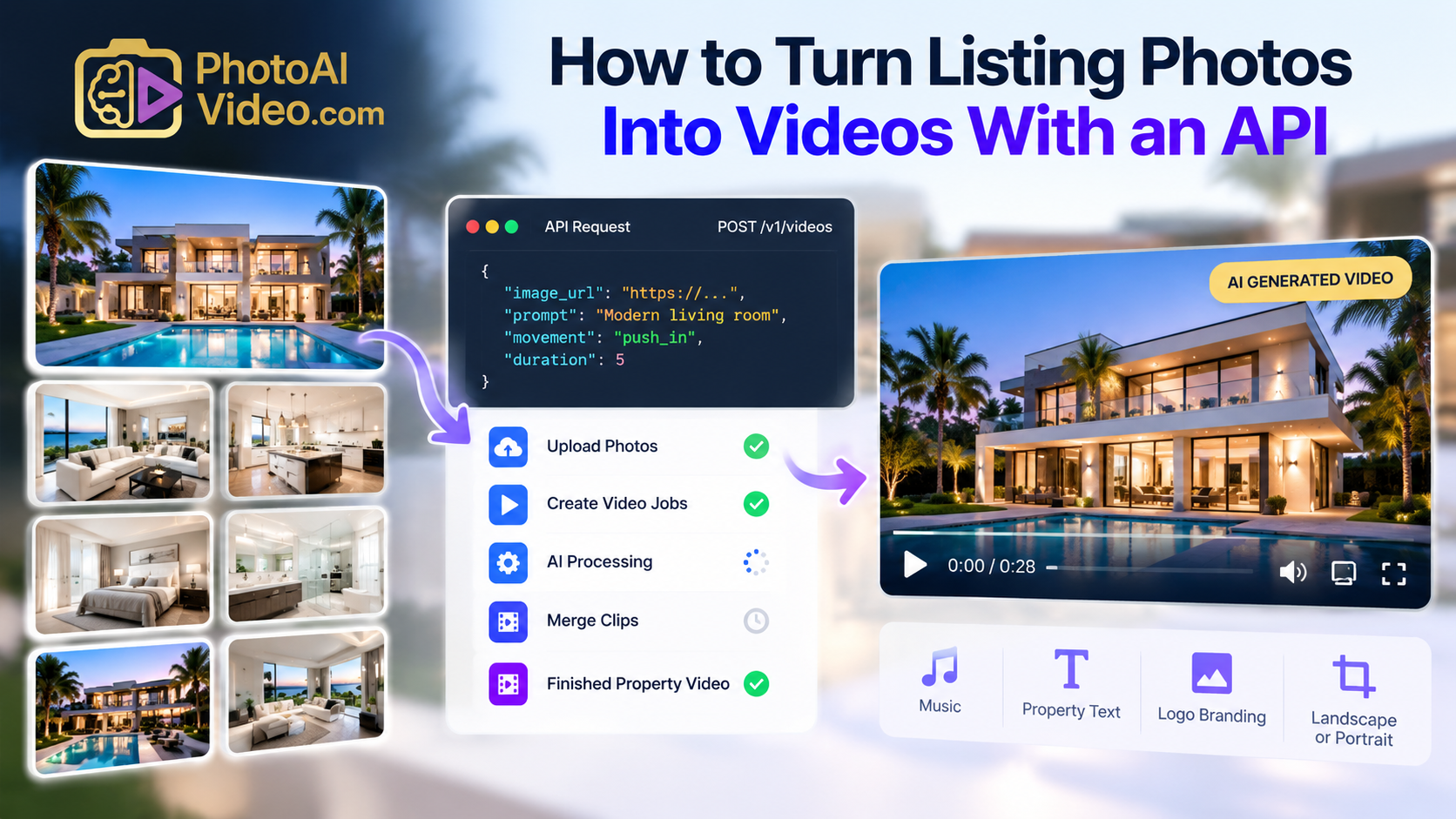
This is the exact structural gap that PhotoAIVideo.com bridges for scaling brokerages. The platform functions as a fast, browser-based AI real estate reels app engineered to completely clear your media production blockages. Instead of arranging complicated timeline spaces or handling expensive localized editing contracts, your marketing coordinator drops a single static listing photo straight into the web interface.
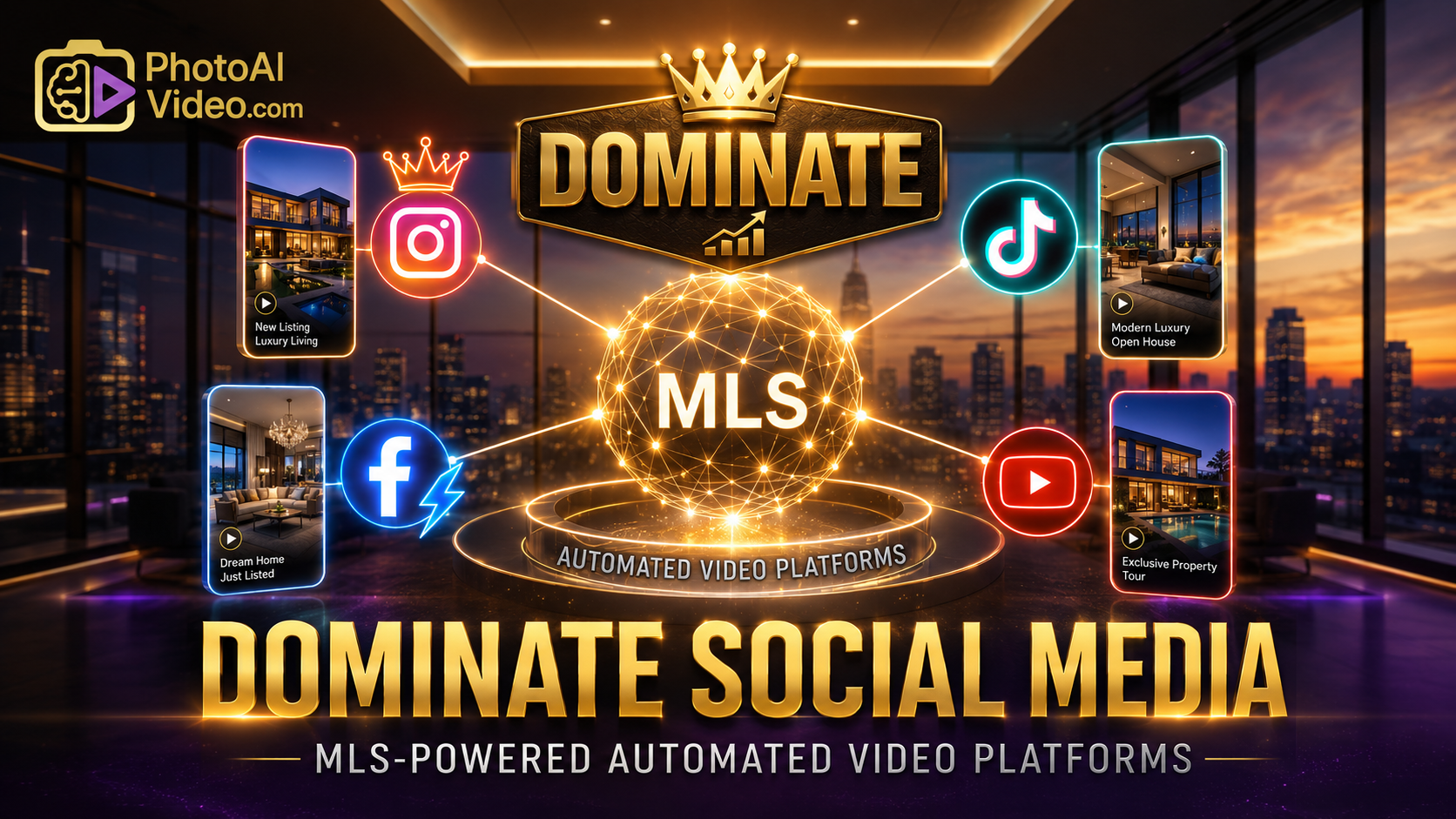
The web application instantly processes the base asset, transforming the flat photo data into a full-screen, native 9:16 vertical motion asset. It turns media asset assembly into a lightweight task, allowing your agents to deploy eye-catching cinematic clips across TikTok, Instagram, and YouTube Shorts simultaneously without stretching your budget or changing your field schedule.
Static 2D Format: Fixed perspective asset. Suppressed by modern network delivery configurations and skipped by scrolling prospects.
3D Parallax Video: System maps visual depth from the raw image to simulate clean, automated physical movement.
The reason this format works so well to hold the eyes of a home shopper is rooted in clean spatial geometry. It skips the erratic transitions or awkward focal morphing common in generic online video template software. Instead, the application runs a calculated real estate reels generator AI computer vision process known as monocular depth mapping.
When you slide an architectural exterior shot or a beautifully staged living interior into the processing line, the algorithm breaks down the image composition at the pixel level. It determines the relative distance of geometric targets, mapping exactly what sits in the immediate front frame—such as a custom stone fireplace hearth or a modern courtyard structure—and separates it cleanly from background spaces, like a remote mountain ridge line or floor-to-ceiling windows.
Once the system completes this plane isolation, it runs a precise parallax motion matrix. By drifting the foreground plane along a slightly different track relative to the deep background layer, it perfectly recreates the visual cues of real physical movement.
The file transforms into an immersive asset that mimics a professional videographer gliding a heavy stabilizer rig past an architectural column. Because room structures and dimensions stay perfectly true, property shoppers get a genuine sense of the layout, building immediate confidence before they ever click through to book a live showing.
Sustaining a reliable lead pipeline requires consistent publishing frequency across all team channels. Integrating automated AI property reels software into your weekly operation allows your agency to transform unmoving drive folders into live, conversion-focused campaigns before your morning coffee breaks:
Human browsing behavior inside modern smartphone environments is incredibly selective. Rigorous user interface interaction analyses compiled by the Nielsen Norman Group reveal that mobile browsers skim visual streams using rapid cognitive pattern matching, filtering out predictable corporate templates within fractions of a second. Inside an active vertical feed, your media has precisely three seconds to hit a visual thumb-stop and anchor concentration.
If your ad account or social feed opens with a static title shot, slow-fading agency graphics, or flat branding slides, your audience has already moved past. Platform auction systems track this early abandonment with extreme precision. When prospects swipe past your asset inside two seconds, data engines score your creative quality index as low, which automatically spikes your cost-per-click levels.
Transitioning to an efficient short-form real estate video AI output pattern solves this behavioral obstacle entirely. Because the 3D parallax transformation applies smooth, drifting multi-plane motion right from the first frame, you trigger an instinctual human visual reflex.
Users pause their scroll because their eyes require an extra moment to decode the unfolding depth variations. This hold window preserves attention long enough for prospects to process your listing parameters and interact with your conversion prompts, optimizing your ad performance while lowering target lead costs.
Growing a modern agency requires strict control over your creative asset cycles. According to user acquisition studies tracked by HubSpot, campaign fatigue hits real estate ad accounts faster than almost any other regional vertical. If your team depends entirely on slow, high-cost manual editing loops, you can’t support structural asset testing. You get stuck running the same video file across a localized geography for months, causing registration rates to crater over time.
Deploying automated media pipelines completely decouples your creative asset volume from your marketing payroll. Your growth managers can generate fifteen distinct, moving visual variants from a single listing shoot folder in a couple of minutes, testing out alternative spatial perspectives and speed metrics.
This high content velocity feeds a reliable local lead generation funnel built to convert:
Ramping up production speed across your business gives you a massive tactical advantage, but you must still police basic layout constraints to keep your brand looking sharp:
The production groups locking down the highest volume of qualified transactions across modern local landscapes aren't winning purely on brute financial spend. They rule their territories because they choose high creative velocity—the capacity to turn raw photographic inventories into dozens of moving, conversion-optimized video ads while competitor offices are still waiting for an outside videography firm to clear an edit queue slot.
Instead of burning valuable capital on heavy agency margins or wasting agent production time on complex timeline tracking software, move your design pipeline straight to automated cloud rendering tools. Introduce true dimensional scale to your listings, capture high-retention consumer blocks, and expand your business by injecting cinematic 3D motion into your standard property folders.


Compact, ready to go anywhere
Interchangeable lens that’s upgradeable
Dual 1-inch sensors for improved clarity and low light performance
Dynamic range and 6K 360° capture
360° photo resolution at 21MP

8K 360° video recording for ultra-detailed visuals.
4K single-lens mode for traditional wide-angle shots.
Invisible selfie stick effect for drone-like perspectives.
2.5-inch touchscreen with Gorilla Glass protection.
Waterproof up to 33ft for underwater shooting.

360° photo resolution in 23MP
Slim design at 24 mm thick
Built-in image stabilization for smooth video capture.
Internal 19GB storage for photo and video storage.
Wireless connectivity for remote control and sharing.

60MP 360° still images for high-resolution photography.
5.7K 360° video recording at 30fps.
2.25-inch touchscreen for intuitive control.
USB Type-C port for fast charging and data transfer.
MicroSD card slot for expandable storage.
.png)

.png)

Try it free. No credit card required. Instant set-up.






.svg)


.svg)