


.png)


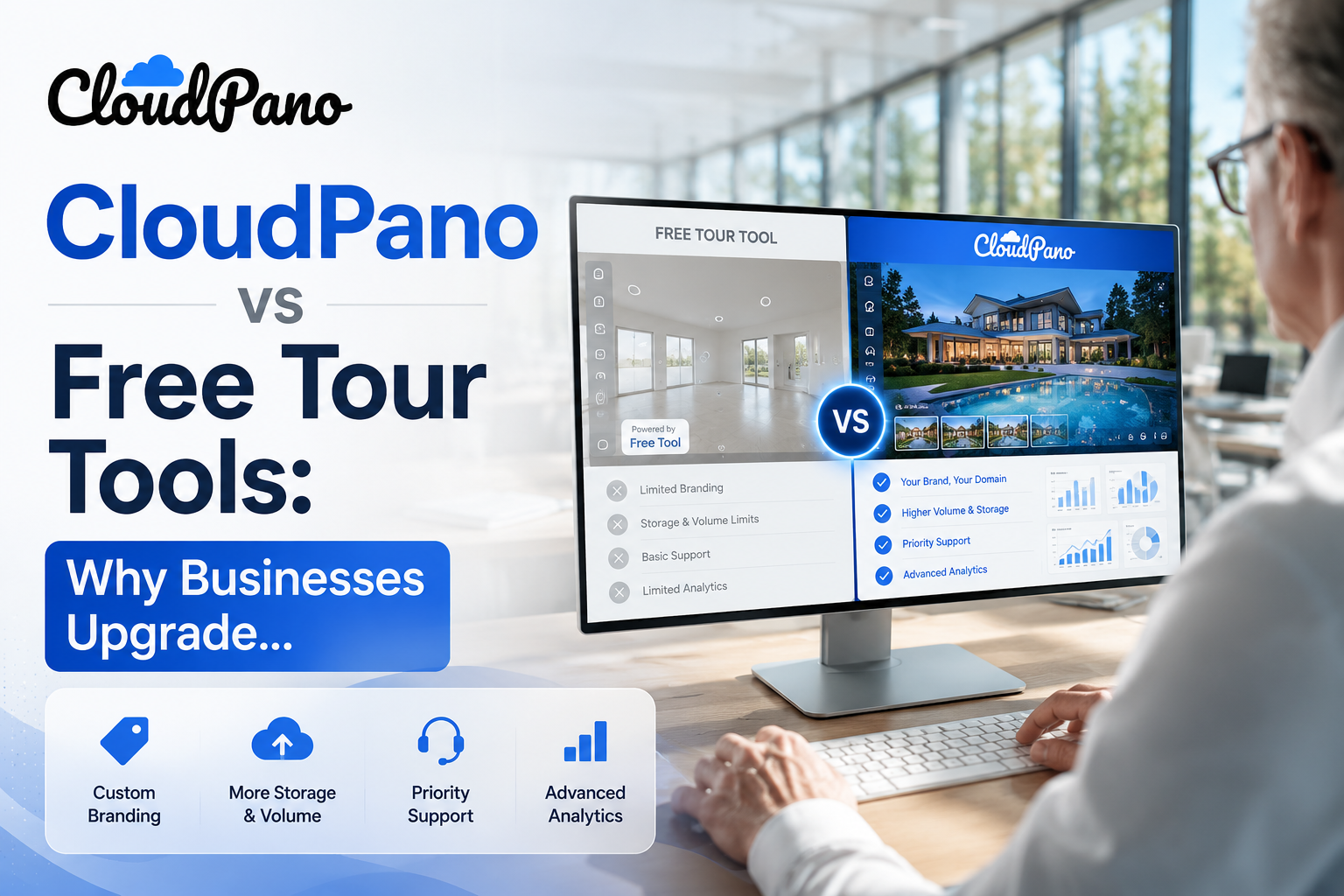
Free virtual tour tools are a genuinely reasonable starting point for plenty of small businesses — there's no need to pay for software before you know whether virtual tours are even worth investing in for your specific use case. But free tools tend to reveal their limits at a predictable point, and understanding that point in advance helps you recognize it in your own business rather than being caught off guard by it. This CloudPano vs free tour tools comparison is about that transition specifically: when free is enough, and when it starts quietly costing you more than a paid platform would.
It's worth saying plainly: free tools aren't a mistake for a business just starting to experiment with virtual tours. If you're testing whether tours drive any measurable benefit for your specific business before committing budget, a free tool is a sensible way to find out without financial risk. The question isn't whether free tools have any value — they clearly do for this use case — it's whether they continue to serve you well once your usage moves past that initial experimentation phase.
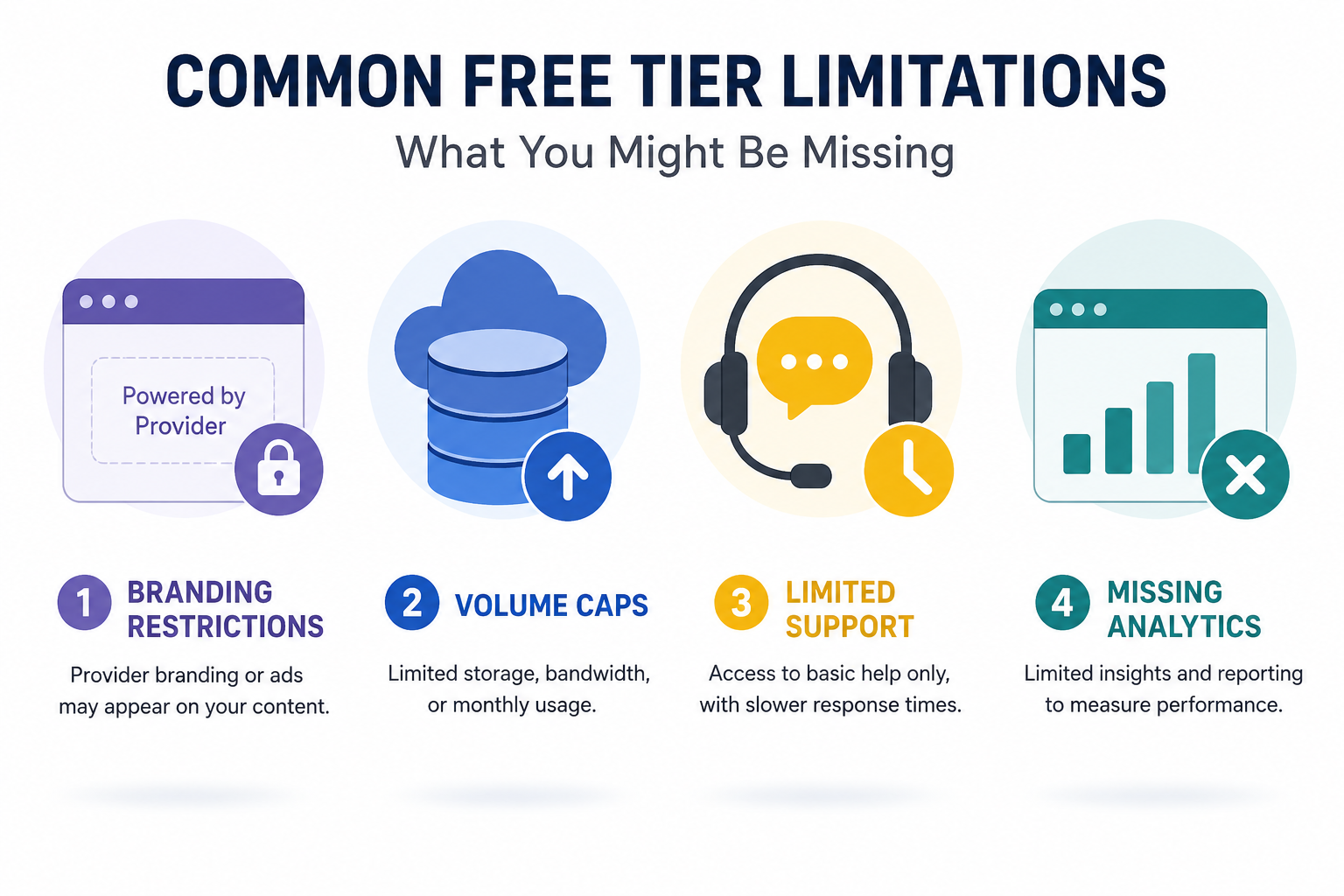
Once usage grows beyond occasional, casual use, a fairly predictable set of free virtual tour software limitations tend to surface:
Branding restrictions. Free tiers often include the platform's own branding prominently, or restrict how much you can customize a tour to reflect your own business identity — fine for a personal test, less fine for a tour representing your business to prospective customers.
Storage and volume caps. Free tiers typically cap how many tours you can host, or how long they remain accessible, which becomes a real constraint once you're producing tours regularly rather than occasionally.
Limited support. Free tiers rarely include meaningful customer support, which is fine when nothing's gone wrong, and considerably less fine when a tour breaks right before a client presentation.
Missing analytics and reporting. Free tools often provide minimal or no insight into how a tour is actually performing, which matters once you want to justify the time investment with some evidence of value.
The honest way to think about paid vs free 3D tours isn't "paid is always better" — it's "paid solves specific problems that free tools predictably create once your usage grows." If none of the limitations above apply to your current situation, a free tool may continue to serve you fine, and there's no need to pay for capability you don't need yet.
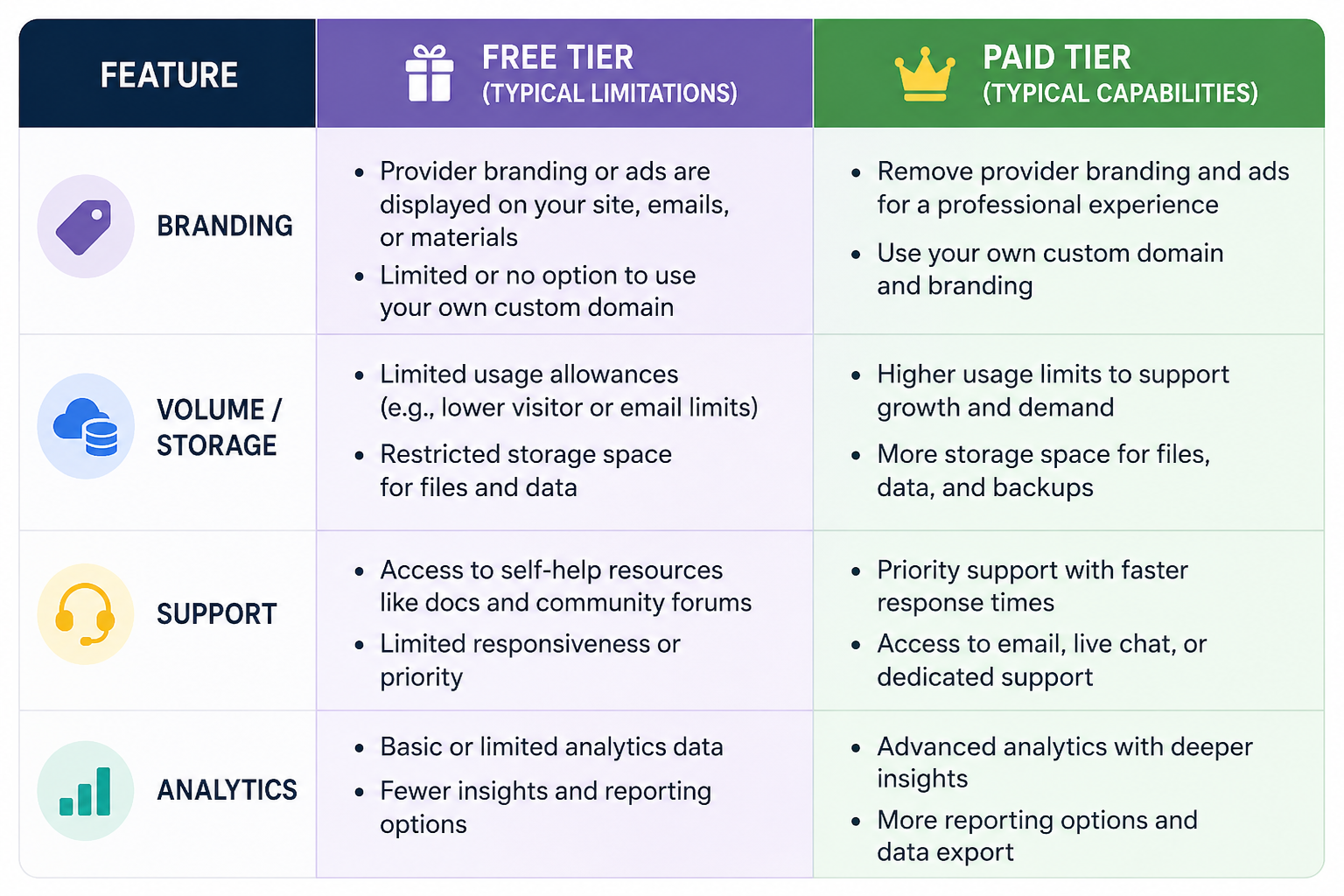
But if you've noticed yourself working around a free tool's branding restrictions, hitting a volume cap, or wishing you had basic performance data to share internally, those are concrete signals that the free-to-paid transition point has arrived for your specific business, not a generic one.
It's worth noting this isn't strictly binary. Some businesses reasonably use a free tool for occasional internal or experimental purposes while paying for a dedicated platform specifically for client-facing work — using each tool where it fits best rather than treating the decision as all-or-nothing. If your business has both a low-stakes internal use case and a higher-stakes external one, it's worth considering whether a hybrid approach actually serves you better than forcing every use case onto a single platform.
That said, running two different tools does introduce its own overhead — remembering which platform hosts which content, maintaining two separate workflows, and potentially confusing team members about where to look for a given tour. For many small businesses, the simplicity of consolidating onto a single platform, once the free-to-paid transition point has genuinely arrived, outweighs whatever savings the free tool continues to offer for the lower-stakes use case.
Framing this purely as "free vs. a monthly cost" misses part of the picture. CloudPano value — or the value of any paid platform, for that matter — comes from what the cost actually buys you: reliable hosting without a volume cap forcing awkward choices, branding that represents your business rather than the platform's, and enough analytics to actually understand whether your tours are working.
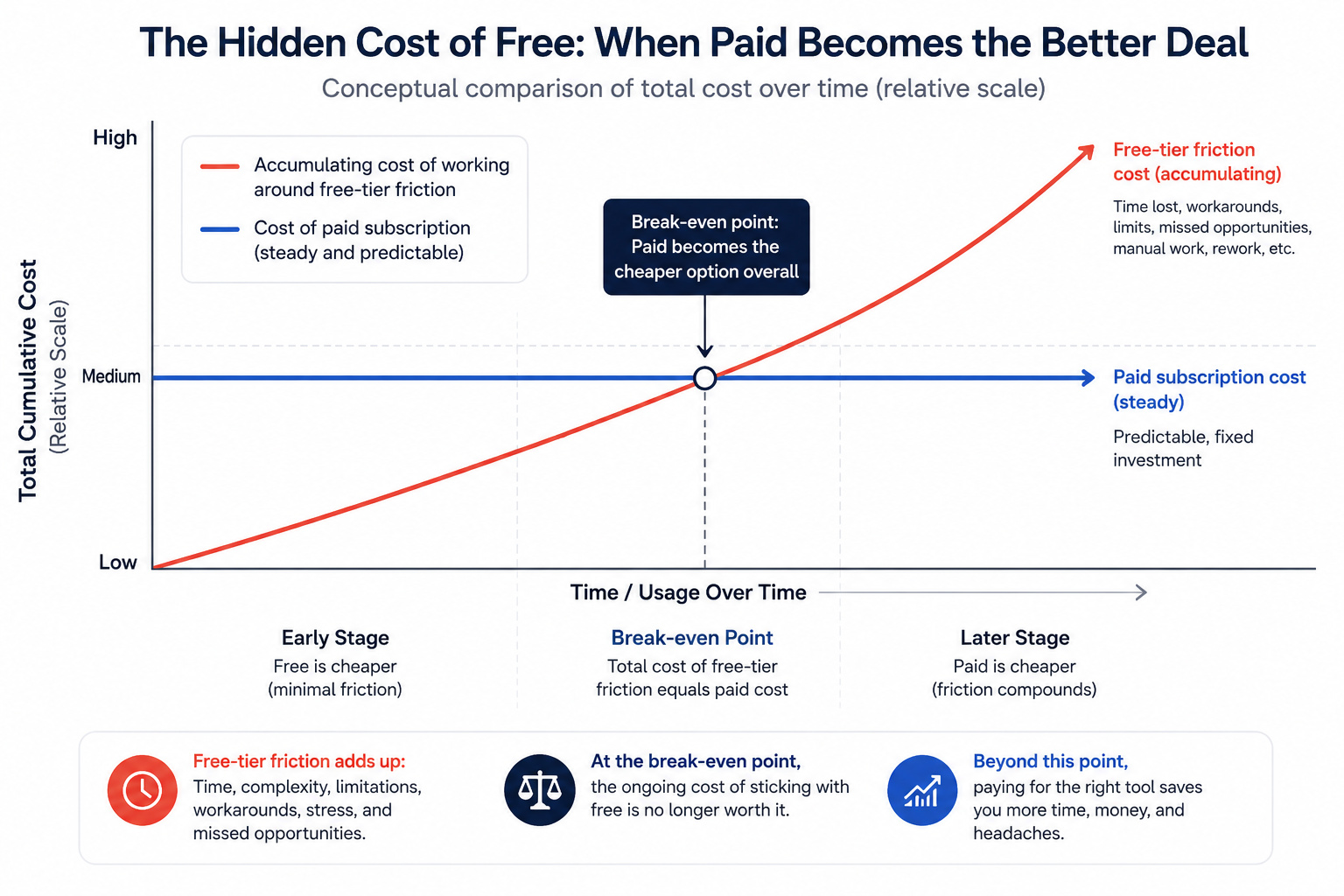
For a business at the point where free tools are creating real friction, the cost of a paid plan is often smaller than the cost of the friction itself — time spent working around a branding restriction, a client interaction affected by a broken tour with no support recourse, or simply not knowing whether the investment is paying off due to a lack of basic data.
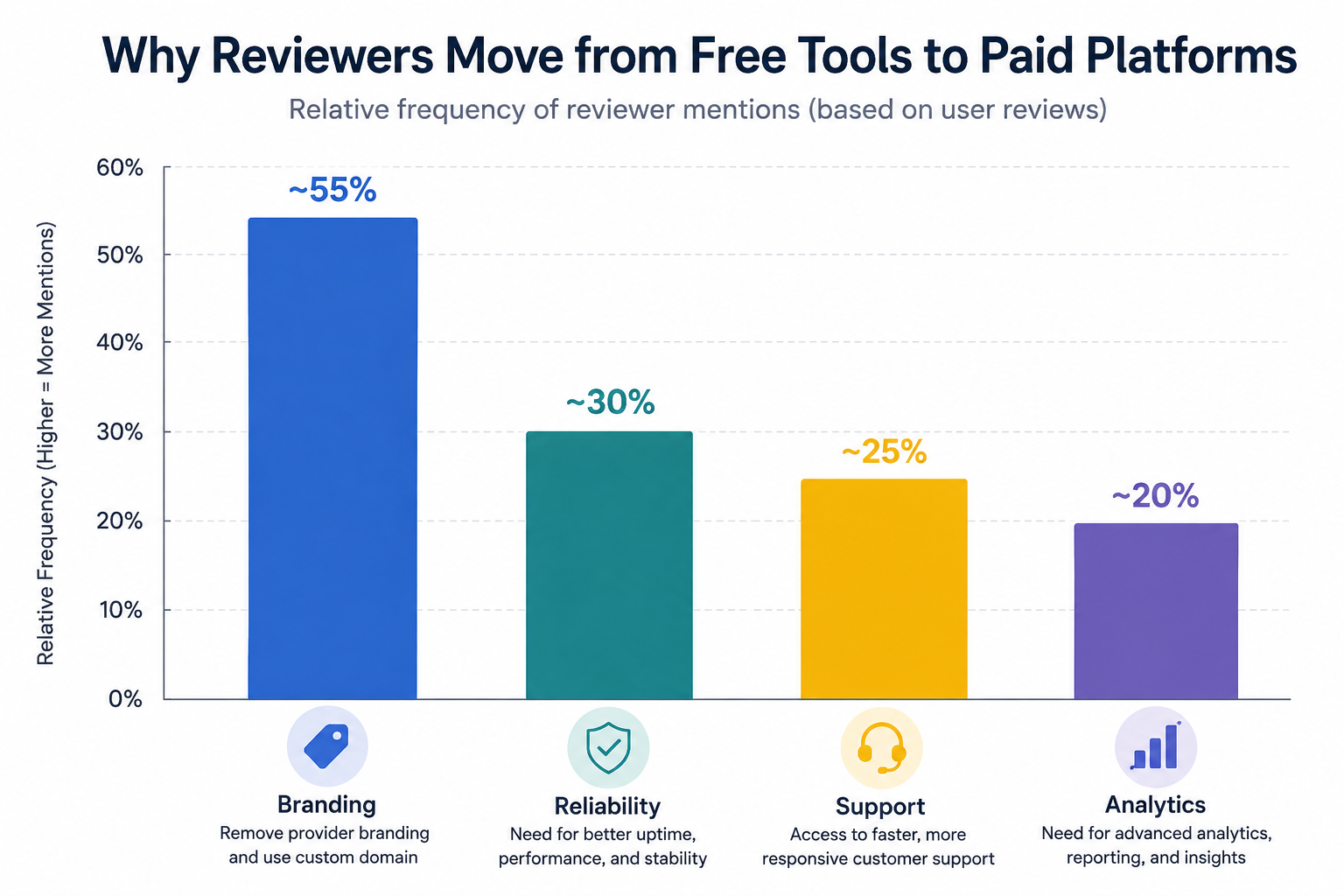
On G2's virtual tour software category page, reviewers who've moved from a free tool to a paid platform frequently cite branding and reliability as their top reasons, echoing the limitations discussed above.
Community discussions on r/smallbusiness occasionally include candid accounts of small businesses hitting a free tool's limits specifically once client-facing use became more serious, which is a useful, unfiltered version of the same pattern.
It's worth resisting the pull of any generic claim about what "most small businesses" eventually do, including the framing in this article's own title. Aggregate patterns are interesting context, but they don't determine what's right for your specific business — a business with modest, stable needs might reasonably stay on a free tool far longer than some general trend would suggest, and that's a perfectly legitimate choice if the specific limitations discussed above genuinely aren't affecting you.
The self-check later in this article is designed specifically to redirect attention away from general trends and back toward your own concrete experience, which is ultimately the only evidence that should drive your decision.
"Isn't a paid platform overkill if I only need a few tours a year?"
Not necessarily overkill, but also not necessarily worth it — this comes back to whether the specific limitations above are actually affecting you. A business producing a handful of tours a year with no branding concerns and no need for analytics may reasonably stay on a free tool indefinitely. The transition point is about your specific usage pattern, not a fixed threshold that applies to everyone.
"What if I switch to paid and don't end up using the extra capability?"
This is worth testing directly with a trial before committing to an annual plan, rather than assuming either outcome. If a trial reveals you're not actually using the paid-tier capabilities, that's useful information suggesting you may not have reached the transition point yet.
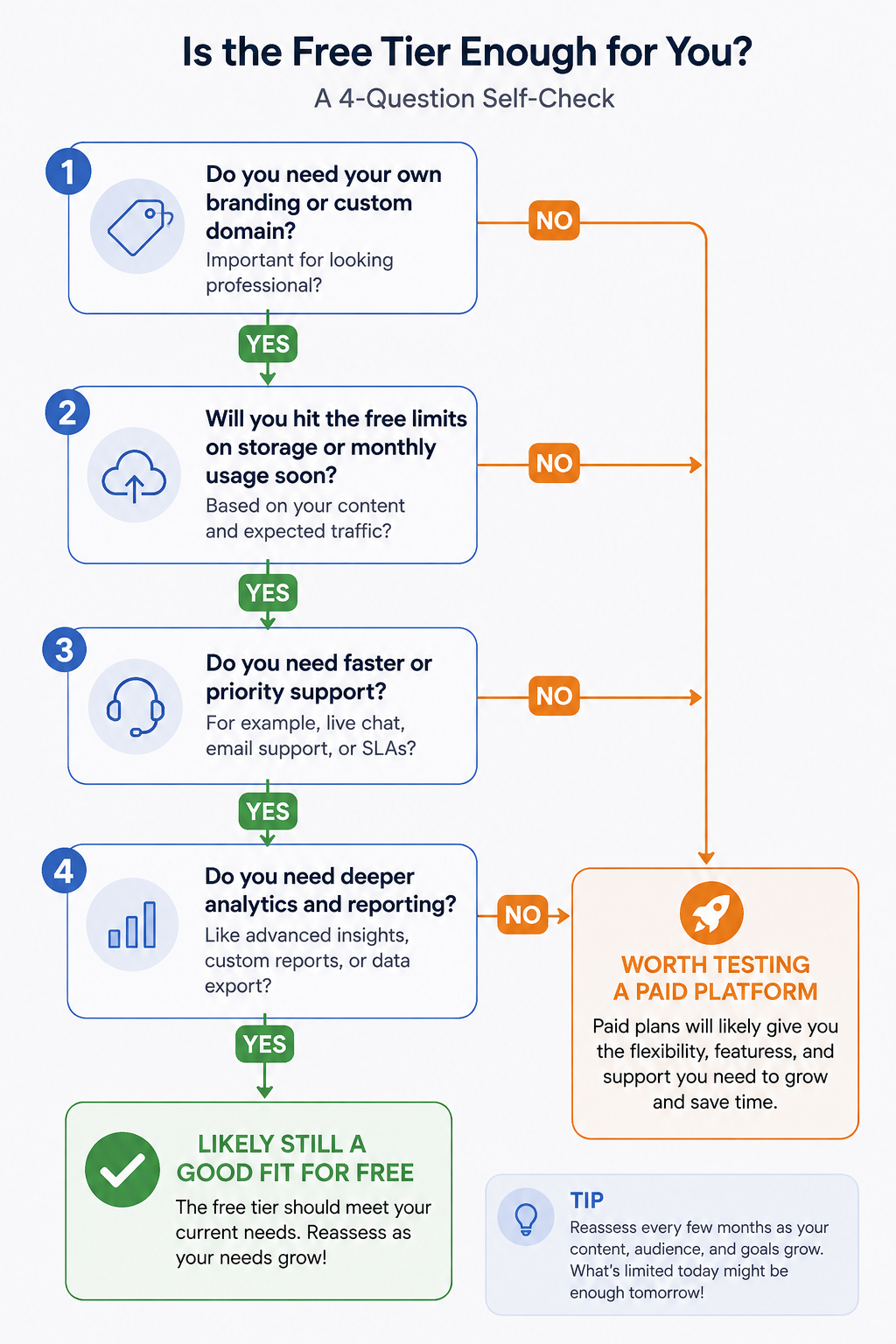
If you're trying to figure out whether you've outgrown a free tool:
Answering yes to two or more suggests it's worth testing a paid platform directly against your specific needs.
Free virtual tour tools serve a real purpose for businesses just starting to experiment, but they tend to create predictable friction once usage grows — branding restrictions, volume caps, limited support, and missing analytics. Recognizing these specific limitations in your own experience is a more useful signal than a generic "you should upgrade" message, since the right timing depends entirely on your actual usage pattern.
If the self-check above points toward having outgrown a free tool, it's worth testing CloudPano directly against your specific needs before committing to a paid plan. And if you're still comparing across a broader set of alternatives, our complete guide on choosing a Matterport alternative covers that wider landscape. Whichever direction you land on, the core question is worth revisiting periodically rather than deciding once and never checking again — a business that's genuinely fine on a free tool today may not be in a year, and the reverse is equally possible if your usage pattern changes in the other direction.


Compact, ready to go anywhere
Interchangeable lens that’s upgradeable
Dual 1-inch sensors for improved clarity and low light performance
Dynamic range and 6K 360° capture
360° photo resolution at 21MP

8K 360° video recording for ultra-detailed visuals.
4K single-lens mode for traditional wide-angle shots.
Invisible selfie stick effect for drone-like perspectives.
2.5-inch touchscreen with Gorilla Glass protection.
Waterproof up to 33ft for underwater shooting.

360° photo resolution in 23MP
Slim design at 24 mm thick
Built-in image stabilization for smooth video capture.
Internal 19GB storage for photo and video storage.
Wireless connectivity for remote control and sharing.

60MP 360° still images for high-resolution photography.
5.7K 360° video recording at 30fps.
2.25-inch touchscreen for intuitive control.
USB Type-C port for fast charging and data transfer.
MicroSD card slot for expandable storage.
.png)

.png)

Try it free. No credit card required. Instant set-up.







.svg)


.svg)