Tutorial: How to Use AI to Turn Real Estate Photos Into Videos

June 30, 2025
•
5 min read
Share this post

🎓 Tutorial: How to Use AI to Turn Real Estate Photos Into Videos

If you're in the real estate industry, there's one content format that stands above the rest in 2025—AI-generated listing videos. 🔥 From static photos to cinematic walkthroughs, AI is making it easier than ever to transform property images into scroll-stopping videos. Here’s your step-by-step tutorial! 🎬📸🤖

🤔 Why Use AI to Create Listing Videos?

  • 🏡 74% of sellers prefer agents who use video
  • 🕒 Saves hours of manual editing
  • 💵 Boosts listing engagement and conversions

Read more: Real Estate Marketing 101: Why Every Listing Needs an AI Video

📥 Step 1: Upload Property Photos

Start by heading to PhotoAIVideo.com. You’ll be prompted to upload your listing photos.

📸 Ideal: 15–25 high-quality interior and exterior shots.

👉 Learn: How to Make Real Estate Videos Using Just Photos

🎨 Step 2: Choose a Video Template

Select from a range of animated video styles:

  • Cinematic pans & zooms 🎞️
  • Text overlays (bed/bath info, location) 🏙️
  • Music or AI voice narration 🎤

Explore ideas: Top Tools for Building AI Virtual Tours Using Just Photos

🧠 Step 3: Customize Branding

You can upload your logo, select brand colors, and even use a preset intro/outro.

🎯 Tip: Make every video feel like it was handcrafted for your brand.

Build consistency: How to Build a Video Brand Identity With AI Tools

🎛️ Step 4: Add Audio

Use:

  • 🎵 Royalty-free music
  • 🗣️ AI voiceovers that sound human

Want to stand out? How to Train AI to Replicate Your Voice and Script Style for Your Real Estate Videos

⚙️ Step 5: Generate the Video

Click “Generate” and let the AI do its work. ⚡

In less than a minute, you’ll have a downloadable, high-definition real estate video.

Try it here: PhotoAIVideo.com

🚀 Step 6: Publish and Share

  • Embed on listing pages 🌐
  • Post to YouTube, Reels, TikTok 📲
  • Email to potential buyers or your CRM 📨

📊 Track results: How to Analyze AI Video Performance to Scale Smarter

🧩 Bonus: Automate the Process

Want to automate the entire photo-to-video flow?

  • Zapier + Google Drive = hands-free content
  • Auto-generate videos with each new listing

Learn more: Create SOPs to Automate Client Video Projects Using AI

✅ Final Takeaway: Simplicity Wins

AI is no longer optional. It’s the fastest, smartest, and most scalable way to create real estate marketing videos.

Start creating: AI-Powered Services: Create Virtual Tour Videos From Photos in Minutes

For more walkthroughs, comparisons, and monetization strategies, explore:

🧠📸 Ready to create your first AI video? Head to PhotoAIVideo.com and get started today!

‍

Share this post

Choose The Right 360° Camera

Insta360 ONE RS 1-Inch 360 Edition

  • Compact, ready to go anywhere

  • Interchangeable lens that’s upgradeable

  • Dual 1-inch sensors for improved clarity and low light performance

  • Dynamic range and 6K 360° capture

  • 360° photo resolution at 21MP

Learn More

Insta360 X4

  • 8K 360° video recording for ultra-detailed visuals.

  • 4K single-lens mode for traditional wide-angle shots.

  • Invisible selfie stick effect for drone-like perspectives.

  • 2.5-inch touchscreen with Gorilla Glass protection.

  • Waterproof up to 33ft for underwater shooting.

Learn More

Ricoh Theta Z1

  • 360° photo resolution in 23MP

  • Slim design at 24 mm thick

  • Built-in image stabilization for smooth video capture.

  • Internal 19GB storage for photo and video storage.

  • Wireless connectivity for remote control and sharing.

Learn More

Ricoh Theta X

  • 60MP 360° still images for high-resolution photography.

  • 5.7K 360° video recording at 30fps.

  • 2.25-inch touchscreen for intuitive control.

  • USB Type-C port for fast charging and data transfer.

  • MicroSD card slot for expandable storage.

Learn More
Property Marketing
Allows potential buyers to explore properties in detail from anywhere, enhancing the real estate marketing process.
Automotive Spins
Create an interactive virtual showroom and engage affluent digital buyers with live 360º video calls, all through the CloudPano mobile app for a complete automotive sales solution.
Interactive Floor Plans
Create 2D and 3D floor plans with measurements in 4 minutes or less, all from your phone. Download the Floor Plan Scanner app and get your first scan free.

360 Virtual Tours With CloudPano.com. Get Started Today.

Try it free. No credit card required. Instant set-up.

Try it free
Latest posts

See our other posts

Interviews, tips, guides, industry best practices, and news.

How to Add Listing Videos to a Real Estate CRM: A Step-by-Step Guide

Adding listing videos to a real estate CRM makes it easier to share property content with leads, organize marketing assets, and build personalized follow-up campaigns. Whether you're using a video link, an email thumbnail, or an automated workflow, connecting listing videos to your CRM can simplify how you market properties. This step-by-step guide explains how to organize, upload, link, and distribute real estate videos through a CRM while keeping your workflow efficient and scalable.
Read post

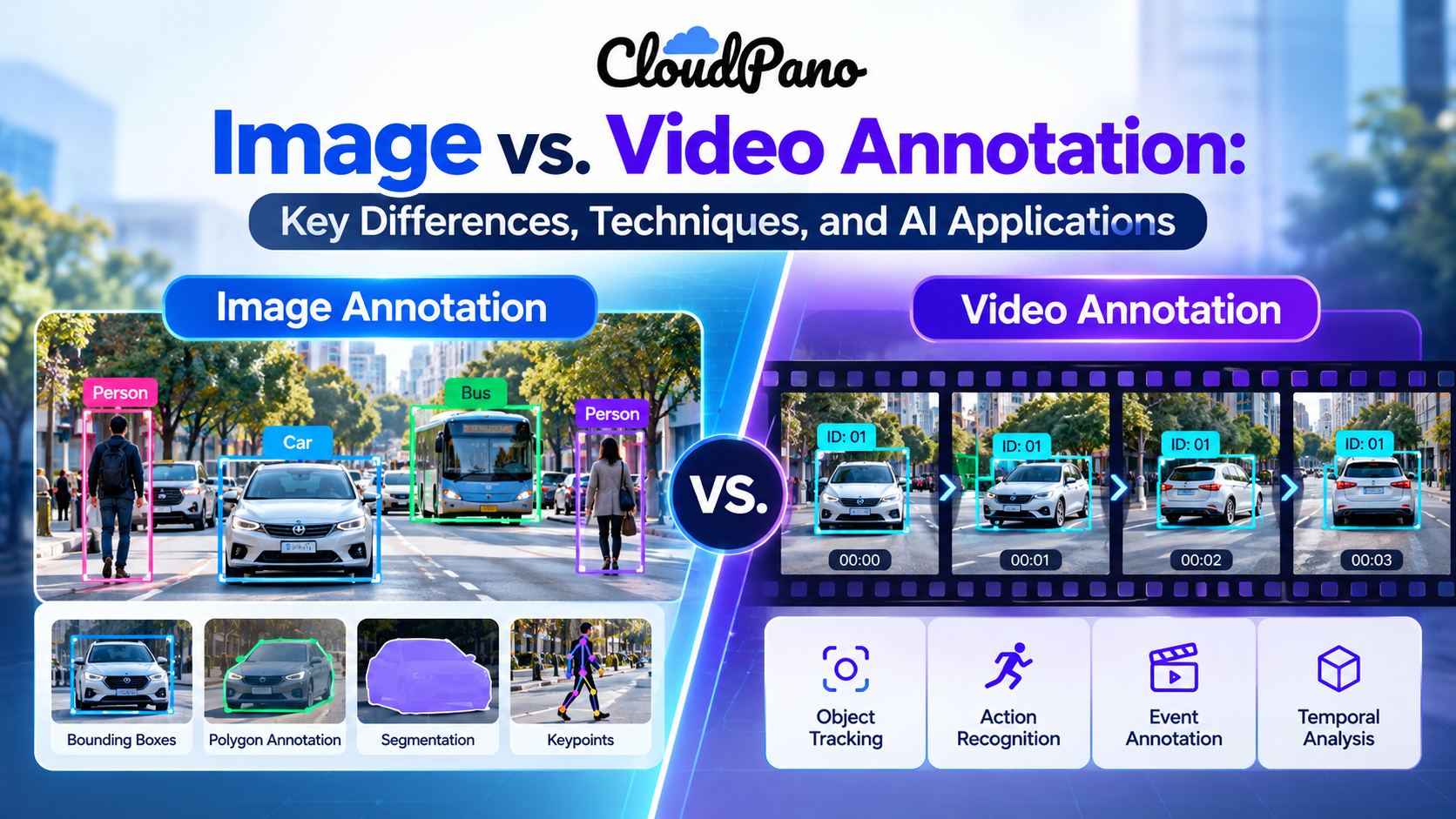
Image vs. Video Annotation: Key Differences, Techniques, and AI Applications

Image and video annotation help artificial intelligence understand visual information, but they solve different problems. Image annotation identifies objects and features within still pictures, while video annotation captures movement, timing, and object relationships across frames. This guide explores their differences, common techniques, real-world applications, and the factors that determine which approach is best for training computer vision models.
Read post

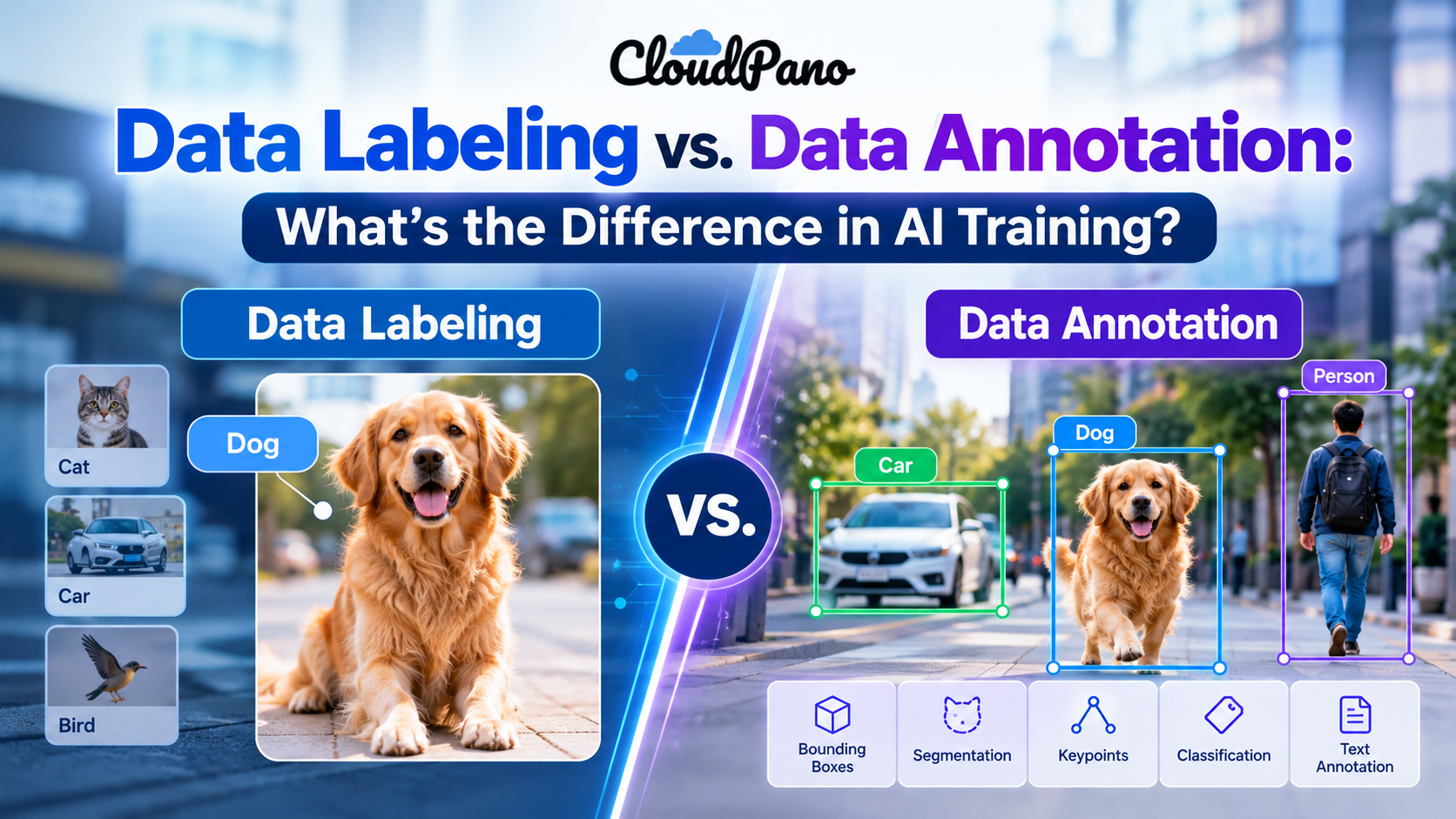
Data Labeling vs. Data Annotation: What's the Difference in AI Training?

Data labeling and data annotation are often used interchangeably in artificial intelligence, but their meanings can differ depending on the task. Labeling typically focuses on assigning categories or values to data, while annotation can include richer contextual information such as object boundaries, relationships, and timestamps. This guide explains how the two processes compare, where they overlap, and why both matter for building accurate and reliable AI training datasets.
Read post