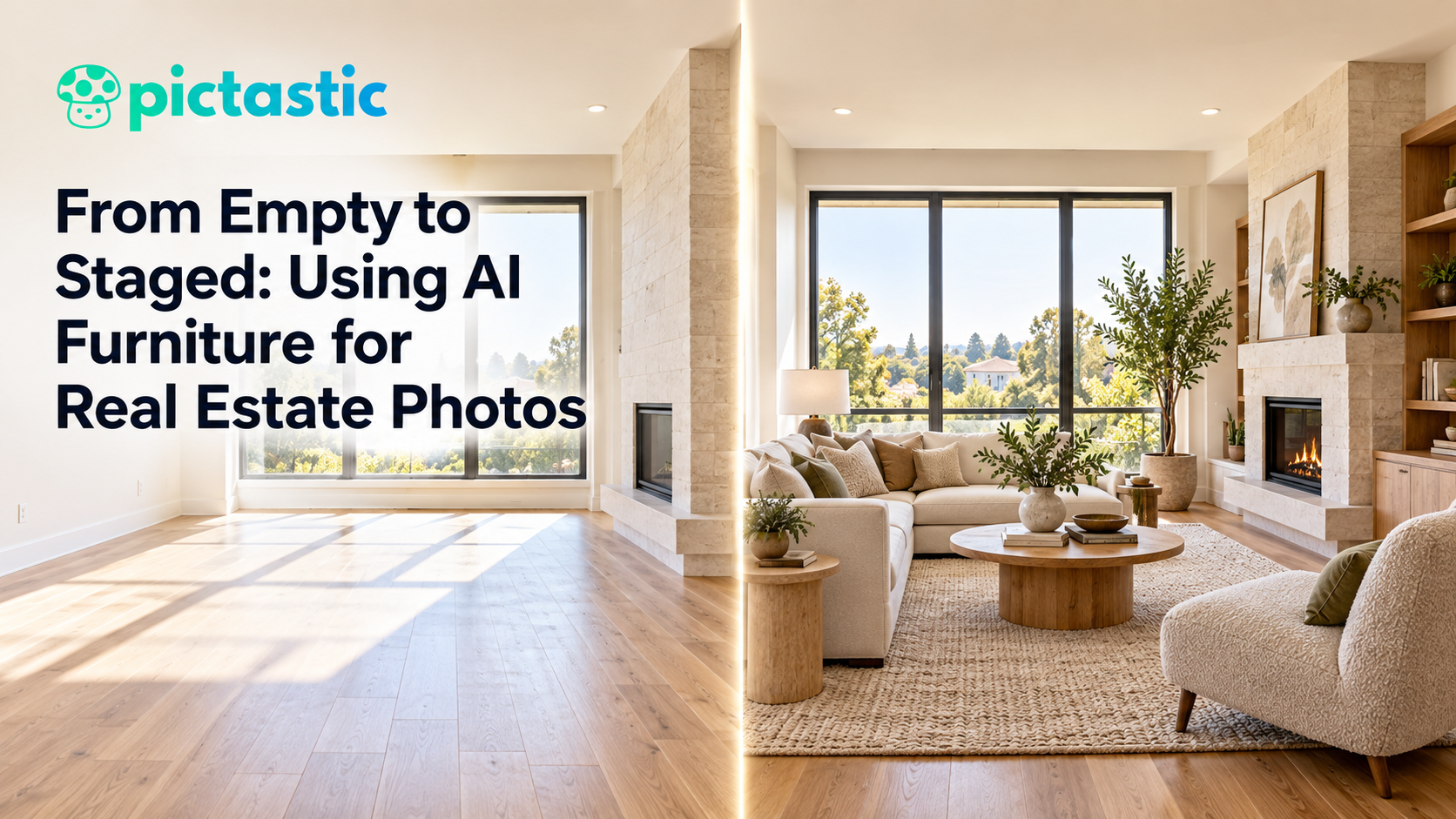
AI furniture placement uses artificial intelligence to digitally furnish empty real estate photos with realistic furniture and décor. It helps photographers and agents showcase a property's potential without physical staging while preserving the original room layout and architecture. This allows potential buyers to visualize how a vacant space could look and feel when furnished.
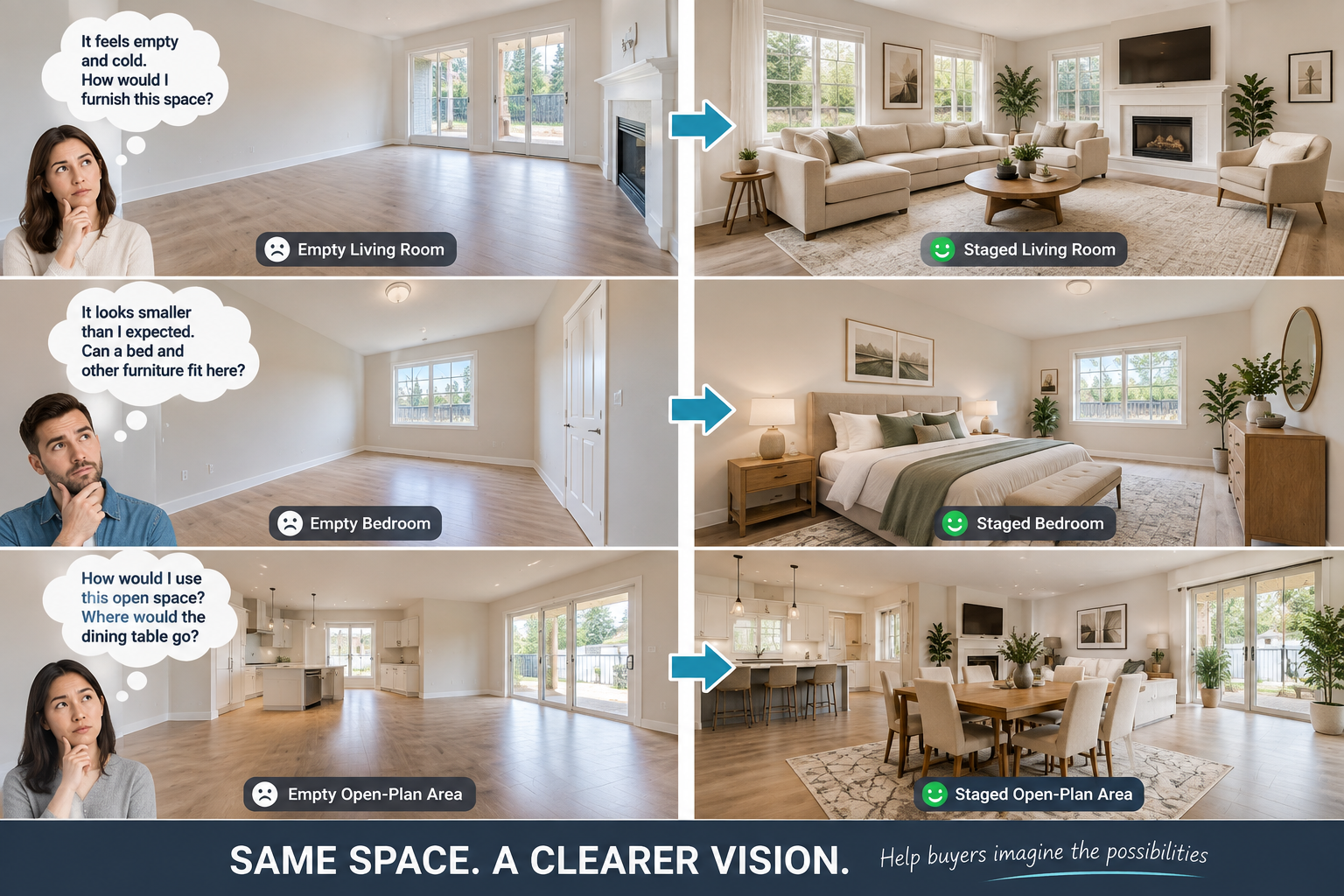
Empty rooms can make it difficult for potential buyers or renters to imagine what a property could become. Without furniture, a spacious living room may feel cold, a bedroom may appear smaller than expected, and an open-plan area may leave viewers wondering how they would actually use the space.
Traditionally, real estate professionals solved this problem with physical home staging. Furniture, rugs, artwork, lighting, and décor were brought into a property before photography. While physical staging can create impressive results, it also requires time, coordination, transportation, and a significant budget.
Artificial intelligence is introducing another option.
AI-powered virtual staging can digitally furnish empty property photos in minutes. Instead of physically moving furniture into a home, photographers and real estate professionals can use AI tools to visualize furnished interiors while keeping the property's actual architecture intact.
For professionals exploring AI furniture placement real estate solutions, the goal isn't simply to fill an empty room. Effective virtual staging should help viewers understand the space while creating attractive, realistic marketing images.
This guide explains how AI furniture placement works, where it can add value, and what real estate professionals should consider before using it.
AI furniture placement is a form of virtual staging that uses artificial intelligence to add digitally generated furniture and décor to property photographs.
A typical workflow starts with a photograph of an empty or sparsely furnished room. The user uploads the image to an AI staging platform and selects a room type or preferred interior design style.
Depending on the software, options might include:
The AI analyzes the room and generates furniture that fits within the visible space.
For example, an empty living room might be transformed with a sofa, coffee table, rug, lamps, artwork, and accent chairs. An empty bedroom could receive a bed, nightstands, lighting, and simple décor.
The result is a digitally staged photograph that provides viewers with a visual example of how the room could be furnished.
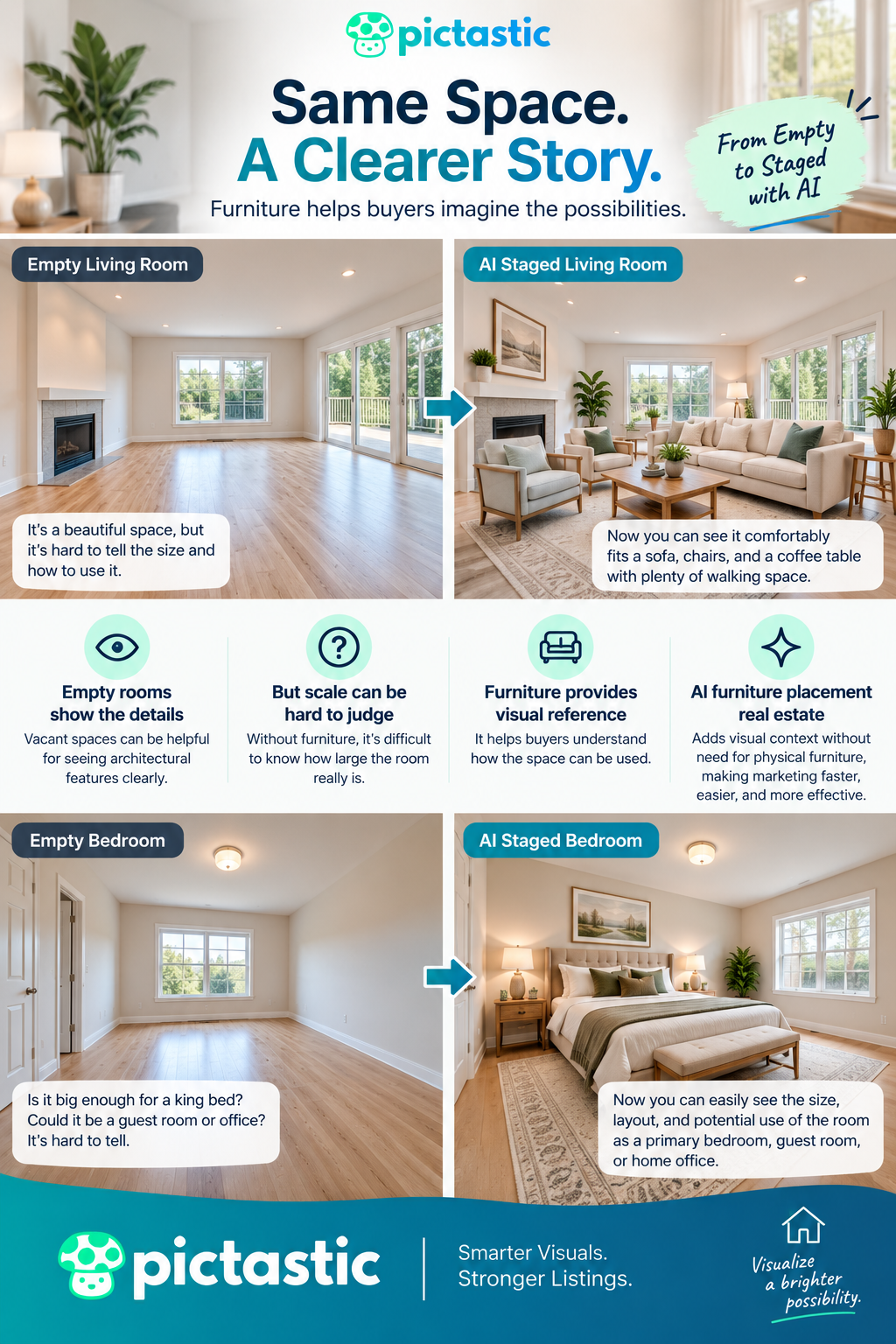
Empty rooms aren't necessarily unattractive. In fact, vacant spaces can help buyers see architectural details clearly.
The challenge is scale and context.
When someone views an empty room online, they may struggle to understand how large it really is. Without familiar objects such as sofas, beds, tables, or chairs, judging dimensions from a photograph becomes more difficult.
Furniture provides visual reference points.
A staged living room, for example, can demonstrate that the room comfortably accommodates a sofa, chairs, and coffee table while maintaining walking space. A staged bedroom can help viewers understand whether the space could function as a primary bedroom, guest room, or home office.
This is one reason AI furniture placement real estate technology can be useful in property marketing. It adds visual context without requiring physical furniture to be installed before the photography session.
While every platform is slightly different, the basic process is usually straightforward.
The original photograph plays an important role in the final result.
Images should ideally be well-lit, properly exposed, and photographed from an angle that clearly communicates the room's layout.
AI can add furniture, but it cannot always compensate for poor photography.
Professional composition, straight vertical lines, balanced exposure, and appropriate camera height remain important.
Many AI staging platforms ask users to identify the type of room being staged.
For example, you might select:
Living room → Modern
or:
Bedroom → Scandinavian
Providing this information helps the system generate furniture appropriate for the space.
Different properties call for different visual styles.
A modern downtown apartment may benefit from clean contemporary furniture, while a suburban family home might look more natural with transitional or farmhouse-inspired décor.
The objective should be to complement the property rather than overwhelm it.
The AI analyzes visible walls, floors, windows, doors, and open areas before generating furniture.
Modern tools can often recognize room perspective and attempt to position furniture accordingly.
Instead of manually creating every sofa, chair, shadow, and reflection, users can generate an initial staging concept automatically.
Generation should never be the final step.
Every staged image should be inspected before publication.
Look carefully at furniture edges, shadows, reflections, windows, doors, flooring, and architectural details.
If something looks unrealistic or if the AI accidentally modifies part of the room, generate another version or make corrections before using the photograph.
Traditional staging involves multiple logistical steps.
Furniture may need to be selected, transported, arranged, photographed, and eventually removed.
Virtual staging eliminates much of this process.
A photographer can capture an empty property and create staged versions afterward, making it especially useful when turnaround time matters.
Physical staging can involve furniture rental, transportation, installation, storage, and professional staging services.
AI staging doesn't completely replace the value of physical staging, especially for in-person showings, but it can provide an affordable alternative for listing photography.
This can be particularly useful for vacant properties or listings where full physical staging isn't practical.
One advantage of digital staging is flexibility.
The same room can potentially be visualized in several styles without moving a single piece of furniture.
A living room could be shown with contemporary furniture and then regenerated with a warmer transitional design.
This allows real estate marketers to experiment before deciding which visual presentation works best for the listing.
Furniture helps communicate how a space might function.
An awkward corner could become a reading area. A spare room could be presented as a home office. A large open-plan area could be visually divided into dining and living zones.
This can make property photographs easier for viewers to interpret.
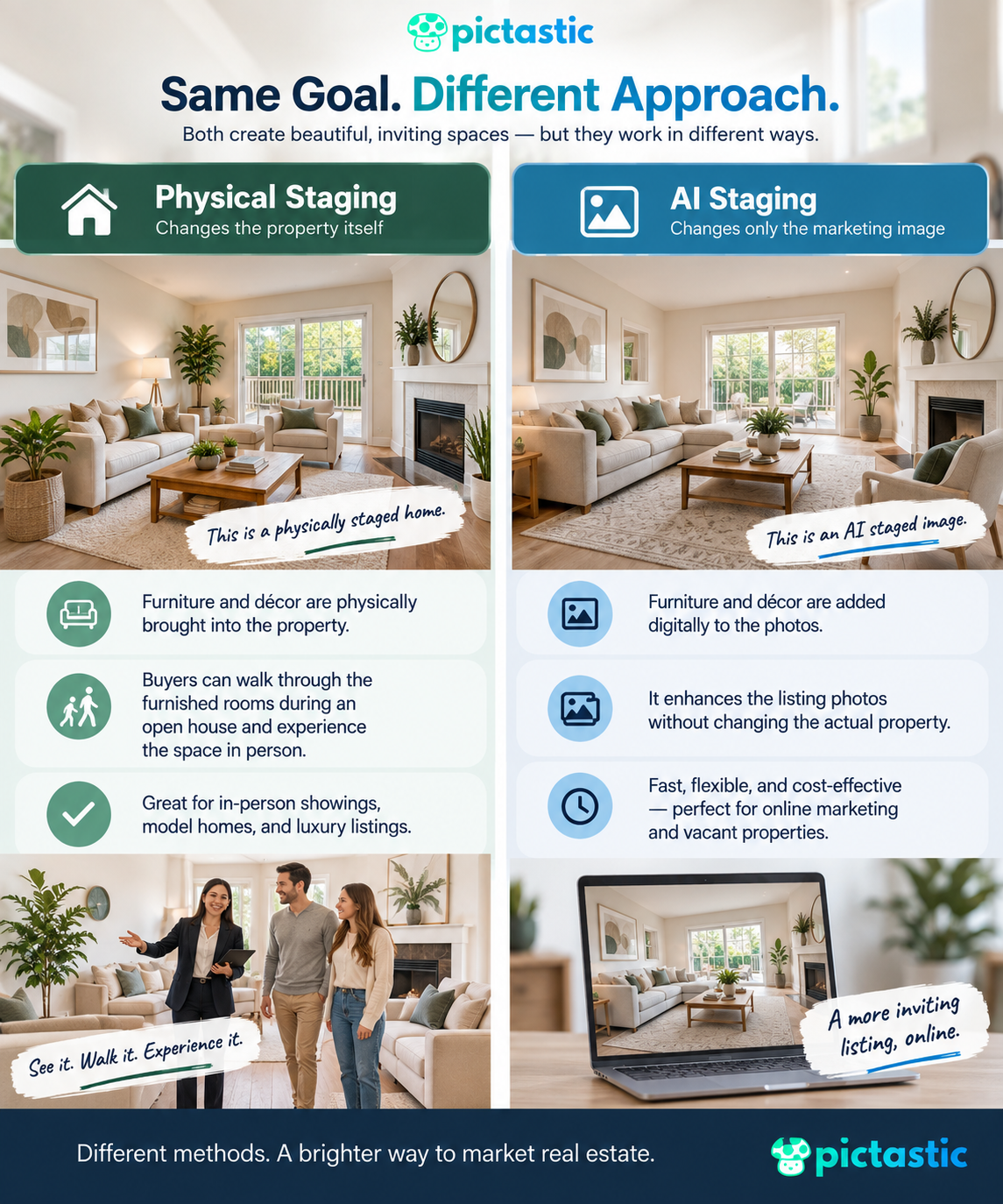
AI staging and physical staging serve similar visual goals, but they aren't identical.
Physical staging changes the property itself. Buyers attending an open house can walk through the furnished rooms and experience the staged environment in person.
AI staging changes only the marketing image.
That distinction matters.
Virtual staging is especially useful when the primary objective is improving online presentation. Traditional staging may offer more value when the in-person viewing experience is equally important.
In some situations, professionals may use both approaches.
For example, major rooms might be physically staged while secondary vacant rooms are virtually staged for online marketing.
Real estate photographers are increasingly expected to provide more than basic photography.
Agents may need listing photos, floor plans, virtual tours, social media assets, video, image enhancement, and virtual staging.
Adding AI furniture placement real estate services can expand the photographer's post-production workflow without requiring them to become an interior designer.
A photographer might offer virtual staging as an optional service for:
The original photographs should generally remain available so clients can distinguish between the actual property and the digitally staged interpretation.
AI can accelerate virtual staging, but quality control remains essential.
One of the most important rules is to preserve the actual property.
AI-generated staging should not accidentally remove doors, enlarge windows, change flooring, redesign ceilings, move walls, or alter permanent architectural features.
Furniture visualization and property modification are very different things.
If the goal is virtual staging, the original structure should remain unchanged.
More furniture doesn't automatically produce a better image.
Overcrowded rooms can appear smaller and less inviting.
Good staging typically leaves natural pathways and enough visual space around furniture.
A digitally generated sectional sofa that appears unusually small can make the room seem artificially large.
Likewise, oversized furniture may make a reasonably spacious room look cramped.
Review proportions carefully.
Look closely at the finished image.
AI-generated furniture can occasionally contain distorted legs, strange shadows, unusual reflections, or objects that merge unnaturally with surrounding surfaces.
These details may be easy to miss at thumbnail size but obvious when someone opens the full-resolution photograph.
Virtual staging should help people imagine realistic possibilities.
Placing a huge dining table in an area that couldn't actually accommodate one can create misleading expectations.
Aim for believable furniture placement rather than simply creating the most dramatic image possible.
Walls, doors, windows, flooring, ceiling details, cabinetry, fireplaces, built-ins, and other permanent features should remain consistent with the original photograph.
This protects the integrity of the property's visual representation.
Choose furniture that feels appropriate for the home's architecture, price point, and likely use.
A compact apartment may benefit from streamlined furniture, while a large luxury property may visually support larger statement pieces.
Furniture placement should make practical sense.
Doors should remain accessible, pathways should remain open, and furniture shouldn't block important architectural features.
If multiple rooms are virtually staged, visual consistency helps the listing feel cohesive.
Moving from ultra-modern furniture in one room to rustic farmhouse furniture in the next can make the presentation feel disconnected.
Choose a general design direction and carry it throughout the property.
Transparency is an important part of responsible real estate marketing.
Because virtual staging adds objects that weren't physically present when the photograph was taken, viewers should be able to understand that the image has been digitally modified.
Depending on local regulations, MLS requirements, brokerage policies, and advertising standards, disclosure requirements can vary.
Real estate professionals should check the rules that apply to their market and platform.
Even where specific wording isn't mandated, clearly identifying virtually staged images can help prevent confusion between the property's actual condition and a visualization of its potential.
One common misconception about AI is that it eliminates the need for professional photography.
In practice, the original image still determines much of the final result.
AI works best when it starts with a strong photograph.
Lighting, composition, perspective, exposure, camera position, and image resolution all influence whether virtual furniture looks convincing.
The photographer's judgment also remains essential.
Someone still needs to decide which images should be staged, which design style fits the property, whether furniture placement makes sense, and whether the final image accurately represents the space.
AI simply makes part of that creative workflow faster.
Virtual staging technology continues to become faster and easier to use.
Future workflows may offer greater control over individual furniture pieces, more consistent staging across multiple rooms, improved perspective detection, and better preservation of architectural details.
AI may also become increasingly connected with other real estate marketing tools.
A single property photography workflow could eventually combine image enhancement, object removal, virtual staging, floor plans, virtual tours, listing videos, and social media content.
For photographers and agents, this means the value of AI may extend beyond generating attractive images. It can help streamline the overall process of preparing a property for digital marketing.
Turning an empty property photo into an inviting staged image no longer requires physically furnishing every room.
With AI furniture placement real estate technology, photographers, agents, property managers, and real estate marketers can quickly create visualizations that help viewers understand how vacant spaces might look when furnished.
However, successful virtual staging requires more than clicking a generate button.
The strongest results begin with quality photography, preserve the property's actual architecture, use realistic furniture proportions, maintain consistent design choices, and undergo careful human review before publication.
AI should enhance the presentation of the space rather than create an unrealistic version of it.
Used thoughtfully, AI furniture placement can become a practical addition to the modern real estate marketing workflow—helping transform empty rooms into welcoming visual possibilities while making property photos more informative and engaging.
AI furniture placement uses artificial intelligence to digitally add furniture and décor to property photos. It helps real estate agents and photographers transform empty rooms into realistic, furnished spaces without physical staging. This allows potential buyers to visualize how a property could look and function.
Upload a photo of an empty room to an AI virtual staging platform, select the room type and preferred design style, and generate a furnished image. The AI digitally adds furniture and décor based on the room's layout. Review the final image to ensure realistic proportions and accurate architectural details.
Yes, AI virtual staging is generally more affordable because it eliminates furniture rental, transportation, and installation costs. It also allows real estate professionals to create multiple design options without physically furnishing a property. However, traditional staging remains useful for in-person property showings.
AI staging tools may occasionally alter architectural details or generate furniture that does not fit the actual space. To maintain accuracy, always preserve the original walls, windows, doors, flooring, and permanent fixtures. Review the staged image carefully and correct any unrealistic changes before publishing it.
Disclosure requirements vary depending on local regulations, MLS rules, and brokerage policies. Real estate agents should clearly label virtually staged images so buyers understand that the furniture and décor were digitally added. Keeping the original property photos available also helps maintain transparency and prevents misleading representations.


Compact, ready to go anywhere
Interchangeable lens that’s upgradeable
Dual 1-inch sensors for improved clarity and low light performance
Dynamic range and 6K 360° capture
360° photo resolution at 21MP

8K 360° video recording for ultra-detailed visuals.
4K single-lens mode for traditional wide-angle shots.
Invisible selfie stick effect for drone-like perspectives.
2.5-inch touchscreen with Gorilla Glass protection.
Waterproof up to 33ft for underwater shooting.

360° photo resolution in 23MP
Slim design at 24 mm thick
Built-in image stabilization for smooth video capture.
Internal 19GB storage for photo and video storage.
Wireless connectivity for remote control and sharing.

60MP 360° still images for high-resolution photography.
5.7K 360° video recording at 30fps.
2.25-inch touchscreen for intuitive control.
USB Type-C port for fast charging and data transfer.
MicroSD card slot for expandable storage.


Try it free. No credit card required. Instant set-up.