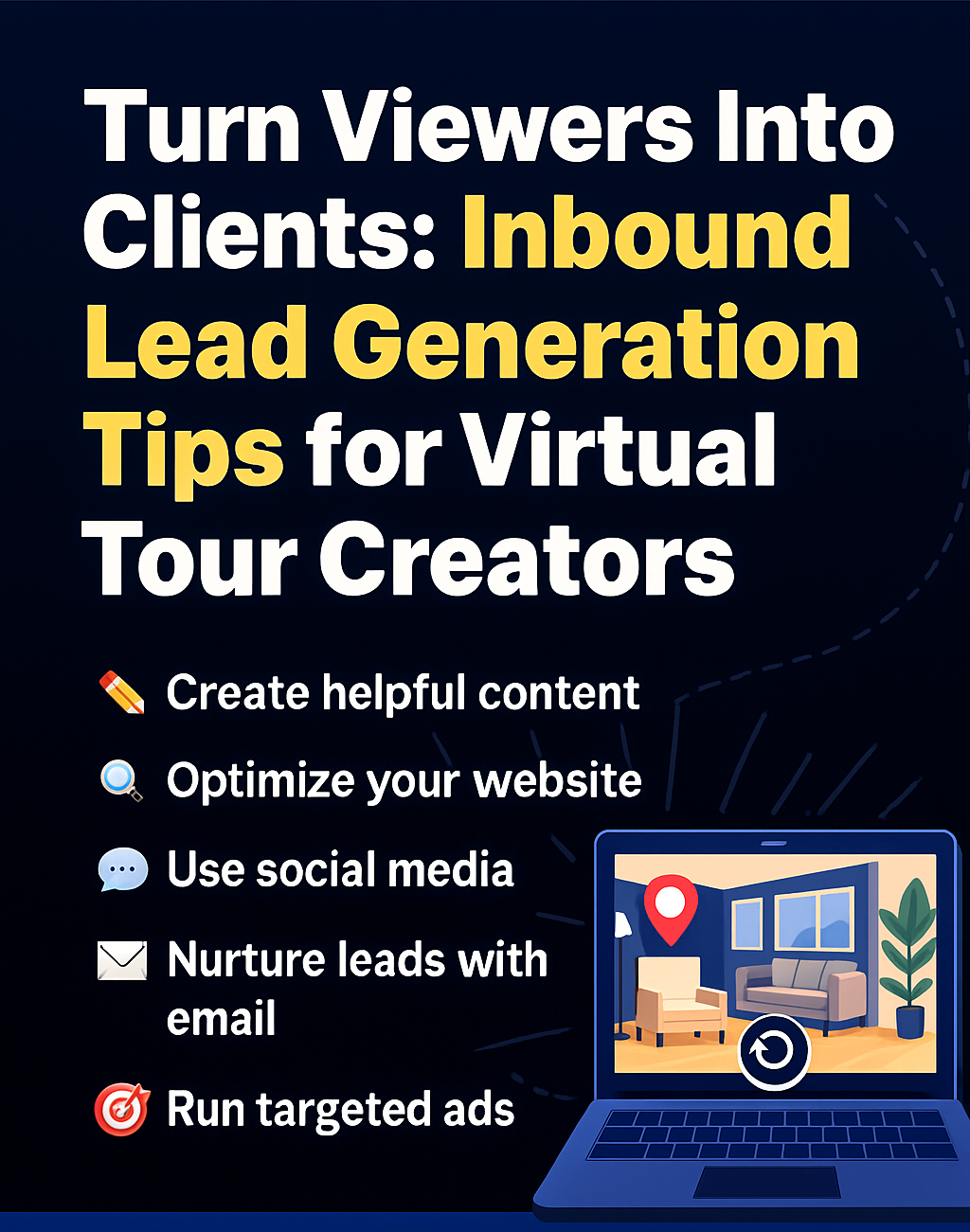
Turn Viewers Into Clients: Inbound Lead Generation Tips for Virtual Tour Creators

Cloudpano
December 12, 2025
5 min read
Share this post

Turn Viewers Into Clients: Inbound Lead Generation Tips for Virtual Tour Creators 🎥✨

Virtual tours have transformed the way real estate agents, businesses, and schools showcase their spaces. With immersive, 360° experiences, prospects can explore properties, campuses, or retail locations from the comfort of their devices. But here’s the big question:

👉 How do you turn those virtual tour viewers into paying clients?

The answer lies in inbound lead generation—a marketing approach that attracts, engages, and converts potential customers by offering them real value first. Instead of cold calls or pushy tactics, inbound marketing builds trust and encourages clients to seek you out. A real estate video app makes it easy for agents to turn listing photos into high-quality videos that boost MLS visibility.

This comprehensive guide will show virtual tour creators how to implement inbound strategies to generate a steady flow of leads and grow their business and beyond. With virtual staging for real estate, agents can showcase empty spaces as fully furnished, ready-to-move homes.

Watch Here: 

Why Inbound Marketing Matters for Virtual Tour Businesses 📈

As a virtual tour creator, your service is already cutting-edge. But competition is rising. Realtors, universities, hospitality companies, and event venues are increasingly seeking professionals who can deliver high-quality immersive experiences.

Inbound marketing helps you:

  • Build authority in your niche with valuable content.
  • Showcase your skills by using your own tours as marketing assets.
  • Generate trust through education and transparency.
  • Attract ready-to-buy clients who already see your value.

With the right inbound system, every viewer of your tours could become a lead, subscriber, or paying client.

Step 1: Define Your Ideal Clients 🎯

You can’t generate quality leads without knowing who you want to attract. For virtual tour creators, your clients might include:

  • Real estate agents & brokers – needing tours to boost listing visibility.
  • Property managers – showcasing rental units or commercial spaces.
  • Universities & schools – highlighting campuses for student recruitment.
  • Hotels & resorts – promoting facilities for travelers.
  • Event venues – allowing couples and planners to explore spaces virtually.

👉 Create buyer personas. Example:

  • “Sarah, a Realtor in her 40s, wants fast turnaround, professional tours, and tools that help her listings stand out online.”

By writing content and offers tailored to these personas, you’ll attract leads that fit your business.

Read: How to Create AI Real Estate Videos, Pre-Sell Clients, and Scale Your Business

Step 2: Optimize Your Website for Lead Capture 🌐

Your website is your digital storefront. Don’t just showcase your tours—make it a conversion machine.

Key elements:

  • Portfolio showcase: Feature your best virtual tours on the homepage.
  • Lead capture forms: Add forms to request quotes, book demos, or download guides.
  • Clear CTAs: Buttons like “Book a Virtual Tour Demo” or “Get a Free Consultation.”
  • Mobile-friendly design: Ensure smooth navigation on phones and tablets.
  • SEO-friendly content: Target phrases like “virtual tour creator for real estate in [your city].”

💡 Pro Tip: Use pop-ups or slide-ins offering a free resource in exchange for email sign-ups.

Step 3: Create Valuable Content to Attract Leads ✍️

Inbound marketing thrives on content that educates and inspires.

Blog Ideas 📝

  • “How Virtual Tours Help Homes Sell 30% Faster”
  • “5 Ways Virtual Tours Attract More Students to Universities”
  • “Why Hotels Need Virtual Tours ”

Each blog post should include keywords relevant to your niche and link to your services page.

Video Content 🎥

Record walkthroughs, behind-the-scenes looks at your process, or client testimonials. Upload on YouTube, LinkedIn, and Instagram.

Lead Magnets 📥

Offer free downloadable resources like:

  • “The Realtor’s Guide to Virtual Tour Marketing”
  • “Campus Recruitment with Virtual Tours: A Step-by-Step Checklist.”

These guides position you as the expert and collect emails for follow-ups.

Read: How to Use AI Automation Mode to Create Real Estate Videos in Minutes (2025 Guide)

Step 4: Master Local SEO 📍

Most of your clients will be local. To dominate your area:

  • Optimize your Google Business Profile with photos, service descriptions, and reviews.
  • Add local keywords: “virtual tour creator in Miami” or “best real estate 360 tours in Dallas.”
  • List your services on local directories like Yelp and industry-specific platforms.
  • Collect client reviews—nothing builds trust faster than social proof.

Step 5: Leverage Social Media to Showcase Your Work 📲

Virtual tours are visually stunning—perfect for social media.

  • Instagram & TikTok: Post short clips of your tours with trending music.
  • LinkedIn: Publish case studies or thought-leadership articles for B2B clients.
  • Facebook: Join local real estate or community groups and share your services.
  • YouTube: Create playlists of your best tours and tutorials.

💡 Always link posts back to your website or lead capture form.

Step 6: Use Email Marketing to Nurture Leads 📧

Once someone downloads your guide or requests a demo, email marketing helps you turn them into clients.

Example sequence:

  1. Welcome email – Thank them and share your top tour examples.
  2. Educational email – “5 Ways Realtors Use Virtual Tours to Win More Listings.”
  3. Case study email – Showcase a client success story.
  4. Offer email – Invite them to book a demo or request pricing.

Email automation tools like Mailchimp, ConvertKit, or GoHighLevel can make this simple.

Step 7: Retarget with Paid Ads 🎯

Sometimes viewers don’t convert right away. Retarget them with ads on Google, Facebook, or Instagram.

Example:

  • Someone visits your pricing page → see ads saying, “Book Your Free Virtual Tour Demo Today.”
  • Realtors watching your tour video on Instagram → get retargeted with “360° Tours Help Agents Sell Homes Faster.”

Paid ads amplify your inbound funnel and keep your brand top of mind.

Step 8: Track and Optimize 📊

Measure what’s working so you can do more of it:

  • Website: Track form submissions, downloads, and inquiries.
  • Email: Monitor open and click-through rates.
  • Social media: See which platforms bring leads.
  • Ads: Measure cost per lead.

Double down on high-performing strategies and refine the rest.

Case Study: Turning Viewers into Clients 🏡

Imagine you specialize in real estate tours:

  1. A Realtor sees your blog post “How Virtual Tours Sell Homes Faster.”
  2. They download your free guide, “10 Tips for Realtors Using Virtual Tours.”
  3. You send them a series of helpful emails, including a case study where a client sold a property in 7 days with your tour.
  4. You retarget them on Facebook with a “Book a Free Demo” ad.
  5. They schedule a call and become your client.

This is inbound marketing in action: attract → engage → convert.

Long-Term Benefits of Inbound for Virtual Tour Creators 🌟

  • Steady leads without cold-calling.
  • Higher authority in your niche.
  • Better client retention through education and nurturing.
  • Scalability as your content and funnels keep working 24/7.

Inbound is not about short-term wins—it’s about building a marketing machine that grows with your business.

Final Thoughts 💡

As a virtual tour creator, you already have one of the most compelling visual products in the digital age. By pairing that with inbound lead generation strategies, you’ll transform your tours from simple visual tools into client-generating engines.

Start small—launch a blog, create a free guide, or optimize your Google profile. Then expand into social media, email funnels, and retargeting ads.

The future of your business doesn’t rely on chasing clients. It lies in creating valuable inbound systems that bring clients to you.

🚀 Turn viewers into clients, and watch your virtual tour business thrive.

Your all-in-one virtual experience solution starts here.

Share this post
Cloudpano

Choose The Right 360° Camera

Insta360 ONE RS 1-Inch 360 Edition

  • Compact, ready to go anywhere

  • Interchangeable lens that’s upgradeable

  • Dual 1-inch sensors for improved clarity and low light performance

  • Dynamic range and 6K 360° capture

  • 360° photo resolution at 21MP

Learn More

Insta360 X4

  • 8K 360° video recording for ultra-detailed visuals.

  • 4K single-lens mode for traditional wide-angle shots.

  • Invisible selfie stick effect for drone-like perspectives.

  • 2.5-inch touchscreen with Gorilla Glass protection.

  • Waterproof up to 33ft for underwater shooting.

Learn More

Ricoh Theta Z1

  • 360° photo resolution in 23MP

  • Slim design at 24 mm thick

  • Built-in image stabilization for smooth video capture.

  • Internal 19GB storage for photo and video storage.

  • Wireless connectivity for remote control and sharing.

Learn More

Ricoh Theta X

  • 60MP 360° still images for high-resolution photography.

  • 5.7K 360° video recording at 30fps.

  • 2.25-inch touchscreen for intuitive control.

  • USB Type-C port for fast charging and data transfer.

  • MicroSD card slot for expandable storage.

Learn More
Property Marketing
Allows potential buyers to explore properties in detail from anywhere, enhancing the real estate marketing process.
Automotive Spins
Create an interactive virtual showroom and engage affluent digital buyers with live 360º video calls, all through the CloudPano mobile app for a complete automotive sales solution.
Interactive Floor Plans
Create 2D and 3D floor plans with measurements in 4 minutes or less, all from your phone. Download the Floor Plan Scanner app and get your first scan free.

360 Virtual Tours With CloudPano.com. Get Started Today.

Try it free. No credit card required. Instant set-up.
Try it free
Latest posts

See our other posts

Interviews, tips, guides, industry best practices, and news.

Mastering Compliance: The Future of Automated Property Video

This article provides a definitive guide for real estate professionals on navigating strict MLS branding regulations through AI-driven automation. It addresses the risks of compliance violations, details the limitations of manual editing workflows, and introduces a scalable, "compliance-first" system for generating high-quality, MLS-approved property videos. The post serves as a strategic blueprint for agents aiming to maintain listing visibility, avoid regulatory penalties, and streamline their marketing operations.
Read post

Future-Proofing Your Business with MLS Safe AI Video for Listings

This high-authority guide focuses on long-term operational stability and the strategic advantages of leveraging artificial intelligence to bypass the industry-wide friction between high-impact marketing and regulatory compliance. Key Takeaways & Content Structure: The Reputation-Risk Factor: Explains the high cost of compliance errors, focusing on how a single technical oversight—such as a misplaced logo or branded watermark—can trigger a systemic board audit, leading to immediate listing suspension and lasting reputational damage with sellers. The Production Disconnect: Breaks down the "two-version" operational tax, where marketing teams suffer from repetitive rendering, file-management bloat, and the persistent danger of human error when manually managing branded vs. unbranded media assets. AI as a Compliance Engine: Defines how advanced AI media platforms move beyond mere aesthetics to function as regulatory safeguards. It illustrates the technical architecture where the AI engine isolates branding data from structural property data at the rendering level, effectively "forking" the output into two distinct, safe-to-use tracks. Operational Blueprint: Maps out a transparent, 6-step automation funnel that takes a listing from flat photograph ingestion to syndicate-ready, neutral-hosted media in minutes. Strategic Scalability: Demonstrates why centralizing production into a single SaaS platform is the only way for growing brokerages to maintain consistency, remove contractor-level liability, and recover significant administrative time. The PhotoAIVideo.com Edge: Concludes by positioning the platform as a purpose-built solution that combines high-definition parallax AI motion with an automated "compliance-first" export workflow, ensuring Realtors can generate professional, engaging video content that passes even the most stringent board audits on the first attempt.
Read post

Streamlining Your Workflow with a Specialized MLS Compliant Real Estate Media App

This article functions as a tactical operations guide for real estate marketers and brokerage leaders focused on reducing technical friction and human error in their media publishing pipeline. Key Takeaways & Content Structure: The "Stop-Work" Order: Addresses the high-stakes reality of MLS compliance flags, where automated rules block properties from IDX feeds due to accidental branding, causing immediate listing velocity loss. The Fragmented Workflow Problem: Identifies the "manual bottleneck"—the inefficiency of having field photographers deliver single assets that then require internal staff to manually strip, re-render, and verify separate branded and unbranded versions. Architecture of Dual-Path Rendering: Illustrates the technological shift toward programmatic asset management. It explains how a modern app processes a single source file into two isolated rendering tracks: a lead-gen-heavy marketing track and a strictly compliant, unbranded track for MLS syndication. Operational Workflow Mapping: Provides a clear, 6-step blueprint for moving from raw photography ingestion to compliant deployment, including automated motion application, metadata scrubbing, and neutral link hosting. Risk Mitigation for Brokerages: Highlights how centralized management dashboards eliminate the "wild west" of agent-led media creation, providing brokers with a single-pane-of-glass view to ensure compliance across all active listings. The PhotoAIVideo.com Advantage: Positions the platform as the ideal MLS compliant real estate media app that leverages AI to inject cinematic motion into flat listing photos, effectively automating the entire compliance-forking process and increasing overall production capacity by up to 94%.
Read post