Revolutionizing Real Estate: The Rise of Virtual Tour Software

March 13, 2025
5 min read
Share this post
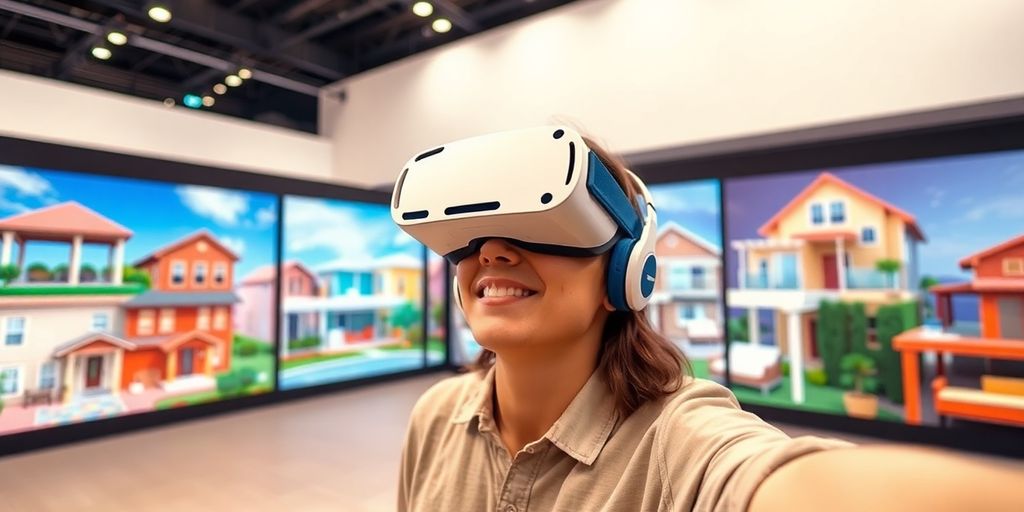
User exploring real estate with virtual reality headset.

The real estate industry is undergoing a significant transformation with the increasing adoption of virtual tour software. This technology has become essential for realtors and property managers, allowing them to showcase properties effectively while accommodating the changing needs of clients in a post-pandemic world.

Key Takeaways

  • Virtual tours enhance property visibility and accessibility.
  • They cater to the evolving preferences of tech-savvy clients.
  • The technology is proving beneficial for both real estate agents and buyers.
  • Virtual tours can streamline the leasing process and improve client engagement.

The Shift Towards Virtual Tours

The COVID-19 pandemic accelerated the adoption of virtual tour technology in real estate. With physical showings restricted, many real estate firms turned to virtual solutions to maintain business continuity. This shift has not only helped agents stay connected with clients but has also opened new avenues for showcasing properties.

Benefits of Virtual Tour Software

  1. Increased Accessibility: Virtual tours allow potential buyers to view properties at their convenience, breaking geographical barriers and enabling remote viewings.
  2. Enhanced Engagement: Interactive tours provide a more immersive experience, allowing clients to explore properties in detail without the need for physical presence.
  3. Time Efficiency: Agents can conduct multiple virtual tours in a day, significantly increasing their productivity and reducing the time properties spend on the market.
  4. Cost-Effective Marketing: Virtual tours can serve as powerful marketing tools, reducing the need for extensive in-person showings and associated costs.

How Virtual Tours Are Changing Real Estate

Real estate professionals are leveraging various virtual tour technologies to enhance their services:

  • 3D Walkthroughs: Tools like Matterport allow agents to create detailed 3D models of properties, providing an interactive experience for potential buyers.
  • Video Tours: Live video tours enable realtors to guide clients through properties in real-time, answering questions and providing insights as they explore.
  • Self-Guided Tours: Clients can navigate through properties at their own pace, making it easier for them to assess their options without feeling rushed.

Adapting to Client Needs

As consumer preferences evolve, real estate agents are adapting their strategies to meet the demands of a more virtual clientele. Clients now expect faster responses and more flexible viewing options. By utilizing virtual tour software, agents can cater to these expectations, providing a seamless experience that aligns with modern lifestyles.

The Future of Real Estate Tours

The future of real estate is undoubtedly leaning towards virtual solutions. As technology continues to advance, we can expect even more innovative features in virtual tour software, such as:

  • Augmented Reality (AR): Integrating AR can enhance the viewing experience by allowing clients to visualize changes or renovations in real-time.
  • AI Integration: Artificial intelligence can personalize the tour experience, suggesting properties based on user preferences and behavior.
  • Data Analytics: Advanced analytics can provide insights into client engagement, helping agents refine their marketing strategies.

In conclusion, the rise of virtual tour software is revolutionizing the real estate industry, making property viewing more accessible and efficient. As technology continues to evolve, it will play an increasingly vital role in shaping how real estate transactions are conducted, ultimately benefiting both agents and clients alike.

Sources

Share this post

Choose The Right 360° Camera

Insta360 ONE RS 1-Inch 360 Edition

  • Compact, ready to go anywhere

  • Interchangeable lens that’s upgradeable

  • Dual 1-inch sensors for improved clarity and low light performance

  • Dynamic range and 6K 360° capture

  • 360° photo resolution at 21MP

Learn More

Insta360 X4

  • 8K 360° video recording for ultra-detailed visuals.

  • 4K single-lens mode for traditional wide-angle shots.

  • Invisible selfie stick effect for drone-like perspectives.

  • 2.5-inch touchscreen with Gorilla Glass protection.

  • Waterproof up to 33ft for underwater shooting.

Learn More

Ricoh Theta Z1

  • 360° photo resolution in 23MP

  • Slim design at 24 mm thick

  • Built-in image stabilization for smooth video capture.

  • Internal 19GB storage for photo and video storage.

  • Wireless connectivity for remote control and sharing.

Learn More

Ricoh Theta X

  • 60MP 360° still images for high-resolution photography.

  • 5.7K 360° video recording at 30fps.

  • 2.25-inch touchscreen for intuitive control.

  • USB Type-C port for fast charging and data transfer.

  • MicroSD card slot for expandable storage.

Learn More
Property Marketing
Allows potential buyers to explore properties in detail from anywhere, enhancing the real estate marketing process.
Automotive Spins
Create an interactive virtual showroom and engage affluent digital buyers with live 360º video calls, all through the CloudPano mobile app for a complete automotive sales solution.
Interactive Floor Plans
Create 2D and 3D floor plans with measurements in 4 minutes or less, all from your phone. Download the Floor Plan Scanner app and get your first scan free.

360 Virtual Tours With CloudPano.com. Get Started Today.

Try it free. No credit card required. Instant set-up.

Try it free
Latest posts

See our other posts

Interviews, tips, guides, industry best practices, and news.

How Auto Backgrounding Software Helps Dealerships Improve Inventory Listings

Takes an operational/technical angle — the hook is inconsistent vehicle photos across syndicated marketplaces (Cars.com, Autotrader, CarGurus) caused by staff turnover and inconsistent capture setups, not lack of effort. Frames AI backgrounding software as a "consistency at scale" fix rather than an artistic upgrade, uses a manual-setup-vs-software comparison table, and covers multi-location dealer groups and marketplace syndication specifically before closing with the reseller CTA.
Read post

Why Dealerships Need Better Vehicle Photos, Spins, and AI Videos

Summary: Makes the buyer-side business case for why dealership vehicle photos matter — shoppers scroll past weak, inconsistent listings before ever calling — then diagnoses why photo quality stays mediocre internally (no one owns the process) and positions CloudPano's automotive tools as the fix. Uses a trial-batch-first sales workflow, a static-vs-AI-enhanced comparison, five use cases (including multi-location dealer groups and RV/powersport dealers), and a reseller-program CTA.
Read post

How to Sell AI Automotive Photo Tools to Car Dealerships

Here's a short summary you could use for a content calendar, internal review, or social share: Summary: This article reframes the automotive dealership pitch from "I take photos" to "I can cut your days-on-lot" — showing resellers how to sell CloudPano's AI vehicle photo and 360-spin tools as a recurring-revenue software play instead of one-off photography gigs. It covers a step-by-step sales process, a services-vs-software-plus-services comparison table, five practical use cases (independent lots, consultants, photographers, salespeople, agencies), common pitching mistakes, and a reseller-link-driven CTA to the CloudPano Reseller Program.
Read post