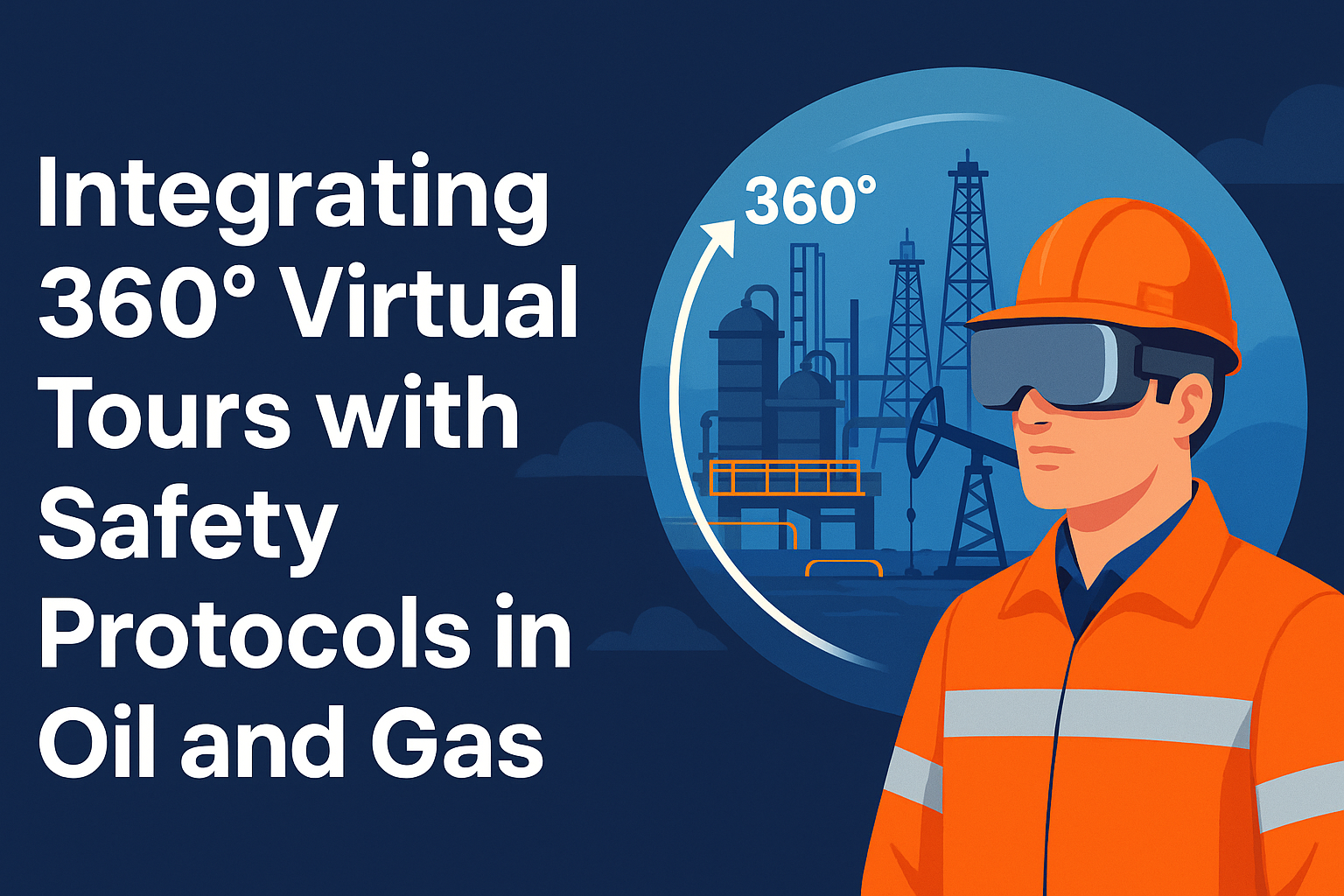
Integrating 360 Virtual Tours with Safety Protocols in Oil and Gas

Cloudpano
July 21, 2025
5 min read
Share this post

🛡️ Integrating 360 Virtual Tours with Safety Protocols in Oil and Gas

In the oil and gas industry, safety isn't optional — it's mission-critical. But with growing field complexity and high-risk environments, traditional safety training methods are no longer enough. That’s where 360 virtual tours come in. 🔄🛢️

When integrated with your site-specific safety protocols, virtual tours don’t just train workers — they prepare them to think, react, and act safely before they ever step foot on-site. ⚙️🚨

In this post, we’ll break down how to integrate 360° tours with real safety protocols, boost compliance, and reduce incident rates — all while linking you to deeper reads like Virtual Safety Walkthroughs: A Game Changer in Oil and Gas Training and Digital Twins and Safety: Virtual Tour Integration in Oil and Gas Training.

📍 Why 360° Virtual Tours for Safety?

Imagine new hires being able to:

  • Walk through a refinery 🚶‍♂️
  • See lockout/tagout stations 🔐
  • Click hotspots that explain confined space rules 🚷
  • Practice evacuation routes and drills before arriving 🚨

All of this without disrupting operations or taking field mentors offline. 🧠

🔗 Related: Step Into Safety: Virtual Tours for Oil and Gas Industry Training

🧩 Step-by-Step: How to Align 360 Tours with Your Safety Procedures

🎯 1. Identify Critical Safety Protocols

Start by gathering your:

  • Site-specific safety policies 📄
  • Hazard Communication (HazCom) standards ☣️
  • Emergency Action Plans 🧯
  • PPE requirements and placement zones 👷‍♀️

Your virtual tour should mirror these documents, reinforcing compliance in real-world visuals.

🔗 Deep dive: Top Benefits of Virtual Tours for Safety of Oil and Gas Workers

🎥 2. Capture High-Risk Zones in 360

Use a 360 camera (like Insta360 or Ricoh Theta Z1) to shoot:

  • Flammable storage areas
  • H2S risk zones
  • Confined spaces
  • High-voltage rooms
  • Escape routes

Overlay interactive elements like:

  • ✅ Checklists
  • 📹 Training videos
  • ⚠️ Hazard labels
  • 📍 Interactive SOPs

🔗 Learn more: How 3D Virtual Tours Improve Hazard Awareness in Oil and Gas Sites

🧠 3. Embed Training Modules Inside the Tour

Transform your tour into a full training experience:

  • Add pop-ups with safety do’s and don’ts ❌✅
  • Embed short quiz questions at key checkpoints 🧠
  • Include links to OSHA or internal documentation 📎

Example: When a user clicks on a confined entry hatch, a module plays about air testing and harness requirements.

🔗 Suggested read: Virtual Tours for Oil and Gas Safety Training: What You Need to Know

📲 4. Deploy Through Your LMS or Training Portal

Share your completed virtual tour via:

  • Learning Management Systems (LMS)
  • Pre-shift safety huddles
  • New hire onboarding
  • Contractor orientations
  • Mobile QR codes on signage

🔗 Read: Train Your Oil and Gas Workforce Remotely with Interactive Virtual Tours

📊 5. Track Engagement and Completion

Most platforms (like CloudPano.com) let you:

  • Monitor which modules are viewed
  • See who passed quizzes
  • Generate reports for compliance records
  • Capture timestamps of completion

📈 This allows you to prove training occurred and refine weak areas before they become accidents.

🔄 Syncing with Field-Based Safety Procedures

Pair your virtual tour with daily toolbox talks and written SOPs to reinforce learning.

Example:

  • Tour Module: "How to Exit During an H2S Leak"
  • Field Talk: "Today’s drill will cover our muster point process for H2S alerts."

Together, they create a multi-touch learning system that reinforces safety through repetition and realism. ✅🔄

🔗 Explore: Oilfield Training Reimagined: Safety Simulations Through Virtual Tours

💡 Case Study: Refinery Cuts Near Misses by 40%

A Gulf Coast refinery integrated a virtual safety tour into its contractor orientation program. Results after 60 days:

  • 🔽 40% drop in near misses
  • 📉 25% reduction in onboarding time
  • ✅ 100% training completion compliance

They credited this to the clarity and repeatability of their virtual walkthroughs — which aligned 1:1 with their SOPs.

🔗 See also: From Classroom to Field: Virtual Tours for Realistic Oil and Gas Training

🚧 Where to Integrate Virtual Tours in Your Safety Program

🔹 Before site access: Replace printed handbooks with immersive walkthroughs
🔹 During onboarding: Standardize safety orientation across sites
🔹 Before high-risk projects: Let teams review project-specific hazard zones
🔹 For compliance refreshers: Use annually as part of continuing education

🧠 Bonus: Combine With Digital Twins

Want even more realism?

Merge your virtual tour with a digital twin — a real-time, sensor-fed model of your site. This enables:

  • 📡 Live hazard zone indicators
  • 🌡️ Real-time environment metrics (temp, gas levels)
  • 📍 Safety alerts layered over site visuals

🔗 Learn more: Digital Twins and Safety: Virtual Tour Integration in Oil and Gas Training

✅ Final Safety Tour Checklist

Before rolling out your tour, double-check:

✅ Includes all site-specific SOPs
✅ Hazard zones clearly marked
✅ Emergency exits and muster points shown
✅ Training quizzes embedded
✅ Reporting and analytics enabled

🚀 Let’s Build a Safer Workforce — Together

Integrating your oil and gas safety protocols with virtual tours isn’t just about upgrading tech — it’s about saving lives, reducing costs, and building a culture of readiness. 🛡️🧑‍🏭

Whether you're onboarding a new hire or retraining veteran field staff, virtual tours give them the tools to stay alert, prepared, and safe.

Share this post
Cloudpano

Choose The Right 360° Camera

Insta360 ONE RS 1-Inch 360 Edition

  • Compact, ready to go anywhere

  • Interchangeable lens that’s upgradeable

  • Dual 1-inch sensors for improved clarity and low light performance

  • Dynamic range and 6K 360° capture

  • 360° photo resolution at 21MP

Learn More

Insta360 X4

  • 8K 360° video recording for ultra-detailed visuals.

  • 4K single-lens mode for traditional wide-angle shots.

  • Invisible selfie stick effect for drone-like perspectives.

  • 2.5-inch touchscreen with Gorilla Glass protection.

  • Waterproof up to 33ft for underwater shooting.

Learn More

Ricoh Theta Z1

  • 360° photo resolution in 23MP

  • Slim design at 24 mm thick

  • Built-in image stabilization for smooth video capture.

  • Internal 19GB storage for photo and video storage.

  • Wireless connectivity for remote control and sharing.

Learn More

Ricoh Theta X

  • 60MP 360° still images for high-resolution photography.

  • 5.7K 360° video recording at 30fps.

  • 2.25-inch touchscreen for intuitive control.

  • USB Type-C port for fast charging and data transfer.

  • MicroSD card slot for expandable storage.

Learn More
Property Marketing
Allows potential buyers to explore properties in detail from anywhere, enhancing the real estate marketing process.
Automotive Spins
Create an interactive virtual showroom and engage affluent digital buyers with live 360º video calls, all through the CloudPano mobile app for a complete automotive sales solution.
Interactive Floor Plans
Create 2D and 3D floor plans with measurements in 4 minutes or less, all from your phone. Download the Floor Plan Scanner app and get your first scan free.

360 Virtual Tours With CloudPano.com. Get Started Today.

Try it free. No credit card required. Instant set-up.
Try it free
Latest posts

See our other posts

Interviews, tips, guides, industry best practices, and news.

Using Your AI Voice Clone Across Listing Videos and Social Media

AI voice cloning is quickly becoming a powerful tool for real estate professionals who want to scale their marketing while maintaining a personal brand. By creating a digital version of their voice, agents can generate narrated listing videos, virtual tours, and social media content without needing to record new audio every time. This approach allows agents to produce consistent, engaging video content across multiple platforms while saving significant time. This article explains how AI voice clone marketing works and how agents can use it to create professional property walkthroughs, listing videos, and social media clips. By combining AI-generated motion videos with voice narration, real estate professionals can transform simple property photos into dynamic presentations that feel personal and informative. The guide also explores how real estate AI avatar branding helps agents maintain a recognizable voice across their marketing channels. When the same voice appears in listing videos, social media posts, and virtual tours, it creates a cohesive brand identity that builds trust with buyers. Finally, the article highlights how AI voice social media real estate strategies allow agents to produce content faster and reach larger audiences. With AI voice cloning technology, real estate professionals can generate multiple videos from a single listing, maintain consistent branding, and create high-quality marketing content at scale.
Read post

How to Record the Perfect Voice Sample for AI Voice Cloning

Recording a high-quality voice sample is the most important step when training an AI voice clone. In real estate marketing, voice cloning allows agents to create automated listing videos, AI avatar walkthroughs, and narrated virtual tours that sound exactly like them. However, the quality of the final AI voice depends heavily on how the original recording is captured. This article explains how to record voice samples for AI voice cloning, including the ideal recording environment, microphone recommendations, and best speaking practices. Readers learn how AI voice models analyze tone, pacing, and pronunciation to replicate a natural voice. By following simple voice sample recording tips, agents can dramatically improve the quality of their AI-generated narration. The guide also explores how AI voice clone training works and how voice samples can be used to produce scalable real estate marketing content. Once a voice model is created, agents can generate property walkthroughs, social media videos, and virtual tour narration without needing to record new audio for every listing. Ultimately, this technology enables real estate professionals to create consistent, engaging content while saving time. With the right voice recording process, agents can build a realistic AI voice clone that powers modern marketing tools and helps deliver property presentations at scale.
Read post

Best AI Voice Cloning Tools for Real Estate Marketing

AI voice cloning technology is rapidly transforming the way real estate professionals create marketing content. Instead of recording new narration for every listing, agents can now use advanced AI voice cloning tools to generate natural-sounding property walkthroughs, AI avatar videos, and voice-guided virtual tours. These tools allow real estate agents to maintain their personal voice and branding while dramatically speeding up the video production process. This article explores the best AI voice cloning tools for real estate marketing and explains how these technologies work. By combining AI avatars, voice cloning, and automated video generation, agents can turn simple property photos into dynamic marketing videos. After uploading listing images and recording a short voice memo, the AI can generate a professional video presentation with synchronized narration that sounds just like the agent. The guide also highlights how AI voice software for real estate can enhance listing videos, social media marketing, and interactive virtual tours. With voice narration, buyers can experience a guided property walkthrough that explains key features, layouts, and amenities, making listings more engaging and informative. Finally, the article explains how these real estate AI marketing tools help agents scale their marketing efforts by producing consistent, high-quality content quickly. As voice cloning technology continues to improve, it is becoming an essential tool for real estate professionals who want to create modern, engaging property presentations and stay competitive in the digital real estate market.
Read post