A Dealer’s Guide to Choosing the Best Car Dealership Social Media Automation Software

Cloudpano
April 25, 2026
•
5 min read
Share this post

A Dealer’s Guide to Choosing the Best Car Dealership Social Media Automation Software

The software graveyard is full of "revolutionary" tools that dealerships bought, paid for, and abandoned within six months. Usually, the failure isn't because the software didn't work—it’s because it didn't fit the specific, chaotic workflow of a high-volume car lot.

Choosing the right car dealership social media automation software isn't about finding the most features; it’s about finding the tool that bridges the gap between your Inventory Management System (IMS) and a buyer’s smartphone. If the software requires a full-time employee to manage it, you haven't automated anything—you’ve just changed the task list.

1. The "Integration-First" Rule

The most expensive mistake a dealer can make is buying a standalone social media tool that doesn't "talk" to the inventory. If you have to manually upload vehicle photos to your automation tool, the system is already broken.

True automation should be invisible. It should detect when a vehicle hits your DMS, check for photos, and automatically trigger the automated dealership content creation process. Look for a "Direct Sync" capability that updates your ads and posts the moment a car is marked as "Sold."

Technical Compatibility Matrix

Use this framework to evaluate if a software candidate meets the enterprise standard.

Software Evaluation Tier List

Feature Group Manual Tools AI-Automated
Data Connection Manual Uploads Full IMS/CRM Sync
Content Type Static Images Dynamic AI Video
Optimization Manual A/B Testing Algorithmic Scaling
Compliance Dealer-Managed Auto-Applied OEM Rules

2. Creative Intelligence: Beyond the Template

Many platforms offer "automation" that just slaps a dealership logo on a static car photo. That isn't enough to stop the scroll. To scale, you need AI video ads for car sales that can generate multi-angle cinematic clips from raw inventory photos.

The software should be able to:

  • Identify the vehicle's "Hero" features (e.g., leather seats, sun roof) and highlight them.
  • Apply dynamic overlays for price drops or "New Arrival" status.
  • Sync the video rhythm to trending audio for social platforms like Reels and TikTok.

3. The 3-Step Decision Framework

When you are in the demo phase with a provider, move past the flashy dashboard and ask these three specific questions to see if the tool will actually survive on your sales floor.

Implementation Decision Path

01
The "Ghost" Test

"If my social manager goes on vacation for two weeks, does the system keep posting accurate inventory?"

02
The "Velocity" Check

"How many minutes pass between a car hitting my DMS and a video ad going live on Facebook?"

03
The "ROI" Visibility

"Can I see a direct correlation between a specific automated post and a lead in my CRM?"

The Takeaway: Prioritize Systems Over Features

The best car dealership social media automation software isn't the one with the most icons; it's the one that requires the least amount of human intervention to generate the most amount of intent. Focus on data integrity, creative quality, and cross-platform distribution.

When the system works, your sales team can focus on what they do best: closing deals with the buyers that your automation found for them.

SELECTION CRITERIA

The 4 Pillars of Dealership Tech

🔌
SYNC
Real-time IMS Feed
🎞️
CREATIVE
AI Video Engine
📱
MULTI-POST
All Channels Active
📈
REPORT
CRM Lead Attribution
*System integrity is more important than dashboard features.

🚀 Your All-In-One Virtual Experience Stack Starts Here

‍

‍

Share this post
Cloudpano

Choose The Right 360° Camera

Insta360 ONE RS 1-Inch 360 Edition

  • Compact, ready to go anywhere

  • Interchangeable lens that’s upgradeable

  • Dual 1-inch sensors for improved clarity and low light performance

  • Dynamic range and 6K 360° capture

  • 360° photo resolution at 21MP

Learn More

Insta360 X4

  • 8K 360° video recording for ultra-detailed visuals.

  • 4K single-lens mode for traditional wide-angle shots.

  • Invisible selfie stick effect for drone-like perspectives.

  • 2.5-inch touchscreen with Gorilla Glass protection.

  • Waterproof up to 33ft for underwater shooting.

Learn More

Ricoh Theta Z1

  • 360° photo resolution in 23MP

  • Slim design at 24 mm thick

  • Built-in image stabilization for smooth video capture.

  • Internal 19GB storage for photo and video storage.

  • Wireless connectivity for remote control and sharing.

Learn More

Ricoh Theta X

  • 60MP 360° still images for high-resolution photography.

  • 5.7K 360° video recording at 30fps.

  • 2.25-inch touchscreen for intuitive control.

  • USB Type-C port for fast charging and data transfer.

  • MicroSD card slot for expandable storage.

Learn More
Property Marketing
Allows potential buyers to explore properties in detail from anywhere, enhancing the real estate marketing process.
Automotive Spins
Create an interactive virtual showroom and engage affluent digital buyers with live 360º video calls, all through the CloudPano mobile app for a complete automotive sales solution.
Interactive Floor Plans
Create 2D and 3D floor plans with measurements in 4 minutes or less, all from your phone. Download the Floor Plan Scanner app and get your first scan free.

360 Virtual Tours With CloudPano.com. Get Started Today.

Try it free. No credit card required. Instant set-up.

Try it free
Latest posts

See our other posts

Interviews, tips, guides, industry best practices, and news.

Common Data Labeling Mistakes That Hurt Model Accuracy

Data labeling mistakes can significantly affect AI model accuracy, reliability, and real-world performance. This guide explores 10 common annotation errors, including inconsistent labeling guidelines, incorrect annotations, missing edge cases, class imbalance, and inadequate quality assurance. Learn practical strategies to improve annotation consistency, train reviewers, monitor labeling quality, and prevent costly model errors. Discover how professional data labeling services can help organizations build accurate, reliable datasets for computer vision, large language models, robotics, and other AI applications.
Read post

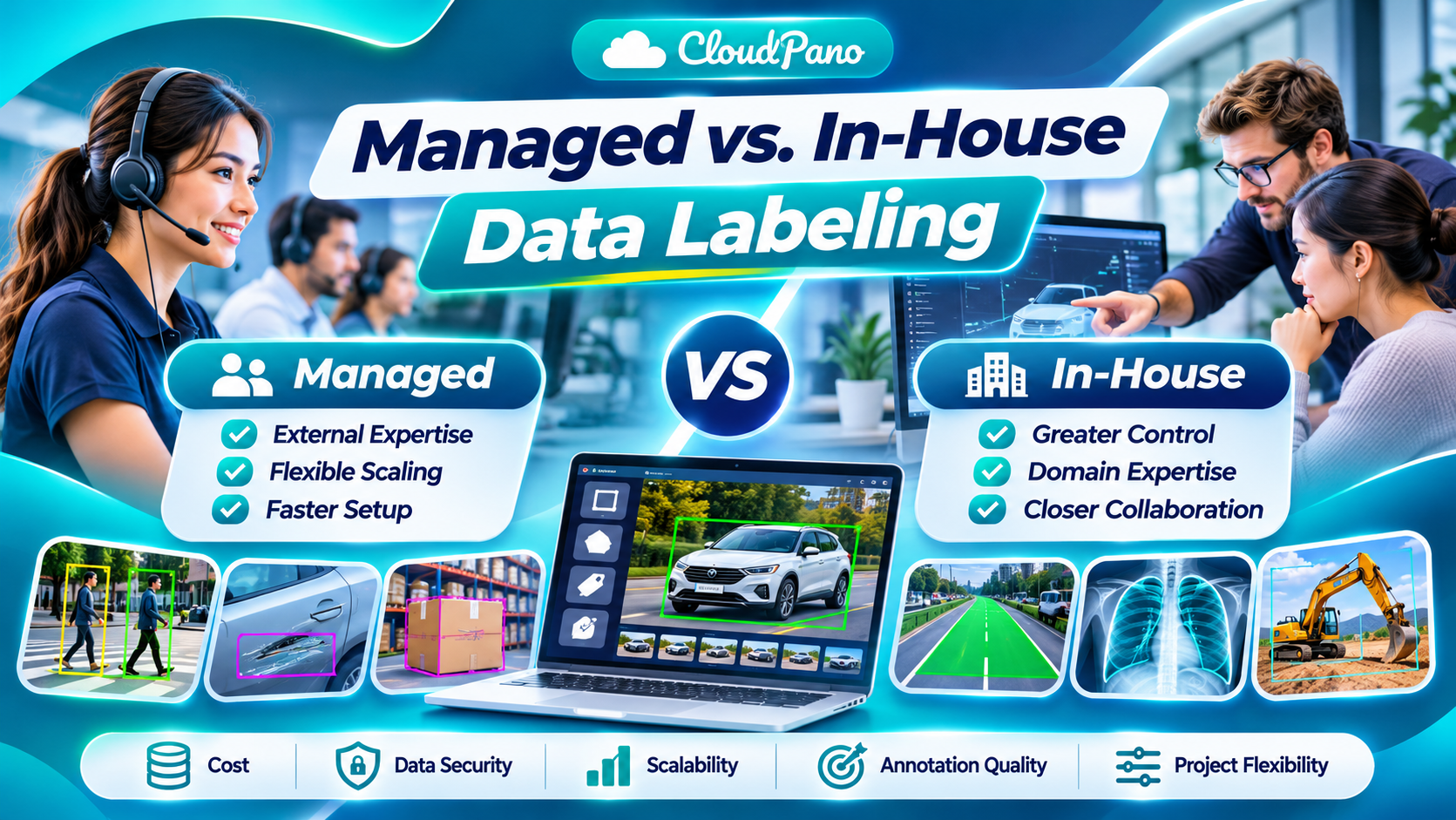
Managed vs. In-House Data Labeling

Choosing between managed and in-house data labeling is an important decision for AI development teams. This guide explores the key differences between managed vs in-house labeling, including costs, annotation quality, data security, scalability, and operational control. Discover the advantages and limitations of each approach, practical examples from computer vision and robotics, and how hybrid labeling workflows can combine external capacity with internal expertise. Learn how to select the right annotation strategy for your project's requirements, resources, and long-term AI goals.
Read post

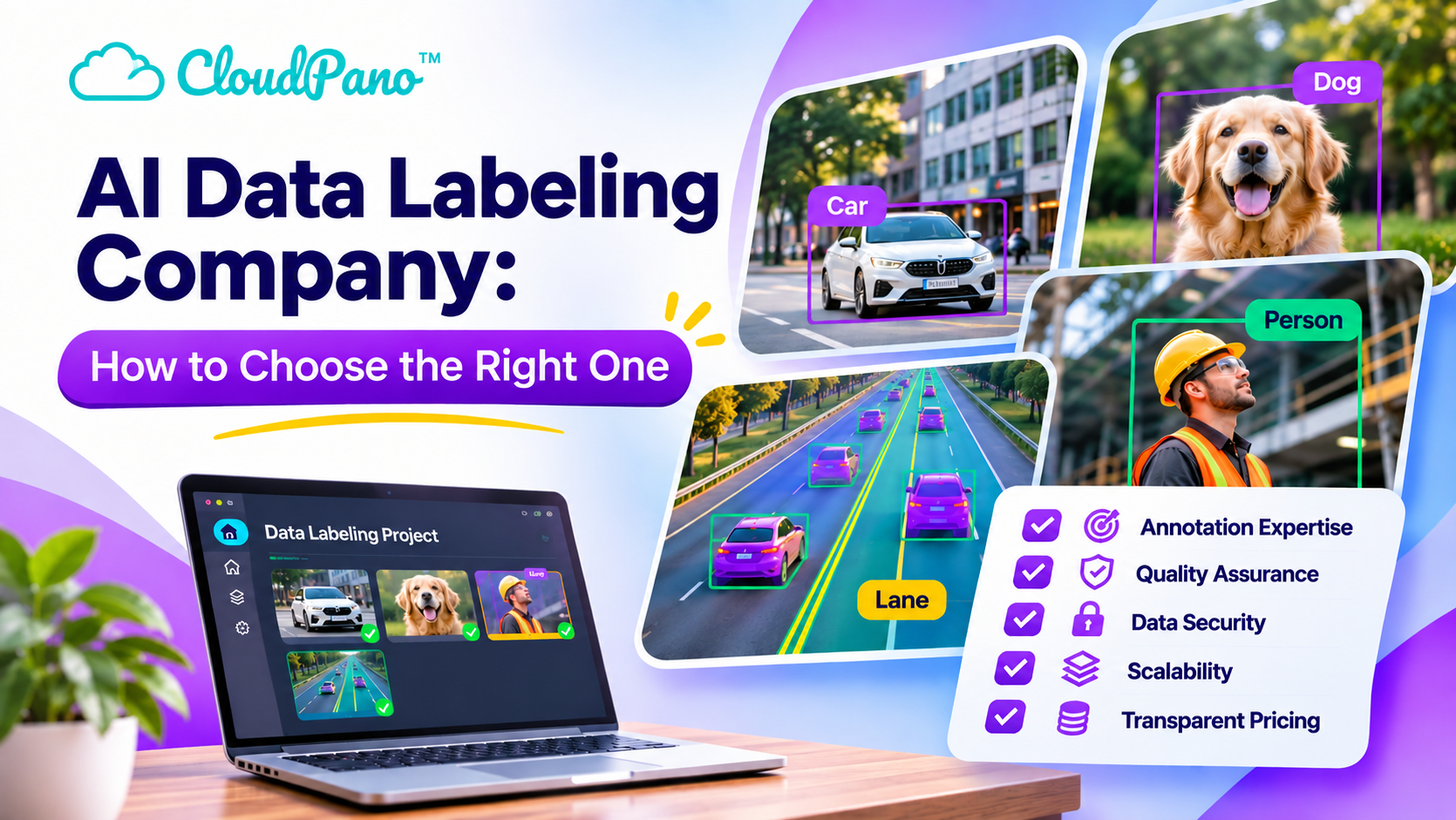
AI Data Labeling Company: How to Choose the Right One

Choosing the right AI data labeling company is essential for developing accurate and reliable artificial intelligence systems. This guide explains how to evaluate annotation providers based on data quality, industry expertise, security, scalability, pricing, and project management. Learn about different annotation services, common mistakes to avoid, and the importance of human review. Discover a practical five-step evaluation process to help you select a trustworthy labeling partner that meets your AI development requirements.
Read post